
Many homeowners ask themselves when it comes to maintaining their yard in Grand Rapids, Michigan: Does insurance cover stump grinding? Tree stumps that sit in your yard can look unprofessional, dangerous, and attract insects. But before you schedule tree service, you should know how insurance works with stump removal and tree removal insurance. In this blog, we go over the facts, including what is usually covered and what is not, and what you can do to improve the chance of a successful claim.
What Is Stump Grinding?
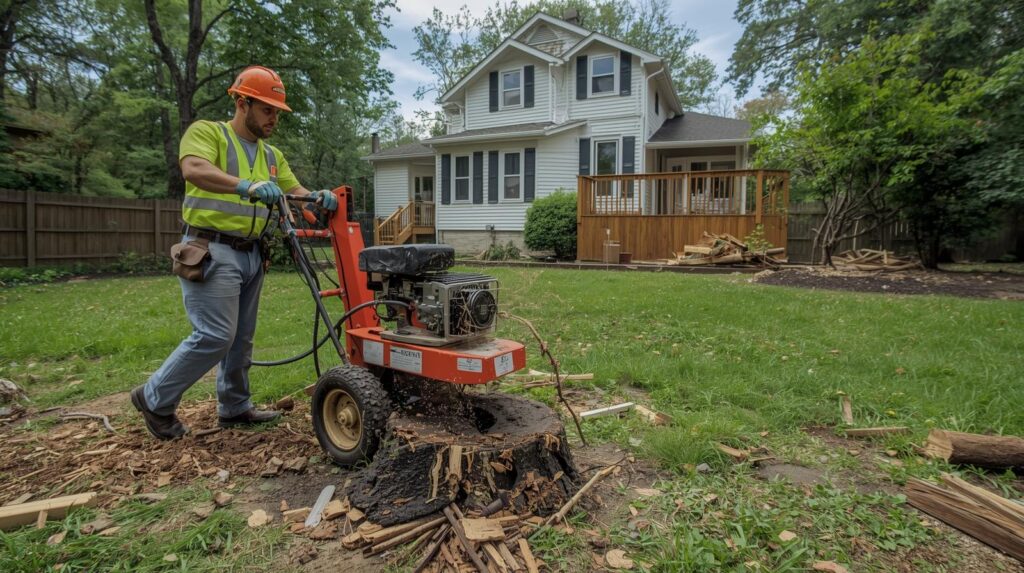
Stump grinding is the removal of the visible portion of a stump from a tree after it has been cut down. The stump is ground down by a stump grinder that grinds the stump below the ground level. This will make your yard safer, and you can plant grass or put something over it. While stump grinding may seem an essential part of normal tree care, whether or not insurance covers stump grinding will depend heavily on the manner in which the stump was produced and why it needed to be removed.
When Insurance Might Cover Stump Grinding
First, let us examine typical homeowner policies to understand why insurance sometimes covers stump grinding. Most standard homeowner insurance policies cover damage or loss that is caused by unexpected, sudden events. Windstorms, lightning, or trees falling in a storm are some of the common examples. This means that if a tree falls on your property because of storm damage and hurts your house or other structures, your insurance will often cover the cost of removal, like stump grinding.
But insurance isn’t always the same as costs for routine maintenance. If you have an old stump from a tree that was taken down long ago, that stump is a homeowner’s responsibility. Here, most insurance companies will not cover stump grinding.
Basically, you can file a tree removal insurance claim Grand Rapids MI if the tree is to fall during a storm, and your insurance will pay for the cost of cutting down the tree and grinding the stump. But if the stump was already there as part of normal landscaping, then it might not be covered.
Homeowners Insurance Stump Removal: What’s Covered?
An interesting way of thinking about it is this: Most insurance companies place stump grinding at the expense of clearing a fallen tree from a covered event. An insured event is something you have a policy of insurance to cover, such as hurricane damage. For example, when Grand Rapids is hit by a severe thunderstorm, and the tree falls on your garage, your insurance will usually pay to remove it, repair or replace your garage, and sometimes even to grind stumps for the same event.
The insurer assumes that the stump is a relic from the storm-damaged tree that caused other damage. The fact that it is part of the clean-up is that it is a claim.
This is called storm damage tree removal coverage insurance for fallen tree stumps. In this situation, your policy might not respond to the tree cutting and stump grinding.
What Insurance Policies Usually Don’t Cover
The following items remain outside the coverage of most insurance policies.
-The majority of insurance providers refuse to pay for:
-Tree stump grinding services for trees that remained healthy and standing until their removal.
-You need to pay for stump grinding services, which you added after hiring the tree service for landscaping purposes.
-The policy excludes all tree service expenses that arise from standard maintenance and insect disease control efforts.
The policy covers only unexpected sudden events according to its design, while excluding routine yard maintenance activities.
For example, if you decide to cut down an old tree because it blocks your driveway, and then you want to dispose of the stump, you pay for it yourself. The job of grinding the stump is considered maintenance, though it makes your yard look nicer and safer, and most stump grinding insurance coverage in Grand Rapids MI does not cover this work.
How to Check Your Insurance Policy?
What matters most is how much insurance coverage insurance provides for stump grinding. Insurance policies may differ from company to company, and knowing what is covered is best found in reading your policy or speaking with your agent.
Filing a Tree Removal Insurance Claim
When making a claim, do everything you can. Take pictures of the fallen tree, stump, and any structures damaged. Make notes about when and how the storm hit. Your insurance company may send an adjuster to inspect the damage. You had to be honest and clear about what happened.
There will be a deductible. The deductible is the amount you pay before insurance covers the rest. If you have a high deductible, you may be more likely to pay for stump grinding yourself.
Tips That Could Help Your Claim
Although stump grinding is a bit of a controversy among insurance companies, here are some tips that could be helpful.
Connect the Stump to a Covered Event.
If the stump is from a tree that fell due to wind, hail, lightning, or other covered risk, insurance will likely help.
Keep Records.
Your case might include photographs before and after the storm, invoices from tree services, and written notes on weather conditions.
Talk to Your Insurance Agent.
Whenever you are hiring a tree service, call your insurance company and ask them to verify your coverage.
Get a Professional opinion.
It is common for certified arborists or experienced tree services to help explain the reason for failure, which could have an impact on the outcome of a claim.
For a reliable explanation of typical homeowner insurance and tree removal coverage, the Insurance Information Institute has good information on what types of tree work insurance may cover. You can find more at: https://www.iii.org/.
Common Misunderstandings
Many homeowners assume that stump grinding is connected to a fallen tree and that it will be covered. Unfortunately, this is not always the case. This depends on the policy and the form of the claim.
Some people think stump grinding after a storm may be covered without checking their deductible.
Another misconception is that tree care is covered for as long as the tree falls due to weather. Some of the insurance policies limit coverage to certain dollar amounts or have specific tree removal regulations. That is why it is important to read your policy.
Making the Best Decision
Now that you have information regarding homeowners insurance, stump removal, tree removal insurance coverage, and stump grinding insurance policy, you can proceed with confidence in the situation. In many cases, insurance is helpful, especially after a storm.
If you do plan on filing a claim, get started right away, and keep everything in check.
FAQ
Does homeowner insurance cover stump grinding after a storm?
Insurance can cover stump grinding services for tree stumps that result from storm-related events, if your policy includes it, but your coverage will depend on the specific terms and deductible of your insurance policy.
Is stump grinding covered if the tree was unhealthy?
Insurers usually deny coverage for tree removal when a tree needs to be removed because of unhealthy conditions or for maintenance purposes.
What should I do before calling a tree service?
Check your insurance policy and talk to your agent. You should take photos and write notes to serve as evidence of the damage.
Can I file a claim for just stump grinding?
The answer depends on the situation. The stump requires coverage when it comes from a covered loss, for example, storm damage. The insurance will probably refuse coverage for normal maintenance work.
For professional stump grinding and tree removal services in Grand Rapids, MI, contact KD Tree Service Belmont for expert assistance, (616) 947-8809.