[email protected] ⚡ Same-day emergency available

Category: Albany, NY

  • Is a Dead Tree an Emergency? Cohoes, NY Removal Criteria

    Is a Dead Tree an Emergency? Cohoes, NY Removal Criteria

    A dead tree is not automatically an emergency, but it can become one when structural failure could affect people, homes, vehicles, roads, sidewalks, utilities, or neighboring property. In Cohoes, warning signs such as major decay, cracks, hanging limbs, root failure, or sudden leaning should prompt a professional tree risk assessment.

    A dead tree in your Cohoes, NY yard may look harmless from the ground. But once large branches begin failing, the trunk develops decay, or the tree starts leaning toward a structure, the situation changes.

    The key question is not simply “Is the tree dead?”

    It is:

    “How likely is the tree or a tree part to fail, what could it hit, and how serious would the consequences be?”

    That distinction is central to modern tree-risk assessment.

    The International Society of Arboriculture (ISA) evaluates tree risk using factors including the likelihood of failure, likelihood of impact, and consequences if failure occurs. Its current assessment materials specifically identify conditions such as deadwood, hanging parts, decay, and cracks.

    For homeowners searching for tree removal Cohoes NY, understanding that difference can help determine whether a dead tree needs monitoring, scheduled removal, or urgent attention.

    Is a Dead Tree Automatically an Emergency?

    No.

    A dead tree can be hazardous without being an immediate emergency.

    For example, a dead tree standing in an isolated part of a backyard may have a different risk profile from a dead tree leaning over a house, driveway, sidewalk, or frequently used area.

    ISA’s risk framework considers the tree or tree part, the potential target, likelihood of failure, likelihood of impact, and consequences.

    That means two dead trees of similar size can require completely different responses.

    The simple rule

    Dead tree + structural defect + meaningful target = potentially urgent hazard.

    The more serious the structural defect and the greater the exposure below or around the tree, the more quickly a professional assessment should be arranged.

    Dead Tree vs. Hazard Tree vs. Emergency Tree

    These terms are often used interchangeably, but they describe different situations.

    SituationWhat It MeansTypical Response
    Dead tree with no obvious defectsTree has died but no immediate target exposure is apparentSchedule an assessment
    Dead tree with significant deadwoodBranch failure may be possiblePrompt professional evaluation
    Dead tree with decay or trunk cracksStructural integrity may be compromisedPrioritize assessment
    Dead tree leaning toward a housePotential target is directly exposedUrgent assessment
    Large hanging limb over drivewayLocalized failure hazardPrompt hazard removal
    Uprooted or partially failed treeFailure may already be underwayUrgent professional response
    Tree affecting utility linesElectrical/infrastructure hazard may existStay clear and contact utility/provider
    Fallen tree blocking access or creating immediate dangerActive obstruction or hazardEmergency response may be appropriate

    The ISA’s current risk-assessment form categorizes likelihood of failure as improbable, possible, probable, or imminent, while likelihood of impact ranges from very low to high.

    So the word “emergency” should describe the actual risk situation not simply the fact that a tree is dead.

    Spotted a High-Risk Tree Hazard?

    Don’t wait for structural failure. Get expert ISA-rated evaluation & emergency response now.

    24/7 Emergency Call Now

    7 Dead Tree Dangerous Signs Cohoes Homeowners Should Know

    1. Large Dead or Hanging Branches

    Large dead branches can become particularly concerning when they are positioned above areas regularly occupied by people or vehicles.

    Look carefully at branches extending over:

    • Driveways
    • Walkways
    • Porches
    • Roofs
    • Garages
    • Parking areas
    • Streets
    • Neighboring property

    A hanging limb following a storm deserves additional attention because its connection to the tree may already be compromised.

    ISA’s assessment materials specifically recognize dead and hanging tree parts as failure types that can be evaluated during a risk assessment.

    2. Cracks in the Trunk or Major Limbs

    Visible cracks can indicate structural weakness.

    A crack becomes more concerning when it occurs alongside decay, included unions, significant lean, broken limbs, or other evidence of deterioration.

    Do not climb a dead tree to investigate a crack yourself.

    A professional should determine whether the defect represents a meaningful structural concern.

    3. Extensive Trunk Decay

    A decaying tree hazard may not always be obvious from the outside.

    Wood can deteriorate internally while portions of the exterior remain standing.

    Potential warning indicators can include:

    • Cavities
    • Extensive wounds
    • Fungal growth
    • Soft or deteriorated wood
    • Broken sections
    • Dead bark or declining structural areas

    The presence of one indicator does not automatically determine the final risk rating.

    The surrounding structure, tree mechanics, target exposure, and likelihood of failure also matter.

    4. Sudden or Significant Lean

    A dead tree leaning toward a house is more concerning than a dead tree leaning into an open area with no meaningful targets.

    Pay particular attention when the lean appears to be new or increasing.

    A recent change can indicate movement within the root system or structural failure.

    If the soil around the trunk is lifting or the root plate appears to be moving, keep people away from the area.

    5. Root Damage or Root Plate Movement

    The roots are part of the tree’s structural support system.

    Warning signs can include:

    • Exposed or damaged roots
    • Soil lifting around the base
    • A visibly tilted root plate
    • New gaps in the soil
    • Major excavation near the root zone
    • Signs of root decay

    A tree that looks stable above ground may still have a significant below-ground problem.

    This is one reason a visual assessment from a distance cannot always establish the actual level of risk.

    6. Recent Storm Damage

    A tree that survives a major wind, snow, or ice event can still have newly damaged structural components.

    Look for:

    • Split limbs
    • Broken tops
    • Hanging branches
    • Fresh trunk cracks
    • Exposed roots
    • Detached bark
    • New leaning

    Storm damage can change the risk profile of a tree very quickly.

    If a large dead tree has sustained new damage and is positioned near an occupied structure, vehicles, or a roadway, arrange professional assistance promptly.

    7. Contact With Utility Lines

    A dead or damaged tree involving electrical lines should never become a DIY project.

    Do not climb the tree.

    Do not cut branches near energized lines.

    Do not use a ladder, pole saw, chainsaw, or other equipment around the electrical hazard.

    Keep people away from the area and contact the appropriate utility or emergency service.

    Critical Tree Defect Identified?

    Don’t risk property damage or injury. Contact our certified arborists for safe evaluation.

    24/7 Available Call Now

    How Can I Tell If a Dead Tree Is an Immediate Emergency in Cohoes?

    Start with four questions.

    1. Is there a structural defect?

    Look for decay, major cracks, hanging branches, root failure, broken sections, or significant lean.

    2. Could the tree or branch fail soon?

    The ISA framework distinguishes between failure that is improbable, possible, probable, or imminent. “Imminent” refers to a failure that has started or is likely to occur in the near future.

    3. What is inside the potential fall or impact zone?

    Consider:

    • People
    • Homes
    • Garages
    • Vehicles
    • Roads
    • Sidewalks
    • Utility infrastructure
    • Neighboring property

    4. What would happen if failure occurred?

    The ISA framework evaluates consequences from negligible through severe.

    If a dead tree has a serious structural defect, an exposed target, and potentially severe consequences, the situation deserves prompt professional attention.

    The Most Important Tree-Risk Concept: Failure × Impact × Consequences

    Homeowners often focus entirely on whether a tree might fall.

    Professional tree-risk assessment goes further.

    A tree can have a relatively high likelihood of failure but create comparatively little risk if there is little chance of striking a target.

    Conversely, a defect may deserve greater attention when the tree is positioned directly over a frequently occupied area.

    The ISA framework separates:

    Likelihood of failure → likelihood of impact → consequences of failure → overall risk.

    This is why tree removal Cohoes NY decisions should be based on site-specific assessment rather than tree appearance alone.

    When Does a Dead Tree Need Removal?

    Full dead tree removal Cohoes NY may be appropriate when the tree has substantial structural deterioration and the surrounding site creates unacceptable exposure.

    Examples can include:

    • A severely decayed trunk beside a house
    • A dead tree leaning toward an occupied structure
    • A compromised tree with major hanging limbs
    • Significant root failure
    • A tree with a high likelihood of striking an important target
    • A dead tree whose structural condition cannot reasonably be mitigated through pruning

    However, removal should not be assumed simply because the tree is dead.

    A qualified professional can determine whether the entire tree, a specific branch, or another mitigation strategy is appropriate.

    Does Every Hazardous Tree Need to Be Removed?

    No.

    Tree-risk management can involve different mitigation strategies.

    Depending on the assessment, a professional may recommend:

    • Removing hazardous deadwood
    • Removing a specific failed branch
    • Pruning selected portions
    • Restricting access beneath the tree
    • Monitoring the condition
    • Removing the entire tree

    ISA’s current Tree Risk Assessment Manual describes a structured process involving inspection, risk categorization, mitigation, and reporting.

    The correct solution depends on the individual tree and site.

    Dead Tree Removal vs. Emergency Tree Removal

    These services address different levels of urgency.

    Scheduled tree removal is appropriate when a tree has been identified for removal but does not present an immediate danger.

    Emergency tree removal becomes relevant when failure has occurred or the condition presents an immediate or rapidly developing hazard.

    For example:

    A dead tree has been declining for several years but stands away from structures.

    That may be a scheduled removal.

    Compare that with:

    A dead tree has developed a major trunk crack, is leaning toward a house, and recently dropped a large limb.

    That situation warrants much more urgent evaluation.

    Cohoes Tree Cutting Service: What Should Homeowners Look For?

    When searching for a Cohoes tree cutting service, homeowners should look beyond a low advertised price.

    Ask about:

    • Arboricultural qualifications
    • Insurance
    • Experience with hazardous trees
    • Emergency response capability
    • Rigging and removal methods
    • Cleanup
    • Stump handling
    • Written estimates
    • Utility-line procedures
    • Property protection
    • Whether the company performs professional tree risk assessments

    For a high-risk tree, the method used to remove it can be just as important as the decision to remove it.

    A tree beside a house, garage, narrow driveway, or utility corridor may require controlled sectional removal rather than simply cutting the trunk at ground level.

    When Should You Call a Certified Arborist in Cohoes?

    A certified arborist Cohoes search is particularly relevant when you are uncertain whether a tree should be removed or whether a particular defect is dangerous.

    Consider professional assessment when:

    • The tree is large
    • The tree is dead or declining
    • There is visible decay
    • Major limbs are hanging
    • The tree is leaning
    • Roots appear damaged
    • The tree has sustained storm damage
    • The tree is close to a structure
    • A neighbor has raised a safety concern
    • You need documentation or a written assessment

    ISA’s current Tree Risk Assessment materials emphasize systematic inspection, target assessment, risk categorization, mitigation, and reporting.

    Hazard Tree Assessment Cost: What Affects the Price?

    There is no single hazard tree assessment cost that applies to every Cohoes property.

    Pricing can vary depending on:

    • Number of trees
    • Tree height and size
    • Accessibility
    • Complexity of the defect
    • Site conditions
    • Whether advanced assessment is necessary
    • Whether a written report is requested
    • Whether the assessment involves multiple targets
    • Whether removal or mitigation is subsequently required

    A basic visual consultation is not necessarily the same service as a formal written tree-risk assessment.

    If documentation is important, ask what the assessment includes before scheduling it.

    Falling Branch Liability: Why Known Hazards Matter

    Homeowners sometimes wait until a dead branch falls before addressing it.

    That can be a poor risk management strategy when a known defect already threatens people or property.

    If a tree extends toward a neighboring property, public sidewalk, roadway, or other target, document the condition and seek professional guidance.

    The legal question of falling branch liability depends on the specific facts and applicable law, so homeowners should not rely on a general tree service article as legal advice.

    From a practical safety perspective, however, known hazards should not simply be ignored.

    Cohoes, NY Tree Removal: Local Considerations

    Cohoes has its own municipal rules that can become relevant depending on where and how tree work occurs.

    For example, the City of Cohoes requires a solid-waste collection permit for businesses engaged in removing trees, tree stumps, or tree trimmings in or upon city streets, alleys, or highways as part of their business activity.

    The city also has provisions addressing public streets and sidewalks. Work that opens or removes pavement in a city street or sidewalk generally requires a permit from the appropriate city department, with specific emergency provisions.

    Cohoes’ subdivision regulations also address tree preservation and recognize circumstances involving diseased, severely damaged, or otherwise unsafe trees.

    These rules do not mean every residential tree removal requires a permit.

    The applicable requirements depend on the property, location, type of work, and whether public infrastructure or development activity is involved.

    When in doubt, confirm requirements with the appropriate City of Cohoes department before performing work affecting public property or regulated areas.

    What If the Dead Tree Is Near a Sidewalk or Street?

    Location becomes especially important when the tree is close to public infrastructure.

    A tree or branch that fails toward a private lawn may create one set of consequences.

    A tree or branch that fails toward a sidewalk, street, parked vehicles, or utility infrastructure can create a substantially different exposure.

    The City of Cohoes’ Public Works provisions give the Commissioner of Public Works authority concerning encroachments and nuisances on public lands, streets, and sidewalks, including emergency abatement circumstances.

    That makes it especially important to distinguish between:

    private-property tree work

    and

    work affecting public rights-of-way or infrastructure.

    What Should You Do Before a Tree Service Arrives?

    If a dead tree appears dangerous:

    Keep people away

    Create as much distance as practical from the potential fall or impact zone.

    Keep vehicles away

    If possible, move vehicles that are positioned beneath or near hazardous branches.

    Do not climb the tree

    Deadwood and compromised branches can fail unexpectedly.

    Do not cut the tree yourself

    Large dead trees can involve unpredictable forces, especially when decay or root failure is present.

    Watch for utility hazards

    If electrical lines are involved, stay away and contact the appropriate utility or emergency service.

    Photograph the condition from a safe location

    Photos can help document visible cracks, hanging limbs, or storm damage for the professional who evaluates the tree.

    What Questions Should You Ask Before Hiring a Tree Removal Company?

    Before approving tree removal in Cohoes NY, ask:

    1. What makes this tree hazardous?
    2. Is the entire tree recommended for removal?
    3. Could pruning mitigate the hazard?
    4. What defects were identified?
    5. What targets are within the potential failure zone?
    6. How will the tree be removed safely?
    7. Will the crew use rigging or sectional removal?
    8. Does the company carry appropriate insurance?
    9. Is cleanup included?
    10. Are there any municipal or utility considerations?
    11. Will I receive a written estimate?
    12. If this is an emergency, what should I do before the crew arrives?

    A professional explanation should connect the recommendation to the tree’s condition and site circumstances rather than simply saying, “The tree is dead.”

    Dead Tree Emergency Checklist for Cohoes Homeowners

    Use this quick checklist if you are unsure what to do.

    Call for prompt professional assessment if you notice:

    • ☐ Major trunk crack
    • ☐ Large hanging branch
    • ☐ Extensive decay
    • ☐ Significant new lean
    • ☐ Root plate movement
    • ☐ Large broken limb
    • ☐ Recent storm damage
    • ☐ Dead tree over a house
    • ☐ Dead tree over a driveway
    • ☐ Dead tree near a frequently used sidewalk
    • ☐ Tree threatening utility infrastructure
    • ☐ Tree partially uprooted or already failing

    The more boxes that apply especially when important targets are nearby the more important a professional evaluation becomes.

    Frequently Asked Questions

    Is a dead tree an emergency?

    Not automatically. A dead tree becomes more urgent when its structural condition creates a meaningful likelihood of failure, the failed tree or branch could impact a target, and the consequences could be significant.

    How can I tell if a dead tree is an immediate emergency in Cohoes?

    Look for major cracks, severe decay, hanging limbs, root movement, sudden leaning, partial uprooting, or storm damage especially when the tree threatens a home, vehicle, sidewalk, roadway, person, or utility line.

    What are the most dangerous dead tree signs?

    Major trunk cracks, extensive decay, large hanging limbs, root plate movement, sudden lean, and partially failed branches are important warning signs that deserve professional evaluation.

    Does a dead tree always need to be removed?

    No. Depending on the risk assessment, mitigation could include selective pruning, removal of hazardous branches, access restrictions, monitoring, or complete tree removal.

    What is a hazard tree assessment?

    A hazard or tree-risk assessment evaluates the tree or tree part, potential targets, likelihood of failure, likelihood of impact, and consequences if failure occurs. ISA’s current methodology uses these factors to categorize tree risk.

    How much does a hazard tree assessment cost in Cohoes?

    There is no universal price. The cost can depend on tree size, number of trees, site access, complexity, assessment level, and whether a written report or advanced assessment is required.

    Can I remove a dead tree myself?

    Small, low-risk vegetation may be manageable by a homeowner, but large dead trees and structurally compromised trees can present serious hazards. Do not attempt DIY removal when the tree is large, unstable, near structures, or involving utility lines.

    Should I call a certified arborist for a dead tree?

    A qualified arborist can be useful when you need an informed assessment of structural condition, risk, pruning options, or removal needs. ISA’s current risk assessment framework provides a systematic approach to tree inspection and mitigation.

    Is emergency tree removal different from regular tree removal?

    Yes. Regular removal is generally scheduled in advance. Emergency tree removal addresses situations involving immediate or rapidly developing hazards, such as a partially failed tree, dangerous hanging limb, or storm damaged tree threatening a target.

    Does Cohoes have rules affecting tree removal?

    Certain Cohoes regulations can affect tree related work depending on the circumstances. For example, the city regulates commercial removal of trees and tree debris from streets, alleys, and highways, and separate rules apply to work involving public streets and sidewalks.

    Final Takeaway: When Is a Dead Tree an Emergency in Cohoes?

    A dead tree is not automatically an emergency.

    The real concern is the relationship between:

    tree condition → likelihood of failure → likelihood of impact → consequences → overall risk.

    A dead tree standing away from people and property may require scheduled attention.

    A dead or decaying tree with a major structural defect directly beside a home, driveway, sidewalk, roadway, or utility line deserves much more urgent consideration.

    For homeowners searching for tree removal Cohoes NY, the safest approach is to have a qualified professional assess the actual tree and site rather than making a removal decision from appearance alone.

    If you see major cracks, severe decay, hanging limbs, root movement, sudden lean, partial failure, or significant storm damage, keep people away from the area and arrange professional assistance.

    The goal is not to remove every dead tree simply because it is dead. The goal is to identify genuine hazards, understand the level of risk, and choose the appropriate mitigation for the specific Cohoes property.
  • Sidewalk Tree Root Damage Liability & Repairs on Broadway, Albany

    Sidewalk Tree Root Damage Liability & Repairs on Broadway, Albany

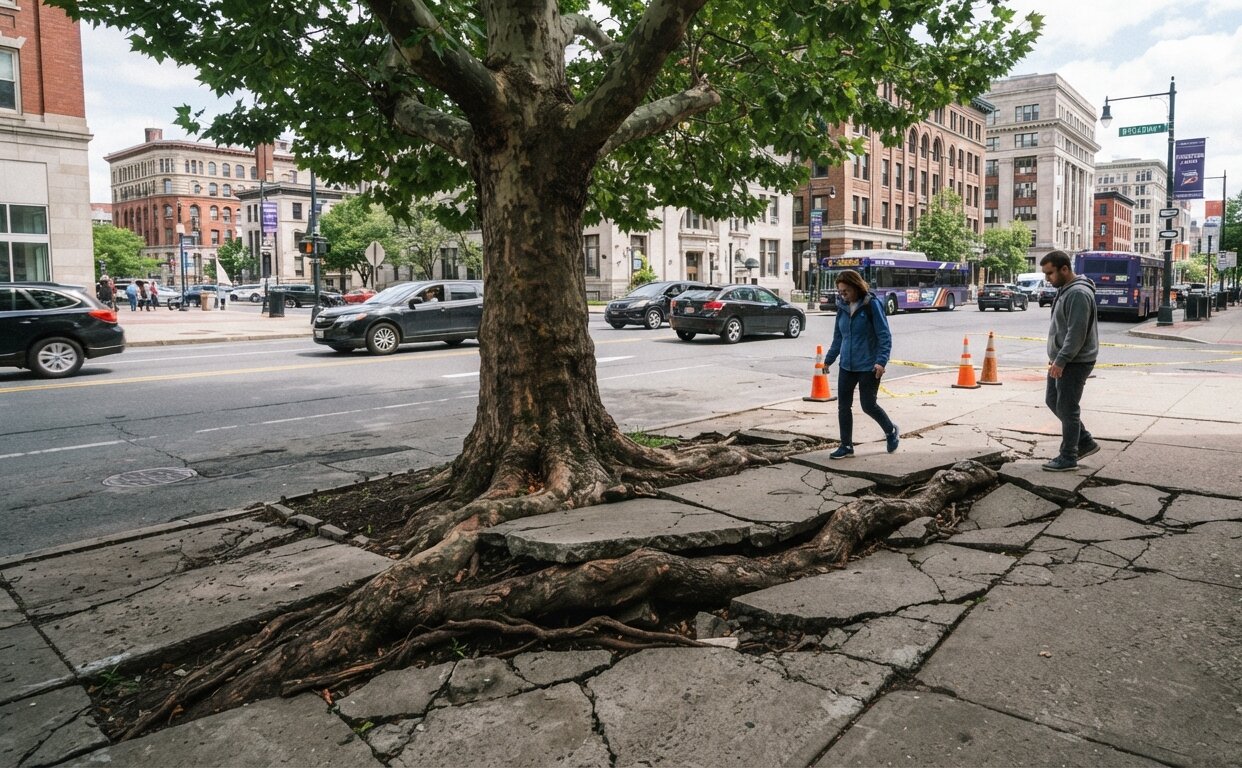
    Commercial sidewalk damage from tree roots on Broadway in Albany should be evaluated by identifying the tree and property responsibilities, documenting the sidewalk condition, and assessing root impacts before cutting roots. Liability depends on applicable law, municipal requirements, property circumstances, and who created or controlled the hazardous condition.

    Who Is Responsible for Sidewalk Damage Caused by Tree Roots on Broadway?

    A cracked or lifted sidewalk beside a commercial property does not automatically establish liability for the adjacent property owner.

    The first step is determining the relationship between the commercial property, sidewalk, tree, root system, and municipal right-of-way.

    New York courts have distinguished between conditions created by an abutting owner, special uses, statutory or ordinance based duties, and defects caused solely by naturally occurring tree roots. The specific facts and applicable legal requirements determine responsibility.

    For an actual liability dispute, injury claim, or demand for payment, a New York attorney should review the property and applicable law.

    For the tree and root component, a qualified arborist can determine whether roots are actually causing the sidewalk displacement and whether root cutting would compromise tree stability.

    Broadway Albany Tree Root Damage: Why the Problem Is More Complicated Than a Cracked Sidewalk

    Tree root sidewalk conflicts are common in developed urban environments because mature trees require expanding root systems while sidewalks restrict available growing space.

    A root may grow beneath a concrete slab and gradually contribute to:

    • Sidewalk lifting
    • Vertical displacement
    • Concrete cracking
    • Uneven walking surfaces
    • Trip hazards
    • Curb displacement
    • Drainage problems
    • Restricted pedestrian access

    However, proximity does not prove causation.

    A sidewalk near a tree can also fail because of frost movement, settlement, drainage, poor subgrade preparation, utility excavation, vehicle loading, or previous construction.

    A professional evaluation should therefore identify the actual mechanism producing the defect.

    Commercial Tree Root Removal Albany: What Should Be Evaluated First?

    Before scheduling commercial tree root removal in Albany, evaluate the entire site rather than focusing only on the exposed root.

    A qualified arborist should consider:

    1. Tree species and size
    2. Trunk diameter
    3. Tree condition
    4. Root location and diameter
    5. Root proximity to the trunk
    6. Existing lean or structural defects
    7. Crown distribution
    8. Soil conditions
    9. Sidewalk configuration
    10. Nearby utilities and infrastructure
    11. Pedestrian exposure
    12. Potential consequences of root removal

    This matters because not every root beneath concrete has the same structural importance.

    A large root close to the trunk may contribute substantially to anchorage. Removing it without an appropriate assessment can create a tree stability concern while solving only the visible sidewalk problem.

    Sidewalk Lift Tree Root Repair: Compare the Available Options

    The best repair is not always complete root removal.

    Depending on the tree, sidewalk design, root configuration, and site constraints, several approaches may be available.

    Repair StrategyPrimary PurposeRoot ImpactSidewalk ImpactBest Consideration
    Slab replacementRestore walking surfaceLow–ModerateModerateLocalized sidewalk damage
    Sidewalk regradingReduce elevation differenceLowModerateWhen grade can be adjusted
    Selective root pruningRemove specific conflicting rootsModerate–HighLow–ModerateOnly when arboriculturally appropriate
    Root barrier installationRedirect future root growthModerateModerateSuitable site-specific situations
    Sidewalk redesignWork around existing rootsLow–ModerateHigherMature trees worth retaining
    Tree replacementResolve long-term incompatibilityHighHigherWhen tree/site conflict is severe
    Extensive root excavationRemove larger root massHighHighSpecialized situations requiring assessment

    The correct option depends on the tree’s structural requirements and the physical limitations of the sidewalk.

    🚨 CALL EMERGENCY TREE SERVICE NOW: (518) 625-8733

    Why Cutting a Tree Root Can Create a Bigger Problem

    A common shortcut is to expose the root, cut it, replace the concrete, and consider the job finished.

    That approach can be inappropriate when the root provides significant structural support.

    Roots contribute to:

    • Tree anchorage
    • Stability against wind loading
    • Water acquisition
    • Nutrient uptake
    • Physiological function

    The closer a substantial root is to the trunk, the more carefully its removal should be evaluated.

    For a mature tree beside a heavily used commercial sidewalk on Broadway, the objective should be to resolve the pedestrian surface problem without unnecessarily creating a tree-stability problem.

    How an Arborist Diagnoses Concrete Cracking Tree Roots

    A professional root-conflict assessment should establish whether the tree root is actually associated with the sidewalk displacement.

    The inspection may follow this relationship:

    Tree → root location → root size → slab displacement → crack pattern → surrounding soil → other possible causes

    Useful site documentation includes:

    • Full sidewalk photographs
    • Close-ups of cracks
    • Measurements of vertical displacement
    • Tree location
    • Trunk diameter
    • Visible surface roots
    • Tree-pit condition
    • Curb condition
    • Nearby utility structures
    • Previous repair areas
    • Drainage conditions

    This creates a more defensible technical record than simply stating that “tree roots cracked the sidewalk.”

    Broadway Albany Tree Care Company: Tree Work and Concrete Work Are Different Scopes

    A sidewalk contractor and an arborist address different technical problems.

    A concrete professional evaluates the pavement, base, grading, reconstruction, and pedestrian surface.

    An arborist evaluates the tree, root system, structural implications, and appropriate tree-care methods.

    For a complicated commercial site, coordination between the two disciplines can prevent one repair from creating another problem.

    A Practical Repair Sequence

    Step 1: Document the defect

    Photograph and measure the affected sidewalk.

    Step 2: Identify the tree

    Determine species, size, condition, and location.

    Step 3: Establish the root conflict

    Determine whether roots are contributing to the displacement.

    Step 4: Verify property and municipal responsibilities

    Identify the sidewalk, tree, property boundary, and relevant right-of-way conditions.

    Step 5: Check applicable City requirements

    Determine whether permits, approvals, or municipal coordination are necessary.

    Step 6: Compare repair options

    Evaluate root pruning, slab replacement, sidewalk redesign, root barriers, tree replacement, or other site-specific approaches.

    Step 7: Perform controlled work

    Use appropriately qualified professionals for the tree and hardscape scopes.

    Step 8: Document completion

    Photograph the completed repair and retain relevant inspection and work records.

    🚨 CALL EMERGENCY TREE SERVICE NOW: (518) 625-8733

    Commercial Property Tree Liability: The Legal Question Is Not Simply “Whose Tree Is It?”

    Commercial property owners often ask:

    “If the tree is next to my building, am I responsible for the sidewalk?”

    That question is too broad to answer correctly without examining the specific site.

    The relevant legal analysis can involve whether the owner created the condition, whether a special use exists, and whether an applicable statute or ordinance establishes a maintenance obligation and associated liability.

    New York appellate decisions have addressed sidewalk defects associated with tree roots and demonstrate why automatic assumptions about liability can be misleading.

    Accordingly, tree ownership, sidewalk responsibility, maintenance obligations, and tort liability should not be treated as interchangeable concepts.

    For a disputed claim, obtain legal advice from a qualified New York attorney.

    Does a Municipal Tree Automatically Make the City Responsible?

    No blanket assumption should be made.

    A commercial property on Broadway may involve several distinct physical and legal entities:

    Commercial property → private frontage → sidewalk → tree pit → tree → curb → public right-of-way

    The exact ownership, maintenance obligations, and applicable municipal rules can vary with the location and circumstances.

    Before performing tree work, verify the applicable City of Albany requirements for the specific site.

    This is especially important if proposed work involves:

    • A street tree
    • A public tree pit
    • Tree removal
    • Major root pruning
    • Work within a public right-of-way
    • Sidewalk reconstruction
    • Curb work
    • Utility conflicts

    The City of Albany is the appropriate municipal authority for confirming current local requirements.

    Who Pays for Sidewalk Repairs and Who Is Liable for an Injury?

    These are two separate questions.

    A party may have a maintenance obligation without automatically being liable for every injury associated with the condition.

    Conversely, the party responsible for repairing a sidewalk may not be the same party responsible for a particular legal claim.

    New York sidewalk-liability analysis depends on the applicable legal duty and circumstances surrounding the defect.

    Therefore, commercial owners and property managers should avoid relying on simplified rules such as:

    “The tree caused it, so the City must pay.”

    or:

    “The tree is beside my building, so I am automatically liable.”

    Neither statement is universally correct.

    🚨 CALL EMERGENCY TREE SERVICE NOW: (518) 625-8733

    What Should a Broadway Commercial Property Manager Do After Discovering Root Damage?

    The safest approach is to treat the condition as a site management issue requiring documentation, technical assessment, and responsibility verification.

    1. Photograph the sidewalk

    Capture both close-up defects and the complete frontage.

    2. Measure the displacement

    Record the approximate height difference between affected surfaces.

    3. Document the tree

    Record visible defects, size, location, and root exposure.

    4. Avoid unauthorized root cutting

    Do not remove major roots simply to make concrete installation easier.

    5. Obtain an arboricultural assessment

    Determine whether roots are structurally significant and whether pruning is appropriate.

    6. Verify municipal requirements

    Confirm applicable City procedures before performing regulated work.

    7. Coordinate the repair

    Make sure the tree solution and sidewalk solution work together.

    8. Maintain records

    Keep photographs, estimates, reports, permits, invoices, and completion documentation.

    This process helps property managers make a better-informed repair decision and creates a useful maintenance history.

    🚨 CALL EMERGENCY TREE SERVICE NOW: (518) 625-8733

    Why Proactive Commercial Tree Care Matters on Broadway

    Commercial properties have a different risk environment from low-traffic residential yards.

    Broadway properties can experience frequent pedestrian movement, deliveries, parking activity, snow and ice conditions, and repeated interaction between trees and hardscape.

    Routine inspections can identify developing problems before they become major repair projects.

    Look for:

    • New sidewalk displacement
    • Fresh concrete cracking
    • Exposed roots
    • Root-related curb movement
    • Dead branches
    • Structural tree defects
    • Clearance problems
    • Tree-pit deterioration
    • Drainage changes

    Early identification can create more repair options than waiting until a large section of sidewalk becomes severely displaced.

    When Is Commercial Tree Root Removal the Right Choice?

    Commercial tree root removal in Albany may be considered when a qualified assessment determines that removing specific roots is appropriate and the resulting tree risk is acceptable.

    It should not be selected solely because:

    • Concrete is cracked
    • A root is visible
    • The sidewalk contractor wants a clear excavation area
    • The tree is inconveniently located
    • A property owner wants the fastest possible repair

    The decision should balance:

    Pedestrian safety + sidewalk function + tree stability + tree health + site constraints + applicable requirements

    That is the core technical relationship behind responsible sidewalk-root conflict management.

    When Is Sidewalk Redesign Better Than Root Cutting?

    For mature trees with significant structural roots, modifying the hardscape may sometimes be preferable to removing important roots.

    Potential approaches can include:

    • Regrading
    • Adjusting slab configuration
    • Increasing clearance around the root zone
    • Redesigning the tree pit
    • Using an appropriate flexible or root-compatible design
    • Replacing only affected sections

    The feasibility depends heavily on existing grades, accessibility requirements, drainage, utilities, tree structure, and municipal standards.

    The goal is not simply to preserve every root at any cost.

    The goal is to find a technically appropriate solution that manages both infrastructure and tree risk.

    🚨 CALL EMERGENCY TREE SERVICE NOW: (518) 625-8733

    Broadway Albany Sidewalk Root Damage: A Better Decision Framework

    Use this simplified framework before approving work:

    QuestionIf YesIf No
    Is the sidewalk visibly displaced?Document and measure itContinue routine monitoring
    Are roots likely contributing?Request arboricultural assessmentInvestigate other causes
    Is a major root involved?Evaluate structural implicationsConsider localized repair
    Can the sidewalk be redesigned?Compare redesign costsEvaluate other options
    Is tree work involved?Verify applicable requirementsProceed with hardscape planning
    Is there a liability dispute?Consult legal counselContinue technical assessment
    Is pedestrian exposure high?Prioritize prompt hazard managementEstablish appropriate maintenance schedule

    This prevents the common mistake of jumping directly from cracked sidewalk → root cutting.

    FAQ: Sidewalk Tree Root Damage in Albany

    Who is liable for commercial sidewalk repairs caused by tree roots on Broadway?

    Liability depends on the specific property, sidewalk, tree, applicable legal duty, municipal requirements, and circumstances that created the condition. An adjacent commercial property owner is not automatically liable simply because nearby tree roots contributed to sidewalk damage.

    Can I cut tree roots under a sidewalk in Albany?

    Do not assume that you can safely or legally cut any root beneath a sidewalk. Significant root pruning can affect tree stability, and municipal requirements may apply depending on the tree and location.

    What is the safest way to repair a sidewalk lifted by tree roots?

    First determine whether roots are causing the displacement and whether the affected roots are structurally important. Potential solutions include selective root pruning, slab replacement, regrading, sidewalk redesign, root barriers, or tree replacement.

    Does a tree next to my commercial property make me responsible for sidewalk damage?

    Not automatically. Tree location, property boundaries, sidewalk responsibility, applicable laws or ordinances, special uses, and the cause of the defect all matter.

    Who should inspect a sidewalk lifted by tree roots?

    A qualified arborist should evaluate the tree and root system. A qualified sidewalk or concrete professional can assess the pavement and reconstruction requirements. Complex sites may require both.

    Can cutting one large root make a tree unstable?

    It can. Large structural roots can contribute significantly to tree anchorage. The potential effect depends on the tree, root location and size, species, condition, surrounding soil, and overall structure.

    What causes concrete cracking near tree roots?

    Tree roots can contribute to sidewalk lifting and cracking, but other causes include settlement, frost movement, poor subgrade, drainage problems, utility excavation, previous construction, and concrete deterioration.

    Should a commercial property manager repair a raised sidewalk immediately?

    A potentially hazardous pedestrian condition should be evaluated promptly. The repair strategy should address the immediate walking-surface problem while also determining its underlying cause and any tree-related risks.

    Is commercial tree root removal better than complete tree removal?

    Not necessarily. Selective root removal may be appropriate in some circumstances, while other sites may require sidewalk redesign, root management, or tree replacement. The correct solution depends on the specific tree-root and infrastructure conflict.

    🚨 CALL EMERGENCY TREE SERVICE NOW: (518) 625-8733

    Final Takeaway: Commercial Tree Root Removal Albany

    A sidewalk lifted by tree roots on Broadway should be treated as both an infrastructure problem and a tree-management problem.

    The visible concrete defect is only one part of the issue.

    The stronger process is:

    Document the sidewalk → identify the tree and property context → diagnose the root conflict → assess tree stability → verify applicable Albany requirements → evaluate repair alternatives → complete coordinated tree and sidewalk work.

    For commercial property owners and managers, this approach can help avoid unnecessary root damage, poorly coordinated repairs, and incorrect assumptions about liability.

    Most importantly, do not treat commercial tree root removal in Albany as routine excavation.

    The right solution balances pedestrian safety, sidewalk functionality, tree stability, property responsibilities, and site-specific requirements.

    Broadway Albany tree care is most effective when the tree, root system, sidewalk, commercial property, and municipal context are evaluated as one connected system.

  • Affordable Insured Local Tree Service in Arbor Hill, Albany, NY

    Affordable Insured Local Tree Service in Arbor Hill, Albany, NY

    Looking for affordable tree service Albany NY? Arbor Hill homeowners around Clinton Avenue need more than the lowest quote. The right tree company should combine fair pricing, proper insurance, qualified tree care, safe removal methods, clear written estimates, and complete cleanup. Here’s how to compare your options with confidence.

    Affordable Tree Service Albany NY: What Does “Affordable” Really Mean?

    When homeowners search for affordable tree service Albany NY, they are usually trying to solve a simple problem: get necessary tree work completed safely without paying more than necessary.

    That does not mean choosing the cheapest contractor.

    An affordable tree service should provide a reasonable price for the actual work required, with the scope clearly explained before the job begins.

    For an Arbor Hill property, pricing can depend on much more than tree height.

    The tree’s location, condition, access, proximity to buildings, sidewalks, vehicles, utilities, and the required removal method can all affect the amount of labor and equipment involved.

    Affordable vs. Cheap Tree Service

    There is an important difference between affordable and cheap.

    An unusually low quote may look attractive until you discover that hauling, cleanup, stump grinding, difficult access, or other work is excluded.

    A slightly higher quote may actually represent better value if it includes the complete project.

    The goal should be transparent, competitive pricing for professional work, not simply the lowest number on a page.

    Insured Tree Company Arbor Hill: What Should Homeowners Verify?

    Tree removal is specialized work.

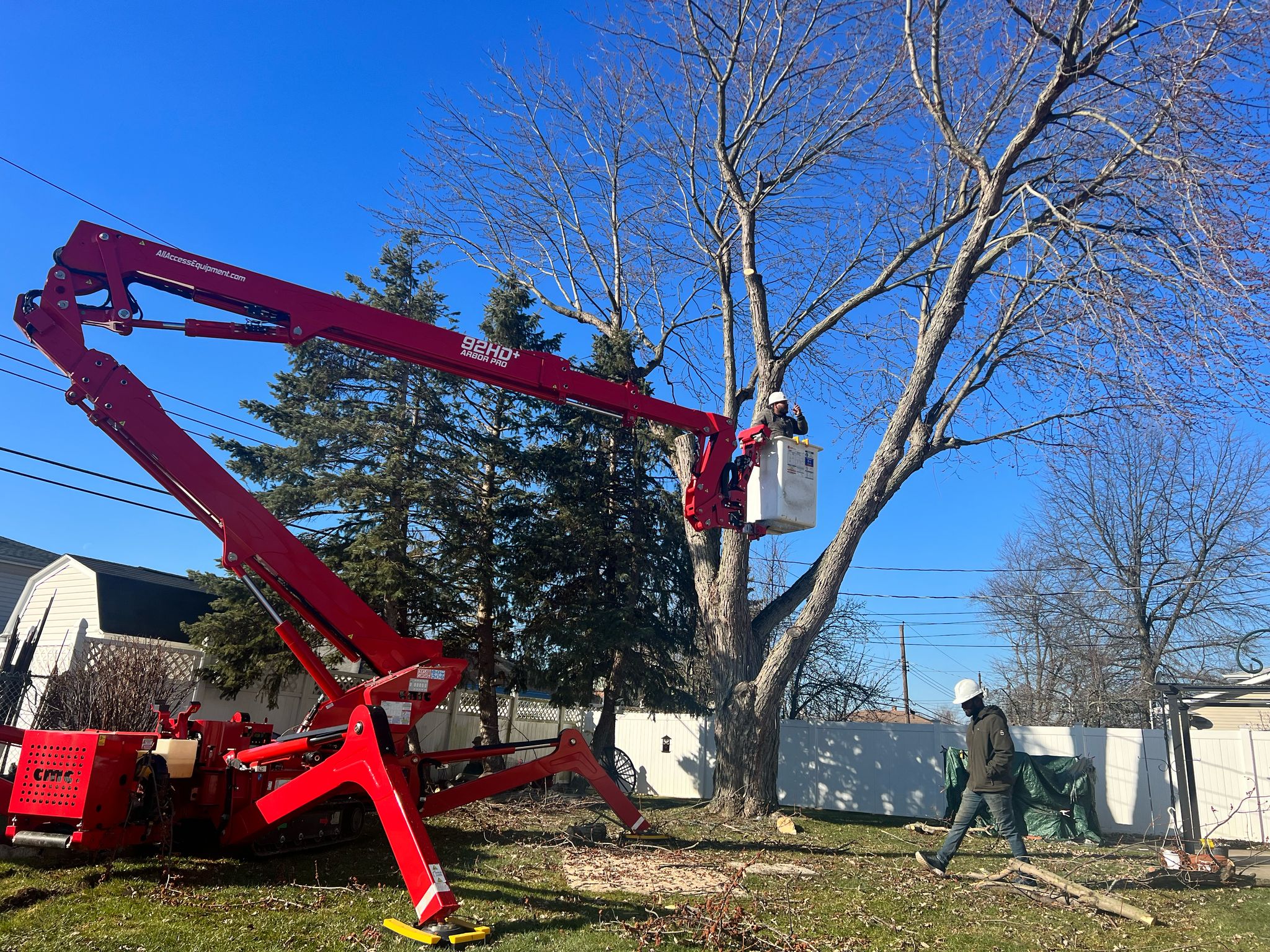
    Depending on the property, crews may work with chainsaws, climbing equipment, ropes, chippers, loaders, rigging systems, or other equipment while managing falling branches and heavy wood.

    OSHA identifies hazards associated with tree care operations, including falls, struck-by hazards, chainsaw hazards, and electrical hazards.

    That makes insurance an important part of choosing a contractor.

    Before hiring an insured tree company in Arbor Hill, ask for information about:

    • General liability insurance
    • Workers’ compensation coverage, where applicable
    • Current insurance documentation
    • The company performing the work
    • The exact scope covered by the estimate

    Insurance alone does not establish that a contractor is qualified.

    It should be considered alongside experience, safety practices, credentials, equipment, references, and the quality of the written estimate.

    Local Tree Removal Estimates: Why Prices Can Be Different

    If you receive several local tree removal estimates, do not compare only the final dollar amount.

    First compare what each contractor is actually offering.

    A professional estimate should account for the conditions that make the particular tree easy or difficult to remove.

    Tree Size and Structure

    A large tree generally requires more labor and produces more material than a small tree.

    But height is only one factor.

    Trunk diameter, branch structure, tree condition, and the location of the canopy can also affect the removal process.

    Tree Condition

    A healthy tree and a severely damaged tree can require very different work methods.

    Dead, split, storm damaged, or structurally compromised trees may require additional planning because the tree may not behave as expected during removal.

    Access to the Property

    Access can have a major impact on cost.

    A tree in an open backyard may be relatively straightforward to work on.

    A tree located behind a narrow side yard, beside a house, near a sidewalk, or close to parked vehicles may require additional labor, rigging, or equipment.

    Proximity to Buildings and Infrastructure

    A tree beside a house is different from a tree standing in an open field.

    The contractor may need to control where branches and trunk sections travel rather than simply allowing material to fall.

    Cleanup and Debris Removal

    Ask whether the estimate includes removal of branches, logs, brush, and other debris.

    A quote that does not include cleanup may appear cheaper than one that provides complete cleanup.

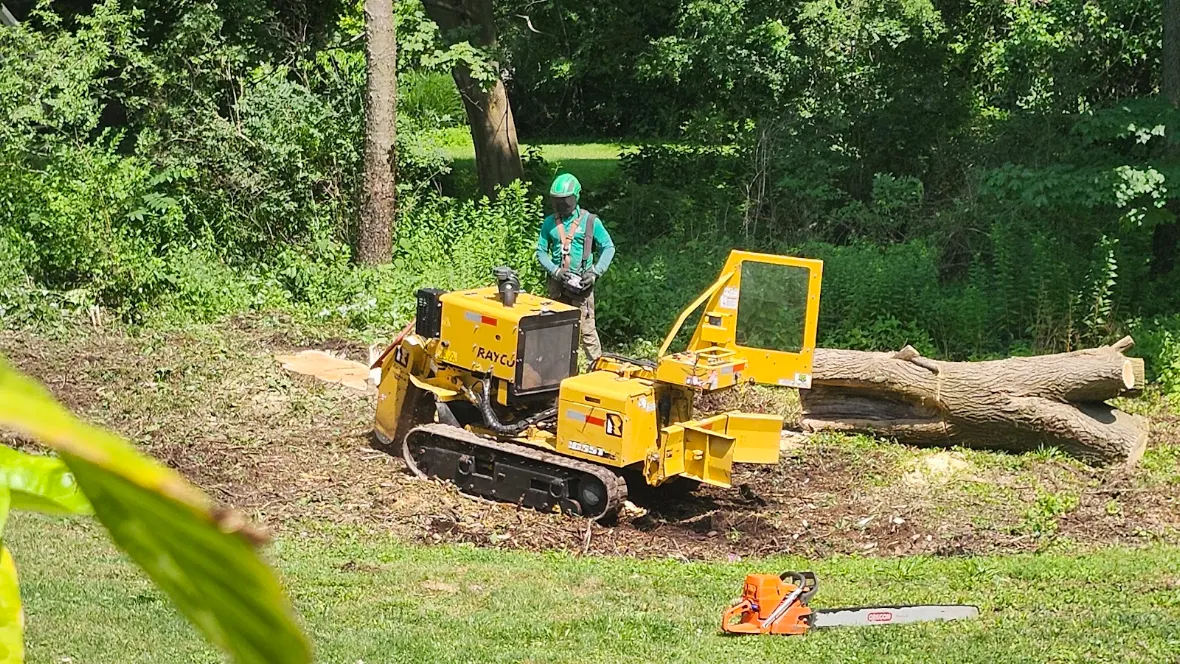
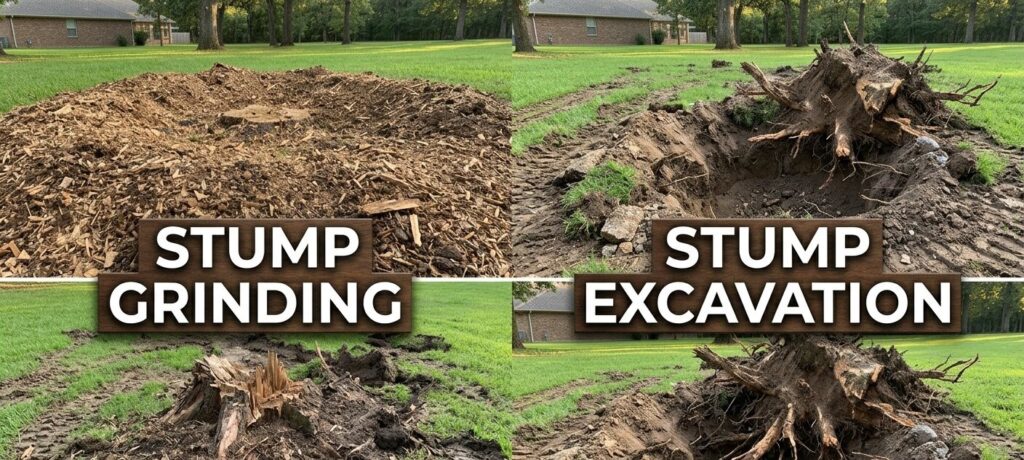
    Stump Grinding

    Tree removal and stump grinding are often separate services.

    If you want the remaining stump removed below grade, ask whether stump grinding is included in the estimate or priced separately.

    Cheap Tree Cutting Clinton Ave: Why the Lowest Price Can Cost More

    Homeowners searching for cheap tree cutting Clinton Ave may find contractors advertising very low prices.

    Price matters but tree cutting is not an area where cutting corners is worth the risk.

    A low quote may reflect a smaller scope of work, limited cleanup, fewer services, or a different removal method.

    Before accepting a bargain price, ask:

    • Is the contractor insured?
    • Is the quote written?
    • Is cleanup included?
    • Is debris hauling included?
    • Is stump grinding included?
    • How will branches be controlled?
    • What happens if access is restricted?
    • Are additional charges possible?
    • Who is actually performing the work?

    The better question is not:

    “Who is the cheapest?”

    It is:

    “Which contractor provides the safest and most complete scope at a competitive price?”

    That is the difference between cheap tree cutting and genuinely affordable professional tree service.

    Why Clinton Avenue Tree Work Requires Local Planning

    Clinton Avenue is part of Albany’s urban environment.

    Tree work around residential properties can involve sidewalks, streets, parked vehicles, neighboring structures, utility infrastructure, fences, driveways, and limited landing areas.

    These conditions can change how a tree should be dismantled and how debris should be controlled.

    The City of Albany’s tree maintenance specifications address traffic and pedestrian protection, parked vehicles, safe tree removal, trained crews, stump grinding, and recognized tree-care practices.

    For this reason, a good Clinton Ave tree service estimate should be based on the actual property not simply a generic price per tree.

    Certified Tree Care: Why Qualifications Matter

    Professional tree care involves more than operating a chainsaw.

    Proper pruning and tree-removal decisions can require an understanding of tree structure, defects, decay, branch attachment, tree biology, risk, and appropriate work techniques.

    That is why certified tree care can be an important consideration when choosing a professional.

    The International Society of Arboriculture provides arborist credentials that homeowners can use when evaluating specialized arboricultural expertise.

    The City of Albany also references ISA qualifications and industry standards within its municipal tree-maintenance requirements.

    What Is an ISA Certified Arborist?

    An ISA Certified Arborist is a professional who has earned an ISA credential through the organization’s certification process.

    If your concern is primarily tree health, structural condition, pruning recommendations, or risk assessment, ask whether an ISA Certified Arborist is involved in the evaluation.

    Keep in mind that an arborist credential and a tree removal company are not the same thing.

    The individual providing an arboricultural assessment may have different qualifications from the crew performing the physical removal.

    ANSI Z133 and OSHA: What Homeowners Should Know

    Homeowners do not need to become safety-standard experts before hiring a tree company.

    However, they should understand that professional tree care involves established safety practices.

    OSHA’s tree-care guidance references standards including ANSI A300 and ANSI Z133.

    ANSI Z133 addresses safety requirements for arboricultural operations.

    For a homeowner, the practical takeaway is straightforward:

    Ask how the contractor plans to control hazards before work starts.

    That question becomes especially important for large trees, storm-damaged trees, restricted-access trees, and trees located near structures or electrical hazards.

    Tree Removal vs. Tree Trimming in Albany

    Not every problem requires complete tree removal.

    Tree trimming or pruning selectively removes branches for a specific objective.

    Tree removal eliminates the entire tree.

    The appropriate service depends on the tree’s condition and the problem being addressed.

    Pruning may be appropriate for issues involving:

    • Dead branches
    • Broken limbs
    • Branch clearance
    • Crossing or rubbing branches
    • Structural development
    • Certain localized defects

    The City of Albany’s tree-maintenance specifications reference ANSI A300 pruning practices and address the removal of dead, broken, hanging, and hazardous limbs.

    When Removal May Be the Better Option

    Removal may be considered when a tree has severe structural problems or presents a hazard that cannot reasonably be managed through pruning or other appropriate measures.

    Potential warning signs include:

    • Major trunk cracks
    • Significant decay
    • Severe storm damage
    • Large structural splits
    • Major root failure
    • Sudden or significant leaning
    • Partial uprooting
    • A tree that has fallen onto a structure

    A single symptom does not automatically mean removal is necessary.

    When there is uncertainty, professional assessment is better than making the decision based solely on appearance.

    Tight Space Tree Removal Near Arbor Hill Homes

    Some trees simply do not have enough room to be safely felled in one piece.

    This can happen when a tree is positioned between a house and sidewalk, near a fence, over a driveway, beside vehicles, or close to neighboring structures.

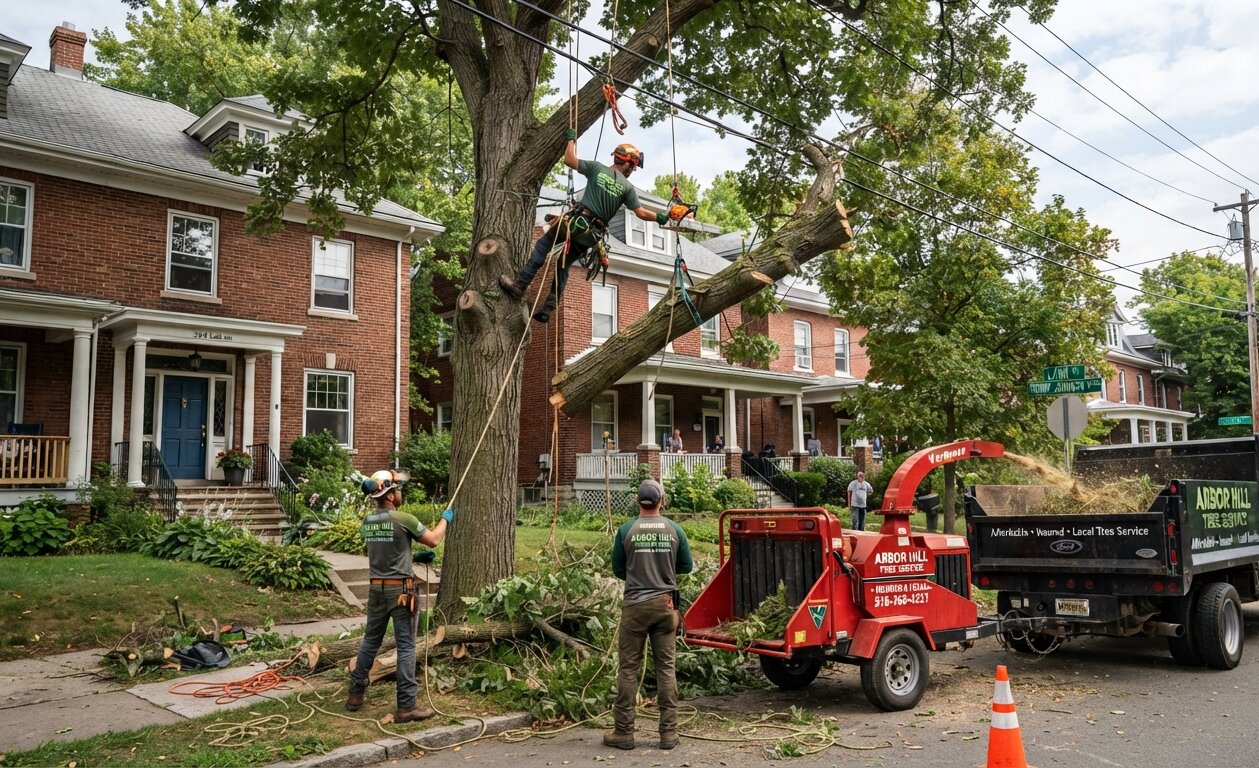
    In these situations, a professional crew may use sectional removal.

    Branches and trunk sections can be dismantled and lowered in a controlled manner rather than allowing them to fall freely.

    This type of work requires planning around:

    • Landing zones
    • Structures
    • Pedestrian areas
    • Vehicles
    • Utilities
    • Property boundaries
    • Equipment access

    Albany’s municipal tree-maintenance specifications recognize situations where trees may need to be reduced while standing before safe felling.

    When Crane Assisted Tree Removal Makes Sense

    Some difficult trees may require specialized equipment.

    A crane can sometimes be used to lift controlled sections of a tree when conventional removal methods are not practical for the site.

    This can be useful when a tree is:

    • Extremely large
    • Located in a restricted area
    • Surrounded by structures
    • Difficult to access from the ground
    • Positioned where traditional falling would create unacceptable risk

    A crane should not be recommended simply because it is available.

    The contractor should determine whether crane assistance is appropriate based on the tree, property, access, staging area, overhead conditions, and removal plan.

    How to Compare Competitive Tree Service Rates

    When comparing competitive tree service rates, use the same checklist for every contractor.

    Compare ThisAsk This Question
    Tree removalWhich tree is included in the quote?
    LaborHow will the tree be removed?
    AccessAre difficult-access conditions included?
    RiggingIs controlled lowering required?
    EquipmentIs specialized equipment included if necessary?
    DebrisWill branches and wood be hauled away?
    CleanupIs final cleanup included?
    StumpIs stump grinding included or separate?
    InsuranceCan current coverage be verified?
    EstimateIs the total scope provided in writing?

    This approach makes it much easier to identify the real value behind each estimate.

    What a Good Written Tree Removal Estimate Should Include

    A professional estimate should answer the homeowner’s most important questions before work begins.

    Look for:

    1. Clear tree identification
    The estimate should make it clear which tree or trees are included.

    2. Defined service
    Removal, pruning, storm cleanup, stump grinding, or another service should be identified.

    3. Work method
    For complicated trees, ask how the contractor intends to dismantle and control the tree.

    4. Debris handling
    Confirm whether wood, branches, brush, and chips will be removed.

    5. Cleanup
    Ask exactly what condition the property will be left in.

    6. Stump work
    Confirm whether stump grinding is included.

    7. Price clarity
    Ask about circumstances that could cause additional charges.

    A clear written scope protects both the homeowner and the contractor from misunderstandings.

    How to Choose a Trusted Local Arborist

    If you are looking for a trusted local arborist or tree care professional in Albany NY, consider the entire picture rather than one factor.

    Look for Local Experience

    A company familiar with Albany properties may better understand urban access limitations and the challenges of working around homes, sidewalks, streets, and neighboring properties.

    Verify Insurance

    Request appropriate documentation before major tree work begins.

    Check Credentials

    If you need specialized tree-health or risk advice, ask about ISA certification.

    Request Written Estimates

    A written quote makes it easier to compare contractors.

    Ask About Safety

    A professional should be able to explain the general removal approach and how hazards will be controlled.

    Confirm Cleanup

    Do not assume debris removal is automatically included.

    Compare the Complete Scope

    The lowest price is not necessarily the lowest total cost.

    What About Trees Near Power Lines?

    Trees near electrical lines require additional caution.

    Do not attempt to cut or remove a tree that is touching or potentially contacting energized electrical lines.

    OSHA identifies electrical hazards as a serious concern in tree-care operations.

    Keep people away from the area and contact the appropriate utility or qualified professionals.

    DIY tree cutting around electrical infrastructure can create a life-threatening situation.

    Who Is Responsible for Trees Along Albany Streets?

    One important question for Clinton Avenue homeowners is whether the tree is actually privately owned.

    The City of Albany Department of General Services Forestry Division handles tree-related work involving public rights-of-way and City-owned trees.

    Its responsibilities include services such as trimming, dead-tree removal, stump removal, and planting.

    Before arranging private tree removal for a street-side tree, determine whether the tree is on private property or within a public right-of-way.

    That distinction can affect who is responsible for the tree and which party should be contacted.

    Albany’s Urban Forestry Context

    Albany has a substantial urban tree population.

    City procurement documentation describes approximately 20,000 street trees and 4,000 park trees within the city’s broader urban-forestry management context.

    The City has also conducted pruning work focused on mature street trees and maintaining clearance around streets, sidewalks, buildings, and streetlights.

    For homeowners, this reinforces an important point:

    Tree work in Albany often takes place within a dense urban environment where safety, access, property protection, and public-space considerations matter.

    Emergency Tree Service in Arbor Hill

    Some tree problems cannot wait for a routine appointment.

    Call for professional assistance when:

    • A tree has fallen on a home
    • A large branch is hanging over a structure
    • A tree has suddenly developed a dangerous lean
    • A major limb has broken during a storm
    • Roots have lifted and the tree is unstable
    • A driveway or access route is blocked
    • A damaged tree threatens people or property

    Do not stand beneath damaged branches.

    Do not attempt to cut a severely storm-damaged tree yourself.

    Storm-damaged trees can contain significant stored tension and may move unexpectedly when cut.

    Why Get More Than One Tree Removal Estimate?

    For non-emergency projects, obtaining multiple estimates can help you understand what the local market is charging.

    More importantly, it can reveal differences in scope.

    One company might include complete cleanup.

    Another might leave the wood on site.

    One might recommend sectional removal.

    Another might propose a different approach.

    One estimate may include stump grinding while another does not.

    Comparing these details helps you identify whether you are actually receiving a competitive tree service rate.

    KD Tree Service Albany NY for Arbor Hill and Clinton Avenue

    For homeowners searching for affordable tree service Albany NY, KD Tree Service Albany NY provides tree care services for Albany and the surrounding Capital Region.

    Services include:

    • Tree removal
    • Emergency tree service
    • Hazardous tree removal
    • Tree trimming and pruning
    • Storm-damage cleanup
    • Stump grinding
    • Arborist consultations
    • Crane-assisted tree removal

    For a property in Arbor Hill or near Clinton Avenue, the right approach depends on the tree’s size, condition, location, access, and surrounding structures.

    KD Tree Service Albany NY can evaluate the project and provide a written estimate based on the specific work required.

    Call (518) 625-8733 to discuss your tree service needs and request an estimate.

    Frequently Asked Questions

    Where can I get an affordable yet fully insured tree removal quote in Albany?

    Look for a local tree company that can provide appropriate insurance documentation and a detailed written estimate. Compare the complete scope including removal, debris handling, cleanup, and optional stump grinding rather than choosing solely by the lowest price.

    How much does tree removal cost in Albany NY?

    There is no single price for every tree. Size, condition, location, access, proximity to structures, utilities, removal method, labor, debris handling, cleanup, and stump grinding can all affect the final estimate.

    What is the difference between affordable and cheap tree service?

    Affordable service means receiving an appropriate scope of professional work at a reasonable price. Cheap service usually emphasizes the lowest upfront price, which may not include every service or account for the safest removal method.

    Should I get multiple local tree removal estimates?

    For non-emergency work, comparing multiple written estimates can help you understand pricing and identify differences in scope, cleanup, equipment, and removal methods.

    What should I ask an insured tree company before hiring?

    Ask about liability insurance, workers’ compensation coverage where applicable, written estimates, removal methods, cleanup, debris hauling, stump services, and who will actually perform the work.

    Is an ISA Certified Arborist the same as a tree removal company?

    No. An ISA Certified Arborist is an individual holding an ISA credential, while a tree-removal company is a business providing tree services. For specialized tree-health or risk questions, ask specifically whether an ISA Certified Arborist is involved.

    Does affordable tree service include stump grinding?

    Not automatically. Stump grinding may be offered separately, so ask the contractor to clearly identify it in the estimate.

    Can a tree near Clinton Avenue be removed safely?

    Potentially, but the appropriate method depends on the site. Restricted properties may require sectional dismantling, controlled lowering, or specialized equipment instead of conventional felling.

    Is tree trimming cheaper than tree removal?

    In many cases, pruning is less extensive than complete tree removal, but the price depends on the tree and the work required. A professional assessment can help determine which service is appropriate.

    Who handles trees in the public right-of-way in Albany?

    The City of Albany Department of General Services Forestry Division handles tree-related responsibilities involving public rights-of-way and City-owned trees.

    What should I do if a tree is touching a power line?

    Do not cut it yourself. Keep people away from the area and contact the appropriate utility or qualified professionals. Electrical hazards can be life-threatening.

    When should I call emergency tree service?

    Call for professional assistance when a tree or large limb has fallen on a structure, blocked access, become severely unstable, or presents an immediate threat to people or property.

    Final Takeaway

    Finding an affordable tree service Albany NY does not mean searching for the lowest number.

    It means finding the right balance of price, insurance, qualifications, safety, workmanship, scope, and cleanup.

    For homeowners in Arbor Hill and around Clinton Avenue, local conditions can make a significant difference in how tree work should be planned and priced.

    Before hiring, verify insurance, request a written estimate, compare complete scopes, ask about removal methods, confirm cleanup, and determine whether the tree is privately owned or within a public right-of-way.

    If you need professional tree removal, trimming, emergency tree service, storm cleanup, stump grinding, or arborist assistance in Albany, KD Tree Service Albany NY can provide a property specific estimate.

    Call (518) 625-8733 to get started.

  • Crane Assisted Tight Space Tree Removal on State St, Downtown Albany

    Crane Assisted Tight Space Tree Removal on State St, Downtown Albany

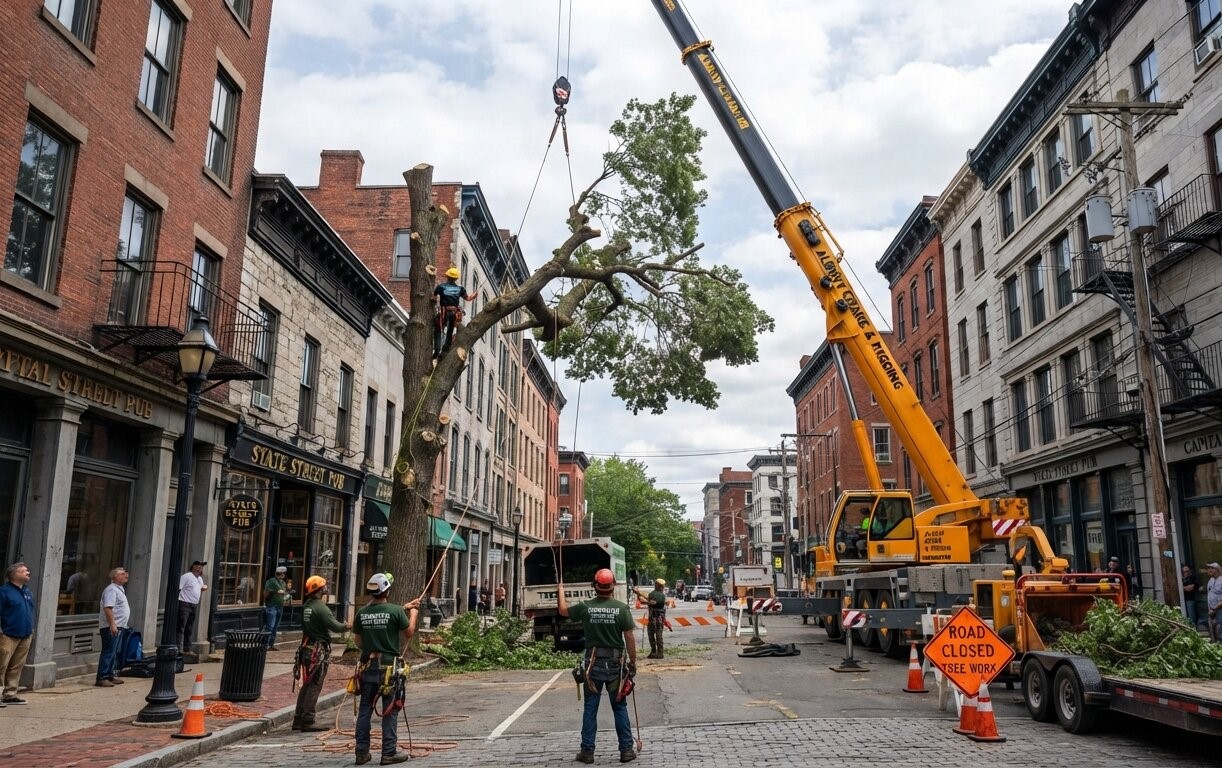
    Crane tree removal in Albany NY is often the right solution when a large or hazardous tree cannot be safely felled because buildings, vehicles, sidewalks, utilities, or limited landing space surround it. On State Street in Downtown Albany, crane assisted removal can provide controlled lifting of heavy tree sections away from sensitive areas.

    Crane Tree Removal Albany NY: What It Means

    Crane assisted tree removal is a specialized method of dismantling a tree when conventional removal does not provide enough space or control.

    Instead of dropping large sections into a limited landing zone, a properly rigged section can be supported, cut, lifted, and moved to a designated location.

    This can be especially valuable in Downtown Albany, where mature trees may be positioned close to buildings, streets, sidewalks, vehicles, utility infrastructure, and neighboring properties.

    The crane is not the entire removal solution.

    It is one component of a larger operation involving tree assessment, rigging, crane positioning, cutting, load control, ground crew coordination, and cleanup.

    When Is a Crane Required for a Tight-Space Tree Removal in Downtown Albany?

    A crane may be appropriate when there is insufficient room to safely drop or conventionally lower large sections of a tree.

    Common situations include:

    • A mature tree standing directly beside a building
    • Heavy trunk sections with no suitable landing zone
    • Large limbs extending over a roof or driveway
    • Trees surrounded by pavement or structures
    • Restricted backyard or side-yard access
    • Trees positioned close to sidewalks or roadways
    • Storm-damaged trees with unstable sections
    • Multiple structures surrounding the tree
    • Limited space for traditional lowering operations
    • A removal where large sections must be precisely controlled

    The decision should not be based on tree height alone.

    A professional evaluates the tree’s condition, structure, diameter, access, surrounding hazards, crane position, lifting requirements, and available landing areas before selecting the removal method.

    Why State Street Tree Removal Is Different

    A tree in an open backyard gives a crew considerably more room to work.

    A tree in a dense urban environment can be surrounded by obstacles on nearly every side.

    A State St Albany tree company may need to account for buildings, sidewalks, vehicles, streets, utility infrastructure, neighboring properties, pedestrians, and restricted equipment access.

    That makes the removal sequence much more important.

    The central question becomes:

    Where can each section go after it is cut?

    If there is no safe place for a heavy section to fall or be lowered, crane-assisted removal may provide another option.

    How a Crane Helps With Tight Urban Tree Removal

    A crane can support a properly secured section while the tree is dismantled.

    The section can then be lifted and moved toward a planned landing or processing area.

    This can reduce the need to drop heavy material through a narrow work area.

    For a tight urban area tree trimming or removal project, that additional control can be particularly useful around structures and other sensitive property.

    However, a crane does not eliminate risk.

    The tree still has to be evaluated, the rigging must be appropriate, the crane must be positioned correctly, and the operation must be coordinated by qualified personnel.

    Crane Assisted vs. Conventional Tree Removal

    The best removal method depends on the property not simply the size of the tree.

    Site ConditionConventional RemovalCrane-Assisted Removal
    Open lawn with clear landing zoneOften practicalUsually unnecessary
    Large tree beside buildingMore difficultOften useful
    Limited landing areaExtensive rigging may be requiredControlled lifting may help
    Heavy trunk sectionsMay require additional processingCrane can handle planned sections
    Tree over roofRequires careful loweringCan move sections away from structure
    Confined urban propertyMore challengingOften worth evaluating
    Road or sidewalk nearbyRequires work-zone planningMay improve material control
    Severe storm damageDepends on tree conditionMay assist with controlled removal
    Restricted accessMethod depends on siteCrane may work from strategic position

    This is why a professional site assessment matters.

    A crane should solve a specific site problem rather than being used simply because a tree is large.

    Step-by-Step: How Crane Tree Removal Works

    1. Inspect the Tree

    The first stage is understanding the tree.

    The crew evaluates species, size, trunk diameter, lean, branch structure, decay indicators, cracks, storm damage, and other visible defects.

    The surrounding property is assessed at the same time.

    That includes roofs, buildings, fences, driveways, sidewalks, vehicles, utilities, access points, and potential landing zones.

    2. Identify the Removal Hazards

    Urban tree work can involve several overlapping hazards.

    These can include falling branches, suspended loads, unstable tree sections, electrical lines, traffic, pedestrians, equipment movement, and restricted access.

    OSHA identifies falls, struck-by hazards, electrical hazards, chainsaws, wood chippers, cranes, and other equipment among the hazards associated with tree-care operations.

    The removal plan should address these conditions before cutting begins.

    3. Decide Whether a Crane Is Appropriate

    A crane may be considered when conventional rigging cannot provide enough control over the tree sections.

    The crew should consider:

    • Section weight
    • Crane capacity
    • Required reach
    • Working radius
    • Crane setup area
    • Ground conditions
    • Overhead clearance
    • Load path
    • Landing location
    • Nearby structures

    If the crane cannot be safely positioned or operated within appropriate limits, another removal method may be more appropriate.

    4. Plan the Crane Position

    Crane placement is a critical part of the operation.

    The crane needs sufficient access and an appropriate operating position for the planned lifts.

    The crew must account for the crane’s reach, lifting capacity, working radius, ground conditions, overhead hazards, and surrounding structures.

    Simply placing a crane close to a tree does not automatically make the project workable.

    5. Establish the Work Zone

    The work area should be controlled before major cutting begins.

    Workers, pedestrians, vehicles, and other people should be kept away from areas where suspended or falling material could create a hazard.

    For projects affecting public streets or sidewalks, additional traffic and pedestrian controls may be necessary.

    Albany’s published tree maintenance requirements address work-zone safety, pedestrian considerations, traffic protection, and coordination when work affects streets.

    6. Install the Rigging

    The selected tree section is connected to an appropriate rigging system.

    The rigging point must be suitable for the tree’s condition and the anticipated load.

    ANSI Z133 is the recognized American National Standard for arboricultural operations, including tree removal and related safety practices. OSHA identifies ANSI Z133 as a relevant consensus standard for tree care operations.

    Proper rigging is therefore a critical part of controlled crane-assisted removal.

    7. Cut the Planned Section

    Once the section is properly prepared and the work area is controlled, the cutting sequence begins.

    The crane supports the planned section while the tree crew performs the cut.

    The goal is controlled movement rather than uncontrolled falling.

    8. Lift and Move the Section

    After separation, the crane moves the section along the planned path.

    The section may be placed in a designated landing area or transferred for processing, depending on the project setup.

    This process is repeated until the tree has been dismantled.

    9. Process the Remaining Trunk

    Once the crown and major limbs are removed, the remaining trunk can be reduced into manageable sections.

    The exact sequence depends on the tree, crane position, section weight, and site conditions.

    10. Complete Cleanup

    Tree removal includes more than cutting.

    Branches, logs, chips, and other debris need to be processed and removed according to the agreed scope of work.

    Stump grinding can also be added when the property owner wants the remaining stump removed.

    What Is Zero-Impact Rigging?

    The term zero-impact rigging generally describes an approach intended to minimize uncontrolled contact with surrounding property.

    It should not be interpreted literally as a guarantee of zero disturbance.

    The goal is to control where sections travel and where they are placed.

    On a confined property, this can help reduce exposure to:

    • Roofs
    • Siding
    • Fences
    • Vehicles
    • Driveways
    • Landscaping
    • Sidewalks
    • Neighboring property

    The rigging system must be selected according to the tree and site.

    There is no universal “zero-impact” setup that works for every tree.

    Crane Removal for Trees Near Buildings

    Trees growing directly beside buildings present one of the strongest cases for considering a crane.

    A large tree may have no suitable direction for conventional felling.

    Its limbs may extend over a roof, and its trunk may be positioned between structures.

    Instead of allowing heavy sections to fall through a restricted area, a crane can potentially lift properly secured sections away from the building.

    For massive tree extraction crane projects, this can make the removal sequence more controlled and predictable.

    The crane’s reach and lifting capacity still need to match the actual site.

    What If the Tree Is Near a Road or Sidewalk?

    Roadside and sidewalk tree removal requires additional planning.

    A tree section falling into a roadway or pedestrian area can create a serious hazard even if no building is nearby.

    The crew may need to coordinate the work area around:

    • Traffic
    • Pedestrians
    • Parked vehicles
    • Sidewalk access
    • Driveways
    • Nearby businesses
    • Utility infrastructure

    Albany’s municipal tree-maintenance documents address traffic and pedestrian safety and specify that streets cannot be closed to traffic without appropriate permission.

    For a State Street project, the applicable City of Albany requirements should be confirmed before work begins.

    Does Albany Require a Tree Removal Permit?

    Permit requirements depend on the tree’s location and the circumstances of the work.

    The City of Albany municipal code includes tree and vegetation permit requirements for specified work involving trees in public streets and parks.

    It also addresses compliance with applicable OSHA requirements and recognized arboricultural standards.

    A private-property tree and a public-street tree should not automatically be treated as having identical requirements.

    For a Downtown Albany project, confirm the requirements that apply to the specific property and work area before scheduling the operation.

    How Much Does Crane Tree Removal Cost in Albany NY?

    There is no reliable single price for crane assisted tree removal.

    The cost can depend on:

    • Tree height
    • Trunk diameter
    • Species
    • Tree condition
    • Number of sections
    • Section weight
    • Crane size
    • Crane reach
    • Crane setup
    • Rigging complexity
    • Access limitations
    • Building proximity
    • Traffic controls
    • Pedestrian controls
    • Debris volume
    • Hauling
    • Stump grinding
    • Permitting or municipal coordination

    A crane is only one part of the project.

    A professional estimate should account for the complete operation rather than presenting an isolated crane charge.

    Why Site Conditions Change Tree Removal Pricing

    Two trees can have almost identical dimensions and still require completely different removal strategies.

    One might stand in a large backyard with an open lawn.

    The other could stand beside a building on a narrow urban property.

    The second project may require specialized rigging, additional labor, crane equipment, traffic controls, and more complex cleanup.

    That is why a site-specific written estimate is more useful than relying on a generic online tree-removal price.

    Can a Crane Remove a Storm Damaged Tree?

    Sometimes, but storm damage can make tree removal significantly more complicated.

    A storm damaged tree may have:

    • Broken limbs
    • Split stems
    • Hanging branches
    • Root damage
    • Uprooting
    • Altered weight distribution
    • Hidden structural damage

    A crane does not automatically make an unstable tree safe.

    The tree should be evaluated before determining the appropriate removal strategy.

    OSHA specifically recognizes the hazards associated with tree-removal operations, including falling material, unstable conditions, elevated work, equipment, and electrical hazards.

    When a Crane Is Not the Best Choice

    Crane assisted removal is specialized equipment and is not necessary for every tree.

    A crane may be unnecessary when:

    • The tree has a large open landing zone
    • Conventional sectional removal is straightforward
    • Crane access is unavailable
    • Ground conditions are unsuitable
    • The required reach exceeds practical equipment limits
    • The project can be safely completed using standard tree-removal methods

    The safest and most practical method should be selected after evaluating the actual site.

    How to Choose a Downtown Albany Tree Cutting Service

    For a complex tree removal project, price should not be the only consideration.

    Ask the contractor:

    How will you remove the tree?

    You should receive a clear explanation of the proposed removal method.

    Where will the crane be positioned?

    The company should understand access, reach, working radius, and surrounding obstacles.

    How will the sections be controlled?

    Ask about rigging and the planned load path.

    How will pedestrians and vehicles be protected?

    This is particularly important for properties near State Street, sidewalks, and roadways.

    What does the written estimate include?

    Confirm whether crane work, removal, hauling, cleanup, and stump grinding are included or priced separately.

    Is the contractor properly insured?

    For complex tree work, verify appropriate insurance coverage before authorizing the project.

    Why Arboricultural Expertise Matters

    A crane operator controls the crane.

    The tree crew must understand the tree.

    Safe tree removal requires knowledge of tree structure, rigging, cutting techniques, load movement, work-zone hazards, and changing site conditions.

    ANSI Z133 provides safety requirements and guidance for arboricultural operations, while OSHA provides applicable workplace safety requirements and tree-care guidance.

    The best result comes from combining appropriate equipment with competent arboricultural planning.

    KD Tree Service Albany NY for Complex Tree Removal

    KD Tree Service Albany NY provides tree removal, emergency tree service, tree trimming, stump grinding, storm cleanup, and arborist related services in Albany and the surrounding Capital Region.

    For a difficult tree, the first step is understanding the site.

    That means evaluating the tree, surrounding structures, access, potential hazards, landing areas, and the appropriate removal method.

    Depending on the property, that may involve conventional sectional removal, advanced rigging, or crane assisted removal.

    For homeowners and property managers dealing with a large or hazardous tree near State Street or elsewhere in Albany, a professional assessment can help determine the safest practical approach.

    Need a difficult tree evaluated? Call KD Tree Service Albany NY at (518) 625-8733 for a professional assessment and written estimate.

    Frequently Asked Questions

    When is a crane required for a tight space tree removal in Downtown Albany?

    A crane may be required when a tree is too large, heavy, hazardous, or confined for conventional removal methods to provide adequate control. Buildings, vehicles, sidewalks, utilities, and limited landing space are common reasons a crane may be considered.

    How does crane tree removal work?

    The tree is dismantled into planned sections. Properly rigged sections are supported by the crane, cut according to the removal plan, lifted, and moved to a predetermined landing or processing area.

    Is crane tree removal safer than traditional tree removal?

    A crane can provide additional control over heavy sections in certain conditions. However, crane operations introduce their own hazards and require appropriate equipment, rigging, planning, and trained personnel.

    Can a crane remove a tree between buildings?

    Potentially. If the crane can be safely positioned and has sufficient reach and lifting capacity, controlled lifting may allow sections to be removed from a confined location where conventional felling is impractical.

    Can crane-assisted removal protect my roof?

    It can reduce uncontrolled drops when the operation is properly planned. Controlled lifting may allow sections to be moved away from a roof rather than dropped toward it.

    Does every large tree need a crane?

    No. A large tree in an open yard may be removable without a crane, while a smaller tree in an extremely confined location may require specialized equipment.

    What is zero-impact rigging?

    Zero-impact rigging generally refers to an approach intended to minimize uncontrolled contact with surrounding property. It should not be understood as a literal guarantee of zero disturbance.

    How much does crane tree removal cost in Albany NY?

    The price depends on tree size, condition, crane requirements, access, rigging, labor, traffic controls, cleanup, hauling, and other project requirements. A site-specific written estimate provides a more useful cost assessment.

    Can a crane remove a storm damaged tree?

    A crane may be useful for certain storm damaged trees, but unstable trees can present additional hazards. A professional assessment should determine the appropriate removal method.

    Is crane tree removal available in Downtown Albany?

    Crane assisted removal may be appropriate for some Downtown Albany properties when the crane can be safely positioned and controlled lifting is needed. The property’s access and surrounding conditions must be evaluated first.

    What should I do if a tree is leaning toward my building?

    Keep people away from the potential fall area and do not attempt to climb or cut the tree yourself. Contact a qualified tree professional for an assessment, particularly if the tree has storm damage, cracks, broken roots, or other visible structural problems.

    Does State Street tree removal require a road closure?

    Not necessarily. Requirements depend on how the work affects traffic and public space. If a closure or traffic control is necessary, applicable City of Albany requirements should be confirmed before work begins.

    Final Takeaway

    Crane tree removal Albany NY is primarily a controlled-removal solution for trees where conventional methods do not provide enough space, access, or control.

    On State Street and throughout Downtown Albany, buildings, sidewalks, vehicles, utilities, and limited work areas can make a seemingly ordinary tree removal significantly more complex.

    A crane may provide a practical solution when heavy sections need to be lifted away from structures or confined areas.

    But the crane is only one part of the operation.

    The complete plan should account for:

    Tree condition + access + crane position + rigging + load path + structures + traffic + pedestrians + landing area + cleanup.

    If you have a large, hazardous, storm damaged, or difficult-to-access tree in Albany, KD Tree Service Albany NY can evaluate the site and determine whether crane assisted removal or another professional removal method is appropriate.

    Call (518) 625-8733 for a professional assessment and written estimate.

  • Historic Property Tree Removal Troy NY: How Professionals Protect Historic Foundations

    Historic Property Tree Removal Troy NY: How Professionals Protect Historic Foundations

    Historic property tree removal in Troy NY requires careful assessment of the tree, foundation, root zone, building, access, utilities, and surrounding targets. Professionals may use sectional dismantling, controlled rigging, climbing techniques, or crane assistance to remove hazardous trees while minimizing unnecessary impact on historic masonry and property.

    Troy, NY is known for its exceptionally rich architectural heritage, including historic brownstones, churches, commercial buildings, rowhouses, and residential properties dating from earlier periods of the city’s development.

    That makes tree removal beside a historic property very different from removing a tree in an open suburban yard.

    A mature tree may be growing close to a masonry foundation, extending over a roof, sitting behind a narrow building, or occupying a small backyard with limited equipment access.

    In these situations, the objective is not simply to cut the tree down.

    The objective is to control the entire removal process from the first cut to the final cleanup while protecting the building, foundation, root zone, landscaping, utilities, and surrounding property.

    What Is Historic Property Tree Removal in Troy?

    Historic property tree removal Troy refers to professional tree removal performed around properties where the building, site, landscape, or surrounding streetscape has historic or architectural significance.

    The work can involve considerably more planning than conventional tree removal.

    A professional assessment may consider:

    • Tree species and size
    • Tree condition and structural defects
    • Lean and potential failure direction
    • Foundation proximity
    • Root-zone conditions
    • Roof and masonry exposure
    • Sidewalks and driveways
    • Overhead utility lines
    • Neighboring structures
    • Equipment access
    • Available landing zones
    • Rigging possibilities
    • Crane access
    • Local historic-district requirements

    This creates a clear relationship between the tree, property, foundation, root zone, removal method, and historic setting.

    Why Troy’s Historic Properties Require Extra Planning

    Troy’s historic districts protect architectural character, and the city’s Historic District & Landmarks Review Commission reviews proposed work affecting properties within designated districts. The city identifies historic districts as areas containing buildings and streetscapes that convey Troy’s local heritage.

    Troy’s preservation regulations also cover designated landmarks and properties within historic districts. City Code Chapter 47 provides for review of certain construction, demolition, and alterations before applicable permits are issued.

    That does not mean every tree automatically requires historic approval.

    Instead, property owners should determine whether their specific property and proposed exterior work are subject to local review before scheduling the project.

    The City of Troy specifically recommends that owners discuss questions about historic-property work with the Planning Department.

    How Do Professionals Remove Trees Near Historic Foundations in Troy NY?

    The process normally begins with a site specific assessment, not a chainsaw.

    An arborist evaluates the tree and identifies everything that could become a target during removal.

    That includes the building, roof, foundation, fence, sidewalk, vehicles, utilities, landscaping, and neighboring structures.

    The removal plan is then built around the available space.

    A difficult tree may be removed in sections rather than felled in one piece.

    Branches can be lowered under controlled conditions, while larger trunk sections may require specialized rigging or crane assistance.

    The safest method depends on the actual tree and site.

    A Typical Professional Workflow

    1. Inspect the tree

    Evaluate species, size, defects, lean, deadwood, root-zone conditions, and overall structural condition.

    2. Identify targets

    Map the historic building, foundation, roof, utilities, vehicles, sidewalks, landscaping, and neighboring structures.

    3. Evaluate access

    Determine whether workers and equipment can reach the tree safely without unnecessary disturbance.

    4. Choose the removal method

    Possible approaches include climbing, sectional dismantling, controlled rigging, crane assistance, or a combination.

    5. Establish protection zones

    Protect sensitive areas from unnecessary equipment movement, falling material, and uncontrolled loads.

    6. Remove the canopy

    Branches are removed progressively rather than allowing large pieces to fall toward the structure.

    7. Remove the trunk

    Sections are cut and controlled according to their size, weight, position, and available landing area.

    8. Complete cleanup

    Wood, branches, and debris are removed, and the site is left in an orderly condition.

    Historic Property Tree Removal: What Should Be Protected?

    Property FeaturePotential ConcernRemoval Planning Response
    Historic masonryImpact from falling woodControlled lowering or lifting
    FoundationGround/root-zone disturbanceEvaluate site before equipment placement
    RoofFalling limbs or trunk sectionsSectional dismantling and controlled rigging
    Brownstone/brick detailsPhysical impactEstablish protected work zones
    SidewalkHeavy equipment and falling materialPlan access and landing areas
    LandscapingDamage from equipment or debrisUse designated movement paths
    UtilitiesContact or clearance issuesIdentify lines before work
    Neighboring buildingsLimited fall zoneControl section movement
    Narrow backyardRestricted working areaTight-access removal strategy
    Large trunkHigh section weightRigging or crane-assisted handling

    How to Protect Foundation Tree Roots

    The phrase foundation root protection can sound simple, but roots and foundations require context.

    A tree’s roots interact with soil, moisture, pavement, drainage, and surrounding structures.

    Roots growing near a foundation do not automatically mean that the tree is damaging the building.

    Likewise, removing a tree does not mean every nearby root should be excavated or disturbed.

    A professional should first understand the existing conditions.

    How to Protect Foundation Tree Roots During Removal

    The practical objective is to minimize unnecessary soil and root-zone disturbance.

    Depending on the property, that can involve:

    • Establishing equipment exclusion areas
    • Choosing an appropriate access route
    • Avoiding unnecessary excavation
    • Limiting repeated equipment travel
    • Keeping heavy loads away from sensitive areas when practical
    • Using controlled rigging instead of uncontrolled drops
    • Identifying exposed or previously damaged roots
    • Avoiding unnecessary root cutting
    • Planning where branches and logs will be placed

    The correct approach depends on the site’s actual conditions.

    A professional should never promise that tree removal will have literally “zero impact.”

    A better standard is controlled, planned, and minimized impact.

    Can Tree Roots Damage a Historic Foundation?

    Sometimes roots and trees can contribute to problems around structures, but the answer is not as simple as “roots near foundations are dangerous.”

    Existing cracks, drainage conditions, soil movement, foundation construction, tree species, root distribution, and site history all matter.

    A tree assessment should therefore look at the tree and the property together.

    If there is an existing foundation concern, the homeowner may also need an appropriately qualified building or structural professional rather than assuming the tree is the cause.

    This distinction is especially important with older Troy buildings.

    Crane Assisted Tree Cutting Troy: When Is a Crane Useful?

    Crane assisted tree cutting Troy can be valuable when a large tree is positioned where conventional removal would create unnecessary exposure to the building or surrounding property.

    A crane can lift selected tree sections instead of requiring them to be dropped into a restricted landing zone.

    That can be especially useful when:

    • The tree is large
    • The building is immediately adjacent
    • There is little room for falling sections
    • The tree extends over a roof
    • A rear yard has limited access
    • Heavy sections need controlled movement
    • Ground-level handling would be difficult

    However, a crane is not automatically the right solution.

    The site must have suitable access, setup space, ground conditions, clearance, and a safe lifting plan.

    The crane itself becomes part of the site assessment.

    Crane Removal vs. Controlled Rigging

    SituationPotential ApproachWhy
    Large open yardConventional removalMore room for controlled falling
    Tight backyardSectional dismantlingReduces uncontrolled fall distance
    Tree beside historic masonryRiggingHelps control material movement
    Large tree over a roofCrane assistanceCan lift sections away from structure
    Limited equipment accessClimbing + riggingCan reduce ground-equipment needs
    Complex urban propertyCombined approachMethod can change by removal stage

    Tight Spot Arborist Troy NY: Why Access Matters

    A tight spot arborist Troy NY project can be significantly more complicated than a tree removal on an open lot.

    Imagine a mature tree behind a Troy rowhouse.

    The building occupies most of the frontage.

    A narrow passage leads to the backyard.

    The tree is positioned close to the rear masonry wall, while branches extend above the roof.

    There is no safe direction in which the entire tree can simply be dropped.

    That changes the entire removal strategy.

    The arborist has to think about access, climbing, rigging, section size, landing areas, equipment positioning, and the building’s vulnerable features simultaneously.

    That is why a site visit matters.

    What Does No Impact Tree Rigging Really Mean?

    No impact tree rigging should not be interpreted as a literal promise that tree removal creates zero physical impact.

    In professional terms, the goal is to control and minimize impact.

    Rigging allows tree sections to be lowered in a planned manner rather than simply dropped.

    That can help reduce the likelihood of uncontrolled contact with:

    • Historic brick
    • Brownstone
    • Windows
    • Roofs
    • Porches
    • Fences
    • Gardens
    • Sidewalks
    • Vehicles
    • Neighboring buildings

    The actual rigging method should be selected according to the tree, section weight, anchor configuration, equipment, and surrounding targets.

    Historic District Tree Care in Troy NY

    Historic district tree care should consider both the tree and the property’s architectural setting.

    Troy’s official preservation resources explain that local historic-district requirements are intended to protect the architectural character of designated areas.

    The city’s preservation guidelines also distinguish local historic designation from National Register listing.

    A property can have historic significance without every type of designation carrying the same local regulatory requirements.

    For homeowners, the practical takeaway is simple:

    Confirm the property’s designation and applicable City of Troy requirements before beginning exterior work.

    Troy Historic Districts and Tree Work: What Homeowners Should Know

    The City of Troy states that exterior modifications within its historic districts may require review and approval before work begins.

    The city’s Historic District & Landmarks Review Commission works with owners and contractors on proposed work affecting the exterior appearance of buildings in local historic districts.

    Troy’s official code also includes an exception for exterior work that the Director of Code Enforcement determines is required for public safety because of dangerous or unsafe conditions.

    Because requirements can depend on the specific property and circumstances, homeowners should verify the current rules directly with the City rather than relying on a general online statement.

    A Realistic Historic Troy Tree Removal Scenario

    Consider an older Troy home with a mature tree growing in a narrow rear yard.

    After several severe weather events, the homeowner notices a large dead limb extending toward the roof.

    The trunk is too close to the building for conventional felling.

    The backyard also has limited access, while the property’s historic masonry makes uncontrolled impacts particularly undesirable.

    A professional crew would first identify the tree’s defects and the surrounding targets.

    The roof, masonry wall, foundation area, fence, utility lines, and available landing zones would all become part of the removal plan.

    Instead of cutting the tree at its base and hoping it falls safely, the crew could dismantle the canopy in controlled sections.

    Depending on the site’s access and tree size, larger sections might be lowered with rigging or lifted using a crane.

    The important point is not that every Troy tree requires a crane.

    It is that the removal method should be selected around the property not the other way around.

    When Tree Removal May Not Be Necessary

    A dangerous-looking tree does not automatically need to be removed.

    Depending on the tree’s condition and risk, an arborist may consider:

    • Deadwood removal
    • Structural pruning
    • Crown management
    • Monitoring
    • Risk reduction
    • Cabling or bracing in appropriate circumstances
    • Tree removal when risk cannot reasonably be mitigated

    The correct recommendation depends on the individual tree.

    A good assessment should explain why removal is recommended and whether another reasonable management option exists.

    Warning Signs That Deserve an Arborist Assessment

    Consider arranging a professional evaluation when you see:

    • A significant lean toward a building
    • Large dead branches above a roof
    • Major trunk cavities or cracks
    • Broken limbs after a storm
    • Root-zone disturbance
    • Soil movement around the tree
    • Visible root damage
    • A tree growing extremely close to masonry
    • A tree with no safe fall zone
    • A large tree in a confined backyard

    The presence of one symptom does not automatically establish that a tree is hazardous.

    The combination of tree condition + target + site conditions is what makes a professional assessment valuable.

    Why Experience Matters for Historic Properties

    Historic Troy properties can contain architectural features that are difficult or expensive to repair.

    The city’s historic resources describe Troy’s architectural heritage as including styles such as Italianate, Greek Revival, Gothic Revival, Romanesque, Queen Anne, and Beaux-Arts, with many historic structures retaining original character and features.

    That context matters when planning tree work.

    A removal crew should think beyond the trunk.

    The working plan should account for the:

    Tree → Canopy → Trunk → Root Zone → Foundation → Masonry → Roof → Streetscape → Utilities → Access

    This interconnected approach is what makes historic property tree removal different from ordinary open lot tree cutting.

    What to Ask Before Hiring a Tree Service in Troy

    Before accepting an estimate, ask:

    1. Will someone inspect the property before quoting the work?
    2. How will the tree be removed given its proximity to the foundation?
    3. Will the crew use controlled rigging if sections cannot safely fall?
    4. Would crane assistance make sense for this particular site?
    5. How will equipment access affect the root zone and landscaping?
    6. How will the roof, masonry, sidewalk, and surrounding property be protected?
    7. Is the company properly insured?
    8. Does the estimate include cleanup?
    9. Will stump grinding or stump removal be handled separately?
    10. Should the homeowner confirm historic-district requirements before work begins?

    A professional answer to these questions is usually more valuable than simply choosing the lowest estimate.

    Why KD Tree Service Can Help Troy Property Owners

    KD Tree Service Albany NY serves the Capital Region and offers services including tree removal, crane-assisted tree removal, emergency tree service, pruning, stump grinding, arborist consultation, and related tree care. For a difficult Troy property, the conversation should begin with the actual site conditions.

    A tree close to a historic foundation may require a different approach from a tree standing in an open yard.

    KD Tree Service Albany NY can evaluate the tree removal requirements and discuss the appropriate approach for access, surrounding structures, and cleanup.

    For homeowners considering tree removal near a historic Troy property, a site-specific estimate is the logical first step.

    Frequently Asked Questions

    How do professionals remove trees near historic foundations in Troy NY?

    Professionals first assess the tree, foundation, root zone, building, utilities, access, and surrounding targets. They may then use sectional dismantling, controlled rigging, climbing techniques, crane assistance, or a combination to manage each section safely.

    What is the best way to protect a foundation during tree removal?

    The best approach is to plan the removal around the building and root zone, minimize unnecessary equipment movement and excavation, and use controlled handling of branches and trunk sections where appropriate.

    Is crane assisted tree cutting appropriate for every Troy property?

    No. Crane removal depends on access, setup space, ground conditions, tree size, clearance, lifting requirements, and the surrounding site.

    Can a tree service remove a tree in a Troy historic district without approval?

    Not necessarily. Troy’s historic-district regulations can require review of exterior work. Property owners should confirm the requirements for their specific property with the City of Troy before work begins.

    Does being on the National Register mean the same thing as being in a Troy local historic district?

    No. The City of Troy explains that National Register designation and local historic-district designation are separate systems, even though some properties may have both designations.

    Should roots near an old foundation automatically be removed?

    No. Root proximity alone does not prove that roots are damaging a foundation. The tree, soil, drainage, foundation condition, and root characteristics should be evaluated before deciding what action is appropriate.

    Is controlled rigging better than simply dropping branches?

    Where the site is confined or sensitive, controlled rigging can provide greater control over where sections travel. The appropriate method depends on the tree and the site’s specific hazards.

    Final Takeaway: Safe Tree Removal Starts With the Property

    Historic property tree removal Troy requires a different mindset from ordinary tree cutting.

    The building is part of the removal plan.

    So are the foundation, root zone, roof, masonry, sidewalk, utilities, neighboring structures, access route, and historic setting.

    For a difficult tree, the right question is not simply:

    “How do we cut it down?”

    It is:

    “How do we remove it while controlling the risks to everything around it?”

    That may mean sectional dismantling, controlled rigging, crane assisted removal, or a combination of techniques.

    And if the property is located within a Troy historic district, homeowners should confirm applicable review requirements with the City before exterior work begins.

    For professional tree removal, crane assisted services, stump grinding, pruning, and arborist consultation in the Capital Region, contact KD Tree Service Albany NY for a site-specific evaluation.

    Need to remove a tree near a historic Troy foundation? Get the property assessed before choosing the removal method.

    Request a Tree Service Estimate from KD Tree Service Albany NY

  • Spotted Lanternfly Control & Tree Damage in Voorheesville, NY

    Spotted Lanternfly Control & Tree Damage in Voorheesville, NY

    Spotted lanternfly treatment Voorheesville NY starts with correct identification, early detection, spread prevention, and integrated pest management. For homeowners in Voorheesville, the key warning signs are egg masses, nymphs, adults, honeydew, sooty mold, and unusual sap flow. A suspected infestation should be evaluated before choosing pest treatment or tree removal.

    What Is the Spotted Lanternfly?

    The Spotted Lanternfly (Lycorma delicatula) is an invasive plant hopper originally from Asia. It feeds on plants using piercing-sucking mouthparts and has been associated with more than 70 plant species.

    New York State identifies spotted lanternfly as a threat to agriculture and forestry as well as a nuisance pest.

    Cornell Integrated Pest Management (IPM) recommends an integrated approach that combines monitoring, spread prevention, physical controls, and appropriate professional treatment when necessary.

    For homeowners in Voorheesville, NY, the first step is not automatically spraying or removing a tree.

    The first step is determining whether the insect is actually spotted lanternfly and understanding whether the activity is affecting the tree’s health or simply creating a nuisance.

    Why Spotted Lanternfly Matters in Voorheesville, NY

    Spotted lanternfly has continued to spread in New York, and Cornell held a dedicated Managing Spotted Lanternfly at Home session in August 2026 because the pest can occur around residential properties and buildings.

    That makes seasonal monitoring valuable for homeowners in the Capital Region.

    However, a county level distribution map does not mean every property within a county is infested. Cornell specifically warns that reported distribution maps are regional and county-based, while an actual infestation may cover only part of a county.

    So homeowners should evaluate what they actually see on their property rather than assuming every unusual insect is SLF.

    ⚡ Voorheesville Local Support

    Unsure If Your Tree Has Spotted Lanternfly?

    Get a quick local arborist inspection before making costly decisions.

    How to Identify a Spotted Lanternfly

    Spotted lanternflies look different as they move through their life cycle.

    Homeowners may encounter egg masses during the colder months, nymphs during earlier active stages, and adults later in the season.

    Look for These Signs

    • Gray or putty-like egg masses
    • Black-and-white spotted nymphs
    • Red-spotted later-stage nymphs
    • Adults with spotted wings
    • Large numbers of insects on trunks or branches
    • Sticky honeydew beneath infested areas
    • Black sooty mold
    • Unusual sap or weeping from tree surfaces

    Cornell recommends photographing suspected insects, documenting the location, and reporting sightings when appropriate, particularly where a population is not already known.

    Do not diagnose spotted lanternfly from one symptom alone.

    For example, sap on a tree trunk can have several possible causes. The insect, tree species, location, feeding activity, wounds, and overall tree condition all need to be considered.

    Spotted Lanternfly Signs: Quick Homeowner Guide

    What You NoticeWhat It Could MeanWhat to Check Next
    Gray egg massPossible overwintering SLF eggsConfirm identification
    Black-and-white nymphsImmature SLFInspect nearby plants
    Red-spotted nymphsLater immature stageMonitor activity
    Adult spotted insectsActive SLF populationPhotograph and follow current NYS guidance
    Sticky surfacesPossible honeydewInspect trees above
    Black sooty moldMold growing on honeydewFind the feeding source
    Wet or bleeding barkPossible insect activity or tree injuryEvaluate other symptoms
    Dead branchesSeparate tree-health issueConsider professional inspection
    Trunk decay or major cracksPotential structural concernObtain a tree-risk assessment

    This distinction is important because pest presence and tree safety are not the same thing.

    🚨 Noticed Any Of These Warning Signs?

    Get a Fast Tree Hazard & Pest Assessment

    Identify insect activity versus real structural damage before taking action.

    How to Kill Spotted Lanternfly Eggs

    One of the most common homeowner questions is how to kill spotted lanternfly eggs.

    Egg masses can occur on tree bark, but they can also be attached to hard outdoor surfaces and movable objects.

    Cornell recommends egg-mass destruction as one component of spotted lanternfly management.

    Inspect areas such as:

    • Tree trunks
    • Lower branches
    • Fence posts
    • Firewood
    • Outdoor furniture
    • Landscaping materials
    • Vehicles
    • Trailers
    • Equipment
    • Other outdoor hard surfaces

    New York State guidance can vary depending on where a sighting occurs. Because the official reporting requirements can change as populations spread, homeowners should check the current NYS instructions when they discover a suspected SLF.

    For a suspected sighting in an area where reporting is required, NYS currently instructs residents to photograph the insect, collect a sample, and contact the state’s SLF responders.

    Why Egg-Mass Inspection Matters

    Egg masses are particularly important because they can survive through winter and produce another generation.

    Checking outdoor items is also a spread-prevention strategy.

    An egg mass attached to a vehicle, trailer, piece of furniture, or landscaping material can potentially travel to another property.

    When Should You Look for Lanternfly Eggs?

    Winter is an important inspection period because egg masses remain after adult activity declines.

    A practical seasonal sequence is:

    Fall → Egg laying → Winter → Egg masses remain → Spring → Hatch → Summer → Nymphs and adults

    Exact timing can vary with weather and local conditions.

    Cornell maintains a spotted lanternfly prediction model through NEWA that tracks development based on seasonal conditions.

    For homeowners, the key lesson is simple:

    Do not wait until you see large numbers of adult lanternflies to begin inspecting your property.

    Lanternfly Host Trees in Albany and Voorheesville

    Spotted lanternfly has a broad host range.

    Tree-of-heaven (Ailanthus altissima) is an especially important host, while New York State identifies crops and trees including apple, grape, hops, maple, and walnut among plants affected by SLF.

    That means homeowners searching for lanternfly host trees Albany should think beyond one species.

    Important Host Plants Include:

    • Tree-of-heaven
    • Maple
    • Walnut
    • Apple
    • Grape
    • Hops
    • Other susceptible plants

    Finding SLF on a host tree does not automatically mean the tree should be removed.

    The correct response depends on infestation level, tree condition, location, season, and the management objective.

    🍂 Have Host Trees On Your Property?

    Protect Your Maples, Fruit Trees & Property

    Schedule an egg mass inspection or seasonal treatment before the next hatch.

    How Does a Lanternfly Infestation Damage Trees?

    Spotted lanternflies feed on plant fluids.

    When populations become heavy, feeding can stress susceptible plants. The insects also produce honeydew, a sugary waste material that accumulates on foliage and surfaces beneath infested trees.

    Honeydew can make:

    • Decks sticky
    • Vehicles difficult to clean
    • Patios messy
    • Leaves coated
    • Outdoor furniture sticky

    Sooty mold can grow on honeydew deposits, creating black, mold-like buildup.

    Cornell notes that spotted lanternflies rarely cause enough damage to landscape trees to require treatment solely for tree health.

    That is an important distinction for homeowners.

    A large infestation may be unpleasant and messy without meaning the tree is immediately dangerous.

    What Is Tree Sap Bleeding?

    Tree sap bleeding or weeping is sometimes associated with suspected spotted lanternfly activity.

    But sap alone does not prove an SLF infestation.

    Sap may also be associated with:

    • Bark wounds
    • Insect activity
    • Disease
    • Physical damage
    • Environmental stress
    • Other tree-health problems

    Look for multiple indicators together.

    If sap is accompanied by large numbers of lanternflies, honeydew, or sooty mold, the possibility of SLF activity becomes more relevant.

    If sap is accompanied by decay, cracks, cavities, dead limbs, or significant canopy decline, the tree may have a separate health or structural issue requiring professional evaluation.

    Voorheesville Tree Pest Control: When Should You Call a Professional?

    Professional Voorheesville tree pest control can be useful when:

    • You cannot confidently identify the insect
    • Large numbers of lanternflies are present
    • Honeydew is accumulating heavily
    • The tree appears stressed
    • You repeatedly find egg masses
    • A valuable landscape tree is affected
    • You are unsure whether treatment is necessary
    • Pest activity is occurring alongside structural tree problems

    Cornell’s IPM framework includes monitoring, traps, sticky bands, circle traps, egg-mass destruction, insecticides, biological control research, trap trees, and vacuum removal.

    The appropriate method depends on the property and situation.

    A professional should first identify the pest and assess the tree before recommending a treatment.

    🌳 Need Professional Pest Evaluation?

    Speak With a Local Certified Arborist Today

    Get expert guidance on treatment options or structural tree health.

    What Is an Arborist Tree Injection?

    An arborist tree injection is a professional method of delivering certain systemic treatments into a tree.

    Cornell’s current SLF management guidance identifies trunk injections, bark sprays, and soil drenches among methods used for systemic insecticides.

    However, an injection is not automatically appropriate for every tree or every lanternfly sighting.

    Treatment decisions depend on:

    1. Pest identification
    2. Tree species
    3. Tree health
    4. Infestation severity
    5. Timing
    6. Treatment objective
    7. Current product labeling
    8. New York requirements

    For residential properties, chemical treatment should be handled by appropriately qualified professionals when necessary.

    The goal should be targeted management, not unnecessary treatment.

    Spotted Lanternfly Treatment in NY: Why IPM Matters

    The strongest modern approach to spotted lanternfly treatment in NY is Integrated Pest Management.

    IPM means using several compatible strategies rather than automatically relying on one pesticide or one control method.

    Cornell identifies stopping the spread as a central part of SLF management.

    For a homeowner, the process can be simplified to:

    Identify → Monitor → Prevent Spread → Manage → Reassess

    This approach makes sense because the best strategy can change depending on the insect’s life stage and the condition of the tree.

    Can Spotted Lanternflies Spread From One Property to Another?

    Yes.

    Human transportation is an important pathway for spotted lanternfly spread.

    Adults and egg masses can hitchhike on vehicles, equipment, furniture, firewood, trailers, and other outdoor materials. Cornell identifies transportation as an important part of SLF spread prevention.

    Before moving outdoor items from an area where SLF is present, inspect them carefully.

    Check:

    • Cars and trucks
    • Trailers
    • Firewood
    • Outdoor furniture
    • Landscaping equipment
    • Recreational equipment
    • Building materials
    • Other outdoor items

    Stop the spread before it starts.

    🚫 Stop The Spread On Your Property

    Moving Equipment or Yard Materials in Voorheesville?

    Schedule a rapid property evaluation to keep your yard pest-free.

    Is Spotted Lanternfly a Reason to Remove a Tree?

    No, not by itself.

    Finding spotted lanternflies on a tree does not automatically justify tree removal.

    Tree removal is a separate decision based on structural condition, defects, decay, deadwood, root problems, risk to people or property, and overall tree health.

    Cornell specifically notes that SLF rarely damages landscape trees enough to require treatment for tree health alone.

    This means homeowners should distinguish:

    Pest problem ≠ automatic tree-removal problem

    A healthy tree may need monitoring or pest management.

    A structurally hazardous tree may need professional attention regardless of whether lanternflies are present.

    Lanternfly Infestation vs. Dangerous Tree

    SituationPrimary ConcernBest Next Step
    Few suspected insectsIdentificationConfirm the pest
    Egg massesFuture SLF emergenceFollow current NYS guidance
    Heavy honeydewActive feedingInspect the tree and canopy
    Sooty moldHoneydew accumulationIdentify the source
    Dead branchesFalling-limb riskTree inspection
    Trunk decayStructural weaknessProfessional assessment
    Large cracksPotential failure riskPrompt evaluation
    Root damageTree stabilityProfessional assessment
    Severe lean with root disturbancePossible failurePrompt tree-risk evaluation

    This is where homeowners often make an expensive mistake.

    Do not confuse an insect infestation with a hazardous tree.

    How Do I Protect My Yard’s Trees From Spotted Lanternfly in Voorheesville?

    The best starting point is regular inspection and early identification.

    Walk around the property and inspect both trees and nearby outdoor surfaces.

    7-Step Voorheesville SLF Checklist

    1. Inspect tree trunks

    Look for egg masses, nymphs, adults, wounds, and unusual activity.

    2. Check lower branches

    Pay particular attention to areas where insects congregate.

    3. Inspect hard surfaces

    Egg masses can occur away from trees.

    4. Look for honeydew

    Sticky surfaces beneath a tree can indicate feeding activity.

    5. Check for sooty mold

    Black growth may develop where honeydew accumulates.

    6. Photograph suspicious insects

    Clear photographs help with identification and reporting.

    7. Verify current NYS guidance

    Reporting rules and known population information can change.

    📋 Completed The Checklist?

    Found Signs Of Spotted Lanternfly In Your Yard?

    Get a professional local inspection and targeted IPM treatment plan today.

    What Should a Voorheesville Homeowner Do After Finding a Suspected SLF?

    First, document the sighting.

    Take clear photographs of the insect, egg mass, or infestation and note where you found it.

    New York State currently instructs residents outside its listed no-report counties to report SLF sightings, collect a sample, and contact the state’s SLF responders. Albany County is not included in the current NYS list of counties exempt from reporting.

    Because these instructions can change, verify the current NYS guidance at the time of the sighting.

    Cornell’s reported-distribution map is also useful for understanding regional status, but Cornell warns that county-level shading does not mean every property in that county is infested.

    Spotted Lanternfly Seasonal Calendar for Voorheesville

    SeasonWhat to Look ForMain Property Priority
    WinterEgg massesInspect trunks and outdoor surfaces
    Early SpringNewly emerged nymphsMonitor host plants
    Late SpringDeveloping nymphsWatch tree trunks and vegetation
    SummerNymphs and adultsMonitor activity and honeydew
    Late SummerIncreasing adult activityInspect susceptible trees
    FallAdults and new egg massesCheck trees and movable items
    After adult activity declinesOverwintering eggsPrepare for winter inspection

    Weather can shift insect development, so these periods are approximate.

    Cornell’s NEWA prediction model can provide more precise seasonal development information based on weather conditions.

    What Are the Biggest Mistakes Homeowners Make?

    Mistake 1: Removing a tree immediately

    SLF presence does not automatically mean the tree is unsafe.

    Mistake 2: Treating every insect as SLF

    Correct identification matters.

    Mistake 3: Looking only at tree bark

    Egg masses can occur on outdoor objects and movable materials.

    Mistake 4: Ignoring transportation

    Vehicles and outdoor equipment can move egg masses.

    Mistake 5: Assuming sap proves infestation

    Tree sap has multiple possible causes.

    Mistake 6: Using outdated reporting information

    New York’s distribution and guidance can change.

    Mistake 7: Treating without evaluating the tree

    The pest, tree health, and treatment objective should be considered together.

    ⚠️ Avoid Expensive Tree Removal Errors

    Get an Expert Opinion Before You Cut or Spray

    Let our arborists evaluate pest activity and structural health together.

    Frequently Asked Questions About Spotted Lanternfly in Voorheesville

    What is the best spotted lanternfly treatment in NY?

    There is no single treatment that is best for every property. Cornell recommends an integrated pest management approach involving identification, monitoring, spread prevention, physical controls, and appropriate professional treatments when justified.

    How do I kill spotted lanternfly eggs?

    First confirm that the material is actually an SLF egg mass. Then follow the current New York State and Cornell guidance for your location. Egg-mass destruction is a recognized component of SLF management.

    What trees do lanternflies attack in Albany?

    Spotted lanternflies have a broad host range. Important New York hosts include tree-of-heaven, maple, walnut, apple, grapes, and hops.

    Can spotted lanternflies kill a mature tree?

    Heavy feeding can stress susceptible plants, but the presence of SLF does not automatically mean a mature landscape tree will die. Cornell notes that SLF rarely causes enough damage to landscape trees to require treatment for tree health alone.

    What is tree sap bleeding?

    Tree sap bleeding is liquid or sap emerging from a tree’s bark or damaged area. It can have several causes, so sap alone should not be used to diagnose spotted lanternfly.

    What is honeydew from lanternflies?

    Honeydew is a sugary substance produced by spotted lanternflies while feeding. It can coat plants and surfaces underneath infested trees and can support the growth of sooty mold.

    When should I look for lanternfly eggs?

    Egg masses are especially relevant during fall and winter because they can remain attached to trees and outdoor surfaces before the next generation emerges.

    Should I remove a tree because it has spotted lanternflies?

    Not automatically. Tree removal should be based on tree health, structural condition, risk, and other arboricultural factors not simply the presence of SLF.

    What is an arborist tree injection?

    An arborist tree injection is a professional treatment technique used to deliver certain systemic products into a tree. Cornell identifies trunk injections as one potential insecticide-delivery method, but treatment suitability depends on the tree, pest, product, timing, and applicable requirements.

    How do I protect my yard’s trees from Spotted Lanternfly in Voorheesville?

    Inspect trees and outdoor surfaces regularly, look for egg masses and active insects, document suspicious sightings, prevent potentially infested materials from being transported, and follow current New York State reporting guidance.

    When Should You Call a Voorheesville Tree Professional?

    Professional evaluation is especially useful when spotted lanternfly activity occurs alongside:

    • Dead or hanging branches
    • Large cracks
    • Trunk cavities
    • Significant decay
    • Root damage
    • Severe canopy decline
    • Major leaning
    • Property or pedestrian exposure
    • Uncertainty about whether removal is necessary

    The goal is to answer three separate questions:

    Is this actually spotted lanternfly?

    Is the tree being significantly affected?

    Does the tree have an independent structural or safety problem?

    Those answers determine whether the next step should be monitoring, pest management, tree care, or a separate hazard assessment.

    Protect Your Voorheesville Trees With the Right Strategy

    Spotted lanternfly management in Voorheesville, NY should begin with accurate identification, seasonal inspection, and prevention of spread.

    The most useful warning signs include egg masses, nymphs, adults, honeydew, sooty mold, and unusual sap flow.

    But none of these signs should automatically trigger tree removal.

    The better approach is:

    Identify the pest.

    Inspect the tree.

    Prevent spread.

    Use appropriate IPM strategies.

    Address genuine tree hazards separately.

    New York’s spotted lanternfly distribution and management guidance can change as populations expand and new information becomes available. Cornell and New York State remain the strongest sources for current identification, reporting, and management information.

    For a Voorheesville property where suspected lanternfly activity is accompanied by dead limbs, decay, major cracks, root problems, or other structural concerns, a professional tree evaluation can help determine the appropriate next step.

    ⚠️ CRITICAL WARNING FOR VOORHEESVILLE HOMEOWNERS

    Is This Silent Pest Destroying Your Tree From The Inside?

    Don’t spend $3,000+ on tree removal before checking this! Get an instant expert assessment now.

  • Stump Grinding Cost, Process & Same Day Service in Watervliet Albany NY

    Stump Grinding Cost, Process & Same Day Service in Watervliet Albany NY

    Professional stump grinding Watervliet NY typically costs between $100 and $700, with most residential jobs averaging $300 ($3 to $6 per inch of stump diameter). Total pricing depends on stump size, root flare spread, narrow alley access, heavy Hudson Valley clay soil, and debris disposal. Same day service is available for accessible, non emergency properties.

    Interactive Watervliet Stump Grinding Cost Estimator

    Estimate your project costs before scheduling a crew. Adjust the stump diameter, property access constraints, and cleanup requirements below to receive a localized estimate tailored to Albany County residential properties.

    🌳 Watervliet Instant Stump Grinding Estimator

    Select your job details below to calculate localized Albany County pricing

    18 Inches
    Estimated Project Range
    $153 – $213

    *Includes $90 local crew mobilization fee for Watervliet & Capital Region.

    Comprehensive Cost Breakdown & Pricing Models in Watervliet, NY

    Stump grinding rates across Watervliet and surrounding Capital District municipalities (such as Cohoes, Troy, and Latham) are calculated using distinct pricing structures. Understanding how contractors quote work prevents surprise add-ons on installation day.

    Contractors generally utilize three main billing frameworks:

    • Per-Inch Diameter Rate: Most common for single or multi-stump residential clearing. Measured at the widest point where the trunk flare meets the soil level (not the top of the cut). Rates average $3 to $6 per inch.
    • Flat Minimum Callout Fee: Tree care operations maintain an initial mobilization threshold (typically $100 to $175) to cover fuel, trailering heavy equipment, insurance, and setup labor. Small stumps under 12 inches often roll into this baseline fee.
    • Volume / Multi-Stump Tiering: Property owners removing multiple stumps receive substantial per-stump discounts (often 25% to 50% off secondary stumps) because equipment is already staged on site.

    Localized Watervliet Stump Grinding Pricing Matrix

    Stump Size CategoryAverage Diameter RangeStandard Depth (4–6” Below Grade)Deep Grinding (12–18” Below Grade)Estimated Time Required
    Small Stump6 to 12 inches$100 – $175$175 – $25015 – 30 minutes
    Medium Stump13 to 24 inches$175 – $350$350 – $47530 – 60 minutes
    Large Stump25 to 36 inches$350 – $550$550 – $7501 – 2 hours
    Extra Large / Veteran37 to 48+ inches$550 – $950+$950 – $1,400+2 – 4+ hours
    Multi-Stump Bundle3+ Various Stumps$250 minimum + $40–$75/extraCustom quote based on total inchesVaries by job scope

    7 Critical Factors Impacting Stump Grinding Costs in Watervliet

       [Stump Diameter & Hardness] ───► Machine Horsepower & Tooth Wear
       [Hudson Valley Clay Soil] ──────► Carbide Dull Rate & Depth Time  ├──► FINAL JOB COST
       [Tight Alley / Gate Width] ───► Walk-Behind vs. Tow-Behind Unit
       [Dig Safely NY 811 Clearance] ─► Hand-Trenching & Safety Delays
    

    1. Soil Density & Hudson Valley Geological Profile

    Watervliet sits directly along the western bank of the Hudson River, featuring dense, high-compaction clay and rocky glacial till deposits. Grinding hardwood roots through compacted clay accelerates tooth wear on carbide cutter wheels (such as Greenteeth® or Sandvik systems). High-horsepower diesel or hydraulic units (35+ HP) are mandatory to maintain progress without overheating hydraulic lines.

    2. Urban Access Constraints & Yard Geometry

    Properties situated in historic sections of Watervliet—particularly near 19th Street, 3rd Avenue, and Broadway—often feature dense lot configurations. Narrow side yards, 32-inch walk-through gates, overhanging porches, and elevated retaining walls prevent large tow-behind or broad-track grinders from accessing the backyard. Specialized self-propelled, narrow-track grinders (like a Vermeer SC30TX or Bandit SG-40) can navigate 36-inch openings but require careful maneuvering, which can increase labor time.

    3. Dig Safely New York (811 Utility Clearance Protocols)

    Under New York State law (Code Rule 753), excavating or grinding below ground level requires notifying Dig Safely New York (811) at least two full working days prior to work. In urban settings with buried National Grid gas lines, municipal water mains, and underground fiber-optic cables near curbs or sidewalk borders, technicians must exercise extreme caution. If a stump sits within 18 inches of a marked utility tolerance zone, manual soft-digging or low-RPM precision grinding is required to prevent catastrophic line strikes.

    4. Stump Diameter vs. Surface Root Flare Spread

    Homeowners frequently measure only the visible trunk remnant, ignoring the expanded root flare at ground level. A Pin Oak or Silver Maple cut flush at 24 inches diameter may feature a 42-inch flare where wood flares out into surface lateral roots. Pricing is strictly driven by the total cutting wheel pass diameter required to eliminate all above-grade wood.

    5. Wood Hardness & Species Specifics

    Deciduous hardwoods common throughout Albany County demand significantly more cutting torque and runtime than softwoods:

    • High-Density Hardwoods (Slow Grinding): White Oak, Black Locust, Sugar Maple, Green Ash, and American Elm. These dense woods require slow, incremental passes to avoid stalling the cutter head.
    • Medium-to-Soft Species (Fast Grinding): Eastern White Pine, Norway Spruce, Tree of Heaven (Ailanthus altissima), and Weeping Willow. Softwood fibers grind rapidly, keeping equipment runtime minimal.

    6. Specified Grinding Depth Requirements

    • Shallow Lawn Surface Grinding (4 to 6 inches below grade): Ideal when the property owner simply wants to cover the area with topsoil and sow grass seed.
    • Standard Landscape Grinding (8 to 12 inches below grade): Required when planting small shrubs, establishing garden beds, or preventing lawnmower blade strikes over lingering wood mass.
    • Deep Structural Excavation Grinding (12 to 18+ inches below grade): Necessary when paving driveways, pouring concrete foundations, building retaining walls, or planting replacement trees directly in the legacy footprint.

    7. Post-Grinding Debris Management

    Stump grinding expands wood volume exponentially. Grinding a medium 24-inch stump generates roughly 3 to 5 cubic feet of mixed wood chips, soil, and bark.

    • Backfill On-Site (Standard): Chips are raked into a mound over the hole to allow for natural decomposition and soil settling.
    • Haul-Away & Disposal (Add-on): The crew vacuums or shovels the wood chip volume into dump trailers for off-site recycling, which adds $75 to $200 depending on volume.

    Step-by-Step Stump Grinding Execution Process

    1.1. Site Inspection & Utility Trace:Mandatory compliance with NY 811 Dig Safe standards.

    Technicians inspect the work area for rocks, steel rebar, chain-link fence remnants, and glass embedded in the bark. Dig Safely NY (811) utility paint lines are verified prior to lowering equipment.

    2.2. Shielding & Perimeter Setup:Safeguarding adjacent structures, glass, and vehicles.

    Heavy-duty poly-mesh safety curtains or rubber ballistic mats are deployed around residential windows, parked vehicles, and neighboring property lines to contain wood chips traveling up to 150 mph.

    3.3. Systematic Cutting Wheel Sweeps:Mechanical reduction using high-RPM carbide teeth.

    The operator positions the cutter wheel over the front edge of the stump, engaging the hydraulic boom to sweep horizontally across the trunk. The wheel lowers 2 to 3 inches per pass, systematically reducing the wood to chips down to the contracted depth.

    4.4. Radial Root Flare Chasing:Chasing lateral surface roots across lawn areas.

    Once the central core is eliminated, the machine tilts to chase radiating lateral surface roots, preventing remaining wood from lifting surrounding lawn turf or damaging mower deck blades.

    5.5. Backfilling, Raking, or Haul-Away:Managing chip pile and site restoration.

    The crew backfills the newly formed subterranean cavity with wood mulch to settle naturally, or extracts the debris entirely, backfilling with clean screened topsoil and seed based on the contract.

    Stump Grinding vs. Complete Stump Excavation

    Understanding the distinction between mechanical grinding and physical excavation is essential for budgeting and landscape management.

    Stump Grinding Watervliet NY
    Stump Grinding Watervliet NY

    Detailed Method Comparison

    Metric / FeatureMechanical Stump GrindingFull Heavy Excavation
    Primary Equipment UsedSelf-propelled hydraulic stump grinderMini-excavator, backhoe, or root ripper
    Typical Cost Range$100 – $700$400 – $1,500+
    Landscape Impact ZoneLow (confined to immediate root flare area)High (heavy tracks tear turf; creates large crater)
    Subsurface Root StatusDeep roots left in place to decompose naturallyEntire central root ball physically ripped out
    Backfill Soil NeededMinimal (wood chip mix fills most of the hole)Extensive (requires yards of imported fill dirt)
    Ideal Project ApplicationTurf restoration, residential yards, garden bedsBuilding foundations, utility trenches, retaining walls

    Surface Root Chase vs. Complete Root System Removal

    A common point of confusion for property owners is whether stump grinding eliminates all tree roots extending into the lawn.

                                TRUNK CORE
                         
             ┌───────────┴───────────┐
             │                       │
     ┌───────┴──────┐        ┌───────┴──────┐
            │ Surface Flare│                     │ Deep Taproot │
     └───────┬──────┘        └───────┬──────┘
                                  
     [Ground 4-12" Deep]     [Left Underground]
     (Grinder Eliminates)    (Decays Over Time)
    
    • Surface Root Chasing (Standard Add-on): Targets exposed lateral roots extending above the grass line. The technician runs the cutter wheel along these surface lines 4 to 6 inches deep to smooth the lawn surface.
    • Deep Underground Root System Decay: Underground taproots and fine lateral feeder roots remain dormant below the soil line. Over 3 to 7 years, soil microbes, fungi, and earthworms break down this organic material. Unless an aggressive species is present, these decaying roots pose no threat to lawns or adjacent structures.

    Securing Same-Day Stump Grinding Service in Watervliet, NY

    When emergency storm events down trees or tight real estate closing windows require rapid site clearance, same-day scheduling becomes a priority.

      [1. Take Scale Photos] ──► [2. Measure Gate Access] ──► [3. Call Dispatch Early] ──► [4. Fast Dispatch]
    

    3 Steps to Fast-Track Same-Day Scheduling:

    1. Provide Clear Scale Photos via SMS: Take two wide-angle photos—one showing the stump relative to surrounding structures (house, fence, driveway) and one showing a tape measure stretched across the stump flare.
    2. Measure Access Width: Measure the narrowest point along the path to the stump (gate clearance, space between air conditioning units, alley width) to ensure the proper machine is dispatched.
    3. Specify Disposal Expectations Upfront: Inform dispatch immediately whether you want wood chips left on-site as mulch or completely hauled away, allowing crews to bring chip trucks and vacuum equipment on the first trip.

    Post-Grinding Yard & Lawn Restoration Guide

    Leaving a fresh mound of wood chips in the yard will prevent grass growth if not handled properly. Wood chips contain high carbon levels; as soil bacteria decompose the wood, they draw available nitrogen from the surrounding soil, starving young grass roots.

    Turf Re-Establishment Sequence:

      [1. Remove Excess Chips] ──► [2. Fill with Screened Topsoil] ──► [3. Add Starter Fertilizer] ──► [4. Sow Turf Seed]
    
    1. Rake and Excavate Excess Chips: Remove the bulk of the wood chip mixture from the grinding hole, leaving only a thin 1-inch layer at the very bottom.
    2. Backfill with Quality Topsoil: Fill the cavity with a 70/30 mixture of screened topsoil and compost, mounding it approximately 2 inches above grade to account for natural settling over the first few rain cycles.
    3. Apply Balanced Starter Fertilizer: Apply a high-nitrogen starter fertilizer (such as 24-25-4) to offset carbon-driven nitrogen depletion.
    4. Sow Locally Adapted Seed: Blend Kentucky Bluegrass and Perennial Ryegrass for sun-exposed Watervliet lawns, or Fine Fescue for shaded yards. Rake seed lightly into the topsoil, roll firmly, and cover with clean straw.
    5. Irrigation Schedule: Water daily for 15 to 20 minutes during early morning hours until seedlings reach 3 inches in height.

    Watervliet Municipal Yard Waste Regulations

    The City of Watervliet Public Works Department maintains strict guidelines for seasonal brush and yard waste pickup:

    • Permissible Municipal Pickup: Balled garden waste, small twigs, and tied brush bundles under 4 feet in length placed at the curb.
    • Excluded Commercial Debris: Municipal services will not collect bulk wood chips, heavy logs, or excavated root balls generated by commercial tree machinery or large-scale private stump removals. Property owners must ensure their tree service contract includes private debris hauling if on-site disposal is not desired.

    Professional vs. DIY Stump Grinding Rental Analysis

    Renting a walk-behind stump grinder from local equipment outlets (such as Home Depot or Sunbelt Rentals in Albany or Troy) appears cost-effective initially, but carries hidden risks and expenses.

    DIY RENTAL COSTS                       PROFESSIONAL SERVICE
    ┌────────────────────────┐                 ┌───────────────────────────┐
    │ Rental Fee ($200-$350/day)│                                │ Complete Grinding Service │
    │ Fuel + Trailer Tow Bar    │                             VS.     │ Full Insurance Coverage   │
    │ Personal Labor & Risk     │                                       │ Zero Safety Hazard        │
    │ No Safety Shields/Matting │                                    │ Cleanup Included          │
    └───────────────────────────┘          └───────────────────────────┘
    

    Cost & Risk Comparison Table

    Feature / Expense FactorDIY Equipment RentalProfessional Tree Service
    Direct Daily Outlay$200 – $350 (Rental fee + tax)$150 – $400 (For typical single stump)
    Equipment CapabilitySmall 9–13 HP rental unit (lightweight)Commercial 35–74 HP hydraulic unit
    Transportation RequirementsRequires Class III hitch, truck, or ramp trailerContractor handles trailering and positioning
    Hardwood Cutting SpeedSlow (1 to 3+ hours per stump)Rapid (15 to 30 minutes per stump)
    Damage LiabilityCustomer pays for dull teeth, cut wires, or glass damageContractor carries $2M+ Commercial General Liability
    Physical Effort RequiredHigh (steering heavy manual handlebars)Zero physical labor required from homeowner

    Comprehensive Watervliet Stump Grinding FAQ

    How much does stump grinding cost in Watervliet, NY?

    Residential stump grinding in Watervliet generally costs between $100 and $700, with an average job rate of $300. Pricing is calculated at $3 to $6 per diameter inch, plus additional charges for restricted access, deep grinding, or debris disposal.

    Is same-day stump grinding available near me?

    Yes, same-day scheduling is available when local crews have open service windows in Albany County. Providing photos of the stump flare and access route speeds up the dispatch process.

    Does stump grinding remove all tree roots underground?

    No. Stump grinding eliminates the main trunk mass and exposed surface roots down to the contracted depth (typically 6 to 12 inches). Deep subterranean roots remain in place to break down naturally.

    Can I plant a new tree directly in the same spot after grinding?

    It is best to plant a new tree 3 to 5 feet away from the legacy stump location. Planting directly in the old hole requires deep grinding (18+ inches), total chip extraction, and fresh soil replacement to ensure healthy root development.

    How do I prevent tree roots from growing back?

    Most hardwood and softwood species die once ground below soil level. However, sprouting-prone trees like Willow, Tree of Heaven (Ailanthus altissima), or Silver Maple can send up suckers; applying an EPA-approved systemic herbicide to fresh root cuts prevents re-sprouting.

    How deep should a stump be ground for lawn re-seeding?

    Grinding 4 to 6 inches below ground level provides sufficient space to add topsoil and establish turfgrass.

    Are wood chips from stump grinding safe to use as garden mulch?

    Yes, provided the tree was free of systemic vascular diseases like Oak Wilt or Verticillium Wilt. Fresh chips should be aged for 3 to 6 months before applying around sensitive ornamental beds to prevent temporary nitrogen burn.

    Will stump grinding damage my surrounding lawn or driveway?

    Professional crews use tracked equipment with rubber treads to distribute machine weight and avoid lawn rutting. Protective rubber mats are placed over concrete edges, brick paver walks, and nearby windows to prevent damage.

    Does the City of Watervliet collect stump grinding debris?

    No. Watervliet municipal yard waste pickup is restricted to small brush and bagged yard waste. Commercial wood chip piles must be managed privately or hauled away by your contractor.

    Do I need a municipal permit to grind a stump on private property in Watervliet?

    Stump grinding on private residential property does not require a municipal building permit in Watervliet. However, compliance with Dig Safely New York (811) for underground utility clearance is mandatory by state law.

  • Landlord Tree Maintenance Liability & Rules on Western Ave Albany

    Landlord Tree Maintenance Liability & Rules on Western Ave Albany

    Rental Property Tree Care Albany: What Every Landlord Needs to Know About Liability, Tenant Safety & New York Law

    Trees are one of the most valuable assets on a rental property. They provide shade, improve curb appeal, increase property value, and create a welcoming environment for tenants. However, when trees are neglected, diseased, or structurally compromised, they can quickly become one of a landlord’s greatest liabilities. Understanding rental property tree care Albany requirements is essential for protecting tenants, neighboring properties, and your investment.

    For landlords and property managers along Western Ave, Albany, tree maintenance is more than seasonal landscaping. Dead branches hanging over parking areas, leaning trees near buildings, roots damaging sidewalks, or storm-damaged limbs can create significant safety risks. In New York, property owners may face legal liability if they knew or reasonably should have known about a hazardous tree and failed to take appropriate action.

    Whether you own a single-family rental home, a duplex, a multi-unit apartment building, or a commercial rental property, proactive tree care reduces the likelihood of accidents, costly emergency removals, insurance disputes, and tenant complaints.

    This guide explains what landlords need to know about landlord liability for dead trees in NY, practical property manager tree care strategies, and how routine inspections help protect both tenants and long-term property value.

    Key Takeaways

    1. Landlords are generally responsible for maintaining trees located on their rental property.
    2. Routine inspections help identify hazardous trees before they become emergencies.
    3. Dead, diseased, or structurally unstable trees can expose landlords to legal and financial liability.
    4. Regular tenant safety tree pruning improves safety, property appearance, and tenant satisfaction.
    5. Hiring a qualified commercial arborist helps document inspections and supports responsible property management.
    6. Preventive maintenance is usually far less expensive than emergency tree removal after storm damage.

    Why Rental Property Tree Care Matters in Albany

    Proper rental property tree care Albany involves much more than trimming overgrown branches. It includes identifying structural defects, monitoring tree health, reducing storm risks, and maintaining safe outdoor spaces for tenants.

    Western Avenue is lined with mature shade trees that contribute to Albany’s character. While these trees provide many benefits, aging trees often develop problems that are difficult to identify without professional inspections.

    Common issues include:

    1. Dead limbs over driveways
    2. Large branches extending above roofs
    3. Trees growing too close to utility lines
    4. Decaying trunks
    5. Hollow cavities
    6. Root damage affecting sidewalks
    7. Storm-weakened limbs
    8. Insect infestations
    9. Fungal decay
    10. Leaning trees after severe weather

    These conditions may worsen gradually, making regular inspections an important part of responsible property ownership.

    Understanding Landlord Liability for Dead Trees in NY

    One of the most common questions landlords ask is whether they are legally responsible when a tree causes damage.

    The answer depends on the circumstances.

    Under New York law, property owners are generally expected to maintain reasonably safe conditions on their property. If a tree appears healthy and unexpectedly fails during an extreme weather event, liability may differ from a situation where obvious signs of decay or structural failure were ignored.

    Potential warning signs include:

    1. Large dead branches
    2. Cracked trunks
    3. Visible fungal growth
    4. Extensive decay
    5. Significant lean
    6. Root damage
    7. Hollow sections
    8. Previous storm damage

    When these warning signs exist, delaying maintenance may increase both safety risks and legal exposure.

    Routine inspections by experienced tree professionals help identify issues before they become dangerous.

    Why Western Ave Properties Face Unique Tree Risks

    Properties located along Western Avenue often feature mature hardwood trees planted decades ago. While these established trees add beauty and shade, they also require ongoing maintenance as they age.

    Several factors increase tree management challenges in this area:

    Mature Urban Trees

    Large maples, oaks, ashes, and other mature species naturally develop heavier limbs and more complex canopies over time.

    Without periodic pruning, these trees may produce deadwood that becomes hazardous during windstorms or heavy snow.

    Heavy Pedestrian Traffic

    Many rental properties near Western Ave experience regular foot traffic from tenants, visitors, students, and pedestrians.

    A falling branch over a walkway, parking lot, or entrance can create serious safety concerns.

    Frequent Storm Exposure

    Albany experiences thunderstorms, heavy snowfall, ice accumulation, and strong seasonal winds.

    Even healthy trees can sustain damage during severe weather, while weakened trees become much more likely to fail.

    Older Rental Properties

    Many buildings along Western Ave were constructed decades ago.

    Older foundations, sidewalks, driveways, and underground utilities may be more susceptible to root-related damage if trees are left unmanaged.

    Common Tree Hazards Every Landlord Should Watch For

    Understanding tree hazards helps landlords schedule maintenance before emergencies occur.

    Dead Branches

    Dead branches often fall without warning.

    They may remain attached for months before eventually breaking due to wind, rain, or snow.

    If branches extend over parking spaces, sidewalks, patios, or tenant entrances, prompt removal improves safety.

    Cracks in the Trunk

    Vertical cracks or split trunks may indicate structural weakness.

    Although not every crack requires removal, significant structural defects should be evaluated promptly.

    Leaning Trees

    A tree that suddenly begins leaning after a storm deserves immediate inspection.

    Recent leaning may indicate root failure or soil instability.

    Root Damage

    Construction projects, sidewalk repairs, excavation work, and compacted soil can damage root systems.

    Root damage often reduces stability long before symptoms appear in the canopy.

    Disease and Decay

    Decay is not always visible from the outside.

    Common indicators include:

    1. Mushrooms growing near the base
    2. Soft wood
    3. Hollow cavities
    4. Bark separating from the trunk
    5. Dead upper branches
    6. Large sections without leaves during the growing season

    Professional evaluation helps determine whether treatment, pruning, or removal is the safest option.

    Tenant Safety Tree Pruning: A Preventive Approach

    Routine tenant safety tree pruning is one of the most effective ways to reduce risks on rental properties.

    Pruning removes dead, damaged, diseased, or structurally weak branches before they become hazards.

    Benefits include:

    1. Improved tenant safety
    2. Better visibility around parking areas
    3. Reduced storm damage risk
    4. Healthier tree growth
    5. Better property appearance
    6. Lower emergency maintenance costs
    7. Reduced interference with roofs and gutters
    8. Improved clearance over sidewalks and driveways

    Rather than waiting for problems to develop, scheduling regular pruning as part of a preventive maintenance program helps protect both people and property.

    Why Documentation Matters

    Professional tree inspections and maintenance records can demonstrate that a landlord is actively managing tree-related risks.

    Keeping records of inspections, pruning, storm assessments, and recommended work helps establish a history of responsible property maintenance. This documentation may also be useful when coordinating with insurance providers or planning long term property upkeep.

    Rental Property Tree Care Albany: Property Manager Best Practices, Hazard Tree Notices & Cost Guide

    Maintaining trees on rental properties is not just about reacting to emergencies it requires a proactive management plan. For landlords and property managers in Albany, especially along Western Ave, scheduled inspections, timely pruning, and proper documentation can significantly reduce liability while preserving property value.

    A well-maintained landscape also creates a positive first impression for prospective tenants, improves tenant retention, and helps prevent expensive emergency tree removals after storms.

    Property Manager Tree Care: Building a Preventive Maintenance Plan

    Professional property manager tree care begins with routine inspections instead of waiting until visible damage occurs.

    An annual maintenance program allows landlords to identify potential hazards early and budget for tree work before it becomes an emergency expense.

    A comprehensive tree maintenance plan should include:

    1. Annual professional tree inspections
    2. Seasonal pruning
    3. Deadwood removal
    4. Storm damage assessments
    5. Root zone protection
    6. Clearance from roofs and buildings
    7. Sidewalk and parking lot inspections
    8. Monitoring trees near utility lines
    9. Removal of hazardous or dying trees

    Preventive maintenance not only reduces risks but also extends the lifespan of healthy trees, helping landlords avoid larger replacement costs in the future.

    Why Preventive Tree Maintenance Saves Money

    Many landlords postpone tree maintenance until tenants report a problem or a storm causes visible damage.

    Unfortunately, emergency work is almost always more expensive than scheduled maintenance.

    For example, removing a dead limb during a routine visit typically requires less equipment and labor than responding to a fallen tree blocking a driveway or damaging a rental home after severe weather.

    Routine maintenance can help reduce:

    1. Emergency tree removal costs
    2. Roof damage
    3. Broken fences
    4. Vehicle damage
    5. Sidewalk repairs
    6. Insurance claims
    7. Tenant complaints
    8. Vacancy caused by unsafe conditions

    For rental property owners, preventive care is often one of the most cost-effective long-term investments.

    Understanding Hazard Tree Notices

    One term landlords may encounter is a hazard tree notice.

    Although terminology can vary depending on the situation, a hazard tree notice generally refers to documentation identifying a tree that presents a potential safety risk due to structural instability, disease, decay, or other hazardous conditions.

    Common reasons a tree may require professional evaluation include:

    1. Extensive dead branches
    2. Hollow trunk
    3. Severe trunk cracks
    4. Advanced decay
    5. Root failure
    6. Leaning toward occupied structures
    7. Storm damage
    8. Large hanging limbs

    Ignoring obvious warning signs increases the likelihood of property damage and personal injury.

    After receiving recommendations from a qualified tree professional, landlords should schedule corrective work promptly to reduce future risks.

    Warning Signs That Should Never Be Ignored

    Many dangerous trees show warning signs months or even years before failure occurs.

    Some of the most common indicators include:

    Large Dead Limbs

    Dead branches become brittle over time and can fall without warning during windy conditions or heavy snow.

    Mushrooms Growing Around the Base

    Certain fungal growth may indicate internal decay affecting structural strength.

    Cracks Running Through the Trunk

    Large vertical or horizontal cracks can reduce a tree’s stability.

    Trees Leaning More Than Before

    A sudden lean after storms may indicate root damage.

    Exposed Roots

    Construction work, erosion, or soil movement can weaken root systems.

    Missing Bark

    Large sections of missing bark sometimes signal disease or declining health.

    Hollow Cavities

    Although some mature trees remain stable with cavities, significant internal decay requires professional assessment.

    Western Ave Tree Service Cost Factors

    One of the most frequently searched topics is Western Ave tree service cost.

    There is no universal price because every property presents different challenges.

    Several factors influence tree service pricing:

    Tree Size

    Larger trees generally require more equipment, labor, and time.

    Tree Condition

    Dead or storm-damaged trees often require specialized rigging and safety procedures.

    Accessibility

    Trees located behind buildings, inside fenced yards, or close to neighboring structures may require additional planning.

    Nearby Structures

    Trees growing over homes, garages, parking lots, or utility lines increase removal complexity.

    Equipment Requirements

    Some projects require cranes, aerial lifts, stump grinders, or specialized climbing equipment.

    Emergency Response

    Emergency work following storms is typically more complex than scheduled maintenance.

    Although every property differs, obtaining a professional inspection is the best way to receive an accurate estimate based on your property’s specific conditions.

    Why Commercial Properties Need Specialized Tree Care

    Rental properties owned by investors or management companies often require ongoing maintenance rather than one-time service.

    A commercial arborist Albany can help develop long-term maintenance schedules designed for:

    1. Apartment complexes
    2. Multi-family housing
    3. HOA communities
    4. Condominium developments
    5. Office buildings
    6. Retail centers
    7. Medical facilities
    8. Industrial properties

    Commercial tree care programs often include scheduled inspections, pruning cycles, storm preparation, risk assessments, and documentation for property records.

    Seasonal Tree Care Schedule for Albany Rental Properties

    Instead of waiting until a problem develops, landlords benefit from following a seasonal maintenance calendar.

    Spring

    1. Inspect winter storm damage
    2. Remove broken limbs
    3. Check for disease
    4. Evaluate new growth

    Summer

    1. Monitor tree health
    2. Prune hazardous branches
    3. Inspect irrigation around newly planted trees
    4. Watch for insect activity

    Fall

    1. Remove weakened limbs before winter storms
    2. Clear branches from roofs
    3. Inspect trees after heavy rain

    Winter

    1. Assess snow and ice damage
    2. Schedule structural pruning when appropriate
    3. Prepare for spring maintenance

    Consistent seasonal care helps reduce emergency situations while improving the long-term health of mature trees.

    Protecting Tenants Through Regular Tree Maintenance

    Safe outdoor spaces contribute to positive tenant experiences.

    Routine tenant safety tree pruning helps maintain:

    1. Safe sidewalks
    2. Well-lit parking areas
    3. Clear emergency exits
    4. Visible security lighting
    5. Accessible entrances
    6. Safe playgrounds
    7. Outdoor gathering spaces

    Reducing tree-related hazards demonstrates responsible property management while creating a more attractive rental environment.

    Why Documentation Is Important

    Good recordkeeping is often overlooked.

    Property owners should maintain records of:

    1. Inspection dates
    2. Arborist recommendations
    3. Completed pruning
    4. Tree removals
    5. Storm inspections
    6. Photographs
    7. Maintenance invoices

    These records help track long-term tree health and demonstrate consistent property maintenance practices.

    Investing in Long Term Property Value

    Healthy trees are valuable assets.

    Well-maintained landscapes improve curb appeal, attract prospective tenants, and contribute to neighborhood aesthetics.

    Conversely, neglected trees may lead to emergency expenses, property damage, tenant dissatisfaction, and avoidable maintenance issues.

    Developing a long-term tree management strategy allows landlords to protect both their investment and the people who live on their property.

    Frequently Asked Questions, Landlord Responsibilities & Protecting Your Rental Property

    As a landlord or property manager, staying proactive with tree maintenance is one of the best ways to protect your investment, support tenant safety, and reduce the likelihood of unexpected expenses. Below are answers to common questions property owners ask about rental property tree care Albany, along with practical guidance for maintaining safe and attractive rental properties.

    Frequently Asked Questions

    Is a landlord responsible for cutting down dead trees on a rental property in Albany, NY?

    In many situations, yes. Property owners are generally responsible for maintaining reasonably safe conditions on their property. If a dead, dying, or structurally hazardous tree poses a foreseeable risk to tenants, neighboring properties, or the public, addressing the issue promptly is an important part of responsible property management.

    Because every situation is different, especially when property boundaries, weather events, or neighboring trees are involved, landlords with legal questions should consult an attorney familiar with New York property law.

    How often should rental property trees be inspected?

    Most rental properties benefit from a professional inspection at least once each year.

    Additional inspections are recommended after:

    1. Severe windstorms
    2. Heavy snowfall
    3. Ice storms
    4. Lightning strikes
    5. Major construction near trees
    6. Visible changes in tree health

    Older trees located near homes, sidewalks, parking lots, or power lines may require more frequent monitoring.

    What are the warning signs that a tree may become dangerous?

    Some of the most common warning signs include:

    1. Dead or hanging branches
    2. Mushrooms growing near the trunk
    3. Large cracks
    4. Hollow cavities
    5. Sudden leaning
    6. Root damage
    7. Significant canopy decline
    8. Large areas without leaves during the growing season
    9. Trees that continue declining year after year

    Early identification often allows problems to be addressed before they become emergencies.

    Can tree branches hanging over walkways create liability concerns?

    Potentially, yes.

    Branches extending over sidewalks, parking spaces, driveways, playgrounds, or tenant entrances should be inspected regularly.

    Routine tenant safety tree pruning helps reduce the risk of falling limbs while improving visibility and property appearance.

    Should landlords remove healthy mature trees?

    Not necessarily.

    Healthy mature trees provide many benefits, including shade, energy savings, improved curb appeal, and increased property value.

    Professional evaluations help determine whether maintenance, structural pruning, or removal is the most appropriate option.

    What does a commercial arborist do?

    A commercial arborist Albany provides specialized services for larger residential and commercial properties.

    These services may include:

    1. Tree risk assessments
    2. Health evaluations
    3. Structural pruning
    4. Disease identification
    5. Storm damage inspections
    6. Long-term maintenance planning
    7. Removal recommendations
    8. Documentation for property managers

    Professional assessments help landlords prioritize maintenance while protecting valuable landscape assets.

    How can landlords reduce emergency tree removal costs?

    Preventive maintenance remains the most effective strategy.

    Scheduling regular inspections, pruning deadwood, monitoring tree health, and addressing small problems before they worsen can reduce the likelihood of expensive emergency work after severe weather.

    Best Practices for Rental Property Tree Care Albany

    Successful property owners treat tree maintenance as an ongoing investment rather than a one-time expense.

    A practical maintenance strategy includes:

    1. Annual tree inspections
    2. Seasonal pruning
    3. Prompt removal of hazardous limbs
    4. Monitoring mature trees
    5. Keeping branches clear of roofs and structures
    6. Maintaining safe pedestrian access
    7. Protecting root systems during construction
    8. Documenting inspections and completed work
    9. Responding quickly after storms

    Consistent maintenance supports tenant safety while helping preserve long-term property value.

    Why Local Tree Expertise Matters

    Trees growing along Western Ave, Albany experience environmental conditions that differ from those in newer developments or rural areas.

    Urban trees often face:

    1. Limited root space
    2. Compacted soil
    3. Road salt exposure
    4. Traffic-related stress
    5. Construction impacts
    6. Utility conflicts
    7. Aging infrastructure

    Understanding these local conditions helps property owners make informed maintenance decisions and prioritize tree care based on site-specific risks.

    Building Long Term Property Value

    Tree maintenance is about more than preventing hazards it also enhances the overall quality of a rental property.

    Well-maintained trees can:

    1. Improve curb appeal
    2. Create shaded outdoor spaces
    3. Increase tenant satisfaction
    4. Enhance neighborhood appearance
    5. Support long-term property value

    By integrating tree care into routine property maintenance, landlords demonstrate a commitment to providing safe, attractive, and well-managed rental housing.

    Final Thoughts

    Managing trees on rental properties requires planning, regular inspections, and timely maintenance. A proactive approach to rental property tree care Albany helps reduce safety risks, preserve healthy trees, and avoid costly emergency situations.

    Whether you manage a single rental home or a portfolio of apartment buildings along Western Ave, investing in preventive tree care is an investment in the long-term success of your property.

    Regular inspections, professional evaluations, and scheduled maintenance help protect tenants, improve the appearance of your property, and support responsible ownership.

    Need Professional Rental Property Tree Care in Albany?

    If you own or manage rental property in the Albany area, don’t wait until a damaged tree becomes an emergency. Routine inspections, preventive pruning, and timely removal of hazardous trees can help protect your tenants, reduce liability risks, and preserve the health and appearance of your landscape.

    Whether you need ongoing property manager tree care, an evaluation of a potentially hazardous tree, or guidance from a commercial arborist Albany, scheduling a professional assessment today can help prevent costly problems tomorrow.

    Key Takeaways

    1. Prioritize rental property tree care Albany with annual inspections and seasonal maintenance.
    2. Address dead or hazardous trees promptly to improve safety and reduce potential liability.
    3. Use tenant safety tree pruning to keep walkways, parking areas, and building entrances clear.
    4. Consider professional assessments for mature or storm-damaged trees.
    5. Maintain records of inspections and completed tree work as part of your overall property management program.
  • Albany Is Losing Hundreds of Aging Trees Near New Scotland Ave and Your Property Could Be Next

    Albany Is Losing Hundreds of Aging Trees Near New Scotland Ave and Your Property Could Be Next

    For decades, the towering maple trees lining New Scotland Avenue helped define some of Albany’s most recognizable neighborhoods. Streets throughout Pine Hills, Buckingham Pond, and nearby residential corridors became known for mature tree canopies that shaded homes, cooled sidewalks during humid summers, and gave older properties timeless curb appeal.

    Now many of those same trees are entering dangerous decline at the same time, leading more homeowners to search for professional tree removal in Albany NY before severe weather causes major property damage.

    Across Albany, aging silver maples and Norway maples are increasingly showing signs of structural failure, internal decay, and storm-related weakness. Local arborists and urban forestry professionals throughout the Capital Region have been warning that many trees planted during Albany’s post-war expansion years are simultaneously reaching the end of their safe lifespan.

    And most homeowners have no idea their tree is failing until something serious happens.

    Sometimes it starts with a heavy limb crashing onto a roof during a summer thunderstorm. Other times, homeowners notice splitting branches after a wet snowstorm or discover large dead sections high in the canopy that suddenly appeared over winter.

    In some cases, trees that looked “healthy” from the street were already hollow inside.

    That is exactly why more Albany homeowners are beginning to ask an important question:

    “Could my tree be next?”

    If your property contains mature maple trees planted decades ago, the answer may be yes.

    Best Tree Removal in Albany NY

    Why So Many Albany Trees Are Suddenly Failing

    What’s happening across New Scotland Avenue is not random.

    It’s the result of a long-developing urban forestry problem that many Northeastern cities are now facing.

    During the 1940s through 1970s, fast-growing shade trees like silver maple and Norway maple became extremely popular throughout Albany neighborhoods. Developers and municipalities planted them heavily because they grew quickly, created large canopies fast, and gave new neighborhoods an established appearance.

    The problem is that thousands of these trees were planted within the same general time period.

    Today, many are aging out together.

    Urban forestry professionals often refer to this as an “even-aged canopy issue,” where large groups of trees decline simultaneously because they share similar species, age, environmental stress, and growing conditions.

    Throughout Albany, tree crews and ISA-certified arborists are increasingly seeing:

    hollow trunks

    severe canopy dieback

    internal decay

    root instability

    splitting trunks

    fungus growth near the base

    dead upper limbs

    sudden branch failures during storms

    Silver maples are especially vulnerable because they grow rapidly but develop weaker wood than many slower-growing native hardwood species. As they mature, large limbs become increasingly prone to cracking under stress from wind, ice, or heavy snow.

    Norway maples create different long-term problems. Their shallow root systems often struggle in compacted urban soil while mature trees become more brittle over time.

    What makes the situation particularly dangerous is that many declining trees still appear alive and full from a distance even while serious internal decay is already progressing.

    Why New Scotland Avenue Became a Hotspot

    The New Scotland Avenue corridor contains many residential blocks where trees were planted uniformly decades ago.

    That means entire streets may now contain trees of nearly identical age and species.

    When one begins declining, neighboring trees often show similar structural problems within only a few years.

    Several Albany-specific conditions have accelerated the issue dramatical.

    1. Albany’s Harsh Freeze Thaw Cycles

    Capital Region winters are especially hard on aging trees.

    Water enters small cracks in trunks and limbs during warmer daytime temperatures. Overnight freezing causes that moisture to expand internally, slowly worsening structural weakness year after year.

    Older maples already suffering from decay become highly vulnerable during these repeated freeze-thaw cycles.

    This is one reason some trees suddenly split or collapse after winter even if they appeared stable the previous fall.

    2. Road Salt Damage

    Trees near roads, sidewalks, and driveways absorb salt runoff every winter.

    Over time, road salt damages root systems and interferes with nutrient uptake.

    Common symptoms include:

    thinning leaves

    premature fall color

    dead branch tips

    weak spring growth

    bark splitting

    canopy thinning

    Combined with decades of urban stress, mature trees become far less resilient during severe weather.

    3. Storm Damage That Builds Over Time

    Many Albany residents remember storms that caused widespread limb failures and National Grid outages across the region.

    But one major misconception is that surviving a storm means the tree is fine.

    In reality, structural damage often remains hidden for years.

    A tree weakened during one storm may not fully fail until much later. Arborists frequently discover internal cracking and decay inside trees homeowners believed were still healthy.

    During recent storm seasons across Upstate New York, many emergency tree removals involved mature maples that had shown warning signs long before complete failure occurred.

    4. Soil Compaction Around Older Properties

    Urban trees rarely receive ideal growing conditions long term.

    Driveways, sidewalks, parked vehicles, construction activity, and heavy foot traffic slowly compact soil around roots over decades.

    Compacted soil reduces oxygen movement underground and weakens root health.

    This creates chronic stress that slowly reduces structural stability over time, which is why many homeowners eventually require professional tree removal in Albany NY after years of unnoticed decline.

    The Warning Signs Many Homeowners Miss

    One of the biggest mistakes homeowners make is assuming:

    “If the tree still has leaves, it must be healthy.”

    Unfortunately, that is not always true.

    Many structurally compromised trees continue producing leaves even while severe internal decay develops.

    Here are the warning signs Albany homeowners should never ignore.

    Large Dead Sections High in the Canopy

    If major limbs stop producing leaves during spring or summer, internal decline may already be progressing significantly.

    Dead upper canopy growth is one of the clearest indicators of stress.

    Vertical Cracks Along the Trunk

    Deep splits in the trunk often signal severe structural weakness.

    These cracks commonly worsen during freeze-thaw cycles.

    Hollow Cavities

    Large openings or hollow sections inside the trunk usually indicate decay.

    Although some hollow trees survive temporarily, stability becomes unpredictable.

    Mushrooms or Fungus Near the Base

    Fungal growth near the trunk flare or roots may indicate internal rot.

    This is especially common in older silver maples throughout Albany neighborhoods.

    Sudden Leaning

    A tree that suddenly leans after storms or heavy rain may have root failure beginning underground.

    This should always be professionally inspected immediately.

    Frequent Limb Drops

    If branches regularly fall during mild wind or normal weather conditions, structural integrity may already be compromised.

    Many Albany emergency tree service calls begin with repeated limb-drop complaints.

    How Old Is Your Tree? It May Be Older Than You Think

    Many homeowners underestimate the age of trees on their property.

    A maple planted by previous homeowners during Albany’s suburban expansion decades could already be approaching advanced decline stages, increasing the likelihood of needing emergency tree service in Albany NY during future storms or heavy winter weather.

    A rough age estimate can be calculated using trunk diameter.

    Measure the tree circumference approximately 4.5 feet above ground level and divide by 3.14 to estimate diameter.

    For silver maples:

    20-inch diameter → often 50–60 years old

    30-inch diameter → frequently 80+ years old

    However, urban conditions often shorten lifespan significantly.

    Trees exposed to:

    road salt

    poor pruning

    storm stress

    root restriction

    compacted soil

    repeated construction damage

    …may decline earlier than expected.

    Who Is Responsible for Dangerous Trees in Albany?

    This is one of the most misunderstood issues homeowners face.

    Trees Near Streets and Sidewalks

    Some trees located between sidewalks and roads may involve city oversight or permit requirements.

    However, responsibility can vary depending on exact location and property boundaries.

    Homeowners should never assume the city will automatically remove a hazardous tree.

    Trees on Private Property

    If the tree originates on private property, the homeowner is typically responsible for:

    inspections

    maintenance

    pruning

    removal

    damage liability

    If a neglected tree damages a neighboring home, fence, vehicle, or utility line, liability issues can become expensive very quickly.

    Why Waiting Often Costs More

    Many homeowners delay inspections because the tree still “looks okay.”

    Unfortunately, emergency tree removal is usually far more expensive than planned preventive work.

    Emergency situations may require:

    crane removals

    blocked-road coordination

    power line safety procedures

    nighttime storm response crews

    hazardous climbing conditions

    Meanwhile, storm damage can include:

    roof destruction

    broken siding

    crushed vehicles

    damaged fences

    electrical hazards

    insurance complications

    A professional arborist inspection costs far less than major structural repairs after a tree failure.

    What Albany Homeowners Should Do Right Now

    If your neighborhood contains mature maples, proactive inspection is critical.

    Step 1: Walk Your Property Carefully

    Look for:

    dead limbs

    hanging branches

    trunk cracks

    hollow cavities

    fungus growth

    sudden leaning

    canopy thinning

    Photograph changes yearly to monitor decline progression.

    Step 2: Schedule an ISA Certified Arborist Inspection

    Professional arborists can identify structural problems long before visible collapse occurs.

    This becomes especially important after:

    wind storms

    ice storms

    wet snow accumulation

    summer thunderstorm activity

    Step 3: Avoid Improper Pruning

    “Topping” mature maples often accelerates decline and creates weak regrowth that becomes even more hazardous later.

    Improper pruning can shorten tree lifespan dramatically.

    Step 4: Plan Tree Replacement Before Failure Happens

    Waiting until a tree collapses creates unnecessary risk and significantly higher costs.

    Planned removal allows homeowners to safely transition their property before emergency conditions develop.

    Best Replacement Trees for Albany Properties

    Urban forestry experts increasingly recommend greater species diversity throughout Albany neighborhoods.

    Overreliance on a few fast-growing species is exactly what contributed to today’s widespread aging-tree problem.

    Several replacement trees perform much better in modern urban conditions.

    Red Maple

    Excellent fall color with stronger adaptability than silver maple.

    Swamp White Oak

    Long lifespan, strong storm resistance, and excellent shade potential.

    Kentucky Coffeetree

    Highly tolerant of difficult urban environments and compacted soils.

    Hackberry

    Surprisingly resilient against city stress and harsh weather conditions.

    Disease Resistant Elm Varieties

    Modern elm cultivars provide classic canopy beauty with far better disease resistance than older generations.

    Native and climate-adapted species generally provide the best long term stability for Capital Region properties, especially for homeowners exploring long-term tree replacement services after removing aging or hazardous maples.

    Albany’s Tree Problem Is Bigger Than One Street

    What is happening near New Scotland Avenue reflects a much larger challenge affecting older cities throughout the Northeast.

    Entire generations of urban trees are aging simultaneously.

    Communities that once depended heavily on fast-growing species are now facing:

    mass removals

    declining canopy coverage

    rising maintenance costs

    increasing storm hazards

    expensive long-term replanting efforts

    For homeowners, the lesson is clear:

    A mature tree adds enormous beauty, shade, and property value but only when it remains structurally safe and properly maintained.

    Ignoring warning signs can turn a beautiful shade tree into a major financial and safety risk surprisingly quickly.

    Final Thoughts

    Albany’s mature tree canopy remains one of the city’s greatest assets, especially throughout neighborhoods surrounding New Scotland Avenue.

    But many silver maples and Norway maples planted generations ago are now entering serious decline at the same time.

    Homeowners who act early can:

    reduce storm damage risk

    avoid emergency removals

    protect nearby structures

    prevent costly property damage

    safely transition to healthier replacement trees

    If your property contains mature maples, now is the time for a professional tree inspection not after the next severe storm warning moves through Albany.

    Because once a large aging tree begins visibly failing, the internal damage is often already far worse than most homeowners realize.

  • Is Your Tree Service Properly Insured? 5 Risks You Must Avoid

    Is Your Tree Service Properly Insured? 5 Risks You Must Avoid

    While it may seem like a simple matter to hire a licensed and insured tree service, there is much more to it than simply cutting off pieces of trees and disposing of old ones. The right company must be selected, particularly in insurance.

    If there is no good coverage, you might have to pay a lot for damages or liabilities. In this blog, we will discuss the reasons why hiring an Insured Tree Service Albany NY is a must.

    Why Insurance Matters for Tree Services

    Emergency Tree Removal Albany NY
    Emergency Tree Removal Albany NY

    Tree work is physically demanding and risky. A falling branch, a falling climber, or even heavy machinery could cause serious injury. As an assumption, many homeowners forget that it is important to hire a licensed and insured tree service. 

    Risks Every Homeowner Should Avoid

    An Insured Tree Service Albany NY carries insurance that protects both the workers and your property. This coverage includes protection against property damage, accidental injury, and even legal liability. Without this, you could end up paying thousands of dollars out of pocket if something goes wrong during the tree service work.

    Risk 1: Property Damage

    One of the biggest risks of hiring an uninsured tree service is property damage. Trees are often grown near homes, fences, cars, and power lines. If a branch falls in the wrong direction, it may damage your roof, siding, or even your car that is parked there. By choosing an Insured Tree Service Albany NY, you are providing the company with property damage protection, which means they will pay for any repairs should their work cause damage to your property.

    Request a Certificate of Insurance (COI) before working. This document confirms that the company is insured and offers assurance that you will not be liable for your own injuries.

    Risk 2: Accidental Injuries

    Tree work is dangerous. Workers work with chainsaws, climbing equipment, and heavy machinery, and are at risk for serious injuries. If the tree service is not adequately insured, and an employee is injured on your property, you may be sued for medical bills and lawsuits. By hiring a licensed and insured tree service, their workers will be covered by accidental injury coverage, saving you money.

    A licensed company may also be more safety-conscious and will invest in training. This decreases the risk of accidents and keeps both workers and homeowners safe.

    Risk 3: Unlicensed Companies

    Not all tree service companies are legally licensed. Choosing an unlicensed provider increases your risk. They are regulated companies with appropriate training and insurance. An Insured Tree Service Albany NY is not just certified but also professional and responsible. This means you can trust you are hiring a skilled, trustworthy professional, reducing the likelihood of poor workmanship or unsafe practices.

    Risk 4: Financial Liability

    In the absence of proper insurance, any error committed during tree removal or pruning can turn out to be a financial disaster. If a tree falls on your house or that of your neighbor, you might be liable for damages and even sued. A licensed and insured tree service takes this financial risk away from you. They will be provided with legal expenses, repairs, and medical bills if an accident happens. It’s a necessary defense that everyone should insist upon.

    Risk 5: Incomplete Coverage

    It is also possible that even some insurance companies are not covered at all. They may have liability insurance, but no workers’ compensation or damage protection. Verify the authenticity of a Certificate of Insurance (COI) before hiring a tree service. They will provide a written statement of coverage to any Insured Tree Service Albany NY that should provide documentation of what is covered. This ensures all possible risks, such as property damage protection, accidental injury coverage, or property damage, are properly considered.

    For more information on safe tree practices, visit the USDA Forest Service tree care guide, https://www.fs.usda.gov/learn/trees.

    How to Verify an Insured Tree Service

    Before hiring a company, ask specific questions about their insurance. Request a Certificate of Insurance (COI) and confirm that it includes both property damage protection and accidental injury coverage. Check that the insurance is current and issued by a legitimate provider. A trustworthy, licensed, and insured tree service will have no problem showing you proof.

    Also, reviewing reviews and looking at local tree service companies in Albany NY can help you find reliable providers. These companies are licensed and insured tree services, well-known and professional in their work.

    Choosing the Right Tree Service in Albany

    When it comes time to search for tree service companies in Albany NY in your area, you should look for safety and insurance over price. The idea of an inexpensive company without insurance is appealing, but the risks far outweigh the savings. The trees are protected by an honest, licensed, and insured tree service that protects your house, your property, and your pocket. Ask about insurance, licenses, and safety protocols before beginning work.

    Remember that tree services are more than cutting branches they include planning, safety, and risk. Choosing a good company also guarantees your investment is safe and that the job is done safely and efficiently.

    FAQ

    What are the main reasons for hiring an insured tree service?

    By hiring an insured tree service, you are not only protected from financial liability but also from property damage and even accidental injuries.

    Are all tree service companies licensed and covered by insurance?

    The answer is no, not every company is licensed and insured. Hence, it is absolutely necessary to hire a licensed and insured tree service to cover all the aspects of safety, legality, and financial protection.

    What are the characteristics of a good tree service in Albany?

    A reputable tree service provider should have strong insurance, proper licensing, customer recommendations, and safety policies. Check out Albany tree service companies that are trustworthy.

    Is it possible that an uninsured tree service would be less expensive?

    Going with an uninsured company might seem attractive budget-wise, but hiring a properly insured one is a safe and smart investment.

    The decision to hire an Insured Tree Service Albany NY is not just about compliance but about your property, your own property, and your workers. Having an experienced, licensed, and insured tree service in your neighborhood allows you to avoid expensive and common home damage, accidental injuries, and financial liability. If you have insurance, with a Certificate of Insurance (COI), and the information on coverage, you are safe, professionally, and worry-free to do tree care.

    To ensure your trees are cared for safely and professionally, call KD Tree Service Albany NY today, (518) 625-8733.