[email protected] ⚡ Same-day emergency available

Author: KD Tree Services

  • The Benefits of Professional Stump Removal for Your Yard

    The Benefits of Professional Stump Removal for Your Yard

    Tree stumps may appear unimportant, but taking care of them has amazing benefits for both your property and the environment. Removing stumps can improve safety, keep pests out of your yard, and make your yard seem better overall. On top of that, removing stumps guarantees a healthier, more sustainable outdoor environment and opens up additional landscaping possibilities. 

    The advantages of stump removal and the reasons you should be thinking about it for your property will be discussed in this blog post.

    Tree stumps are a major issue in landscaping and lawn upkeep. Tree stumps can be an annoyance and might be undetected risks in your yard, despite their seemingly pleasant appearance. At this point, using a professional tree stump removal service turns into a smart investment rather than just a choice. 

    Knowing the advantages of hiring a professional stump removal service can help you save your energy, time, and money, regardless if you’re a company owner concerned about safety or a homeowner hoping to improve the appearance of your yard.

    What is Yard Stump Removal?
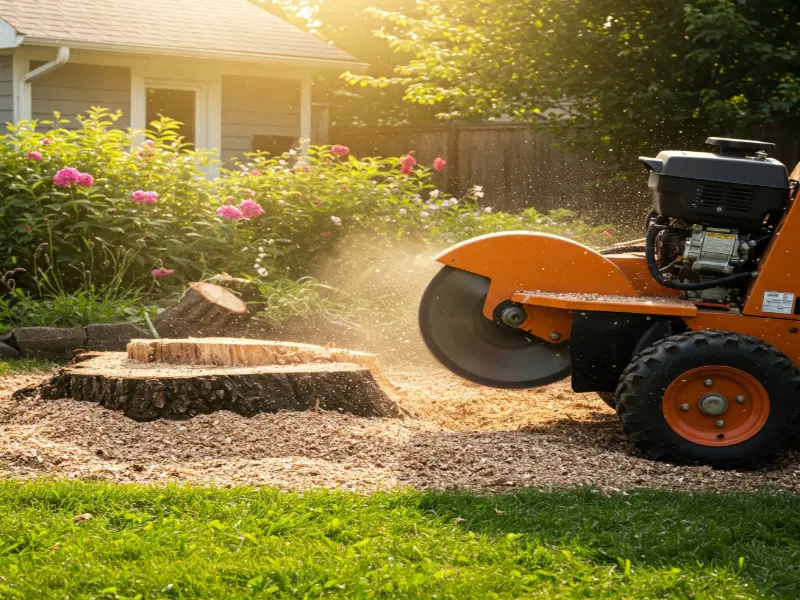
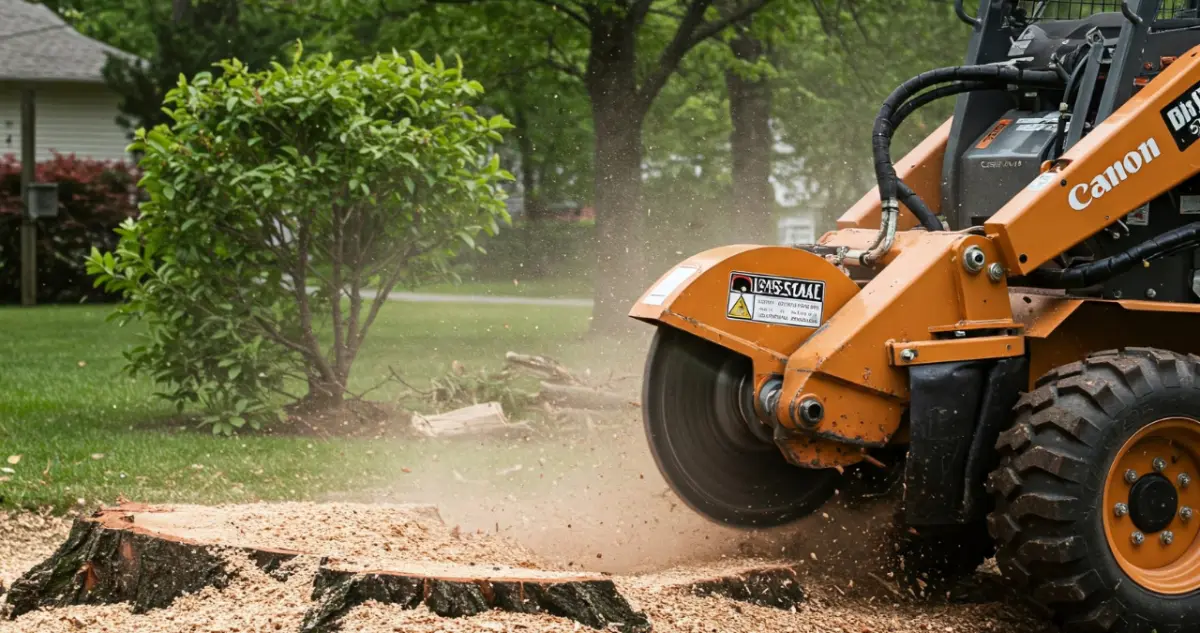
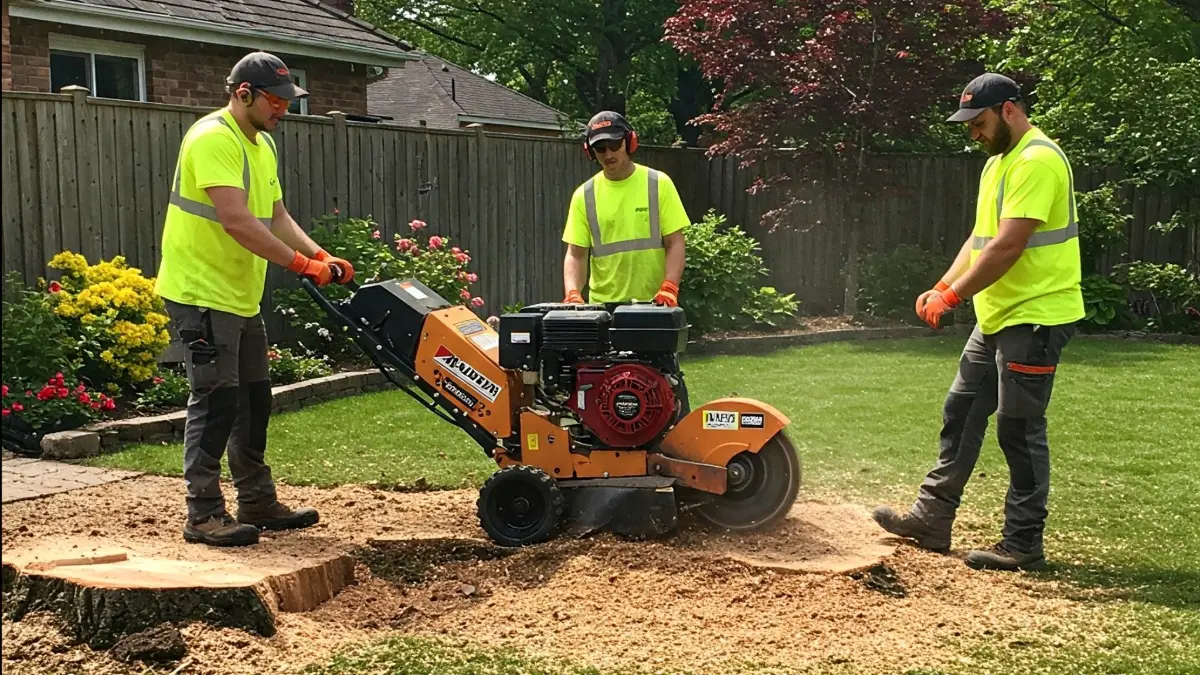
    Heavy-duty stump removal machine in action, grinding down a tree stump in a residential yard.

    Stump removal process Is utilized to completely remove a tree stump and its root system from the ground to make room for landscaping or other operations is known as stump removal. 

    Stump grinding vs stump removal: In contrast to stump grinding, which leaves roots behind, stump removal guarantees that there are no leftovers that could encourage regrowth or draw pests. Possessing an understanding of the advantages of stump removal will enable you to comprehend why this comprehensive strategy is worthwhile.

    What are the benefits of professional stump removal for your yard?

    Tree stump removal improves the overall attractiveness of your outdoor area and minimizes risk for injury, among other benefits. In addition to improving lawn maintenance and preventing pest infestations, this strategy can raise property values and support the sustainability of the environment. We will go into great detail about some of the Stump removal benefits. 

    Safety Enhancement

    Removing tree stumps enhances safety by minimizing tripping risks, particularly for kids and elderly people. During regular care, hidden stumps can potentially harm lawn equipment, requiring expensive repairs. A safer, obstacle-free yard and easier lawn maintenance are guaranteed when stumps are removed.

    Avoid Infestations of Pests

    Termites or insects, beetles, and ants can establish their nests on old and decaying tree stumps. In addition to endangering the condition of your yard, these pests have the ability to get into your house and cause expensive damage and repairs. By removing the whole stump, including any potentially insect-hosting roots, tree stump removal contractors could remove this risk.

    Keep Your Lawn Healthy

    Mold and fungi found on tree stumps can infect other plants in your yard and cause disease. The natural balance of your yard as a whole may be impacted by these illnesses, which can weaken or even destroy healthy trees and plants. Guaranteeing 100% removal of the stump and its root system and lowering the possibility of disease exchange, using a Professional stump removal service helps avoid this. 

    Stops Regrowth

    Controlling intended regrowth that can result in multiple tiny trees competing for water and nutrients is just one of the main advantages of stump removal. As the roots spread, these shoots may potentially harm adjacent structures like sidewalks or driveways. By completely removing the stump, regrowth is prevented, and a well-kept garden area is guaranteed.

    Stop Soil Erosion

    By removing obstacles that impede water flow, stump removal also improves water drainage. Stumps can lead to soil erosion and pooling, removing them stabilizes the ground and maintains the aesthetic appeal of your environment. A healthier, more durable garden is guaranteed by effective drainage, which also shields plant roots and keeps flooding away.

    Lowering the Cost of Long-Term Maintenance

    Tree stumps may not seem like much, but over time, they can cause expensive problems like pest infestations, equipment damage, or property damage from spreading roots. In the long term, removing stumps saves you money by removing these hazards and lowering the need for continuous upkeep. It is, therefore, among the most intelligent advantages of stump removal. 

    Effect on Appearance and Property Value

    For homebuyers, a well-kept and appealing landscape is a major marketing element, and removing stumps improves your yard’s usability and aesthetic appeal. One of the major advantages of stump removal is that it guarantees the entire outside area is functional and makes a good image, which raises the marketability of your house.

    Not sure how to deal with that leftover stump? This guide on Stump Grinding vs Stump Removal: Which One is Right for You? will help you make the best decision for your yard.

    Why hiring a professional for stump grinding is worth it

    Experts

    Skilled experts with years of experience provide excellent stump removal services. These professionals have the skills and experience needed to deal with different kinds of stumps in an efficient manner. Their knowledge extends beyond simple removal techniques, guaranteeing a comprehensive and effective procedure. 

    One of the most important abilities these experts contribute is the ability to effectively assess removal circumstances. They can choose the best removal strategy by assessing elements including stump size, root system complex nature, and the environment around it. This knowledge is essential to guaranteeing the safe and effective performance of the removal procedure. So, now you know why hire a professional for stump removal.

    Excellent Services

    Expert stump removal services use a comprehensive strategy to guarantee that stumps are removed completely. These services put a focus on total removal to stop regrowth, in contrast to amateur techniques that could leave behind residue. This methodical strategy removes any chance of new growth by targeting subsurface roots in addition to removing visible areas.

    In order to avoid future issues like pest infestations or structural damage from decaying stumps, thorough removal is crucial. Expert services take steps to completely remove the stump, preventing any potential regrowth or issues. These professionals offer durable remedies that are advantageous to the natural world and property by emphasizing thorough removal.

    Is professional stump removal better than DIY?

    Indeed, yes. Expert stump removal services use cutting-edge methods and tools to ensure total removal. As part of their methodical process, they destroy the stump into wood chips and make sure that any leftover material is disposed of appropriately. This laborious process removes all traces of the stump, leaving a spotless area that can be used for building or gardening.

    There are a number of risks associated with DIY stump removal techniques, such as the possibility of incomplete removal leading to regrowth and the requirement for additional treatments. 

    If you try to remove a stump without expert help, you may face many risks as a result. Because do-it-yourself methods frequently lack the accuracy and safety precautions used by professionals, there is a higher chance of errors or property damage throughout the removal procedure.

    Conclusion

    You now understand the value of skilled stump removal services, including the many methods, advantages, safety precautions, and knowledge that experts provide. You can improve the appearance and value of your house while saving time and money by working with professionals. Investing in skilled Tree stump removal services not only provides efficiency but also guarantees a safe and visually beautiful finish for your space. 

    Make the decision to work with experts like KD Tree Services for stump removal services, and you’ll experience a hassle-free procedure with results that last.
  • DIY Tree Trimming: Is It Worth the Risk?

    DIY Tree Trimming: Is It Worth the Risk?

    When you are a yard owner, you need to follow a proper maintenance routine, including regular tree trimming. Sometimes, some homeowners think doing it themselves is a smart way to save some money.

    That’s how DIY tree trimming is becoming more popular, and most people try to handle it on their own using tutorials and tools. But before you start a DIY tree trimming project, there is one question you should ask yourself:

    Should I trim my own trees or leave the task to trained professionals?

    So, what do you think? You may feel it’s better to save some money and do it yourself. That’s okay. But with all the details we’re going to provide, your idea may change. So, let’s check: Is it worth the risk?

    Why Homeowners Choose DIY Tree Trimming

    Like we said before, the main reason why DIY tree trimming is becoming more popular is that most people think it’s a great way to save some money. And we have to admit, hiring professional tree services can be expensive, while trimming trees yourself offers a more budget-friendly alternative.

    Another reason is that many people genuinely enjoy gardening. It gives them a sense of accomplishment and can be a great way to relieve stress after a long day.

    There’s also the fact that hardware stores and workshops now offer a wide variety of tools for purchase or rent. So, homeowners can easily get the tree trimming equipment for homeowners and get the job done themselves.

    We’re not saying DIY tree trimming is wrong, but there is a limit to what you should handle. You need to know when the job exceeds your skill level. At that point, it’s best to step back and call in a professional team.

    Is DIY Tree Trimming Safe?

    While DIY tree trimming might seem like an easy and cost-effective solution, it does come with serious risks. Without proper training, homeowners can underestimate the dangers involved. One of the biggest risks is working near power lines. Accidentally touching or cutting branches that are too close to electrical wires can lead to severe injuries or even fatalities. Similarly, trimming large trees or those with unstable, heavy branches requires specialized equipment and expertise to manage safely.

    Common mistakes in DIY tree cutting include using the wrong tools, poor ladder placement, and incorrect cutting techniques. These errors can result in falling branches, personal injuries, or even property damage. In some cases, homeowners might misjudge the weight or tension of a branch, causing it to snap back unexpectedly.

    Additionally, unstable weather, like high winds or rain, can turn a routine trimming job into a hazardous situation. Wet surfaces and strong gusts reduce stability and control, increasing the risk of accidents.

    If you’re facing any of these high-risk situations, it’s always safer to call in the professionals. Trained arborists have the right tools, knowledge, and experience to handle dangerous tasks safely, protecting both you and your property.

    Tree Trimming Injuries and Liability Issues

    Tree trimming might look harmless, but statistics show it’s riskier than many assume. According to safety reports, falls from ladders are among the most common causes of tree trimming injuries, often leading to fractures, head injuries, or worse. Climbing trees or using unstable ladders without proper support increases the danger significantly. Even experienced DIYers underestimate the risks of losing balance while handling heavy tools at height.

    Beyond personal injury, legal liability is another serious concern. If you accidentally damage your neighbor’s property or cause an injury during tree work, you could be held financially responsible. Without proper insurance, these costs come straight out of pocket. Worse, if an injury occurs to someone else while you’re trimming, you might face costly legal action.

    Using ladders around trees can be extremely risky this article on why ladders and trees can be a dangerous combination explains the hazards and how to avoid them.

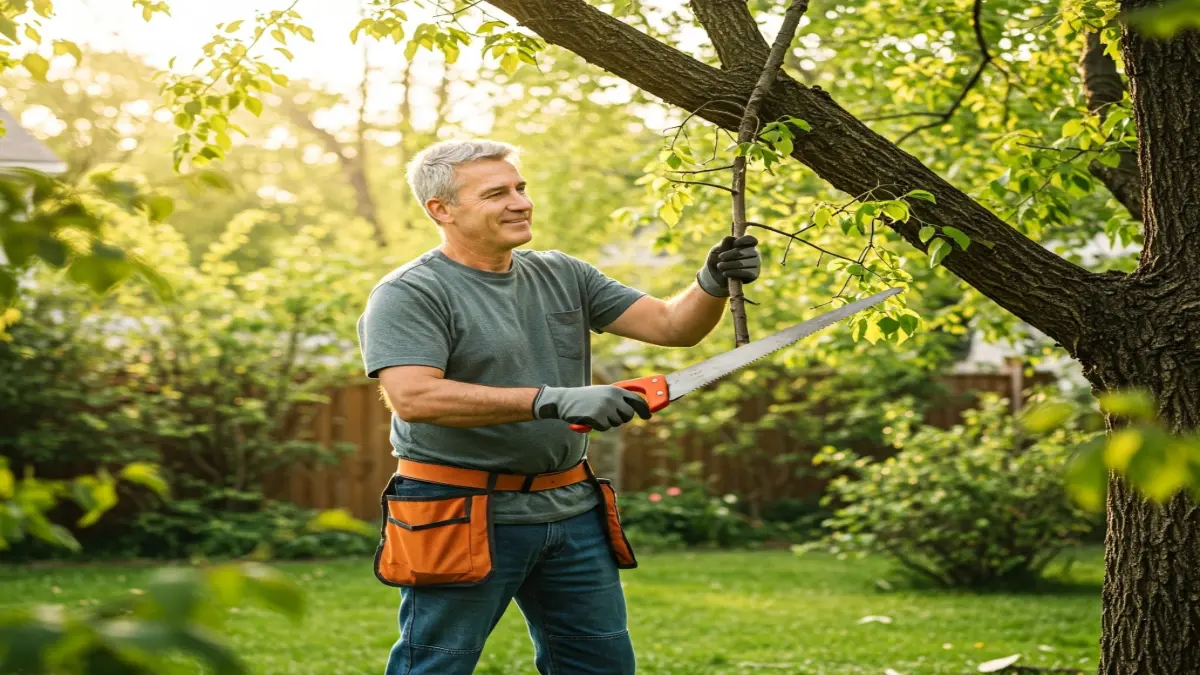
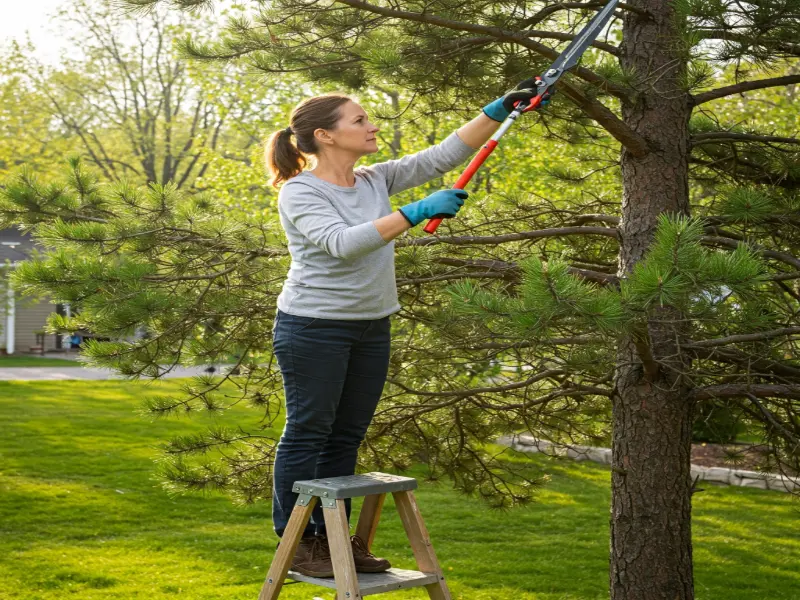
    A person standing on a ladder trimming tree branches with a handsaw in a residential yard

    Pros and Cons of DIY Tree Trimming vs Hiring a Pro

    So, with all the details we’ve discussed, you might be wondering: What should I do? Let’s break down the pros and cons, so you can easily decide what works best for you.

    When you choose to proceed with DIY tree trimming, the biggest advantage you get is cost-saving. You can avoid service fees and keep full control over your property maintenance. Once you have the basic tools, you can easily handle light trimming tasks like cutting small branches or simple projects. As we mentioned earlier, it also provides some stress relief, and you can turn it into a relaxing activity during weekends or holidays with your family.

    However, the major downside of DIY is the serious safety risks. When you deal with tall trees, heavy branches, or work near power lines, the dangers increase significantly. Even with proper tools, accidents can happen. You may face injuries, property damage, or make costly mistakes that could have been avoided with professional help. So, while DIY can save money, it’s important to know its risks and limits.

    On the other hand, hiring a professional arborist comes with a price tag but offers undeniable advantages. Pros bring specialized tools, knowledge of tree biology, and safety training. They can identify hidden issues like disease or weak limbs, ensuring healthier growth and improved tree longevity. Most importantly, they’re insured, which shields you from liability if something goes wrong.

    Tip – In summary, for small tasks DIY might work, but for complex, risky jobs, professional services are the safer and smarter choice.

    To ensure your trees thrive year-round, follow these Tree Trimming Best Practices for a Healthier Landscape and keep your landscape looking its best.

    When to Hire a Tree Trimming Service

    Knowing when to hire a professional tree trimming service can save you time and money, as well as potential hazards. If you’re dealing with large trees, heavy branches, or trees near power lines, it’s best to leave the job to the experts. Professionals have the right equipment, experience, and safety training to handle complex trimming without risking injuries or property damage. While hiring a service does come with a cost, the benefits outweigh the risks. 

    Pros can spot underlying health issues in your trees and provide proper care to promote long-term health and growth. Plus, professional services are insured, giving you peace of mind in case of accidents or unexpected damage. In the long run, maintaining healthy trees adds value to your property. 

    So now you have a clear understanding of when DIY tree trimming is appropriate and when it’s time to call in the professionals. But the next big question is: how do you choose the right tree care service? Let us help with that!

    Introducing KD Tree Services: Your trusted partner in expert tree care.

    What makes KD Tree Services stand out?

    • Certified Arborists with Advanced Expertise — Their skilled team understands tree health, disease management, and proper care techniques.
    • Transparent and Competitive Pricing — No hidden fees, just honest, upfront costs.
    • Customer-Focused Solutions — They prioritize your unique needs for personalized care.
    • Comprehensive Tree Health & Care — From detailed inspections to effective treatments.
    • Eco-Friendly Practices — Committed to sustainable, environmentally responsible methods.
    • On-Time, Reliable Service — Count on them for prompt and dependable care.

    For everything from professional tree trimming to complete tree health solutions, KD Tree Services is your best choice. 

    Don’t risk injuries, property damage, or costly mistakes with DIY projects. 

    Contact KD Tree Services today and make sure the job is done safely and right! They’re just one call away!


    Get a Free Estimate

  • What to Expect from a Professional Tree Inspection

    What to Expect from a Professional Tree Inspection

    Everything needs to be inspected, including bank accounts, cars, and teeth. Maintaining the health and quality of many people and things, including your trees, requires regular checks that help avoid future issues. 

    So, in order to identify any present obstacles and address potential issues in the future, trees also need to be inspected. 

    A tree examination, carried out by a qualified Arborist tree inspection process, can help maintain the health of your beautiful trees and save you from any possible future issues. 

    If you’ve never hired a tree service before, you might be unsure of what to expect from a professional tree inspection of your property. The main components of expert tree care, from the first consultation to the last cleanup, will be covered in this blog.

    How a certified arborist evaluates tree health during an inspection.

    Trees are inspected in-depth by a Certified tree inspector to determine their strength of structure, safety, and overall health. Examining multiple elements of the tree’s roots, trunk, branches, as well as leaves for signs of disease, pest infestations, decay, structural issues, and tree risk assessment is part of the process. Arborists also consider environmental factors that can affect the health of trees, such as the surrounding plants and soil conditions. Frequent inspections help identify issues early, enabling the right actions to be taken to lessen risks, extend the life of trees, and safeguard local residents’ and property’s safety.

    Why hire a professional tree inspector

    The arborist will examine the tree for any noticeable signs of bacterial, fungal, or insect-caused infestation. As soon as they notice symptoms of sickness, a skilled arborist can detect potential hazards by taking into account local diseases and pests. They perform a deep tree inspection checklist to accomplish their task.

    Safety

    By identifying and reducing potential risks like weak branches or structural instability, regular tree inspections help prevent mishaps and property damage.

    Tree Health

    By identifying early indicators of disease, pest infestations, or nutrient deficiencies, inspections enable timely intervention to maintain the health of trees.

    Property Value

    A property’s aesthetic appeal and value are enhanced by healthy, well-maintained trees, which also make the surrounding area more pleasant and raise real estate values. 

    Legal Compliance

    In many locations, it is compulsory for property owners to make sure that trees on their land do not pose a risk to neighboring properties or public safety. 

    Environmental Benefits

    Trees give wildlife a place to live, purify the air, and store carbon. Trees will continue to provide these vital environmental benefits if they are regularly inspected. 

    Tree maintenance and health check is an essential responsibility of every human.

    Understanding the importance of a certified arborist is key to maintaining healthy trees — learn more about the role of a certified arborist in Erie, PA and how they can help safeguard your landscape.

    What does a professional tree inspection include?

    1. First Consultation and Evaluation of the Tree

    Trustworthy Tree safety evaluation services will assess your trees and decide on the best choice of action to follow during the initial consultation. Usually, this step consists of: 

    Tree Health Assessment

    A qualified arborist will follow an Arborist tree inspection process to examine your trees for any indications of illness, deterioration, or potentially dangerous structural flaws. 

    Discussion of Needs and Goals

    The service provider should pay attention to your worries and offer professional guidance, regardless of whether you require tree removal, pruning, or routine upkeep. 

    Transparent Cost Estimate

    An experienced tree care service provider will provide a thorough estimate that explains the costs and the scope of the work, guaranteeing that there are no unstated charges.

    Remember, Companies that give quotes over the phone without visiting your trees to assess them should be avoided. While every tree is different, accurate assessment is necessary for appropriate tree care evaluation.

    2. Professional and Safe Tree Removal

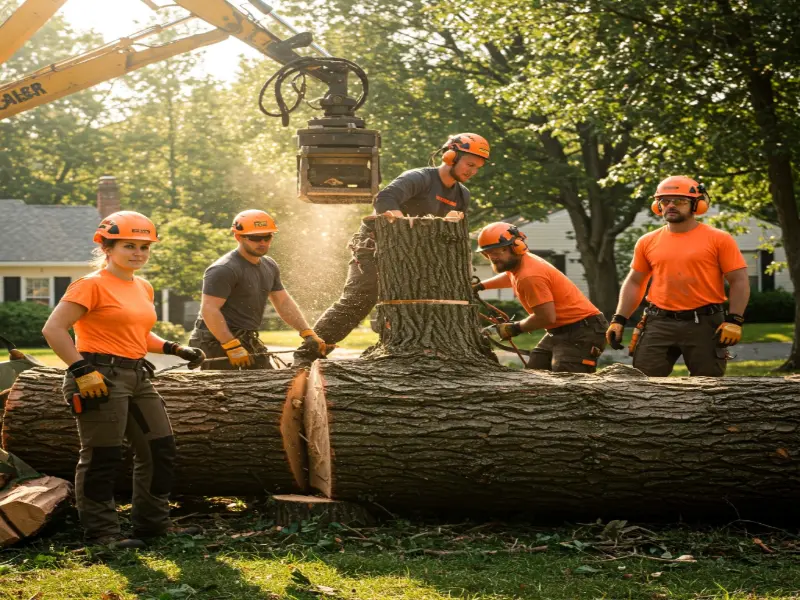
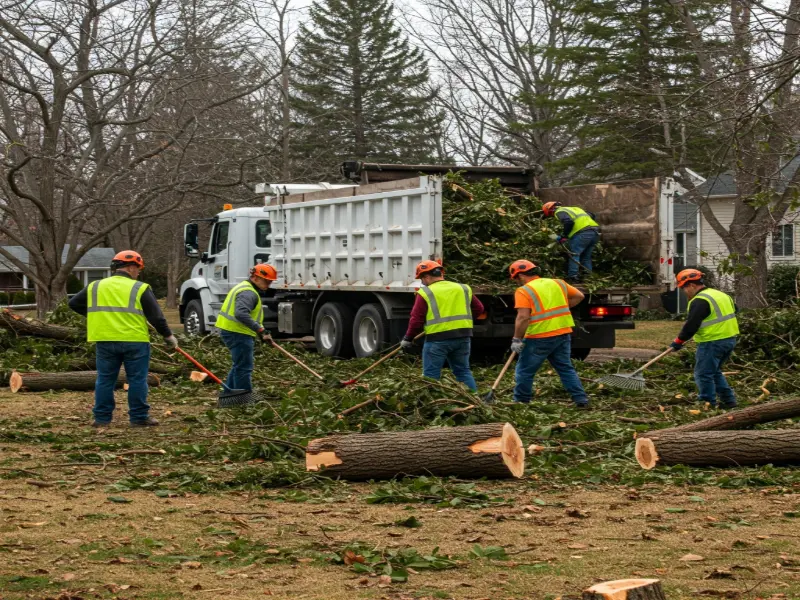
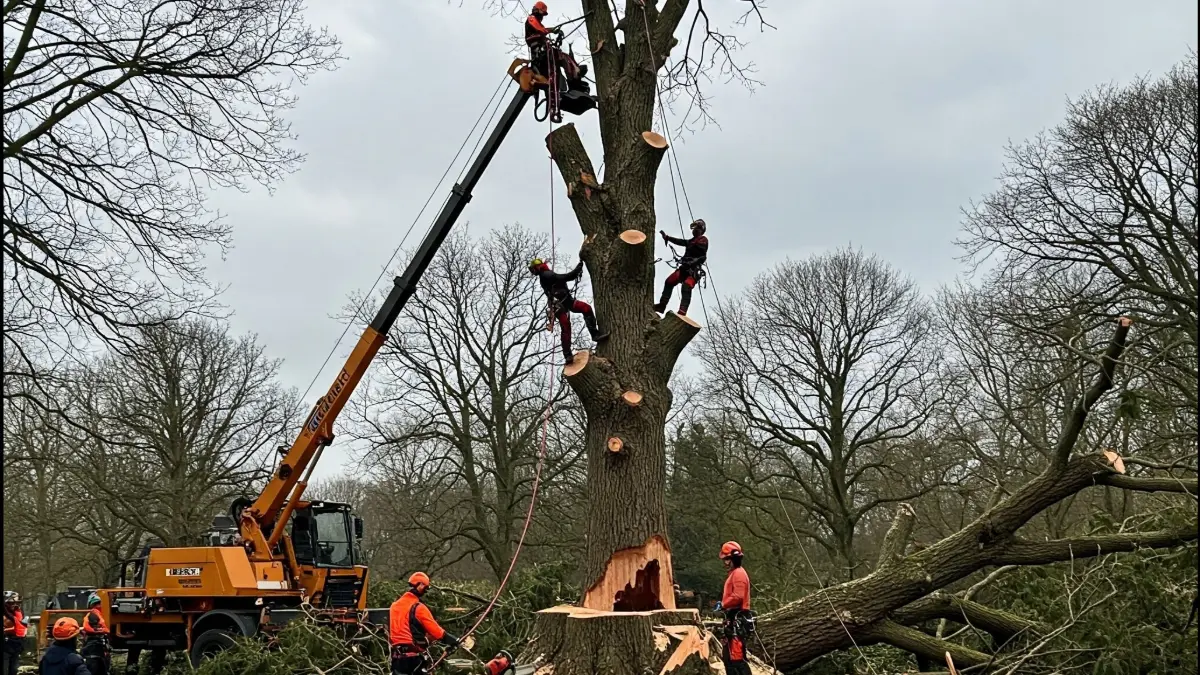
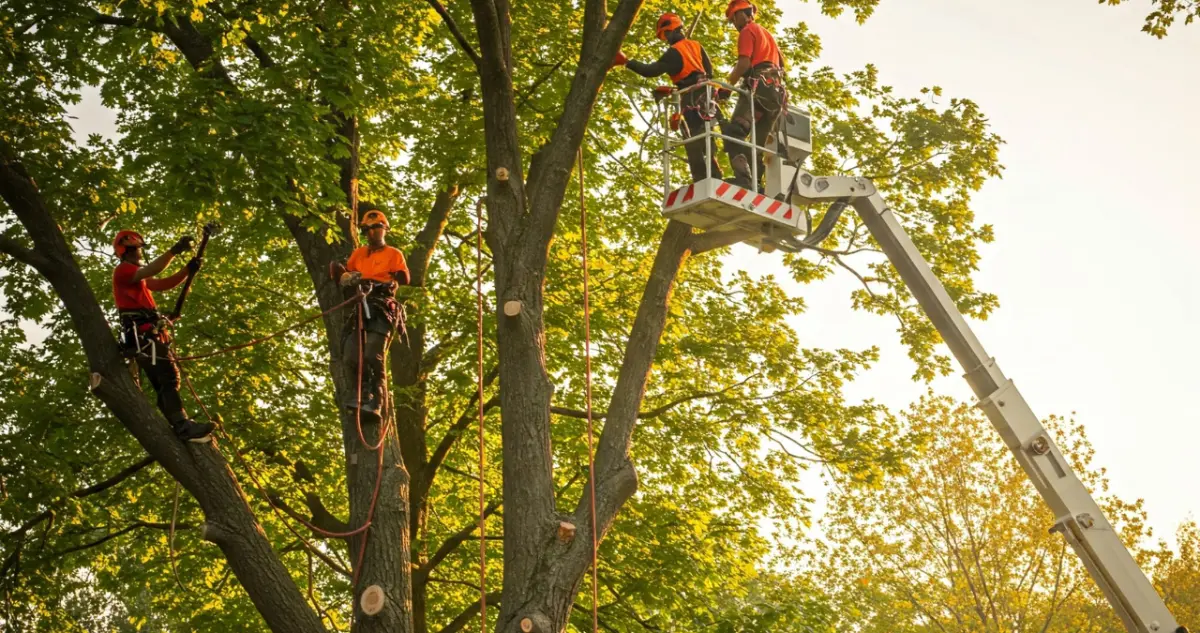
    A professional tree removal team equipped with safety gear, working together on a tree removal project

    Tree removal is a difficult job that needs to be done carefully to avoid damaging nearby property. When you work with experts, you may expect: 

    Complete Site Evaluation

    Considering the tree’s size, position, and condition, experts will decide how to remove it safely. 

    Use of Specialized Equipment

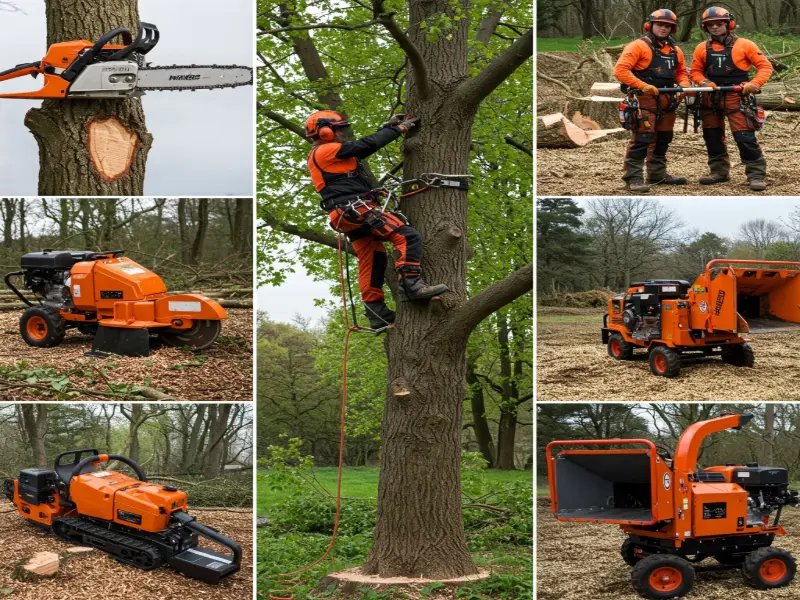
    To manage the removal process and reduce risk, professional tree services use chainsaws, cranes, rigging, and ropes. 

    Safeguard surrounding structure

    Safety measures are taken to guarantee that neighboring residences, fences, electricity lines, and landscaping are unaffected.

    Emergency Tree Removal

    Professionals offer emergency tree removal services to stop more property damage in the event that a tree has fallen as a result of a storm or other unanticipated circumstances.

    3. Effective Tree Pruning and Trimming Methods

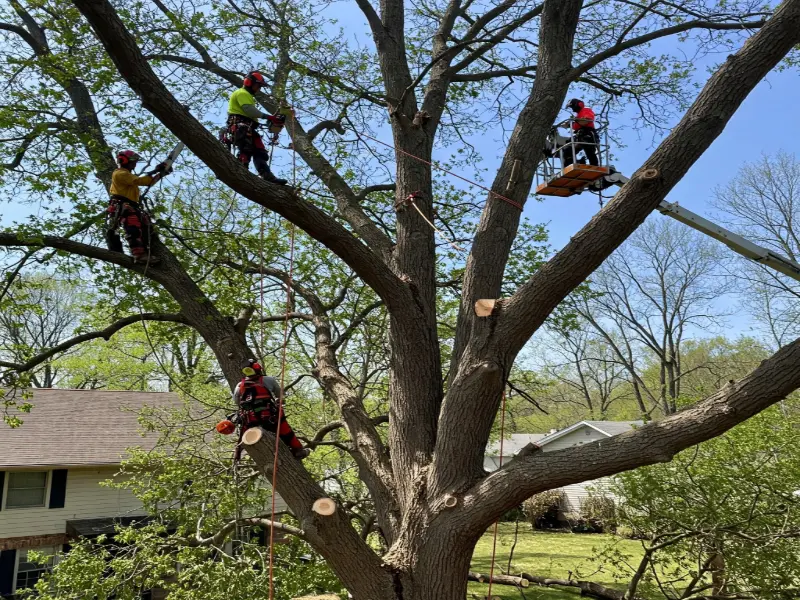
    Four people trimming a tree, working together to remove overgrown branches and maintain the tree's health.

    Pruning trees is an essential part of tree care that encourages growth, health, and safety. A qualified tree care service will:

    Use Proper Trimming Techniques

    Careful trimming encourages healthy growth, however, excessive pruning might stress the tree. 

    Get rid of Dangerous or Overgrown Branches

    It’s critical to remove weak or diseased branches as soon as possible since they can endanger persons and property. 

    Enhance Tree Shape and Structure

    Tree trimming makes trees more attractive to the eye and guarantees that they grow in an orderly manner.

    Take Seasonal Timing into Account

    Arborists are aware of when to prune various tree species to prevent harm or disease exposure. 

    4. Grinding and Removal of Stump

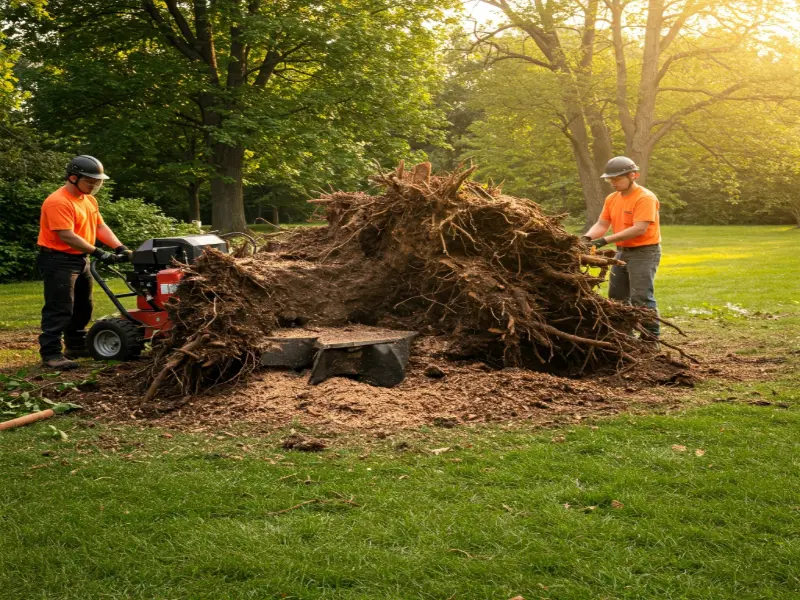
    Two workers performing stump removal, digging and extracting the entire tree stump and roots.

    When a tree is cut down, the stump that remains can be unattractive, dangerous for people to fall over, and a breeding ground for pests. Expert tree care services provide: 

    Stump Grinding

    To make landscaping the area easier, a machine grinds the stump down to ground level. 

    Total Stump Removal

    If required, the entire root system and stump may be dug up. 

    Debris Cleanup

    Following removal or grinding, experts make sure that wood chips and other debris are removed from the area. KD Tree Services can be considered the best tree care provider with the best experience, serving hundreds of clients for over 10 years. 

    5. Tree Health and Disease Control

    To avoid disease and pest infestations, healthy trees need constant maintenance. 

    Professional tree care services ought to offer:

    Tree Disease Diagnosis

    Before diseases, rot, or pest infestations worsen, arborists can spot the early warning symptoms.

    Treatment Plans

    Experts can assist in restoring the health of trees by trimming, treating the soil, or using other techniques.

    Preventative Care

    Regular examinations and upkeep guarantee that trees stay robust and impervious to problems in the future.

    Ignoring issues with tree health can eventually result in expensive removals. Your trees’ longevity can be increased with routine evaluations.

    6. Complete Site Restoration and Cleaning

    A partially damaged tree remaining after storm cleanup, with trimmed branches and visible bark wounds.

    After the task is done, a trustworthy tree service won’t leave your property in a state of mess. Expect that they will: 

    Clear Out All Debris

    Wood chips, branches, and leaves should be disposed of or used for other purposes. 

    Reduce Impact on Landscaping

     When working on trees, care should be given to avoid damaging driveways, gardens, and lawns. 

    Provide Options for Firewood or Mulch

    Some businesses let customers save tree trimmings for mulch or firewood.

    After tree work is completed, site cleanup is a crucial component of the service that guarantees your property will look well-maintained.

    7. Professionals with experience, insurance, and qualifications

    Selecting the best tree service entails collaborating with professionals who put quality and safety first. An expert tree care business should:

    Possess the appropriate certification and licensing

    This guarantees that they adhere to best practices and industry norms.

    Possess Positive Customer Reviews

    You can learn more about a company’s reputation and dependability by looking at online reviews, previous work, and their reputation.

    Provide Transparent Pricing

    Businesses that ask for full payment up ahead or have incredibly low prices may be signs of unstated costs or poor craftsmanship.

    These are what happens during a tree inspection. 

    Your trees and property will be handled with care if you choose a business that employs certified and experienced tree workers.

    Wondering what a tree inspection involves? Find out more with this detailed guide on what a tree inspection includes to ensure your trees are in optimal condition.

    Conclusion

    Knowing that your trees are receiving safe and efficient care when you hire a professional tree service gives you peace of mind. 

    Contact a reputable local company, like KD Tree Services, for a consultation if you require professional tree care services. Maintaining your trees properly improves your outdoor area’s attractiveness and safety.


    Get a Free Estimate

  • How We Helped a Homeowner with a Dangerous Tree Removal

    How We Helped a Homeowner with a Dangerous Tree Removal

    Regardless of the season, removing dangerous trees should be the top priority. A dangerous tree could fall at any time, risking your family’s and your neighbors’ safety. Leaving a tree standing when it should be taken down has plenty of risks.

    Removing trees requires accuracy, skill, and, most importantly, safety. Making sure the tree removal is safe should be your first concern, regardless of whether you’re a professional tree remover or a homeowner attempting a do-it-yourself effort. We’ll highlight the value of safety in this blog article and offer tree removal safety advice for both tree removal experts and homeowners.

    What to do when you have a dangerous tree on your property

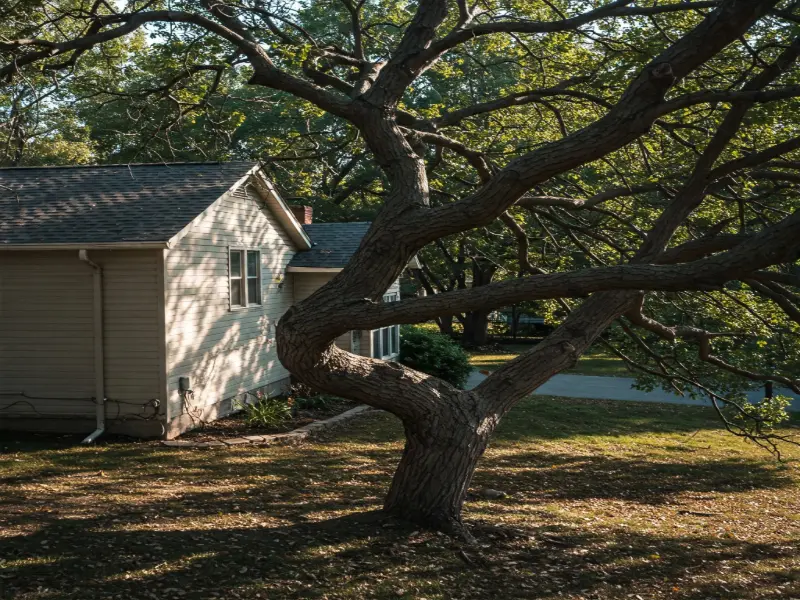
    A tree with an undesirable and potentially hazardous shape leaning toward a house.

    As trees grow, they either take on a healthy, well-formed structure or develop an undesirable, potentially hazardous shape. 

    This puts people, animals, and surrounding buildings in danger of injury. Undoubtedly, dangerous tree removal could be considered as the best option in this case.

    How to Identify a Dangerous Tree

    Before taking action, it’s important to determine whether a tree clearly poses a threat. There are several reasons why a tree may need to be taken down if it is dangerous.

    Indications of Decay

    Decay is one of the main causes of a tree becoming dangerous, and there are a number of signs to look out for. These consist of big holes or cavities in the trunk, fungi or mushrooms growing at the tree’s base, loose, crumbly, or missing bark, and hanging or dead branches. 

    Environmental Factors

    A tree’s location can make it dangerous, even if it appears healthy. Factors to consider include whether it’s growing in regions prone to strong winds or storms, whether it has been affected by recent construction or changes in soil grade, and its proximity to buildings, power lines, or high-traffic areas. If a tree faces a severe weather event, such as storm and lightning, that could lead the tree to be strongly damaged and weak so emergency tree removal would be the best option.

    Having a Construction Site Nearby

    Trees near building zones or sites are often at risk of being damaged. 

    If there is a lot of building activity going on, it could cause vibrations, cut shallow roots, and harm the tree. Disruptive activities like these weaken the tree. 

    Huge damages are caused by the compaction of the soil surrounding the tree, as well as injuries and vibrations. 

    So, as the tree is unstable and dangerous, removing that particular tree would be the best option.

    Problems with Structure

    Trees with structural issues are more likely to fall, and there are plenty of indicators to look out for. Multiple loosely linked trunks, exposed roots from erosion or construction, cracks or splits in the trunk or large branches, and weak trunks, especially if it’s a recent change, are all signs of possible instability.

    Why hire professionals for dangerous tree removal

    All of the bad factors stated above contribute to harmful tree development.

    To prevent such trees from abruptly breaking or falling over, you will need to consider their removal. Trees that pose a risk are evaluated to identify the precise issue before they are cut down. This enables them to decide on Tree removal for homeowners. Additionally, compared to normal tree removal tasks, Emergency tree removal tends to be more sensitive. 

    So, the professionals will need to employ the right techniques to achieve the intended outcomes. 

    Tree cutting for safety

    If removal is required, a safe and effective procedure depends on careful planning. Here are some tips on how to safely remove a large tree close to your house.

    Wear Safety Gear

    What potential risks come with removing trees? Fatal falls, electrocution, bites, stings, and wounds. Wearing leather gloves, safety eyewear, and a hard hat will help you avoid it all. 

    Wearing Kevlar chaps and ear protection is essential if you plan to use a chainsaw. In the unusual event that you accidentally drop the bar against your leg, these chaps will immediately stop a blade. Wear non-slip shoes and long sleeves, similar to what you would for any challenging outdoor activity.

    Inspect the power lines.

    Avoid being near any live wires. A live wire doesn’t have to be touched to cause harm. Just touching a branch that is in contact with a wire could cause a fatal injury. If the tree is within ten feet of a power line, don’t attempt to work on it. Give the power company a call instead. In most cases, they can send workers to the site to cut the line or insulate it while the tree is being taken down.

    Identify the Fall Zone

    Determine the tree’s fall position and mark off the area to ensure the safety of pedestrians, other people, and yourself. Keep an eye out for falling branches and always protect the fall zone. Remember, it might not always fall in the expected direction, even though you have used the correct cutting techniques or ropes to control it. So poor judgements could cause huge damages, like trees falling on houses, electric lines, or people.  

    Don’t Work Alone

    You’re always safer when you work with someone. Have someone you can trust stand a few feet behind you and keep an eye out for any falling branches. Ask them to tap you on the shoulder with a stick when a branch is going to fall or when it’s time for you to leave the area. Both you and your partner should have first aid and CPR skills in case of an emergency. 

    For more guidance on staying safe while working around trees, check out these Tree trimming safety tips from the Texas Department of Insurance

    How to assess tree danger to your home

    It’s time to assess the tree’s risk level after you’ve figured out any potential risks.

    Professional Evaluation

    It is wise to hire certified tree removal specialists to check a tree’s condition. They can perform a comprehensive health examination, assess the tree’s structural stability, identify internal damage using specialized equipment, and offer treatment or removal options. 

    Legal Aspects

    It’s crucial to confirm local laws before taking down a tree because some areas need permission. Special restrictions may apply to heritage or protected trees, and it’s best to check with your neighbor if the tree is on your property line. 

    Additionally, review the rules of any homeowner’s associations in the community where you reside. 

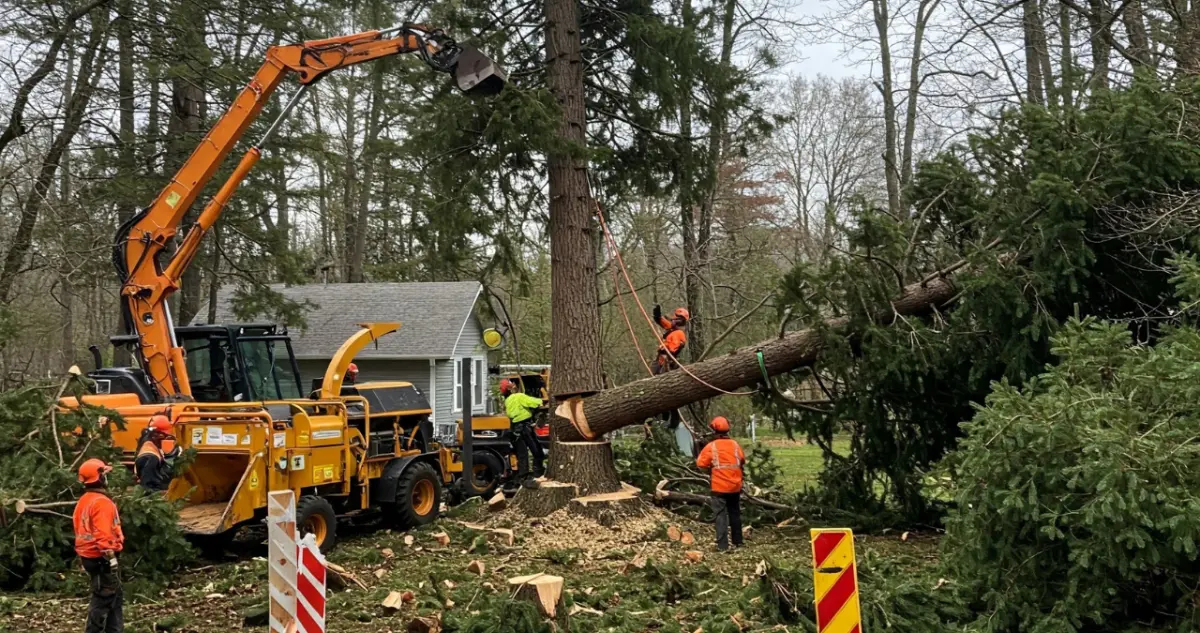
    How we helped a homeowner with dangerous tree removal

    While removing dangerous trees from your property is crucial, you should always plan ahead and choose the best alternative between professionals who provide Tree removal services. KD Tree Services understands how important it is to protect your home from any potential dangers that might be hiding underneath. Our skilled team and modern technology equipments provide a safe and efficient removal process, leaving your surroundings relaxing and safe. 

    From careful Tree trimming vs Tree removal for homes and businesses to complete illness treatment, we offer a wide range of professional services considering all Tree removal risks and safety protocols.

    So if you spot any dangerous tree in your yard, contact KD Tree services before it is too late.


    Get a Free Estimate

  • What to Do When a Tree Falls on Your Property

    What to Do When a Tree Falls on Your Property

    We know that if a tree has fallen on your property, it is surely a shocking and stressful experience. Especially if you are experiencing this for the first time, we can feel you. Whether it happens during the day or night, one question will definitely come to your mind: “What to do when a tree falls?”

    There are several reasons for a tree to fall. In most cases, it is because of harsh storms, powerful winds, or sometimes, if the tree is aging and has hidden decay, then you really can’t do much to prevent it. During such times, you can get help from emergency tree services.

    But before you do that, you need to understand why these things happen, how to handle this kind of situation, and how to act efficiently. So don’t worry; in this guide, we are guiding you through this scenario, so you will have all the knowledge you need.

    Immediate Safety Steps: What to Do When a Tree Falls

    Before anything, you need to focus on your own and other people’s safety. You might think a fallen tree is harmless, but it is not. So you need to stay away from that tree, especially if you can see any electric wires tangled in the branches. Most of the time, hazardous tree situations come with hidden risks like unstable limbs or the chance of the tree rolling or shifting.

    And we do not need to say, if a tree has fallen into the power line, then you can’t handle it yourself. What you need to do is call the local authorities or your power company immediately. Most of the time, when tree falls on power lines, it can lead to serious accidents. So allow professionals to handle them.

    What you need to do is keep your children, pets, and neighbours in a safe zone, stay calm, and calm other people as well. Now you can think about the next step: Assessing the Damage.

    For a deeper understanding of the risks involved, read Why Fallen Trees Are More Dangerous Than You Think to learn how to stay safe.

    Assessing the Damage: Tree Falls on House or Yard

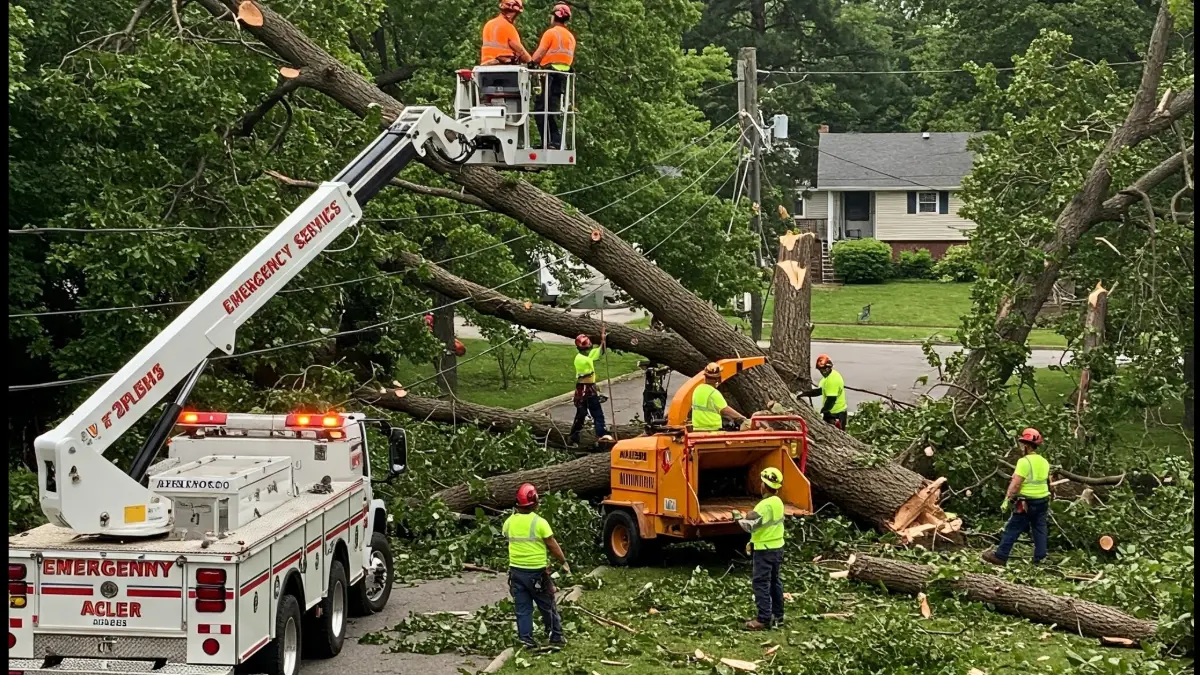
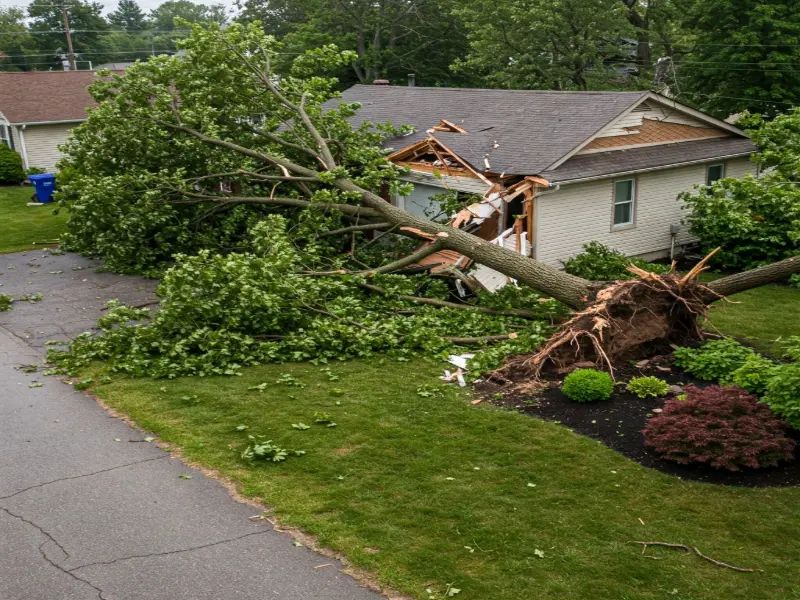
    A large tree fallen onto a property, causing damage to the roof and surrounding area.

    If you are not experienced in this, you can get help from your family member or even a neighbor. You need to know that when a tree falls on a house or yard, it’s not just about the visible mess. There can be structural damage to your house or vehicles, and to see them properly, you need to do a careful check. Look for cracks in the roof, damage on the walls, and even in the foundation.

    Sometimes, property damage from trees is hidden inside, like leaks or weakened structures, and later these will become huge headaches. So, do not ignore small things. Check everything possible and clearly write down all the damages caused by this fallen tree.

    Contacting Professionals: Who to Call for Emergency Tree Removal

    When dealing with a fallen tree, speed is very important, especially if you need urgent tree removal after a storm. So, the first thing is to know who to call for Emergency tree removal. Start by contacting local Emergency tree removal services many of them offer 24/7 tree removal services, so they can respond at any time, day or night.

    If the tree has damaged utility lines, do not forget to call your utility companies immediately. They will send their emergency team to handle the situation safely. Also, if there’s any danger to people or traffic, calling local authorities is a smart step. Keep a list of these contacts handy, because in emergency situations, every minute counts. Getting professionals on-site quickly can prevent further damage and make the cleanup much smoother.

    Insurance Coverage: Does Insurance Cover Emergency Tree Services?

    If you are wondering about insurance for fallen trees, the good news is that, in many cases, your homeowner’s insurance can help. If the reason is storm, strong winds, or other natural causes and it damaged your house, garage, or any other covered structure, then you have a great possibility to cover. But there are some restrictions. Most common is if the tree was already dead or rotting and no action was taken earlier, then you have a problem.

    And there will be the next question on your mind: does insurance cover emergency tree services?

    Yes, but in some specific situations. The best thing is you contact your insurance company and discuss with them. So you can have clear instructions without any hesitation.

    Now, let’s go through the basic steps to take after a tree falls on your home.

    The first thing you need to do is document everything. Take clear photos of the fallen tree and the damage it caused. Contact your insurance company as soon as possible and provide them with the details. Third, follow their guidance on assessments and repairs. If you are covering the insurance, then they may also recommend approved contractors for tree removal and repair work.

    Tree Damage Cleanup and Restoration

    A partially damaged tree remaining after storm cleanup, with trimmed branches and visible bark wounds.

    After the fallen tree is removed, the next part should be tree damage cleanup.

    In this process, it should include removing the leftover branches, wood pieces, and debris from your yard. Depending on the size of the tree and the damage, it may take one hour or even days.

    In this process, do not forget to follow safety guidelines, and do not use your DIY methods for large occasions. If you think you cannot handle them, then hiring professionals will be the best option for safe and efficient tree damage cleanup without risking injury.

    Professional services also handle emergency landscaping and tree care after a storm or accident. They will make sure to restore your yard, remove the stumps, and make your yard normal.

    Not sure what to do with that leftover stump? Read our guide on Stump Grinding vs. Stump Removal: Which One is Right for You? to make the best choice for your yard.

    Preventive Measures for the Future

    So, even in this kind of situation, once you clear your garden, then you have to do one thing. This is the final step in this guide, and you must do it. It is the prevention from this kind of situation. We know mother nature cannot be guessed, but there are some scenarios you can manage.

    To avoid these kinds of situations, do routine inspections, regular pruning, and tree health assessments. You can check if there are any weaknesses like dead branches, leaning trees, or cracks in the trunk.

    Before your local storm season, do a regular check on your yard and remove any weak or overhanging branches to avoid any risks. Storm damage tree removal should not only happen after a disaster but also be a part of prevention.

    So, with this final step, we think now you know how to handle storm-damaged trees in your yard.

    And if you own a yard, do not forget to do a clear inspection, and if you need to do that from a professional team, we got you covered.

    Trusted Experts in Emergency Tree Services – KD Tree Services

    KD Tree Service is a leading full-service tree company with multiple locations across the USA, with over 14+ years of experience in the industry. They specialize in everything from Consulting services, Tree removal, and pruning to Emergency services. They value their customers and provide competitive rates while maintaining the highest standards of service.

    If you need professional tree services, look no further than KD Tree Service.

    Contact KD Tree Service for any requirements and ensure your family is safe and risk-free with a green and healthy yard.

  • The Most Common Tree Species in Albany, NY and How to Care for Them

    The Most Common Tree Species in Albany, NY and How to Care for Them

    Albany, New York, United States, presents a heavenly appearance for every viewer. This area could be considered a paradise for nature lovers. With the perfect weather, which suits the soil in the area, this region provides the best environment for species like Picht pine, Red maple and Eastern white pine. 

    In addition to adding value to the area’s attractiveness, these trees help raise its cultural and social importance.

    Are you interested in learning more about Common tree species in Albany NY, and the best practices for caring for native Albany trees? 

    Then, continue reading the blog till the end.

    What are the most common trees found in Albany NY?

    Sugar Maple (Acer saccharum)

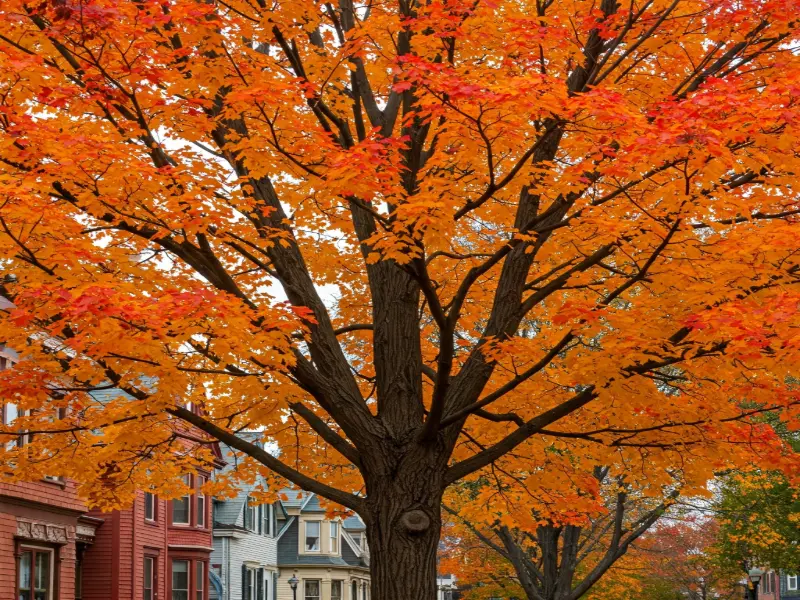
    A healthy Sugar Maple (Acer saccharum) tree with vibrant yellow leaves in full bloom.

    Sugar maple, or Acer saccharum, is a deciduous flowing tree that is native to North America. This plant’s vibrant leaves, which turn deep red in the fall, are its most distinctive feature. 

    In addition to being the official state tree of New York and the plant that produces maple syrup, sugar maple is most famous for its leaf, which forms the unique silhouette on Canada’s flag.

    Sugar maple trunks have a long lifespan, making them excellent material for furniture, homes, high-quality firewood, and exquisite interior finishes. It is a forest tree that can survive as an understory plant beneath a closed canopy and can tolerate being shaded by larger trees. It tends to grow in the direction of any light.

    Eastern White Pine (Pinus strobus)

    The long-lived evergreen eastern white pine or Pinus strobus tree is native to Eastern North America’s mixed forests in temperate regions. In its natural habitat, it is regarded as one of the tallest trees. The lightweight, straight-grained wood of eastern white pine is commonly desired in construction.

    Northern Red Oak (Quercus rubra)

    Northern Red Oak, known as Quercus rubra, is probably the most widely used hardwood in the United States. It can be used for veneers, trim, cabinets, flooring, and more. The tree grows to a height of 15 to 23 meters. This tree has beautiful leaves, which changes from dark green to bright red in the fall.

    Black Cherry (Prunus serotina)

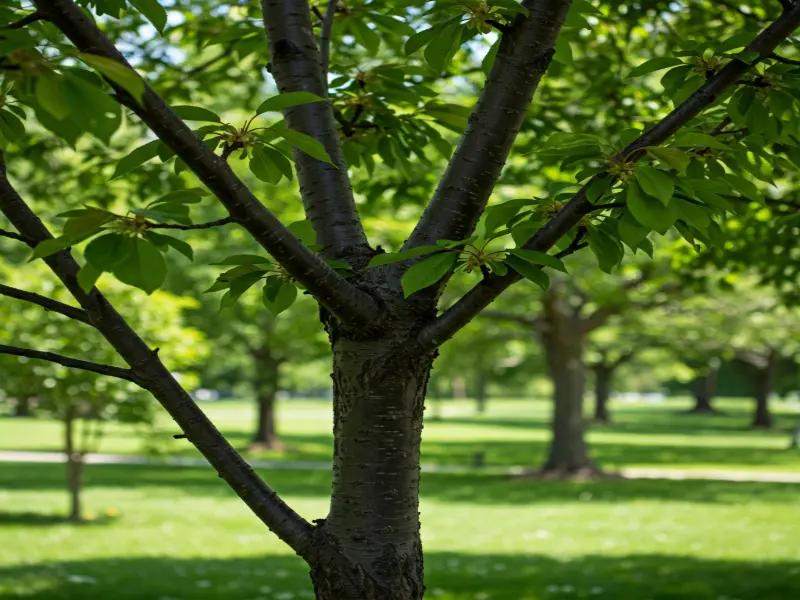
    A mature Black Cherry (Prunus serotina) tree with dark bark and green foliage in a natural setting

    The medium-sized, deciduous forest tree known as the black cherry or Prunus serotina is one of the valuable native trees in Albany New York, but has also spread to several regions of Europe. When pitted, the little white blossoms in the inflorescence turn into clusters of dark cherries that are delectable. The bark of mature trees is noticeably cracked and ranges from gray to black. The glossy leaves are harmful to cattle. This pioneer species has a high rate of reproduction and the potential to become invasive. 

    White Oak (Quercus alba)

    Quercus alba is a broad-canoped, long-lived white oak. The term “white oak” describes the color of its process wood, which is used for a wide range of purposes, including building, the production of musical instruments, barrels for wine and whiskey, Japanese martial arts weaponry, etc. Because of its size, white oak is rarely grown as an ornamental.

    These are some of the Popular tree types in upstate NY.

    Common Urban/Ornamental Trees

    Dogwood

    Early spring brings pink, white, or red blossoms to the beautiful tree. The tree has both male and female reproductive organs, which is an interesting discovery. It has the ability to self-produce seeds and pollinate. 

    Dogwood thieves in partial shade and full sun. These trees grow quickly and are easy to maintain. Although there are many varieties, the most popular ones are the pagoda, carnelian, white, and common.

    Crabapple

    You should think about planting crabapple trees in New York for the following reasons:

    It’s an excellent cross-pollinator. By drawing pollinators, growing close to a pear or cherry tree promotes fruit growth.

    • It grows readily in every location. It doesn’t require a particular kind of soil to thrive. Both large and small spaces can support it’s growth. It can grow in any season, weather it’s summer or winter. 
    • In the spring, it will make your yard seem like a paradise, and at times, it can even last until the fall. The tree has one of the longest blooms, which can continue until the fall, and it blooms in the spring in colors of pink, white, and red.

    Norway Maple

    The species of tree known as the Norway maple is indigenous to West Asia and Europe. It’s bright green, its lobed leaves become gold or red in the fall, and it stands 20 to 30 meters tall. Originally brought to the United States as a decorative shade tree, it is now regarded as invasive. It can be short-lived andvulnarable to assault and illness outside of its northern range.

    Japanese Lilac

    A blooming Japanese Lilac tree with clusters of creamy white flowers and lush green leaves.

    It is a beautiful tree that grows upright and has a circular shape. Their rate of growth is moderate. Ivory silk, signature, ivory pillar, and golden eclipse are the most widely recognized varieties.

    For the following reasons, planting it in New York might be the best option:

    • Because it is prone and easy to maintain, its spread can be controlled. The tree grows straight, making it ideal for homeowners with limited space.
    • Out of all the trees on your property, the Japanese Lilac stands out. It’s similar to the entire package. Flowers, shrubs, or bushes it all depends on your perspective
    • It also needs little care because it doesn’t need a lot of water, doesn’t get sick from pests, and doesn’t make suckers. 
    • The tree is inexpensive and easy to find. Planting this tree doesn’t have to cost a fortune, you may locate it with ease for a relatively small amount of money.  

    How to care for common trees in Albany

    We often talk about how crucial it is to take good care of your trees and why maintaining them with professional care is so crucial to their growth. With their many advantages, including shade, clean air, and habitat for birds and animals, trees are vital parts of our ecosystem. 

    It is crucial to take care of every tree around us, and Tree maintenance in Albany NY is the responsibility of every homeowner. 

    Read more about tree care recommendations for New York homeowners 

    Reach out!

    Keep in mind that our best clients are the ones who are the most educated! One of the most crucial things we do at KD Tree Services is to assist residents with tree maintenance and educate them on the best methods to take care of every tree species around them so that they are able to protect their gigantic neighbors.  

    We’ve been in business for over 12 years, proudly serving Albany NY trees, making sure every client knows how to keep Albany trees healthy year-round, and recommending Tree Care Albany NY

    Make sure you contact us, the KD Tree services team, to receive the best Seasonal tree care in New York. 


    Get a Free Estimate

  • Stump Grinding vs Stump Removal: Which One is Right for You?

    Stump Grinding vs Stump Removal: Which One is Right for You?

    Sometimes we have to remove some trees altogether, but only removing the tree isn’t enough. When you remove a tree, the next question is what to do with the stump left behind. However, it needs to be managed because that stump gives a bad appeal to the yard and can become a home for pests in the long term.

    So, when we are talking about stumps, there are two main methods to take care of them: stump grinding vs. stump removal. While both of these methods offer unique benefits and challenges, you need to understand them well to choose which is best for you. 

    If you’ve been wondering about the best way to get rid of a tree stump, you’re in the right place. 

    In this blog, we are going to discuss everything you need to know about Stump Grinding vs. Stump Removal. So let’s start the journey.

    Understanding the Basics

    So first, let’s explore the difference between stump grinding and stump removal.

    What is Stump Grinding?

    A worker operating a stump grinding machine to remove a tree stump from the landscape

    Stump grinding is a method that uses a specialized machine to grind down the tree stump into small wood chips. Usually, the grinder goes a few inches below the surface, so the roots remain intact underground. If you’re looking for a quick, simple, and efficient method, then this is for you.

    When we talk about the benefits of this method, it’s less invasive and more affordable. You can even use the leftover mulch as decoration or come up with some creative landscaping ideas. Most stump grinding services offer one-day service, and it causes minimal harm to your garden, lawn, and surroundings.

    What is Stump Removal?

    Two workers performing stump removal, digging and extracting the entire tree stump and roots.

    Stump removal, on the other hand, involves digging out the entire stump along with the underground roots. This method requires machinery and usually disrupts the surrounding soil. It’s commonly used when you need to replant or build in the same area. And if the roots are causing issues, tree root removal options like full excavation may be your best bet.

    So, you have to decide what the best option is for your needs and take your time before choosing. Next, we’re going to talk about the pros and cons of each method.

    Pros and Cons of Each Method

    So, if you’re wondering, “Is stump removal necessary?”, you should know the pros and cons. Let’s talk about them now.

    Pros and Cons of Stump Grinding

    Let’s look at the pros of stump grinding:

    • Faster, less invasive, and more affordable.
    • Doesn’t require heavy digging.
    • It can usually be finished within one day.
    • The leftover mulch can be used for your garden or landscaping, like garden beds.

    Now the cons of stump grinding:

    • It doesn’t completely remove the roots.
    • There is a chance of regrowth or underground decay.
    • It can become a potential home for pests over time.

    Pros and Cons of Stump Removal

    Let’s check the pros first:

    • It’s a complete solution that removes the entire stump and root system from the ground.
    • You can reuse the area for replanting or construction.

    Now the cons:

    • It is more expensive than grinding.
    • It takes more time to complete the project.
    • The process can cause some damage to your garden or yard.

    Both methods have their strengths depending on your goals. After either option, yard restoration after tree removal might be necessary.

    Learn more in The Ultimate Guide to Tree Removal: When and Why You Need It

    Cost Comparison

    You may think that having a cost comparison of stump grinding vs stump removal would be great to help you get an idea of what you can afford. When we talk about cost, there are several factors involved. For a more detailed breakdown, check out this guide on how much stump grinding costs.

    So let’s dig deeper and explore more.

    As we already know, stump grinding is the budget-friendly option. On average, it will cost between $100 to $400 per stump, but you should be aware that the cost will vary depending on the size, location, and accessibility. The process is quick and usually takes only a few hours if you are working with a professional team.

    On the other hand, stump removal is definitely not cheap. It will cost you between $300 to $800 or more. Sometimes, it can be a two-day project, and depending on the tree size and complexity, it may take even more time.

    You shouldn’t decide based on cost alone. Consider your requirements, the time and effort involved, and the budget, and you’ll be in a better position to make the right decision.

    When to Choose One Over the Other

    So, what scenarios will lead you to choose one option over the other? Here, we’re going to talk about that.

    Even though you may want to go with the budget-friendly option, if you need to build in the exact same location or replant there, then you’ll have to go with the stump removal option.

    And if you don’t need to completely remove the stump with the root system, but instead plan to create a more natural yard, keeping the stump and coming up with a creative solution could save you money, time, and effort.

    So, you need to decide when to choose stump removal over grinding or grinding over stump removal. It depends on your requirements, budget, future plans, as well as the stump type and size.

    And you should remember, every yard is different, so you can’t always go with a general opinion. The right choice depends on you and your garden.

    Tree Stump Disposal and Aftercare

    So after you’ve made the right decision and finally got rid of that annoying stump, you might think the process is done. Actually, it’s not. There’s still the leftover part to deal with. Whether you used grinding or full removal, you should know the proper tree stump disposal methods to finish the job.

    If you went with stump grinding, there will likely be wood chips left behind. You can collect them and use them later as mulch.

    Either way, grinding or removal, there may be a hole left in the ground that you’ll need to take care of. You can fill it with topsoil and level it with the rest of your yard. Next, depending on your plan, you can reseed it with grass or plant something new.

    Sometimes, you may also need lawn repair after stump grinding to avoid further damage to your yard. 

    Once that’s handled, you can finally say, hooray! That stump is gone, and the process is complete.

    DIY or Hire Stump Grinding Services

    DIY is possible for stump removal, but it would need expensive tools such as stump grinders, excavators, and experience in using them properly. With such requirements, it’s easy to understand why stump grinders are rarely pursued by seasoned do-it-yourselfers.

    For large or numerous stumps and multi-stump grinding, flexible space stump grinding requires professional assistance, which is quicker without the danger of self-inflicted injuries or damage to the property.

    Without expertise or experience with specialty machinery, there is usually a higher expense involved for the trained professional. Even with dual pricing, the decision will ultimately lead to choosing the trained professional.

    So you may wonder how to find an expert and professional person for your tree needs. Don’t worry! We have the right option for you.

    Introducing KD Tree Services

    KD Tree Service offers the best tree care with safety and reliability at affordable prices. With over 14 years in the industry, they specialize in providing both residential and commercial tree services. KD Tree Service has become a trusted provider across the USA for all kinds of tree care, whether it’s routine maintenance or emergency tree removal.

    From arborist consultations, tree removal, tree trimming & pruning,
    To emergency tree services, We offer the best possible solutions tailored to your needs.

    You can contact Us and explain your requirements; We’ll provide a customized solution.

    So why wait? 

    Remove or grind that stubborn stump with the right professional team. Call now and get your free estimate!


    Get a Free Estimate

  • How to Identify and Treat Common Tree Diseases

    How to Identify and Treat Common Tree Diseases

    We know how trees assist our lives, they give our environment value, beauty, and, moreover, help maintain the ecological balance of any landscape. And when someone thinks of enhancing the curb appeal of a yard, the very first idea is planting suitable trees to make the land more valuable. So, when trees give us thousands of benefits, it becomes our responsibility to protect them.

    When we talk about our responsibility, we cannot forget about the common tree diseases that often go unnoticed and eventually cause serious damage. If you cannot identify these diseases early, they can become a huge problem and may even spread to other trees.

    As a yard owner, you should better understand tree health problems and solutions.

    That is why, in this guide, we will explore how to identify, diagnose, and begin treating tree diseases effectively, so you can have a green, healthy yard throughout the year.

    Let’s start the journey.

    Why Tree Disease Identification Matters

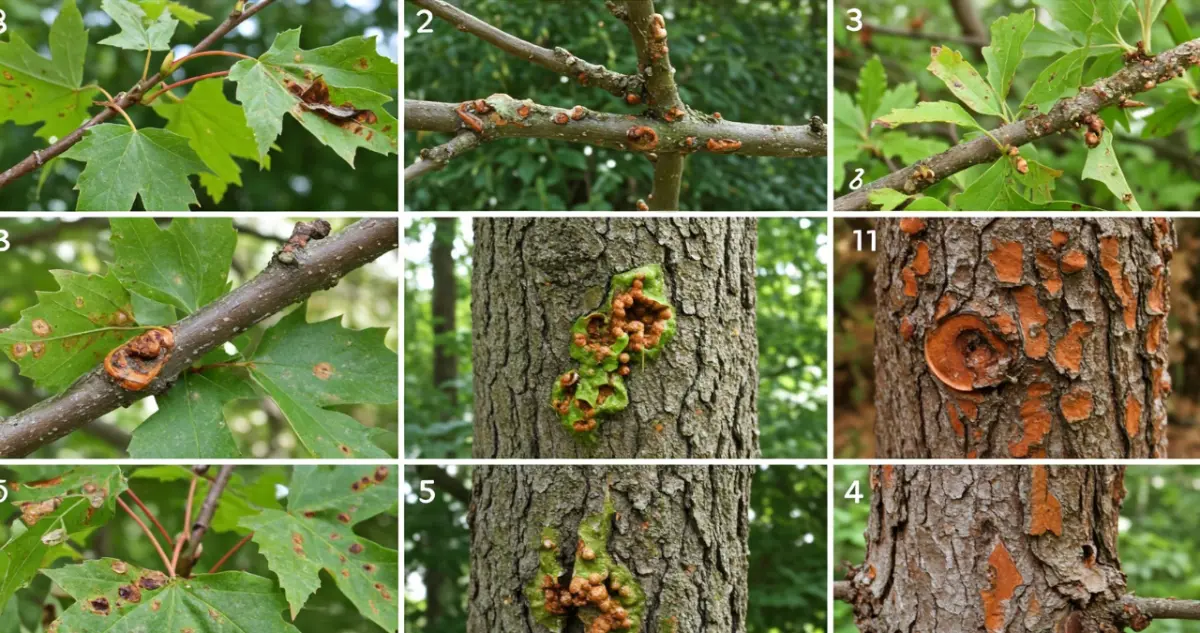
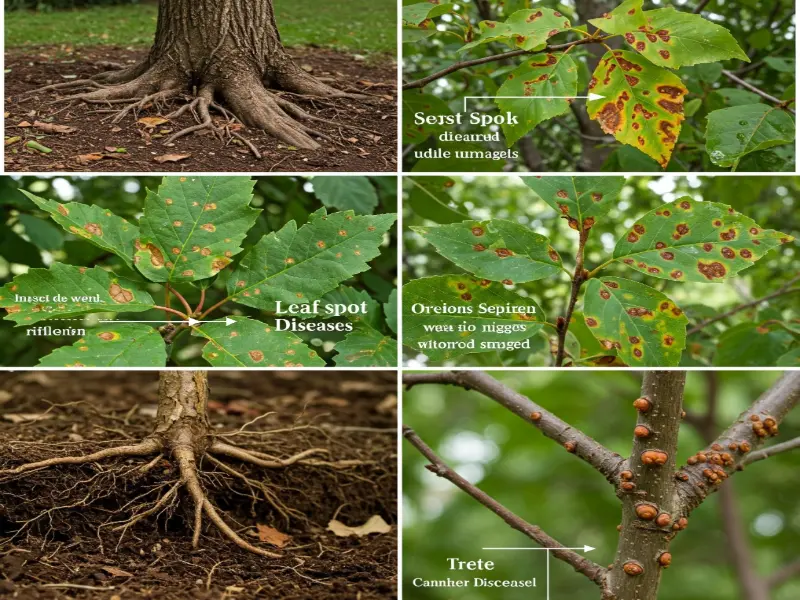
    Tree affected by common diseases, showing symptoms like leaf spots, cankers, and wilting

    As we discussed before, trees give us a lot of benefits including oxygen, reducing pollution, and offering shade. But on the other hand, when a tree starts to decline, it affects not only its visual appearance but also the health of nearby plants. Because of that, there can be a lot of safety problems too.

    That’s why it’s so important to know how to identify tree diseases early and treat them ASAP to protect the trees. Sometimes, you can’t understand the issue properly because there are very small and subtle tree disease symptoms like discolored leaves, bark damage, or unusual growths.

    If you continuously ignore the signs of a sick tree, it can lead to major issues until it needs complete removal. You can avoid this with regular tree inspection and maintenance, allowing you to catch problems early and extend the life and beauty of your trees, making prevention the best long-term solution.

    How to Spot Early Signs of Tree Disease

    Spotting the early signs of tree disease is crucial for maintaining the health and safety of your trees. Identifying symptoms early can help prevent the spread of disease and reduce the risk of severe damage. To help you with this, here’s a comprehensive guide on early tree disease symptoms from Indigo Surveys

    Leaf discoloration, spots, or curling

    Yellowing or browning leaves and spots or curled edges can indicate issues like blight or fungal infections.

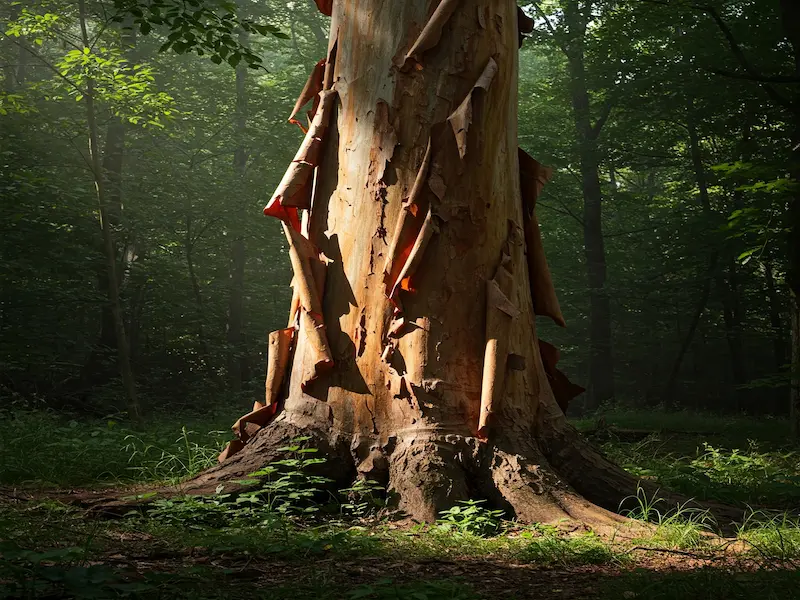
    Bark peeling or cankers

    A tree with bark peeling off, which can indicate disease, pest infestation, or environmental stress

    If the bark starts peeling or you notice sunken areas, this could be a sign of canker diseases, which damage the tree’s vascular system.

    Sudden leaf drop or branch dieback

    If leaves drop prematurely or branches begin to die back, it may signal root rot or other systemic diseases.

    Unusual growths or fungus

    Visible fungus, such as mushrooms at the base of the tree or on branches, could indicate root rot or other fungal infections

    So if you can identify these signs, then you need to know your trees need essential care to address, and you need to act immediately. The longer you wait, the more damage can occur. If it is hard to identify the exact disease, the best move is to contact a professional tree care service and do the needed treatment as soon as possible before the symptoms worsen.

    Best Ways to Treat Tree Diseases

    Once you’ve identified a problem, treating tree diseases quickly and correctly is the only way to save your tree.Here’s a simple tree disease treatment guide you can follow.

    Isolate the infected tree

    If possible, avoid contact with other plants to reduce the risk of spreading the disease.

    Prune affected branches

    Use sterilized pruning tools to remove dead or infected branches. This helps stop the disease from progressing.

    Apply fungicide or antibacterial treatment

    Depending on the issue, choose a treatment specific to the disease. For example, copper-based fungicides work well for fungal infections, while neem oil is a good natural option.

    Improve soil health

    Add compost or organic matter to strengthen the tree’s immune system. Healthy soil promotes strong roots and overall resilience.

    Some of the best products for tree disease treatment include broad-spectrum fungicides, horticultural oils, and disease-specific treatments like sulfur-based sprays or bio-fungicides. Always read the label and follow safety instructions.

    When it comes to treatment, you can choose between natural and chemical options. Natural methods, like neem oil and compost teas, are eco-friendly but may act more slowly. Chemical treatments tend to be faster and stronger but should be used with caution, especially around kids, pets, or water sources.

    Tree Disease Prevention Tips

    We all know that prevention is better than cure. So, you must be aware of the most important tree disease prevention tips.

    Routine tree trimming & pruning

    Regularly remove dead or diseased branches to improve airflow and reduce the risk of infection.

    Avoid overwatering

    Excess moisture creates a perfect environment for fungal growth and root rot. Water trees deeply but infrequently to promote healthy roots

    Pest control measures

    Regularly inspect your trees for pests that can introduce diseases. Use eco-friendly pesticides or natural predators to manage infestations.

    Promote airflow and sunlight

    Properly spaced trees and thinning the canopy allow better airflow and sunlight, helping to reduce disease risk and promote overall tree health.

    If you regularly follow these tree health care tips and gain a better understanding of how to prevent common tree diseases before they start, you can save time, effort, and money in the long run.

    For ongoing care, be sure to check out our guide on Tree Trimming Best Practices for a Healthier Landscape to help maintain strong, disease-resistant trees

    What to Do If Your Tree Shows Signs of Illness

    If you notice signs of illness in your tree, it’s important to act quickly. Start by stopping irrigation to prevent further stress and possible fungal growth. Next, prune any dead or infected branches with sanitized tools. Test the soil to check for nutrient imbalances or drainage issues. If the symptoms persist or worsen, consult a professional arborist for an accurate diagnosis and treatment plan. Taking swift action is essential to save your tree and prevent the disease from spreading.

    KD Tree Service is the trusted and affordable tree service for all your tree needs.

    KD Tree Services is a trusted provider of professional tree care solutions. Our certified arborists bring advanced expertise to every job from diagnosing tree health issues to managing large-scale projects with precision.

    We offer transparent, competitive pricing and prioritize eco-friendly practices tailored to your specific needs. Our team is known for reliable, on-time service and a strong commitment to customer satisfaction. KD Tree Services consistently delivers high-quality results across a full range of services including tree removal, trimming And pruning and more.

    Get in touch today for expert advice or to schedule your next tree service appointment.


    Get a Free Estimate

  • Tree Trimming Best Practices for a Healthier Landscape

    Tree Trimming Best Practices for a Healthier Landscape

    Every yard owner has one goal! That goal is maintaining a healthy and glowing yard without a big hassle. But the thing is, only doing the watering and fertilizing isn’t enough to maintain that for you. There are so many practices you need to do in order to maintain them. Among these methods, tree trimming takes first place, since it has a lot of advantages for trees, including helping to improve tree health and structure, preventing diseases, and promoting good growth for the trees. These are the main advantages, but there are many more.

    So you can understand why tree trimming is important. But just doing the trimming is not enough. You need to follow the tree trimming best practices to make sure you receive 100% of the advantages. 

    You may wonder how?

    That is why we are preparing this blog for you. In this guide, we will show you how to trim your yard with the best possible practices.

    So, let’s start and learn a lot of new things on behalf of your green friends.

    Why Tree Trimming Matters

    Four people trimming a tree, working together to remove overgrown branches and maintain the tree's health.

    Most people think the main advantage of tree trimming is tree shaping and canopy control. But that’s not entirely true. Commonly, most people aren’t aware that, in order to maintain tree health and structure, it’s very important to do tree trimming at the right time and in the right season.

    When a tree is regularly trimmed, it helps to:

    • Grow well and develop strong limbs.
    • Reduce the risk of breakages.
    • Maintain a healthy and well-shaped structure.
    • Receive sunlight throughout the entire tree.
    • Prevent the spread of disease.

    One of the most effective tree trimming tips to promote growth and prevent disease is to remove extra branches and give the tree a chance to get good air circulation. Improving airflow and sunlight with trimming reduces most fungal infections and helps grow a healthy, green yard.

    So with these benefits, now you know why tree trimming matters and why you must do it to maintain your yard. So let’s find out when you need to trim your trees.

    When to Trim Trees

    Before you decide to trim your trees, you need to know when to trim trees. The best time of year to trim trees for health is typically during late winter or early spring. During this period, trees start new growth, and the harsh winter has already passed. According to experts, trimming in this time frame helps trees heal quickly and resume growing without extra stress.

    You must avoid tree trimming during the fall. The reason is that cuts made during this time heal slowly, and it will delay growth while increasing the risk of diseases.

    You must know that pruning young vs. mature trees requires different timing and frequency. For young trees, annual structural pruning supports proper growth and achieves good form. On the other hand, according to tree experts, mature trees should be trimmed every 3–5 years. However, if there are issues like disease or dead limbs, you should follow the guidance of a professional tree care service.

    For complete info on pruning trees in a home landscape, check out this helpful guide from the University of Maryland Extension

    So, how often should you trim trees in your yard? In this case, you should properly inspect your yard and decide. If you can’t decide, the best option is to contact an expert tree service in your area and get the best possible advice.

    If you’re wondering what you should ask a tree service when hiring, refer to this The Complete Guide to Tree Service in Jackson: What You Need to Know. It has everything you need to know.

    Tools and Safety Gear You Need

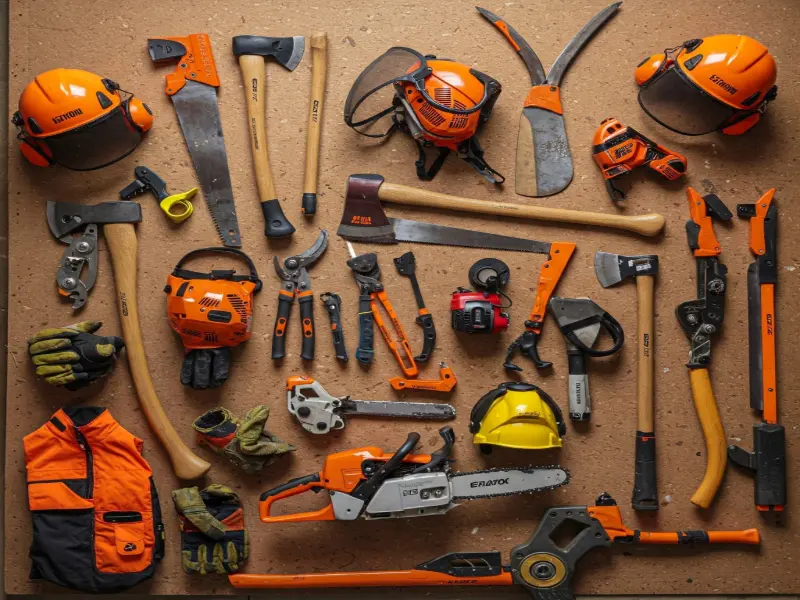
    A collection of tree trimming tools including pruning shears, loppers, and chainsaws arranged for use.

    If you are not hiring a professional company and doing your own trimming and pruning in your yard, you should follow tree trimming best practices, and you need the right tools and safety gear. Usually, for small branches, you need pruning shears; for thicker limbs, you need loppers; and for medium-sized branches, a pruning saw is required. You should also use a pole pruner when you need to reach high areas. These tools for effective tree trimming allow for clean cuts that help trees heal faster and stay healthy.

    Always remember to use clean and sharp tools, especially when using selective pruning techniques, to avoid tearing the bark or spreading disease.

    Remember to wear gloves, safety goggles, a hard hat if working under large branches, and non-slip footwear.

    Also, be aware that you cannot handle every tree trimming project on your own. If you are too busy to manage your yard or feel you need a professional tree care service, do not hesitate to hire them. It’s not just an expense, it’s an investment in your green, healthy yard.

    Techniques for Effective Tree Trimming

    So far, with the details we’ve discussed, you know proper tree trimming techniques are needed for healthy growth. So let us give you some tips about the best possible techniques you can use.

    Step 01 – Start by identifying dead, diseased, or crossing branches.

    Step 02 – Always cut at a slight angle just above a bud and avoid flush cuts, which can damage the trunk.

    Step 03 – Apply selective pruning techniques to improve both health and appearance, removing only what’s necessary.

    And you should remember, for better tree shaping and canopy control, maintain a balanced form by thinning the crown evenly. Always avoid over-pruning, as it can weaken the tree and stunt its growth.

    Common Mistakes to Avoid

    When we are discussing tree trimming best practices, you should avoid common mistakes because it is just as important as doing things right. When it comes to the mistakes to avoid when pruning landscape trees, there are three main mistakes you should be aware of.

    The first major error is tree topping — cutting off the top of a tree, which weakens its structure and leads to unhealthy regrowth.

    The second is over-pruning, which removes too much foliage and puts the tree under stress, making it hard for the tree to regrow.

    The third mistake is trimming in the wrong season and using the wrong tools or dull blades, which can tear branches and leave wounds that take longer to heal.

    So, please remember these mistakes and make sure you’re doing the right job at the right time.

    So, if you haven’t found a suitable professional for your requirements yet, let us give you a hint.

    KD Tree Service is the trusted and affordable tree service for all your tree needs.

    Our certified arborists specialize in eco-friendly tree care solutions, offering transparent pricing and timely service. Whether you need precision tree trimming, emergency tree removal, or a full arborist consultation, our team ensures professional results backed by 5-star customer reviews. Contact us today to schedule a free on-site estimate.


    Get a Free Estimate

  • The Ultimate Guide to Tree Removal: When and Why You Need It

    The Ultimate Guide to Tree Removal: When and Why You Need It

    Tree removal can be a daunting and complicated task for many homeowners and nature lovers. It is a huge decision that many delay until they realize that their decision was too late. Of course, trees are an essential tool for our survival. Yet, there could be many reasons to cut down a tree. Through this Tree removal guide, let’s take a look at when to remove a tree and why tree removal is necessary.

    Now, let’s take a look at some reasons why trees should be removed.

    There are many reasons for a tree to be removed. In some cases, it could be either safety concerns, dead, infections spread within the tree, or damaged. So, let us take a look at some Signs a tree needs to be removed, 

    Disease or pest infections

    Tree affected by common diseases, showing symptoms like leaf spots, cankers, and wilting

    The spread of diseases or an infection could bring hazardous outcomes to a tree. This is the most common reason for many tree removals. A disease or pest infection can weaken a tree and increase its vulnerability to infection or even death. When a tree is infected, that could affect your whole landscape, either affecting the nearby trees or your whole landscape. Removing such a tree is the best solution in such conditions. 

    Now, how can we identify such trees? Here are some typical indicators of illness or a pest infestation. 

    • Dead or dying tree risks.
    • Spots or discoloration on leaves.
    • Splits or cracks on the trunk.
    • Infects or larvae present.

    Tree removal for safety reasons

    Tree removal for safety reasons is another common reason for tree removal. People and property can be in serious danger from trees that are leaning, have dead branches, are not strong enough to bear their weight, or are situated too close to buildings or electrical lines. To solve the safety issue, pruning or trimming might be sufficient in some cases, while removal may be the best choice in other situations. 

    What are the warning signs of a hazardous tree?

    Following are some typical safety issues that could need a tree removal:

      • Unstable or slanting trees.
      • Massive, dead branches.
      • Trees that are too close to buildings or power lines.
      • Trees with rotting or damaged roots.

    you can learn more about hazardous tree removal and the steps to take from the International Society of Arboriculture

    Enhancement in the landscape

    Some homeowners could choose to remove a tree in order to improve the overall appearance of their property. Tree removal and landscaping plans have an interconnected relationship. Trees that are overly huge or placed in an awkward spot might take away from a property’s overall beauty. A tree may also need to be cut down to create space for new development or for appearance improvement purposes. 

    Tree removal for landscape enhancement is frequently done for the following reasons:

    • Trees that are grown in awkward spots.
    • Trees that obstruct sunlight and views.
    • Trees that are getting in the way of new development or landscaping projects.
    • Trees that take up too much room.

    These are considered to be the top reasons to consider tree removal on your property. All these situations could affect your decision for When to remove a tree. Make sure you make the best decision before it is too late. 

    Getting ready to remove a tree

    It is crucial to be prepared for the task at hand before removing a tree. This will guarantee that the tree is taken down in a safe and efficient manner without damaging nearby property or putting local residents in danger.

    Evaluating the tree

    It’s crucial to evaluate the tree to determine the most effective removal method before starting the operation. Take into account the tree’s dimensions, position, and condition. Perform a Tree health inspection. Hiring a professional tree removal service could be required if the tree is large and situated near buildings or other structures. With the proper tools and safety measures, you might be able to remove the tree by yourself if it’s tiny and located in a public place.

    Getting the necessary tools.

    Various tree removal tools including chainsaws, ropes, and safety gear arranged for use

    The proper equipment must be available in order to remove a tree in a safe and efficient manner. Tree removal frequently involves the use of a chainsaw, hand saw, pruning shear, ropes, and a ladder. Before starting the removal procedure, it is crucial to make sure that every tool is in excellent working condition.

    Safety Measure

    Safety should always come first, regardless of whether or not the tree removal is being done by a professional or by a homeowner. The following safety measures should be implemented:

    Include safety gear, such as a hard hat, gloves, helmet, eye and ear protection, and sturdy boots that offer sufficient traction.

    Make sure there are no people, animals, or other obstructions in the vicinity of the tree. Be careful when working close to infrastructure, such as electricity lines.

    Use the perfect cutting methods to avoid getting hurt or damaging your property. 

    Establish a plan for getting rid of the debris, including whether to take it away or utilize a wood chipper.

    Hiring a skilled tree removal service

    A professional tree removal team equipped with safety gear, working together on a tree removal project

    It is strongly advised to choose a professional service when it comes to tree removal. Tree removal calls for certain expertise, abilities, and tools and can be complex. The skilled experts at KD Tree Services can guarantee everyone’s safety because they are aware of the difficulties associated with tree removal for both small and large projects. 

    Do your research before picking a tree removal service, and pick one with a solid reputation. An accurate estimate of the project, including the price, schedule, and any extra services like debris removal or stump grinding, will be given by a reputable tree removal company. Speak with KD Tree Services if you need assistance. 

    Tree removal cost factors should also be considered when deciding to remove a tree.

    The cost of tree removal varies depending on several factors, including the tree’s size, location, condition, as well as accessibility.  In general, larger and more difficult tree removal tasks will cost more.  Additionally, considerations such as the presence of electricity lines, nearby structures, or difficult terrain can influence the pricing.

    It is recommended that you get a better idea of the average cost in your area.  However, keep in mind that the lowest price does not always imply the highest quality service.  You should also ensure that your quotation covers all relevant components, such as preparation and cleanup.  When selecting a service provider, it is important to evaluate the quality of work, experience, and reputation. 

    Discover more about Tree Removal Cost How Much Does Tree Removal Cost in Erie, PA?

    What is the best tree removal service to select?

    Tree removal is an important choice that should not be taken lightly.  While trees offer essential environmental and health benefits, there are times when their removal is necessary and should be done as soon as possible.  

    Hiring a professional tree removal service, like KD Tree Services, is strongly recommended to guarantee a safe and efficient removal process. The KD tree services team possesses the skills, labor, and equipment to complete the work perfectly.  They will take care of the Tree removal and local regulations. Contact us today to set up your consultation!


    Get a Free Estimate