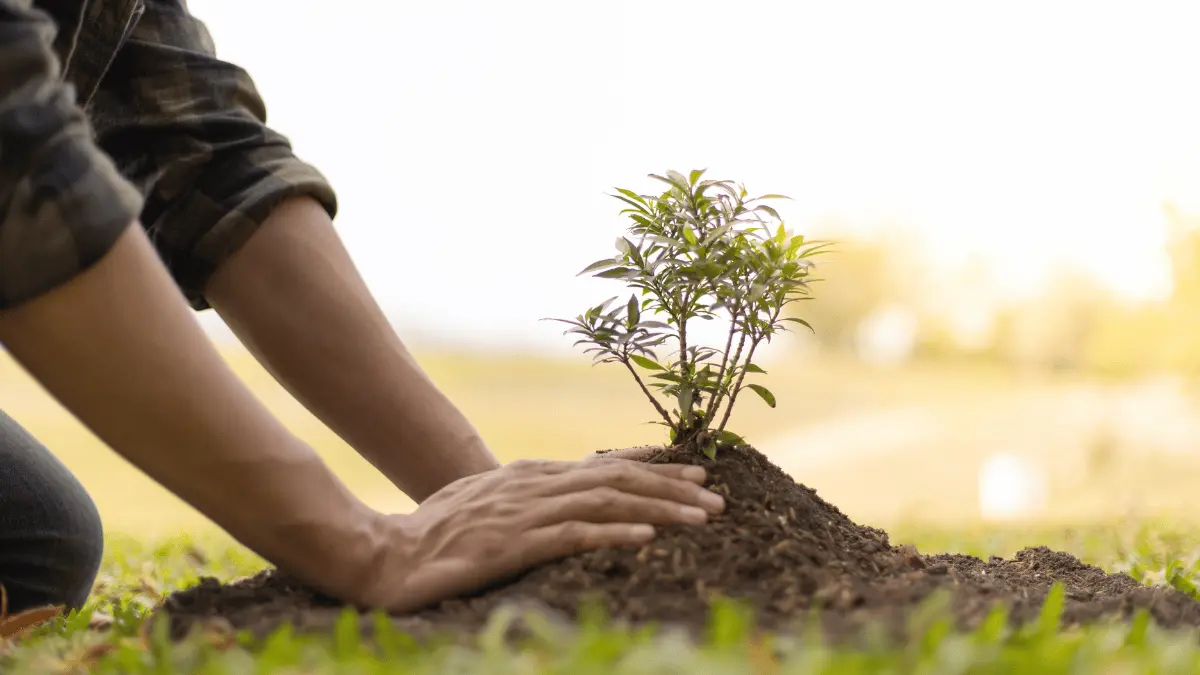
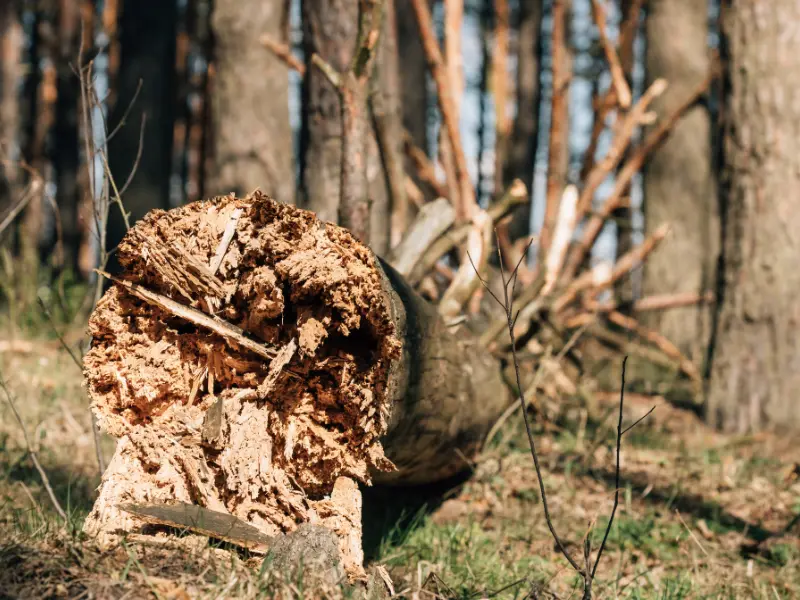
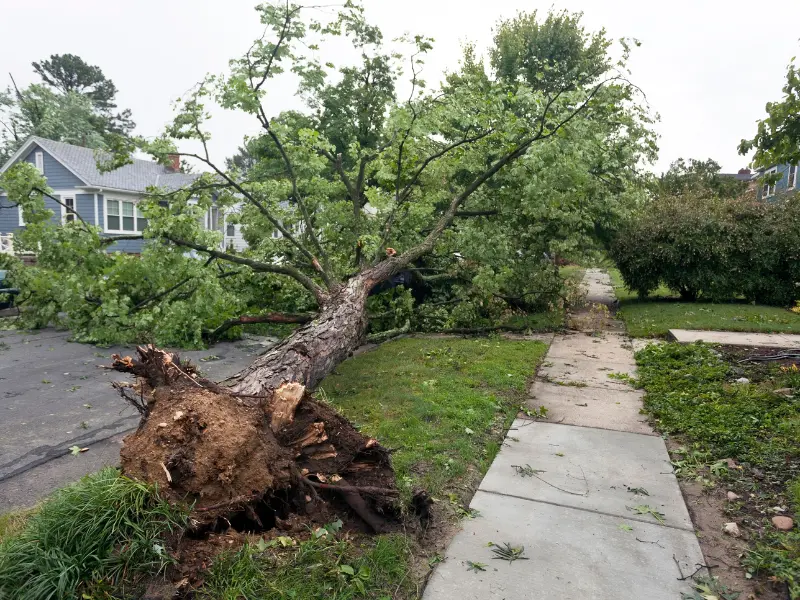
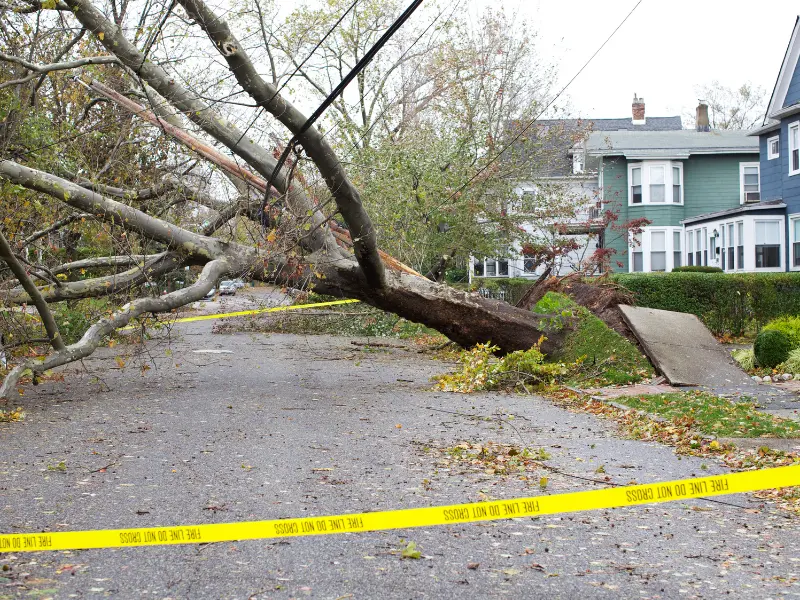
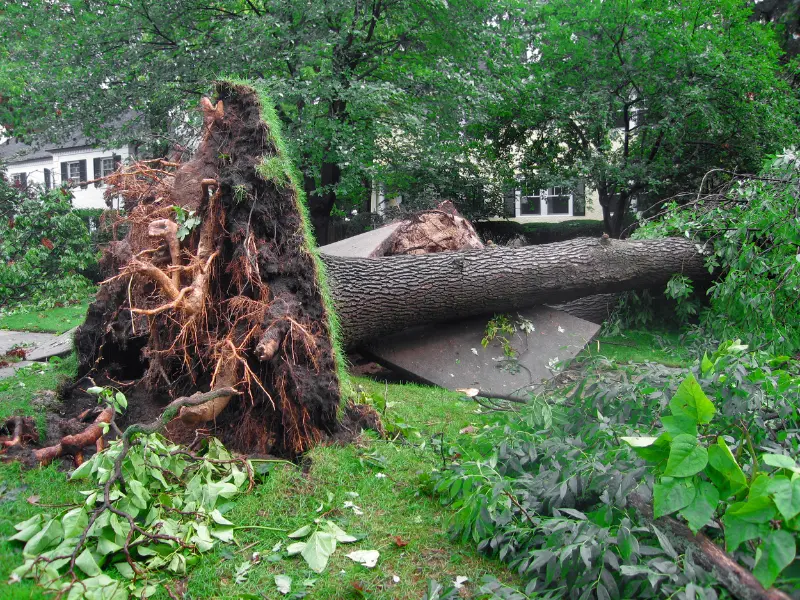
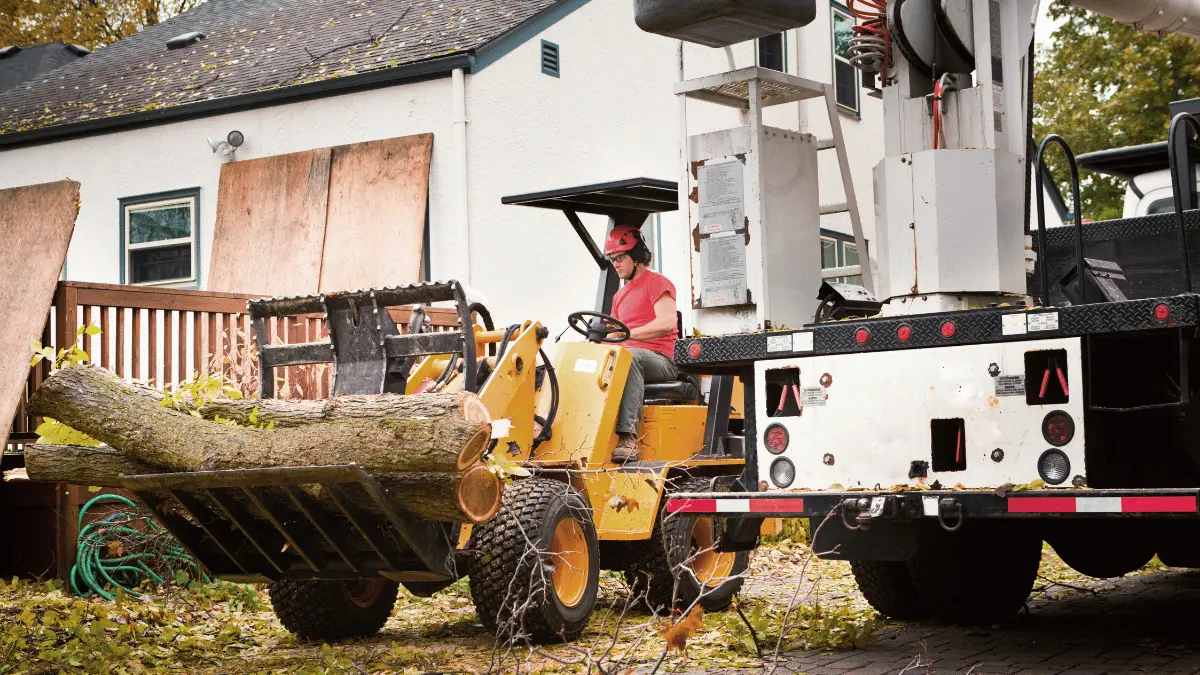
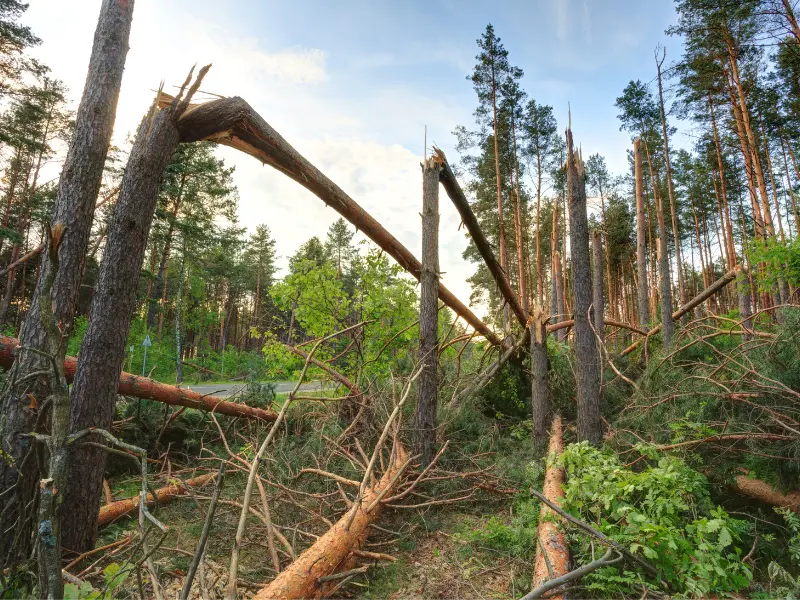
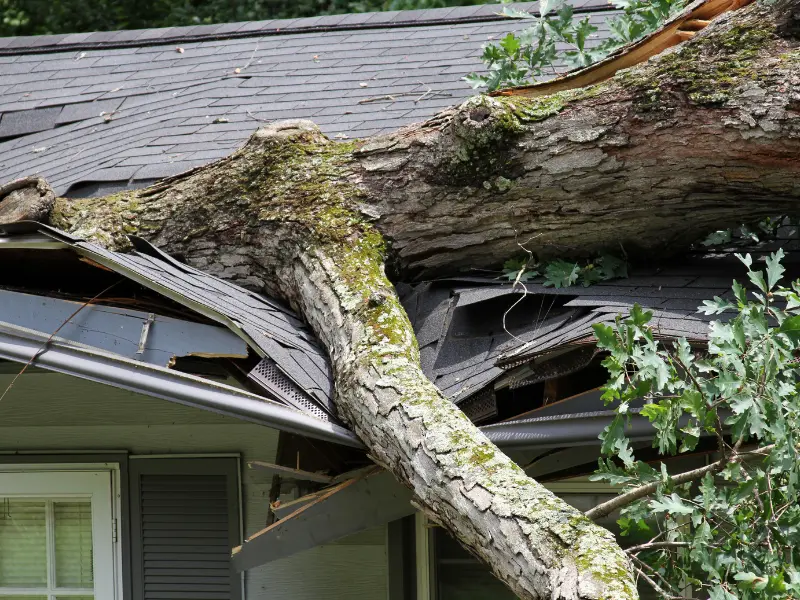
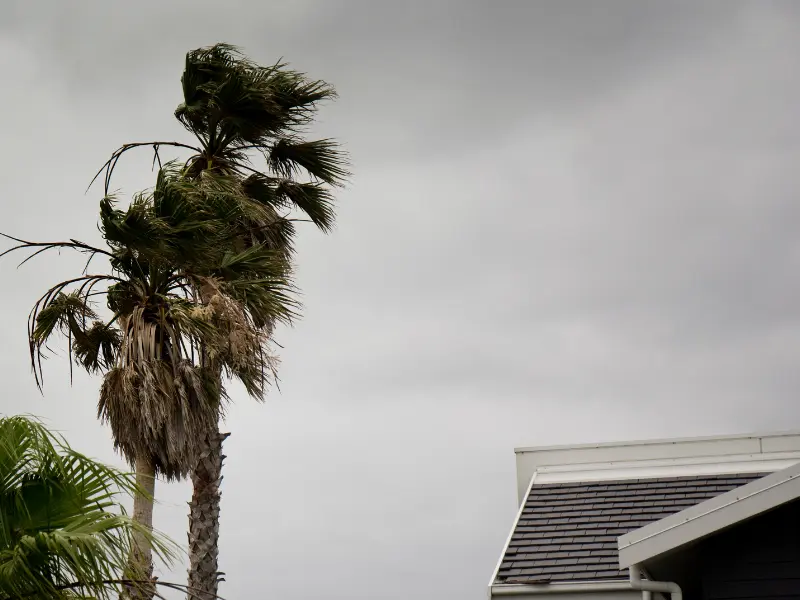
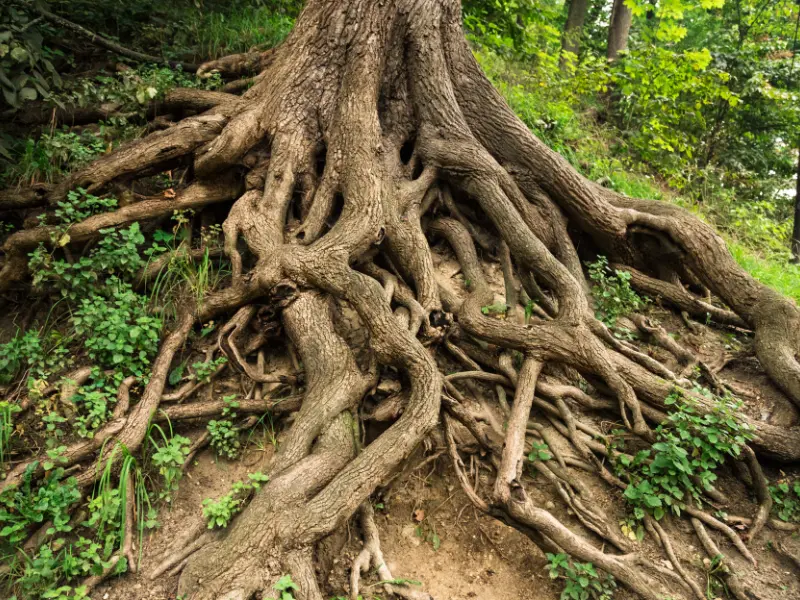
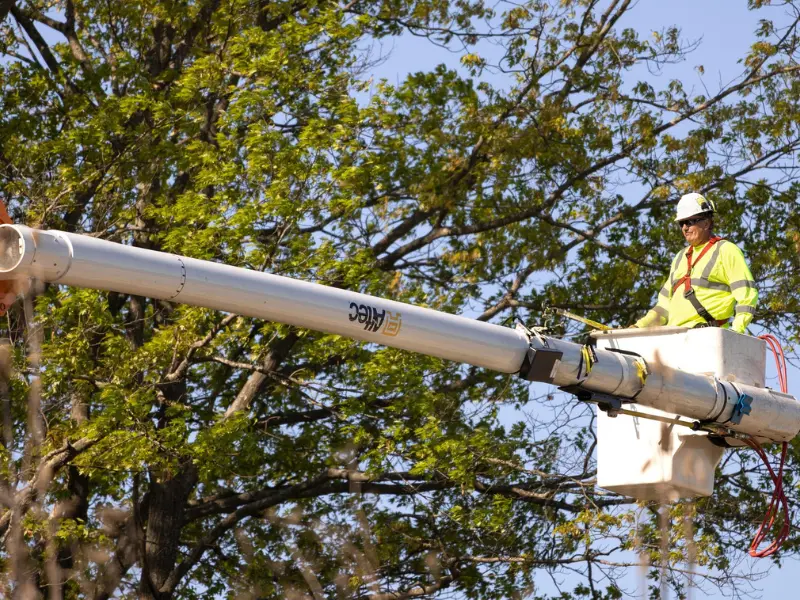
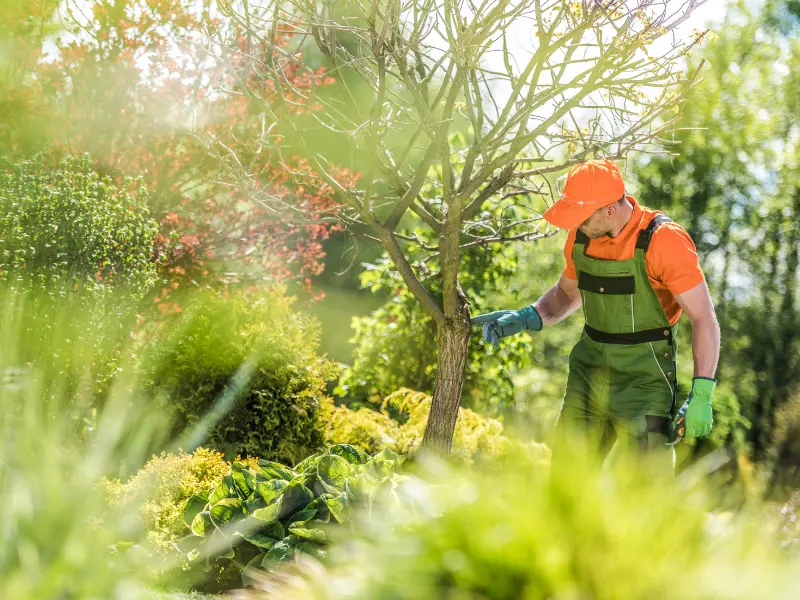
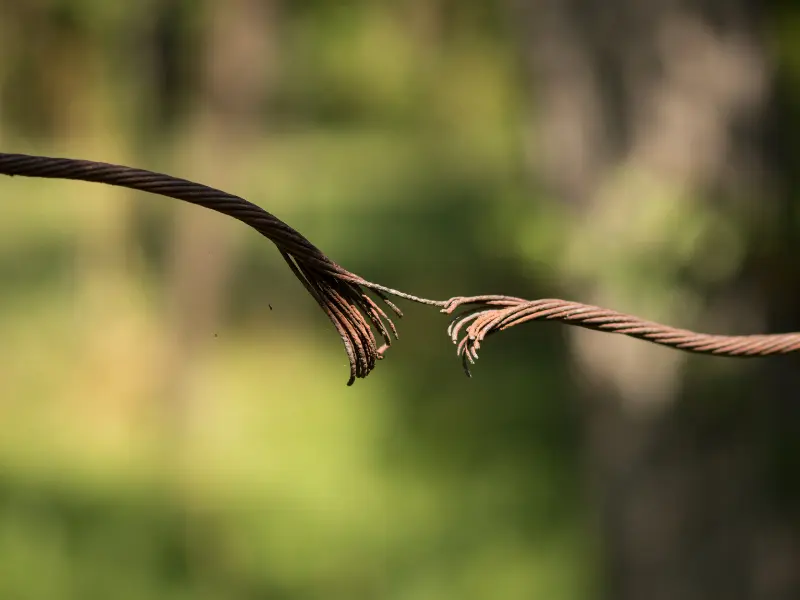
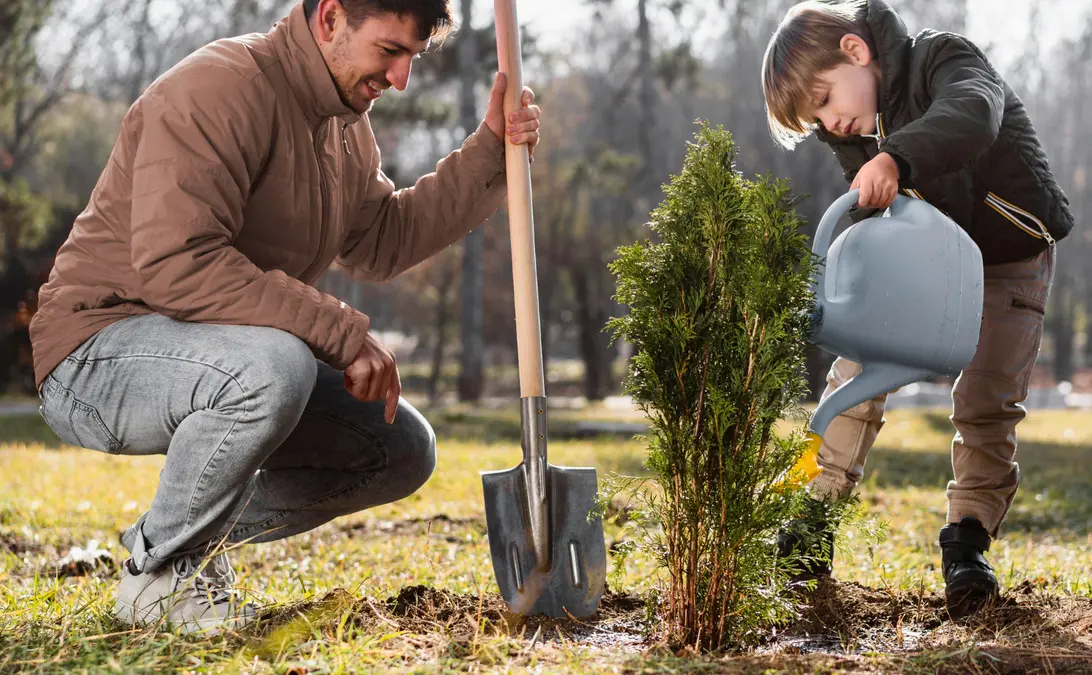
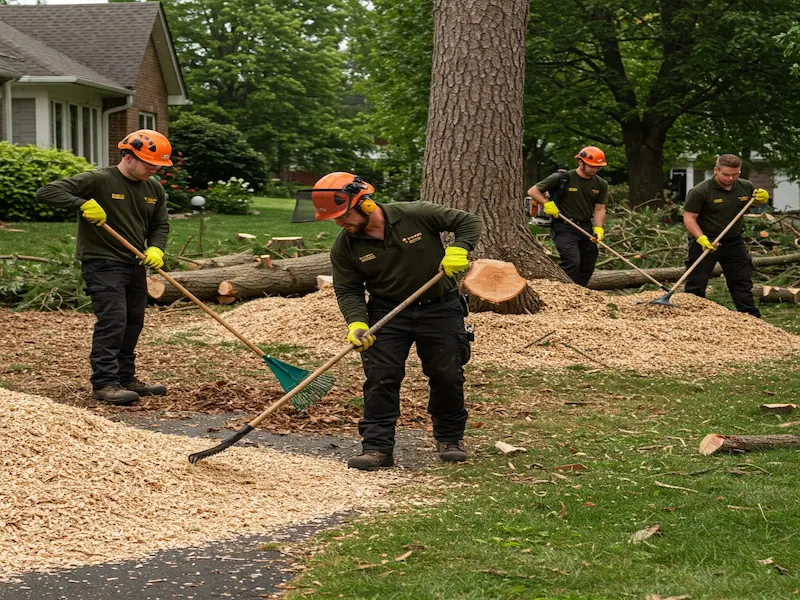
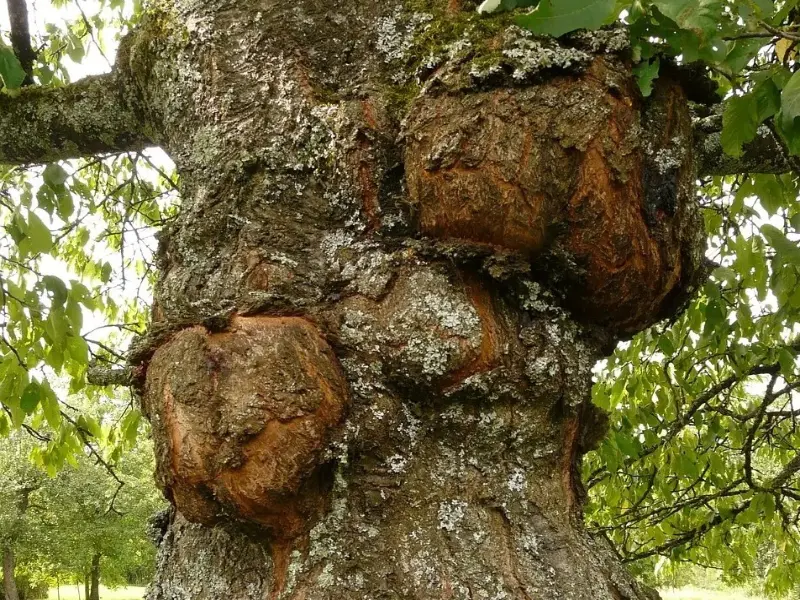
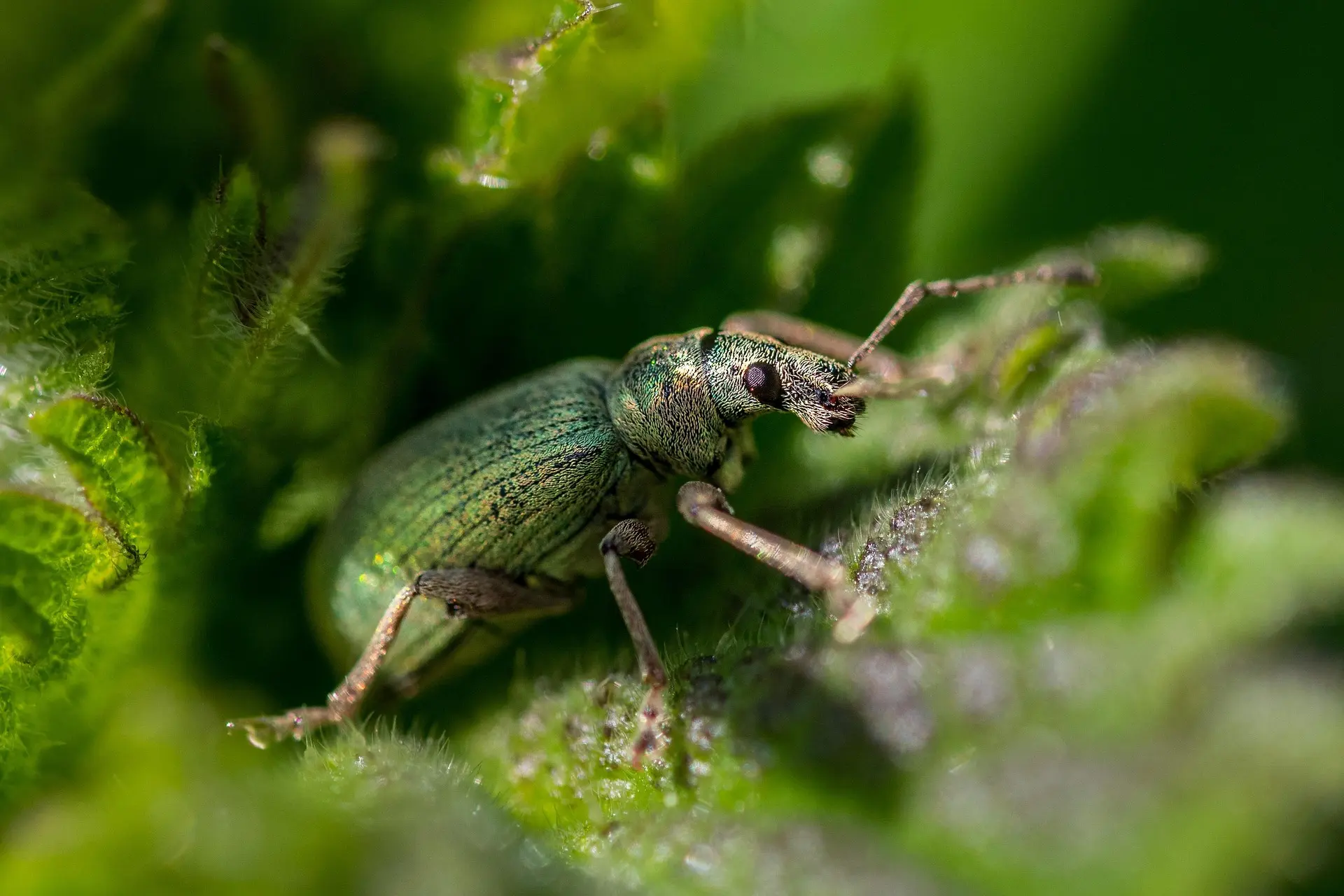
First, we must inspect our trees to determine whether any damage has occurred as we begin the process of cleaning up our yards and landscapes after a Storm. There may be broken branches, uplifted roots, or even cracks that could cause problems later if not taken care of. By giving them the right care and helping them, we can make sure that our trees not only withstand this storm but also prepare for future ones.
How tree cabling helps with stability
Trees can take damage during a storm, giving the appearance that there is no future. It can cause serious limb damage or breakage. Additionally, it has the ability to rip or gouge the bark, as well as shred or peel the leaves off.
However, a tree may not necessarily die from what seems to be fatal wounds. After being damaged by a storm, trees have an amazing ability to recover. This is called Storm-damaged tree recovery.
How to save a tree that’s been damaged by a storm
Tree damage assessment after a storm
Assessing a storm-damaged tree’s general health and vigour is the first stage in the process. Using first aid procedures right after the storm should help the tree recover if it is generally healthy and has not sustained significant structural damage. It’s important to keep an eye on the tree before applying fertilizer because damaged trees sometimes don’t respond well to nutritional treatments. The best course of action is to let the tree heal itself or seek guidance from an experienced arborist.
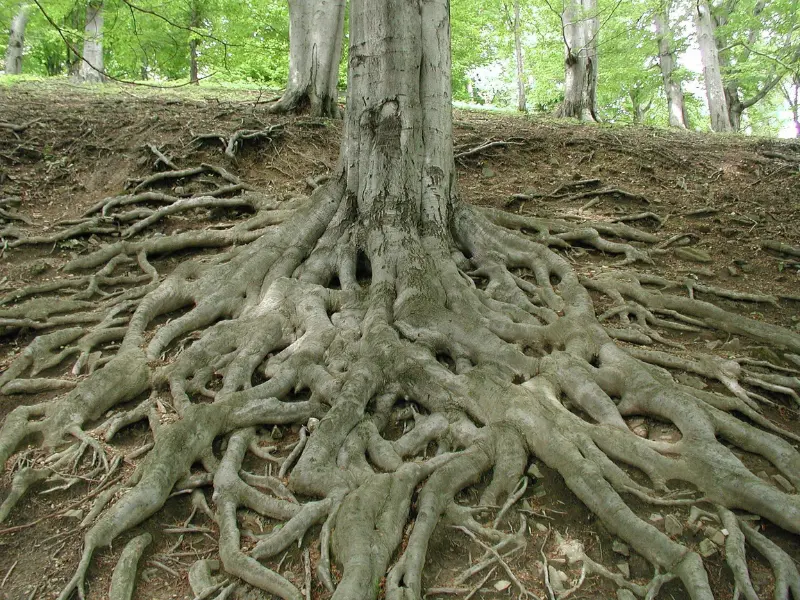
The next crucial step is to determine whether the tree’s root system is stable and undamaged. The survival and recovery of the tree depend on an effective root system. The stability and health of the tree may be at risk if the roots are broken or exposed. In such instances, get advice from an experienced person to decide on the best course of action.
Lastly, the loss of the leader, which is the main upward-trending branch on most trees, should be assessed. The loss of the leader may affect the tree’s ability to recover
After assessing tree health after wind damage,
Steps to take to repair a storm-damaged tree
1. Treat Trees After a Storm Damage
The question that arises after deciding to Repairing trees after a storm, “Can I do the tree storm damage repair myself, or do I seek expert assistance?”
Hiring a trained specialist to complete the work can be preferable. However, if you are able to work and have experience with such equipments, you can do it.
2. Removal of Branches
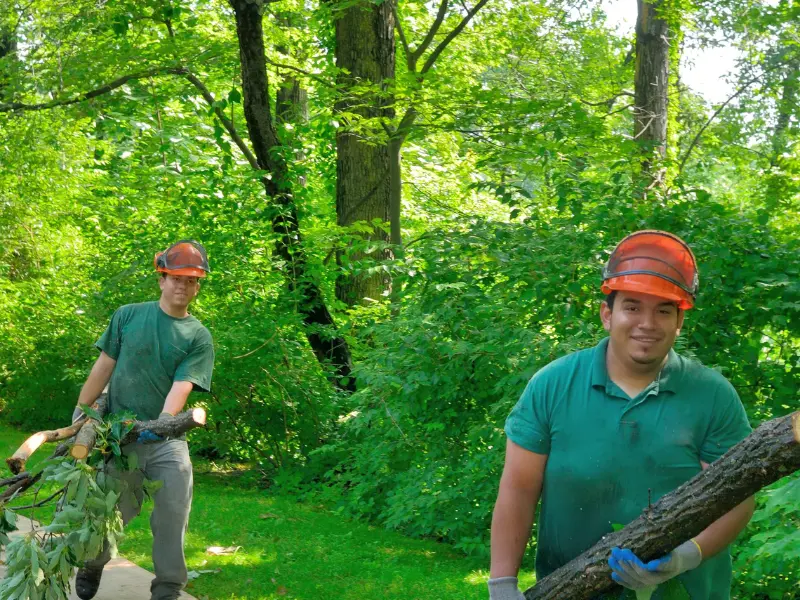
Pruning shears or a pole pruner can be used to trim branches that are smaller than three inches in diameter. A clean cut can be made with a sharp shear or pruner that is positioned precisely. Additionally, it reduces cleanup time by half and will not tear or break bark tissue.
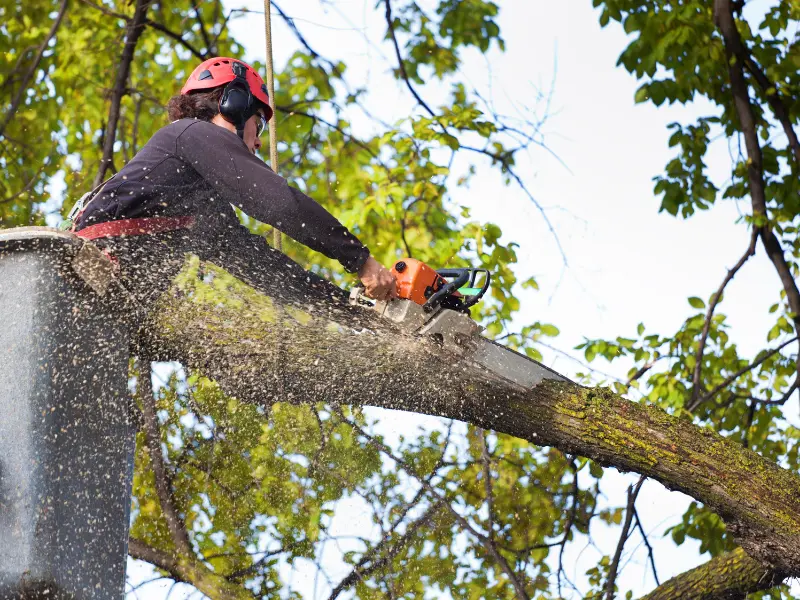
Larger branches should be cut off using a sharp saw. When using a power saw, you will also require a safety line and harness.
The most efficient and safest method for cutting large branches is the 3-cut approach. This is due to the fact that they don’t further harm the tree.
If storm-damaged trees are not trimmed carefully, they may sprout excessively or lose entire branches. Additionally, it may cause more problems to arise in the future. This is because these sprouts are typically short-lived and poorly connected.
3. Torn Bark
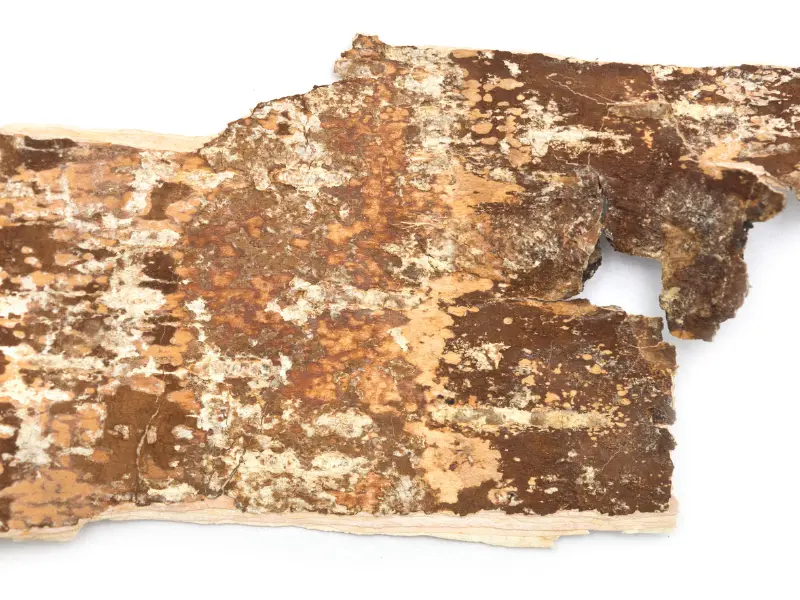
In some cases, bark tearing occurs on large branches or the main stem. This is most frequent when lightning strikes trees.
Trim every loose bark back to the region where it is connected. Avoid making deep cuts into the tree’s wood. This technique of bark-cutting is known as bark tracing.
If possible, cut every bark incision into an oval shape. This will minimize the trace as much as possible. In large areas, this could be difficult. Additionally, this kind of bark pruning encourages quick healing with less wood decay.
Trim every loose bark back to the region where it is connected. Avoid making deep cuts into the tree’s wood. This technique of bark-cutting is known as bark tracing.
If possible, cut every bark incision into an oval shape. This will minimize the trace as much as possible. In large areas, this could be difficult. Additionally, this kind of bark pruning encourages quick healing with less wood decay
4. Split Forks
It is possible to fix some partially damaged forks or the main branches without having to cut off one or both branches. Most homeowners cannot complete this task unless they have prior experience.
You can reassemble the divided pieces if the break is almost equal. After that, fasten them using a threaded screw rod and a wide-diameter steel bolt that are placed across the split area.
Pulling the split together is the first step in the proper repair process. A small tackle, block, or winch can be used for this.
Place them six to eight feet or more above the split to maximize leverage. Once the rod or bolt is in position, drill holes in both divided halves.
Two or more bolts may be required for long split areas. In addition to the bolts, it is usually advantageous to place a steel cable between the split fork’s two main branches a few feet above the split.
Attach the cable using lag screws to each branch. Eventually, the cable will girdle the branch if you wrap it around it. The purpose of this cable system is to hold the crotch together. It reduces the likelihood of more harm as a result.
5. Wound treatment
After pruning storm-damaged trees, apply pruning paint or wound dressing to any wounds larger than 1½ to 2″ in diameter. Dressings and paints are unlikely to speed up healing. However, they may stop drying and have an aesthetic influence.
There are numerous commercial products available. You may also apply a few coats of orange shellac. This method can also be used to remediate damaged bark regions that have been traced.
6. Tree root damage from storms
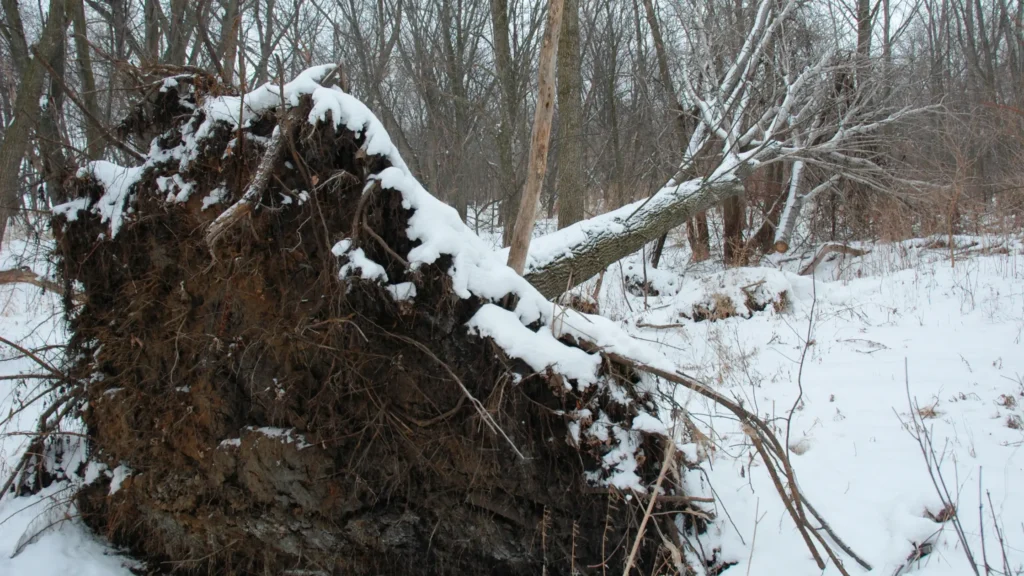
Severe storms may uproot trees. You can’t save a tree that’s too big. In this instance, cutting down storm-damaged trees is necessary.
You could straighten and stabilize smaller trees with guy cables or wires. To pull the tree upright, you will need a power lift or other equipment.
You should not use this procedure unless 1/3 to 1/2 of the roots remain in the soil. The remaining visible roots are often compact and undamaged.
Before raising the tree upright, remove some dirt from beneath its root mass.
This will help to put the roots below the current soil grade level. Once the tree has been restored to its upright posture, fill in any soil gaps.
Water the trees to help the soil firm up and reduce air pockets.
Tie two or three guy lines to the trunk at about 2/3 of the tree’s height. Also, do this with anchors 12 to 15 feet from the tree’s base. This is to keep the tree in place, just like it is usual with newly transplanted trees.
Conclution
Do you know what? A huge storm does not necessarily indicate the end for your large trees.
Contact a reputable tree service for the perfect Emergency tree care after storms.
If the storm has already hit, a trustworthy tree service can help you save livable trees while removing damaged ones. Not only that, you will be able to get details regarding how to help a storm-damaged tree recover, the steps of Storm-damaged tree care, and much more advice to maintain a healthy tree.
KD Tree Servicesprovides experienced tree services, storm damage treatment, and Tree storm damage repair for every client. This covers storm-damaged tree removal, landscaping, and trimming. We are dedicated to preserving and enhancing the beauty of your yard.
Call us today, and our staff members are going to respond right away.
Hi there, fellow homeowners! Have you ever woken up after a storm with the sound of a tree branch breaking loudly on your property or noticed a tree leaning dangerously near your home? Trees can be quite dangerous despite their beauty, especially during or after bad weather. Let’s explore emergency tree services and the need for having trustworthy experts on hand for such unforeseen situations.
Spring showers can occasionally cause tree storm damage. Strong storms, strong winds, and heavy rain can cause severe damage to your trees, including damaged branches to complete tree fall. Your family and property could be at risk from your trees if you don’t take the right precautions after a storm. However, you don’t have to face the challenges by yourself. With our spring storm recovery recommendations, the KD Tree Service team explains how to help your trees recover from hurricane season.
Here are the Best practices for securing trees during a storm and assisting with Your Emergency tree care after a hurricane.
To increase the likelihood that you are protecting trees during hurricanes, it is always wise to practice tree storm preparedness in advance. On the other hand, spring storms might arrive suddenly. Strong storms, such as hurricanes, can cause significant tree damage because they bring strong winds and a lot of rain. You need to inspect your property and trees once the storm has passed. These are signs of tree storm damage to watch out for.
Consider hurricane tree protection when you examine your trees. Until the issue is resolved, it is recommended to rope off the section of your yard where the tree is leaning. Trees that have fallen and damaged your roof, vehicle, electricity lines, or other parts of your property need to be removed immediately. When it comes to safety, don’t hesitate to take action.
Tree wind damage prevention: Determine Whether You Can Save Damaged and Fallen Trees.
You could question whether you can save your fallen or damaged trees after evaluating the tree storm damage in your yard. The extent of the damage determines
this. For instance, after regular pruning and trimming, trees that survive a storm with a few broken branches might be fine. Additionally, bracing and cabling can be used to fix minor leans. Trees that have been hit by lightning, split at the trunk, lost more than half of their foliage, or fallen during a storm, however, might never fully recover and will need tree removal services. Get a tree inspection from a qualified arborist if you are unable to assess the degree of the tree’s storm damage.
Are you curious about storm-proofing trees? How to storm-proof your trees before a hurricane?
Although you may believe that trees are constantly destroyed by hurricanes, that isn’t necessarily the case. Although the wind and rain are beyond your control, you may strengthen your tree to withstand bad weather.
Tree root strengthening for storms
The roots are the most important component in a tree’s ability to withstand adverse weather conditions, regardless of how old the tree is. They guarantee that your tree has the materials it needs to recuperate and provide it the solidity it needs to withstand strong winds.
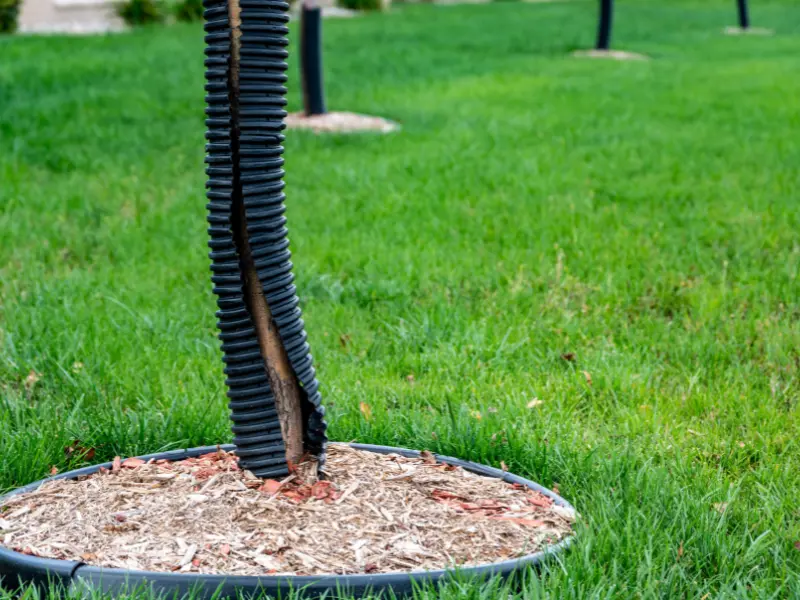
Mulch the tree with natural material to begin the preparations. In addition to keeping the root hydrated and shielding it from extreme heat, this also acts as a barrier against heavy rainfall.
Hurricane tree pruning
Pruning trees is an excellent option if you’re wondering how to keep them safe from hurricanes. Regular pruning promotes strong development by removing weakened or damaged branches. Because the wind has the ability to tear off and scatter dead and dying branches, this becomes especially crucial before the storm season. The breaks, which are often rough, cause substantial damage to the trunk. Furthermore, the broken branches could negatively impact the remaining branches and surrounding property.
Making a lot of clutter within The trick is to keep the canopy open so the wind faces the least amount of resistance as it crashes through.Are you unsure of where to begin? The proper cuts can be made for you by a qualified arborist. For the best outcome, give us a call.
Keep the bark safe
You can use a material like row cover or burlap to protect the bark. By padding the bark, both products reduce the effect of flying debris. More importantly, this layer can shield the trunk from unpleasant damage and wounds.
Trees can withstand bruising, but they are better off without it. Cuts in the bark, however, expose the tree to illnesses and infestations of insects. These are particularly common during hurricane season, given that the weather is suitable for the spread of fungus and bacteria
Protecting Trees During Hurricanes
This refers to the use of cable supports or staking. Since it’s difficult to do this correctly with a mature tree, it’s preferable to hire experts. The concept is rather straightforward: in order to reinforce the branches, we weave the cables throughout the canopy.
Additionally, we can brace potentially breaking branches or trunks. They keep the tree steady amidst the chaos.
Are you in need of assistance to keep trees safe from hurricanes? Or do you simply want to stay out of the next tree emergency? KD Tree Services is dependable in every case. Contact us to make an appointment for service right now!
Protecting Trees During Hurricanes
This refers to the use of cable supports or staking. Since it’s difficult to do this correctly with a mature tree, it’s preferable to hire experts. The concept is rather straightforward: in order to reinforce the branches, we weave the cables throughout the canopy.
Additionally, we can brace potentially breaking branches or trunks. They keep the tree steady amidst the chaos.
Are you in need of assistance to keep trees safe from hurricanes? Or do you simply want to stay out of the next tree emergency? KD Tree Services is dependable in every case. Contact us to make an appointment for service right now!
Next Steps for Repairing Hurricane Tree Damage
If you intend to keep the tree…
You should take steps to remove damaged branches and support the tree to rectify any leaning if the storm damage is minimal and you choose to maintain the tree. To eliminate any risks from your yard and get back to using your outside area, you should also begin cleaning up storm damage and clearing away plant debris.
If it’s time to move on…
It could be preferable to let your tree go if it was severely damaged and is now missing huge branches, split at the trunk, or uprooted entirely. Trees that are severely damaged can risk the safety of other trees, your family, and your property. For instance, pest infestations may spread across your yard due to an unhealthy tree. Never be afraid to remove a tree that is damaged. For expert tree removal services, contact KD Tree Services.
Our Arborists Are Here to Help You Get Through the Storm
You don’t have to face the storm alone. Get the professional assistance you require with post-storm recovery, including tree inspection, tree removal, and storm cleanup services, by getting in touch with the best tree care service providers, the KD Tree Service team.
Trees provide shade, aesthetic appeal, and environmental advantages, making them a vital component of any landscape. However, even the strongest trees occasionally require a bit of extra support to survive the weather and any structural difficulties they might come across. This is when bracing and tree cabling are useful. These methods can often be the most effective for keeping trees standing up, safe, and healthy.
Let’s go into greater detail about what tree cabling and bracing mean, why they’re necessary, and how these methods can help your trees last longer.
What is tree cabling and bracing, and how does it work?
Arborist tree cabling and bracing services employ tree support systems like tree cabling and bracing to strengthen weak or sensitive branches and trunks, preventing damage or possible failure.
How tree cabling helps with stability
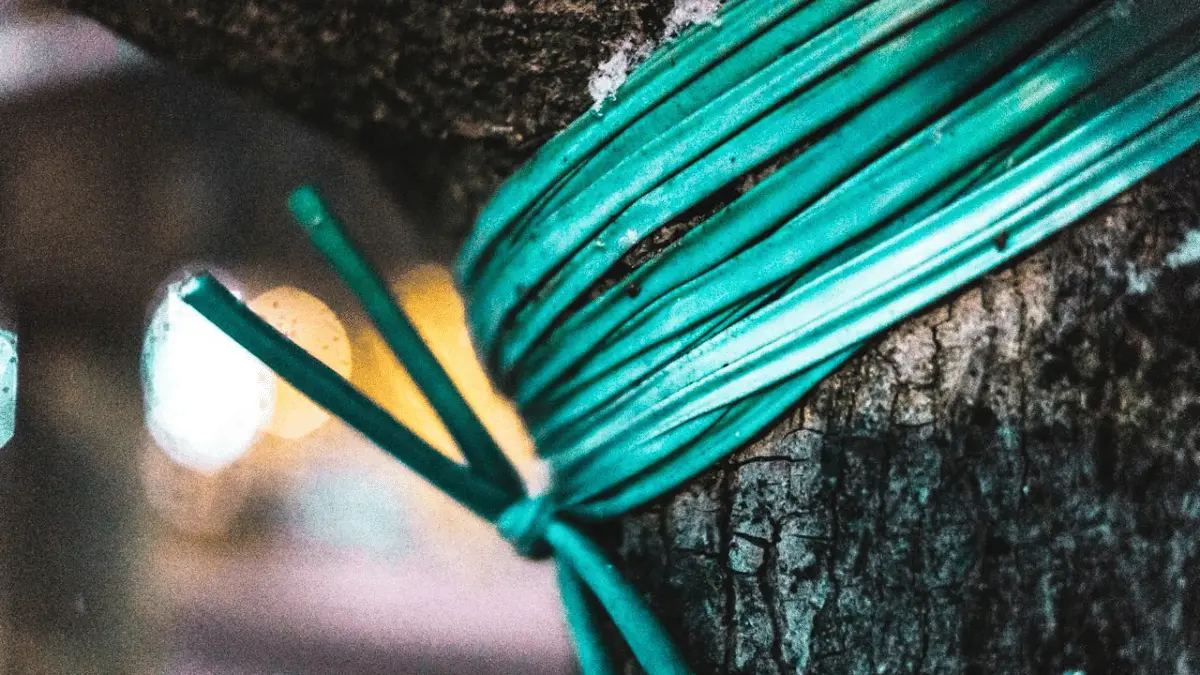
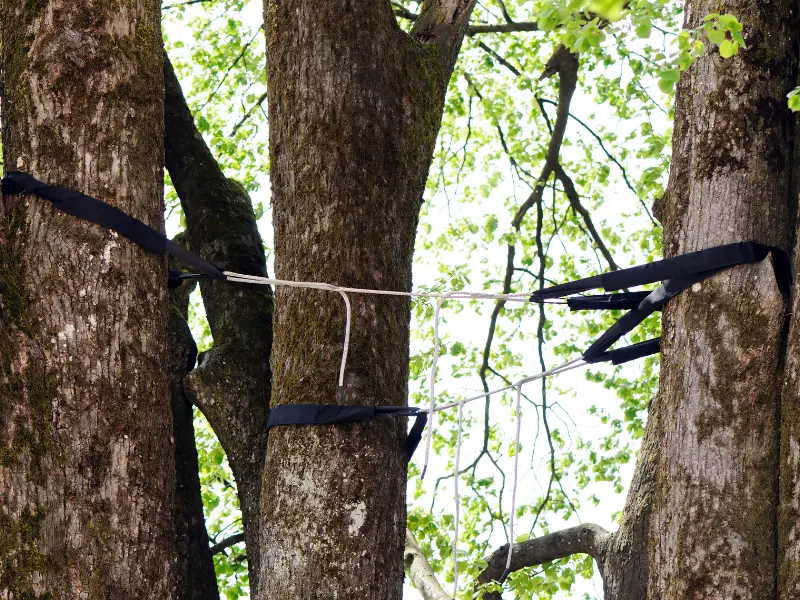
Installing flexible cables in a tree’s upper canopy to prevent branch movement is known as cabling. Cabling redistributes the pressure, reducing the likelihood that weaker limbs would break under their weight of snow and ice or due to strong winds.
Tree bracing for structural support.
Bracing strengthens a tree’s weak spots, like a broken trunk or a branch bearing a lot of weight, by using steel rods. In order to stop more splitting or breaking, braces are usually positioned closer to the tree’s weak spot, lower in the tree.
Both Tree cabling and bracing techniques aim to minimize the chance of structural failure while preserving the tree’s natural shape to the highest degree attainable.
When should you use tree cabling and bracing for support?
While cabling and bracing trees are not necessary for every tree, there are some situations during which they have a major effect on a tree’s stability and lifespan.
Signs your tree needs cabling and bracing
Weak Branch Unions: Some trees develop a “V” shape, in which a trunk and a branch or two branches meet at a sharp angle. This may lead to a weak point that eventually cracks under the weight of the tree or outside forces. Stress at those union points might be minimized via cabling.
Heavy or Overextended Branches: Sometimes, mature trees grow branches that extend greatly from the main trunk. Wind, snow, or simply their own weight could trigger these branches to break. Cabling adds support to these branches, allowing them to develop safely.
Damage Recovery: Bracing can provide crucial support as a tree heals from a crack or break in the trunk or a large branch. A major split or fractured trunk is a serious structural problem, and bracing can stop more damage or failure.
Multi-stemmed Trees: As they get older, some trees, such as maples and birches, may become unstable due to their many stems. The stems are secured by cabling and bracing, allowing them to grow together harmoniously without competing for structural superiority.
High-Stress Environments: Extra-structural assistance may be helpful to trees in regions with high winds, a lot of snowfall, or high foot activity around their root zone.
The benefits of tree cabling and bracing for weak trees
Stops Branch and Trunk Failure: By securing slender limbs and lowering their likelihood of breaking, cabling and bracing can prevent serious harm to the tree.
Increases Tree Lifespan: These methods help trees grow longer and healthier by strengthening their weak spots, which will benefit the landscape for many years to come.
Protects Neighbouring Property and Persons: Trees with weak branches could danger to neighbouring persons, structures, or automobiles. Bracing and cabling lessen these risks.
Supports Natural Growth: Cabling and bracing retain the tree’s natural structure and aesthetic value without cutting off big branches or changing the tree’s shape.
Arborist tree cabling and bracing services
Tree cabling and bracing should always be done by a qualified arborist. In fact, improper installation may damage the tree or not give it enough support. The general steps in the procedure are as follows:
Assessment: An arborist looks at the tree’s structure, vulnerabilities, and stress spots first.
Installation: Bolts fastened to the limbs are used to put wires high in the canopy. Steel rods are put through the trunk or branches’ weak spots for bracing in order to keep them from splitting.
Maintenance and Inspection: As the tree gets bigger, it’s important to periodically check the braces and wires. Over time, modifications can be required to guarantee the tree keeps getting enough support while being restricted.
Investigating tree health support with cabling and bracing
To make sure cables and braces maintain the tree structural support systems
in an efficient manner after they are installed, routine inspections are necessary. Tree development and alteration over time can have an impact on brace location and cable tension. Through inspections, arborists can make necessary adjustments to the equipment, averting possible issues and guaranteeing the system keeps operating at its best.
Here’s why it’s so crucial to regularly inspect the bracing and cabling:
Tracking Tree Development: As trees get bigger, they surround the supports and wires with more wood. This expansion may cause the cables to become misaligned or increase the strain on the bracing. Arborists can prevent the hardware from becoming entrenched in the tree or stressing out new growth by making the required adjustments during routine inspections.
Preventing Hardware Failure: Braces and cables are vulnerable to deterioration over time, just like any other structural support system. Inspections lower the chance of failure during storms or heavy winds by ensuring that the hardware stays sturdy and secure.
Finding New Weak Points: As they mature, trees undergo ongoing change because they are living things. A tree may develop new weak spots or structural issues that require further support even with cables and braces. An arborist can evaluate the tree as a whole during an examination, spot any new dangers, and suggest additional care if necessary.
Maintaining Long-Term Efficiency: Although well-maintained cables and braces can endure for many years, they could occasionally require changes to continue working properly. Frequent checks maintain the system’s functionality and guarantee that the tree will continue to gain from the assistance without experiencing any negative consequences.
Safety for the Environment: Trees with bracing and wires are frequently seen close to buildings, walkways, or places where people congregate. Frequent inspections guarantee that the system stays safe, lowering the risk to nearby people and property.
For mature trees with a lot of cabling and bracing, a licensed arborist’s annual check is advised. To make sure the system is still functional and intact after a strong storm or other weather event, a follow-up examination is advised.
When partnered with routine maintenance, tree bracing and cabling can give trees the vital support they need to remain strong and secure for many years. To safeguard your tree and the surrounding environment, make sure to arrange regular inspections with a certified arborist if your tree has wires or bracing. This proactive strategy ensures the safety and longevity of the tree while reducing risks and maintaining a healthy landscape. Our goal at KD Tree Services is to provide expert, efficient, and trustworthy tree care. Please feel free to call us if you need a tree cable or brace evaluated or if you have questions regarding a tree.
The first real stretch of bright days and warmer temperatures always makes people want to get outside and brighten things up.
Spring is a great time to check on the state of your trees and give them a good start to the growth season when you’re raking the yard, cleaning the garden beds, or organizing new projects.
A little early-season care can have a big impact on your trees’ long-term health, safety, and attractiveness as they prepare to awaken after months of wind, salt air, and peaceful hibernation. Everything homeowners need to know how to help their trees thrive this season is included in our Spring tree care checklist.
Let’s get started!
Spring tree care checklist for healthy growth
Tree inspection for spring growth
Trees can suffer damage from frost, strong winds, and winter storms. As you stroll around your home, search for:
Branches that are hanging or broken could fall at any time.
Splits or cracks in the branches or trunk.
Leaning trees that might have grown unsteady because of the saturated soil.
Get in touch with a qualified arborist to evaluate the tree, learnessential tree care tasks for springtime, and decide on the best path of action when you observe any of these problems.
Clear the Area Around Tree Bases
Remove any leaves that have piled around your trees, fallen branches, and other debris.
Clearing this debris is essential:
Improves airflow, reducing fungal and bacterial concerns.
The prevention of rodents and insects from building their nests close to tree trunks.
Allows you to see any early disease symptoms, such as cracking bark or root flare.
A tree’s bark is its first line of defense against pests and rot, therefore, when cleaning, try not to cut or damage it.
The Correct Way to Apply Mulch
One of the simplest ways to improve the health of your tree is to apply mulch properly.
Cover the tree with 2–3 inches of mulch in the shape of a donut.
Avoid building “mulch volcanoes” by stacking mulch up against the trunk.
Use organic mulch like wood chips or crushed bark.
Rubber mulch or skip colored mulch can trap heat and cause problems.
As the weather warms, mulch supports your trees by controlling soil temperature, preventing weed growth, and storing moisture.
Plan Spring Tree Pruning and Uplifting the trees’ health
Spring is the best season to prune trees, particularly seasonal ones like maple, oak, and ornamental cherry.
Remove any branches that are infected, dead, or damaged.
Enhance the tree’s form and structural soundness.
Boosts sunlight penetration and ventilation through the canopy
Keep branches out of the way of roadways, walkways, and roofs.
Timing is important since some trees, like oaks, should only be pruned in certain seasons to avoid diseases likeoak wilt. A certified arborist should always be consulted before making any cuttings.
Tree fertilization in spring
Regular fertilization is not necessary for the majority of mature trees on native soil. However, if your trees are:
Growing in soil that has been disturbed or compacted
Situated close to building zones or driveways
Demonstrating symptoms of a nutritional deficit or stress (yellowing leaves, reduced development).
It could be time to do a soil test and apply seasonal deep-root fertilizer.
This approach delivers nutrients directly to the root zone, where trees may actually use them without encouraging overly fast, weak progress. It is crucial for young trees and ornamental plants that are actively establishing themselves.
Keep an Eye Out for Early Insect or Disease Signs
Infections and pests become more active when the weather warms. Springtime brings a variety of tree health problems, and avoiding long-term harm requires early detection. That is why we carry out the necessary measures and educate our clients with a Spring tree care guide for homeowners to avoid long-term harm.
Speak with an Expert
Whenever in doubt, consult a qualified tree care provider. They can detect problems, give you individualized care advice on how to prepare your trees for the growing season this spring, and assist you in keeping your trees looking and feeling their best.
We hope this guide on how to care for trees in spring was useful to you.
Conclusion
Spring is a crucial time of the year for tree care because it guarantees that trees grow and develop healthily all year long. You can make sure your trees stay strong and colorful by using this Tree care checklist. Keep in mind that putting time and effort to Prepare trees for spring can result in a long-lasting, lovely, and healthy landscape.
KD Tree Services is an expert in providing specialist tree care services to maintain the healthiest trees. We can assist you with any tree health care in spring, including trimming, inspections, and emergency removal!
Our skilled experts have assisted thousands of satisfied customers in getting their yards ready for a fruitful season.
We are committed to giving your trees the best care possible and making sure they are in excellent condition.
Start your tree care process by getting in touch with us right now!
Large trees can be a lovely addition to any property, but they may need to be removed for safety, disease, or other reasons. In this blog post, we will look at practical ways for removing huge trees without causing damage to your property.
Removing huge trees requires careful planning, professional skill, and adherence to safety rules. By taking the proper steps, you can ensure a successful tree removal process.
Cutting down trees appears simple, and it can be, but if not done correctly, it may be dangerous and time-consuming
Here is a Step-by-step guide to removing a tree without damaging your lawn or home
Tree Health Evaluation
Before removing a huge tree, check its health. Look for evidence of illnesses, decay, or structural damage, such as hollowed areas, fractures, or leaning. If the tree poses a risk to people or structures, removal may be necessary to prevent accidents or property damage. To determine the best course of action and assess the tree’s condition, you should also think about speaking with a qualified arborist or tree care professional. Not only that, they will help you in tree cutting without damaging the surrounding property.
Tree removal equipment
Chainsaws and Safety Gear
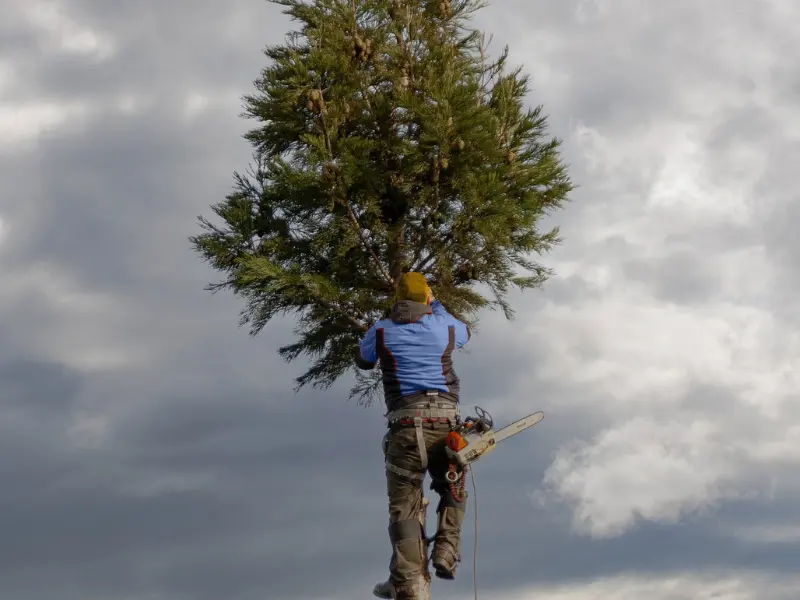
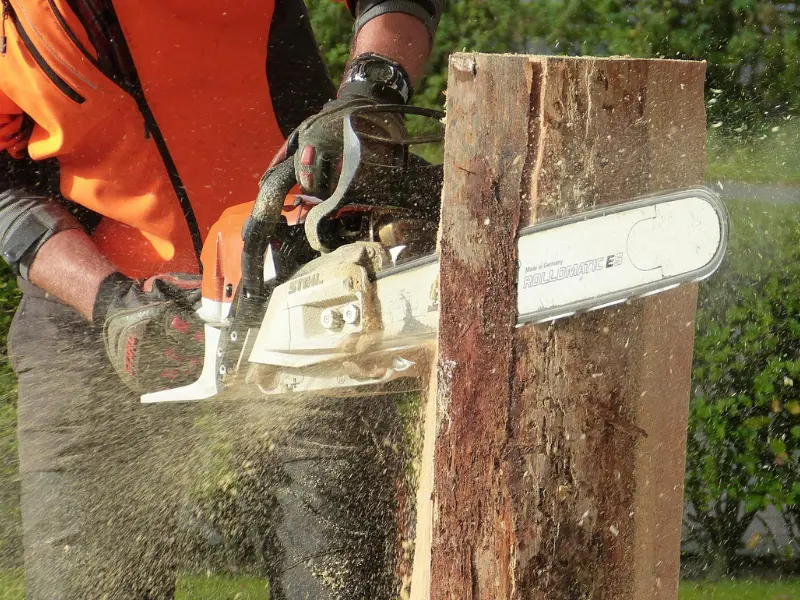
Having the proper equipment is essential for safe tree removal. Chainsaws are widely utilized, but safety gear is equally crucial. Arborists use helmets, eye protection, and chainsaw-resistant clothing to avoid injury. Additionally, sturdy gloves and boots provide protection against cuts and impacts. Prioritizing safety equipment guarantees that arborists can operate efficiently while lowering the chance of accidents during tree removal operations.
Ropes and Rigging
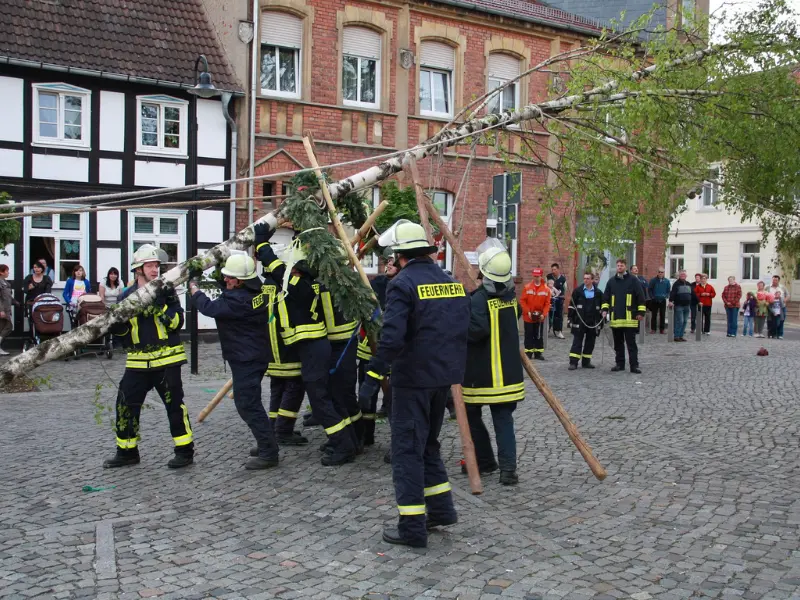
Professionals utilize ropes and rigging techniques to direct the tree’s fall direction. This lowers the chance of property damage. Learn correct rigging techniques and how to secure ropes effectively. Rigging techniques include carefully placing ropes and pulleys to regulate the tree’s descent. This helps to guarantee that the tree falls exactly where it should, limiting the risk of damage to nearby structures or landscape elements.
Choosing the Right Method
Felling
Felling is the process of cutting down a tree in one piece. It is appropriate for open areas with no obstacles. Professionals utilize ropes and pulleys to direct the tree’s fall, ensuring that it lands securely away from structures and other trees. This procedure necessitates careful planning and execution in order to reduce hazards and ensure the safety of persons and property around. By entrusting filling to experienced professionals, you can ensure that the process is conducted safely and efficiently.
Sectional Removal
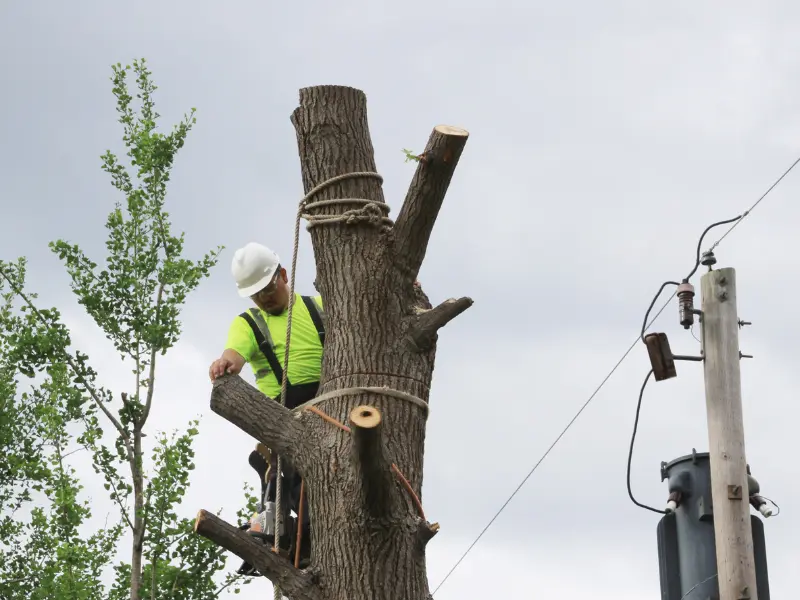
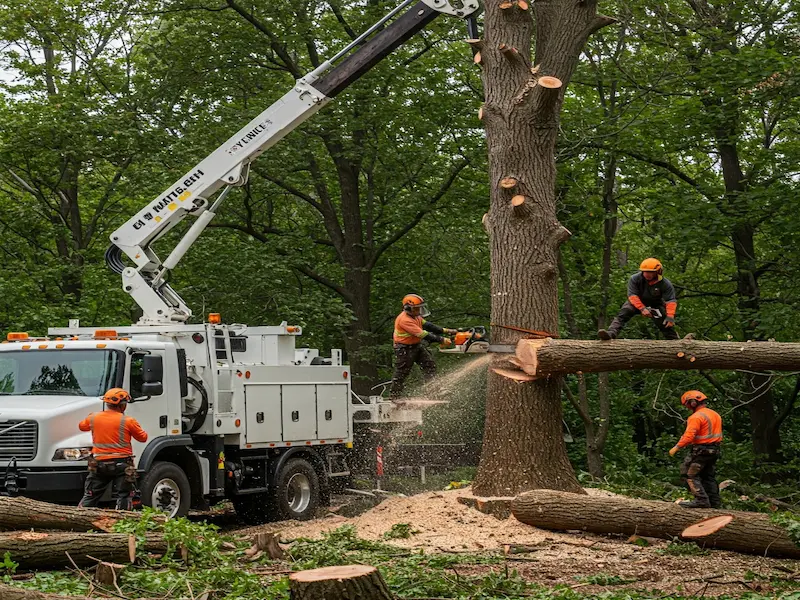
Sectional removal is a safer option for trees near structures or in smaller locations. Arborists cut the tree into smaller pieces before carefully dropping them to the ground. This strategy reduces the chance of property damage while also ensuring the safety of surrounding structures and individuals. Arborists utilize specialized tools and procedures to remove trees in an organized way, taking into consideration branch weight and tree stability. Sectional removal requires accuracy and knowledge to be completed safely and properly. Hiring professionals trained in this method ensures that tree removal is carried out with minimal risk and maximum efficiency.
Crane-Assisted Removal
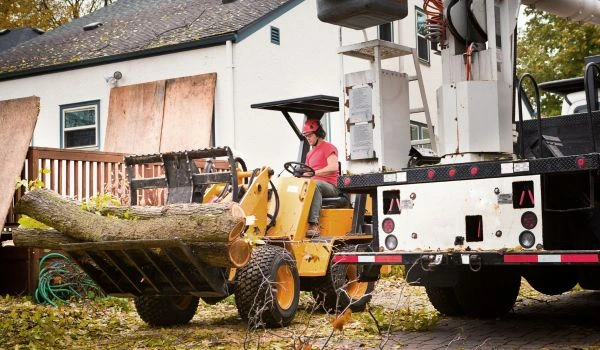
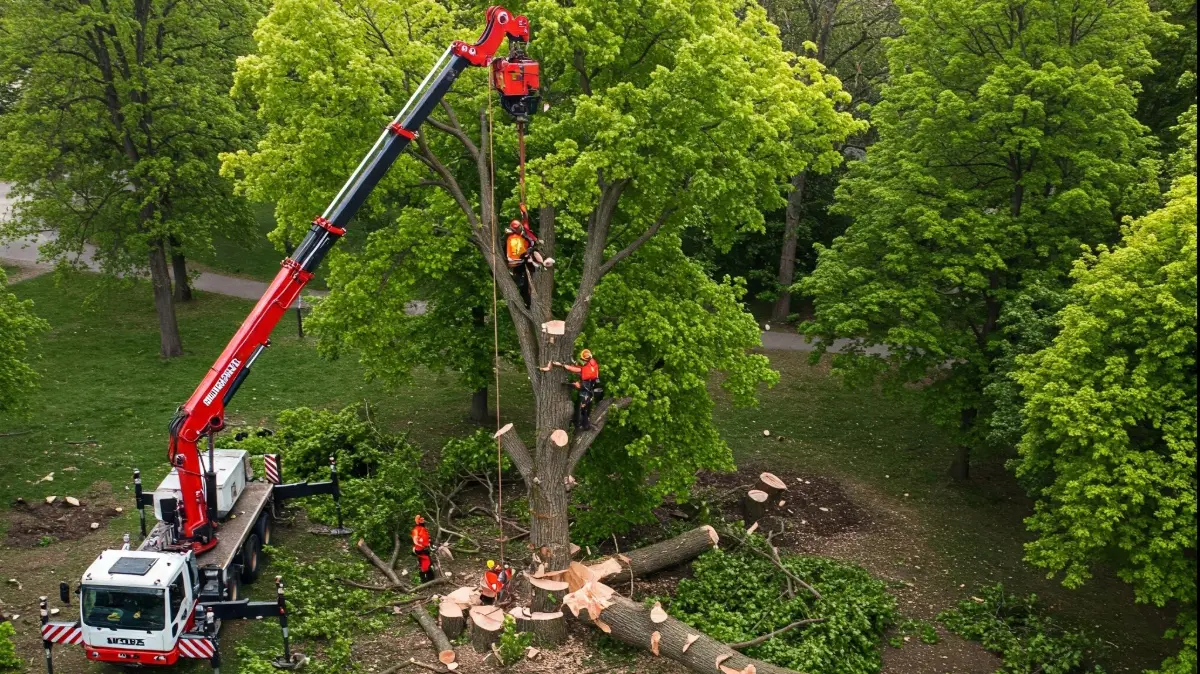
In rare circumstances, a crane is utilized to remove tree parts from structures. This method minimizes property damage by carefully carrying huge portions of the tree over barriers like buildings or power lines. Cranes give accuracy and control, allowing arborists to carefully move massive tree parts without damaging neighbouring structures or landscape elements. This strategy is especially useful when dealing with enormous or dangerous trees that cannot be safely felled or removed using traditional methods. Arborists can use a crane to ensure that tree removal is done efficiently and safely.
How to remove a tree safely
Safety is the most essential consideration while removing a tree. Hire a certified arborist or Professional tree removal services to do the work. They have the appropriate equipment and knowledge to carefully cut down the tree, reducing the possibility of accidents or property damage. Furthermore, professionals are taught to identify potential hazards and follow strict tree removal safety precautions throughout the removal process. By leaving the job to experienced professionals, you can ensure that tree removal is conducted efficiently and without compromising safety.
These are some of the important Tree removal tips.
Aftercare and Stump Removal
Stump Grinding
To stop regrowth, grind the stump after removing the tree. Additionally, stump grinding improves the area’s appearance and allows landscaping or replanting. The stump and roots are successfully removed below ground level by grinding them into tiny wood chips with specialist equipment. This reduces the likelihood of new branches growing and creates a flat, smooth surface that is simple to use for replanting or landscaping. You will guarantee a smooth and seamless change with stump grinding, enhancing the appearance and usability of your outdoor area.
Soil RestorationRecover any compaction of the soil by heavy
equipment during removal. Also, add organic materials and nutrients to aid in the growth of the soil. Compaction of the soil can limit root development and water absorption; therefore, breaking up the soil and applying organic materials like compost or mulch improves soil structure and fertility. This aids in the growth of plants and improves the overall health of your landscape. By addressing soil compaction of the soil, you may create a perfect condition for new plantings to thrive and establish safely.
Planting New Trees
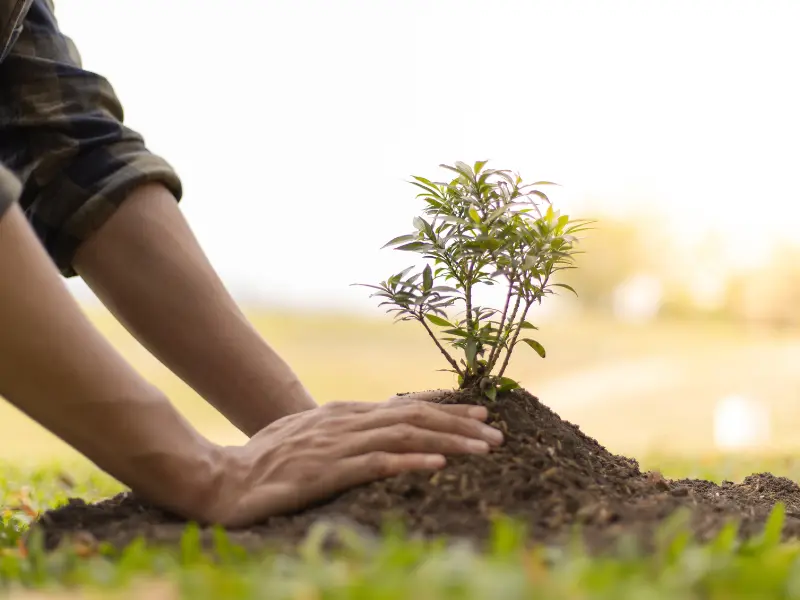
Consider planting a new tree to replace the one that has been removed. Select a species that is appropriate for your area and soil type, taking into consideration like sunlight exposure, moisture levels, and space limits. Choosing the correct tree species ensures the tree’s long-term health and reduces future maintenance requirements. Planting a new tree also provides environmental benefits such as air purification, shade, and wildlife habitat creation. Yes, replanting a tree can help restore biodiversity while also improving the attractiveness and resilience of your landscape for future generations.
Conclusion
Large trees can cause serious harm to property if they are removed without the correct equipment or expertise. Carelessly letting a big tree or branch fall on your house is the absolute last thing you want. Having an expert remove the tree in your yard is going to cost far less than fixing your house after it has sustained that kind of damage. Therefore, get in touch with KD Tree Services for the safest tree removal and the most professional services.
In addition to being attractive elements of our landscape, trees are essential to our ecosystem as they help animals live, improve air quality, and supply oxygen. However, these silent giants’ health may be threatened by pests and tree diseases. To keep the trees healthy, you must be aware of the early warning symptoms of tree diseases. Everything you need to know about tree diseases and pests will be covered in this blog.
How to identify and treat common tree diseases
Trees are prone to a variety of illnesses, much like people and animals. Apple scab, Dutch elm disease, and oak wilt are the most widespread illnesses. Knowing how to identify diseases in trees can help you take the appropriate precautions to keep your trees safe. For instance, if left unchecked, the fungal disease known as oak wilt, through root grafts and sap-feeding beetles. Leaf discoloration and wilting are among the which affect oak trees, which can be deadly. The most common ways that it spreads are through symptoms, along with a distinctive veinal necrosis pattern.
Maintain good tree care by giving your trees enough food, water, and sunlight to ward off these illnesses. Pruning can also help since it increases air circulation and gets rid of diseased tissues.
Common tree pests first
In addition to diseases, trees must deal with pests that can seriously damage them. For instance, North American ash species, such as green and white ash, are infested and killed by the metallic wood-boring insect known as the emerald ash borer. By consuming the inner bark of a tree, the larvae impair the tree’s capacity to transfer nutrients and water, which eventually causes the tree to die.
Another invasive pest species in the US is the gypsy moth. Oak is the favored host for its larvae, which consume the leaves of more than 300 different types of trees, shrubs, and plants. A tree that has a severe infestation may lose its leaves, making it prone to various illnesses and pests.
One of the most important methods for preventing tree pest is being aware. Using pesticides when needed, controlling the landscape to deter pest invasion, and
preserving tree health to enable plants to keep away pests naturally are a few strategies.
Impacts on the Environment and Tree Health
Tree diseases and pest infestations that go untreated can have catastrophic effects. Since trees are essential to preserving a balanced ecosystem, the condition of our entire tree population has a direct impact on the environment. For sectors that depend on wood and plant materials, there are economic consequences in addition to environmental effects.
Treatment and early identification are crucial. It is recommended that the community become involved in tree health because it can greatly slow the spread of pests and diseases.
Keeping Trees Healthy
Homeowners can take a number of proactive steps to keep their trees healthy and avoid disease and pest spread.
Now, how to spot tree pests? You can identify early indicators of illness or pests by visually inspecting your trees on a regular basis. Keep an eye out for odd leaf discolouration, wilting, and pest activity indicators like bark holes or frass, that like sawdust.
Pruning, mulching the base of the tree, watering, fertilizing, and other proper tree care practices can greatly increase a tree’s ability to fight disease and tree pest infestations. Consult an arborist or other tree-care specialist when in doubt. In addition to identifying and addressing any problems, they may offer professional advice on tree health.
Communities, homeowners, and environmental organizations all have a role to play in keeping trees safe from pests and diseases. KD Tree Service can help you discover more about our services. You can help create a cleaner, sustainable environment for everyone and a healthy tree population by gaining knowledge and taking action.
Now let’s take a look at how to manage tree pests and Tree management
Cultural habits, biological and chemical treatments, and integrated pest management techniques are all necessary for effective infestation control.
Cultural practices: These are preventative steps to maintain the health of trees and make them less vulnerable to pests. Steps to control pest infestations in your trees consist of appropriate fertilizing, proper pruning, and frequent watering. A healthy tree is more resilient to infestations than one that has been neglected.
Biological and Chemical Control Options: Chemical treatments utilize pesticides to eradicate pests. In order to organically reduce infestation, biological control releases the pests’ natural enemies into the environment, such as predatory insects, mites, or fungi.
Integrated Pest Management Strategies: This method integrates a number of strategies to control pests in the most efficient and ecologically responsible manner. To guarantee the best possible tree health, it consists of continuous evaluation, early detection, management, and monitoring.
How to prevent tree pests from damaging your landscape
Preventing future tree disease and infestation requires maintaining the general health of the tree.
As said earlier, a strong tree that can withstand pests is a result of regular watering, suitable fertilization, and pruning. For preventive care and health evaluations, hire a qualified arborist.
Enhance your garden’s biodiversity to attract natural predators of pests. Regular visual checks for Signs of tree pest damage, the use of insect traps, and tracking alterations in tree health over time are examples of early detection methods. Frequent examinations minimize the likelihood of an infestation becoming out of control by enabling quick action.
The secret is to continue being watchful and keen with your bug control and tree care routines.
Conclusion
Don’t allow pests harm your property’s beautiful trees.
You can maintain the health and productivity of your trees by learning to spot the warning signs of an infestation and getting professional assistance when necessary. If you think your trees may have a pest infection, act quickly! For professional pest control services, Get in touch with KD Tree Service right now. Our goal is to preserve your trees and make your property more attractive.
Contact KD Tree Service
Ready to protect your trees? KD Tree Service is here to help! Whether you need expert pest control, pruning, or routine health evaluations, our certified arborists are just a call away.
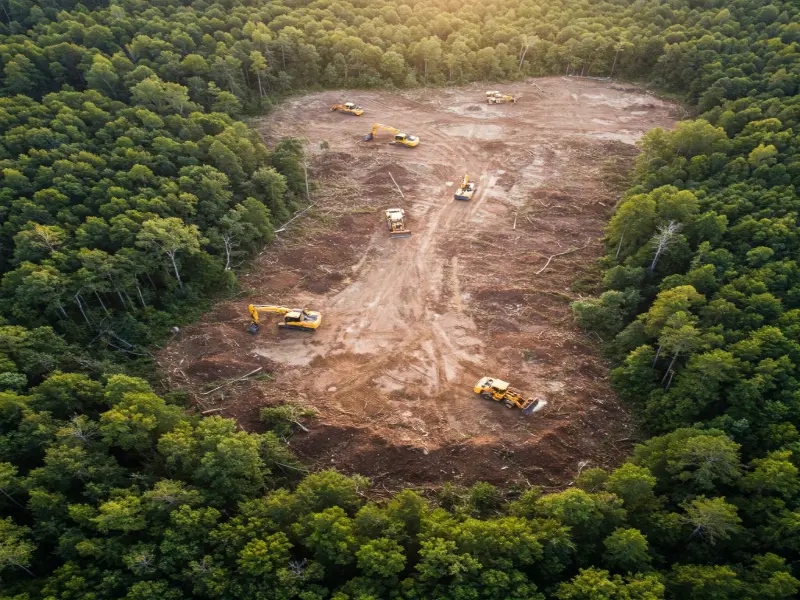
The initial stage of many construction projects is clearing land. Trees, shrubs, and other vegetation should be removed from a specific area of land. By doing this, the site is ready for construction, and the foundation’s stability is guaranteed.
Many individuals frequently undervalue the benefits of land clearing for construction. However, tree and debris removal for construction directly affects the project’s overall success. Future issues associated with construction can be avoided by making sure the site is clear.
Why land clearing is important
Land clearing is a critical step in the property development process, setting the foundations for successful construction projects. Knowing how important land clearing is can have a huge impact on the success of any project, whether you’re building a commercial building, residential home, or industrial facility. This article will examine how land clearing helps with new construction projects, the different techniques employed in the process, the best Land clearing contractors, and the steps involved in land clearing for construction projects.
Why land clearing is crucial for new construction projects
Increased Safety at the Location
Avoiding possible risks is one of the main goals of land clearance. Large rocks, overgrown plants, and dead trees can all be risks for building workers and machinery. These risks are reduced, and a safer working environment is ensured by completely land clearing for new construction projects.
Enhanced Land Usability
It might be difficult to carry out tasks in unmaintained areas, which sometimes delays construction projects. When the land is cleared, it becomes more usable, and the grading and excavation procedures may move forward more quickly.
Avoiding Infestations with Pests
Neglected land frequently encourages pests that can cause complications for both the owner of workers during and after the construction process. Pest infestations are less likely to occur when plants and rubbish are removed, safeguarding the location and its environs.
Management of the Environment
Although clearing land is frequently linked to environmental disruption, the ecological impact is reduced when appropriate methods are used. Hiring qualified Land clearing contractors could be the perfect option. By preventing soil erosion and protecting important habitats, strategic clearing helps to maintain the harmony between environmental management and development.
Steps involved in land clearing for construction projects
Planning and Scheduling Land Clearing
You must plan the cleansing process before you begin. This involves being aware of the land’s layout and spotting any obstacles that may exist. Permits from local authorities may also be required.
Permits guarantee that local laws are followed during the clearing procedure. This step is crucial to avoiding future legal concerns.
Removing plants
This can be achieved through an array of methods, including manual labor or mechanical devices. The choice varies depending on the size of the land and the type of tree species.
Correct Tree removal for construction projects of the plants is crucial. This might involve moving the wood to a disposal location, composting, or chipping it.
You can learn more about Tree removal permits in Buffalo, NY in our detailed blog post covering what homeowners need to know before starting any removal work.
Grading and Leveling
The area must be leveled and graded after the plants have been removed. This guarantees a level and strong building surface. While leveling smooth out any uneven areas, grading entails shifting earth to create a level basis.
Future foundation and water drainage problems can be avoided with proper grading and leveling.
Considering Appropriate Equipment
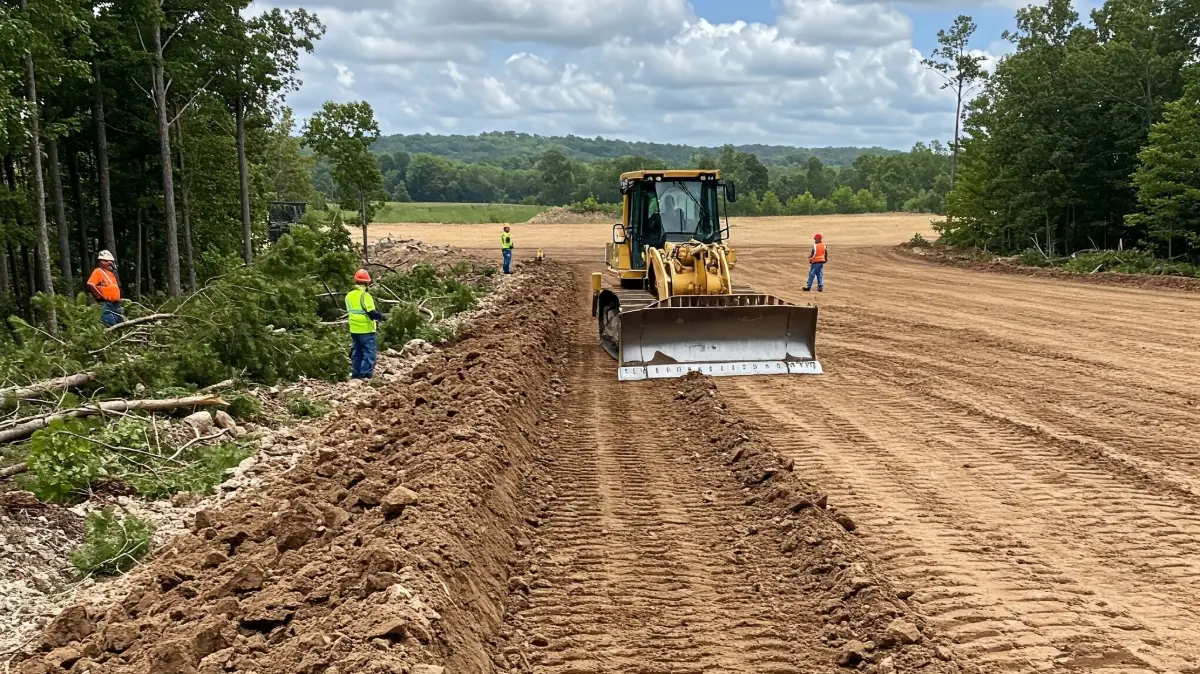
For the perfect Construction site preparation, the proper equipment must be used. Bulldozers, excavators, and chainsaws are examples of common tools. Every tool serves a distinct function and can facilitate the task.
Large-scale projects could require massive machinery. Hand tools may be all you need for smaller projects. Knowing what tools to utilize can help you save your effort and time.
Safety Factors
Safety is the first priority in land clearing services for construction site preparation. Workers ought to put on protective clothing, such as boots, gloves, and helmets. It’s also crucial to have the right equipment and follow instructions.
Potential dangers like fallen trees or hidden debris must be recognized by the public. Accidents and injuries can be avoided by adhering to safety procedures.
Techniques for Land clearing for construction
Different land-clearing techniques are needed for different projects. To get the best results when cleaning the land, teams might employ a variety of strategies. Some of the most popular techniques for Site clearing for construction and Land preparation for construction or agricultural projects are listed below.
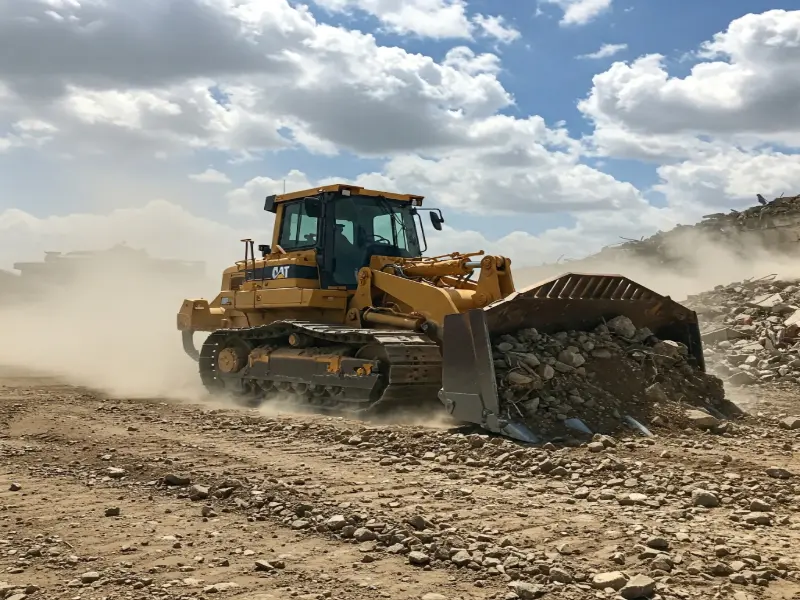
Bulldozing
As the name implies, this involves ridding the land of all impediments with a bulldozer. Given that it pushes a lot of vegetation and plant growth out of the way, this technique is also known as the pushover method. Additionally, even though this is a quick and rather simple way to clear land, it preserves the roots, which may allow the vegetation to regrow after removal.
Furthermore, the topsoil may be harmed by this technique. For this reason, it’s not the best method for large-scale construction and farming projects. However, for small and medium-sized construction projects, this could end up being the most effective way to clear the land.
Although this method is not recommended for all smaller tasks, it may be useful for the majority of them. This way of clearing land is quite quick and easy, and it will require less effort than other methods because it only requires a bulldozer.
Cut and Grind
For properties with fewer plants and trees, the cut-and-grind method might be the best option. This technique entails chopping and removing the vegetation, as the name suggests, and then grinding the plant to create mulch.
Teams can usually remove bushes and plants using a variety of tools. You might need to employ logging tools and equipment like wood plows, mulchers, brush mowers, and even bulldozers, based on the measurement of the site and the number of plants.
Pulling
The pulling method, also referred to as the pullover method, operates in the opposite manner from the pushover method. This technique entails tying chains to the vegetation and then tying the chains to a tractor, which will pull off the plant and efficiently clean the ground, as opposed to using a bulldozer to push the plants away from the property.
Pile and Burn
One of the first methods of clearing land that was widely used by farmers was the pile-and-burn technique. Using this technique, the land must be cleared, everything removed must be piled up, and the land must then be burned. This can be a quick and economical option to get rid of property, but if something goes wrong, you will have to pay an enormous amount of money.
For example, if fires spread and cause property damage, you will need to do fire restorations. Furthermore, when some plant materials and flora are burned, they release harmful fumes that may harm the environment.
To explore various methods of land clearing for construction projects, you can refer to this comprehensive guide on land clearing techniques.
Hiring Professionals
Employing experts is frequently the best course of action, even if some land clearing projects can be completed by individuals. Professionals have the tools and experience necessary to complete the task effectively.
Additionally, expert services may guarantee that the clearance procedure is aligned with regional laws. Time can be saved, and any legal problems can be avoided.
Expert service providers can guarantee their projects start off on a strong foundation. Hiring an expert service provider like KD Tree Services can be the best option if you would like to improve your property’s appearance, health and overall value.
Effective, secure, and sustainable development can be made possible by land clearing with proper planning, adherence to laws, and a dedication to environmental preservation.
Get in touch with KD Tree Services right now for excellent construction land clearing!
Trees are crucial components of our ecosystem, giving many advantages such as beauty, shade, and air filtration. However, a tree might need to be removed for reasons like disease, damage, or safety. When that time comes, it’s critical to know the permissions and restrictions in Buffalo and the surrounding locations. At KD tree services, we are here to offer assistance as you navigate the process.
Understanding the Need for Permits and Regulations.
Buffalo tree cutting laws and restrictions exist to safeguard trees, property owners, and the surrounding community. They ensure that only the necessary removals are carried out by professionals who have the appropriate knowledge and competence. The regulations differ by place, so knowing the specific regulations for your area is important.
Tree removal permits Buffalo NY
Public tree maintenance and removal in the City of Buffalo is monitored by the Department of Public Works, Parks, and Streets. Homeowners are generally responsible for the care and maintenance of trees on their private land. However, if a tree on private land threatens public safety or causes problems with public infrastructure, the city can order its removal.
Before removing a tree in Buffalo, you must first determine whether a permit is required. A permit is typically necessary if the tree is:
On public property.
Situated inside an officially recognized historic district
A “protected tree” based on its size, species, or historical significance
If you are unsure whether a Buffalo tree cutting permit is required, it is better to check with a professional tree service, like KD Tree Services, who can walk you through the correct Buffalo NY tree removal laws.
Choosing a competent tree removal service in Buffalo is about more than simply convenience, it’s about guaranteeing safety, quality, and long-term peace of mind. Tree removal, particularly of huge or damaged trees, is a complex process that requires competence, suitable equipment, and a thorough awareness of local rules. Here’s why hiring expert tree removal in Buffalo, NY is the perfect choice:
Safety first
Tree removal can be dangerous, especially when dealing with massive trees, broken trunks, or trees near buildings, electricity lines, or busy streets. Removing a tree without the correct equipment or skill can result in accidents, property damage, or injury. Our tree removal professionals are skilled enough to handle any scenario securely. They use specialized equipment, follow safety regulations, and possess the experience required to detect and manage risks successfully.
Prevent property damage
Improper tree removal can cause serious damage to nearby residences, landscaping, and utilities. Many things might go wrong during a tree removal process, including falling branches and weakening roots. Professional tree services ensure that your property and surrounding structures are secured throughout the process. Whether it’s carefully lowering enormous branches or utilizing precise cutting procedures, our crew will minimize risk while keeping your property safe.
Expertise and Knowledge
Tree removal entails more than just removing a tree, it also takes into account tree species, health concerns, and Buffalo tree removal regulations. Specialist tree care providers in Buffalo have expertise regarding various tree species and the best ways to remove them without compromising the general health of your landscape. They also understand Tree removal laws Buffalo NY, and can assist you in obtaining any essential permits for removing trees Buffalo NY to ensure that your tree removal is in accordance with city or state legislation.
Efficient and economical
While DIY tree removal may appear to be a cheaper option, the possible risks, time, and extra expenses can soon add up. Professionals have the required equipment and skills to complete the task quickly, saving you time and avoiding unexpected costs such as property damage or medical expenditures. Furthermore, tree removal companies frequently offer competitive prices with no hidden fees, and many offer free quotes before beginning work.
Complete Service
When you engage a professional tree removal service in Buffalo, you get more than simply tree pruning. Professionals carry out the entire job, from initial evaluation to cleanup. They will securely remove the tree, grind the stump if necessary, and remove any remaining debris, leaving your yard neat and free of risks. Not only that, our service team provides extra services such as stump grinding, lot clearing, or tree health evaluations, ensuring that your property is properly taken into consideration from start to completion.
Environmentally friendly
KD Tree Services takes care of the removal of trees in a way that is environmentally friendly. In many instances, fallen trees can be repurposed into mulch, firewood, and other valuable resources. We use sustainable procedures whenever possible to ensure that the operation of removing a tree has the least potential adverse effects on the environment.
Last but not least,
Peace of mind
Hiring a professional tree removal service in Buffalo allows you to feel comfortable knowing that the job is being handled by experts. You will not have to be concerned about safety, property damage, or if the tree is being removed in accordance with Tree removal regulations in Buffalo NY. With KD Tree Services, a reputable tree removal service provider, you can rest assured that the task will be completed correctly, knowing the steps for getting a tree removal permit in Buffalo, NY.
Conclusion
Homeowners who have to remove a tree from their property must be aware of the Tree removal permit process Buffalo and the neighboring locations. It’s important to understand the specific rules in your area because they range from town to town and city to city.
When in doubt, get advice on permits, Tree protection laws Buffalo, and safe tree removal techniques from a qualified tree care service provider like KD Tree Services. Our team of professionals can help you navigate through the Private tree removal laws Buffalo NY , and guarantee a safe and effective tree removal.
Feel free to get in touch with one of our staff members to reserve the time slot that is most convenient for you.
Spring Tree Care Checklist for New York Homeowners: Essential Tips Every tree lover knows spring is the perfect time to focus on your green yard. During this period, trees emerge from dormancy and are ready for growth. As caretakers of your green yard, we should help them grow well. Our primary duties are to ensure healthy tree development, conduct regular checkups, prevent diseases, and prepare them for the harsh weather conditions later in the year.
As a New York resident, you know how Mother Nature can change from cold, snowy winters to warm, humid summers. So, we need to help trees survive in every condition.
If you’re wondering how to do that, don’t worry, we did the hard part and gathered all the details you need about the Spring Tree Care Checklist for New York.
So, let’s check it out and find out what they are, so you can prepare for your green friends and help them grow and glow better.
Check for winter damage.
As a New York resident, you should be aware of how harsh winters can be in your area. During this time, freezing temperatures and severe ice storms make it difficult for trees to survive. However, when spring arrives, you have the opportunity to assess any damage and help your trees recover.
Start by checking for broken branches, cracks, or signs of disease. Strong winds and heavy snow can break branches and cause cracks in the trunk or limbs. If you notice any damage, take action quickly to prevent further issues.
Next, inspect for frost damage or dead limbs. Carefully examine thetree, removeall dead branches, and prune where necessary. This will allow the tree to start fresh and grow strong again.
Lastly, check for pests or fungal infections. Since trees have been snow-covered for a long time, fungi may have developed, weakening them over time. Look for discolored bark, holes, or unusual growths, and take immediate action to protect your trees from further harm.
Use fertilizers for healthy growth.
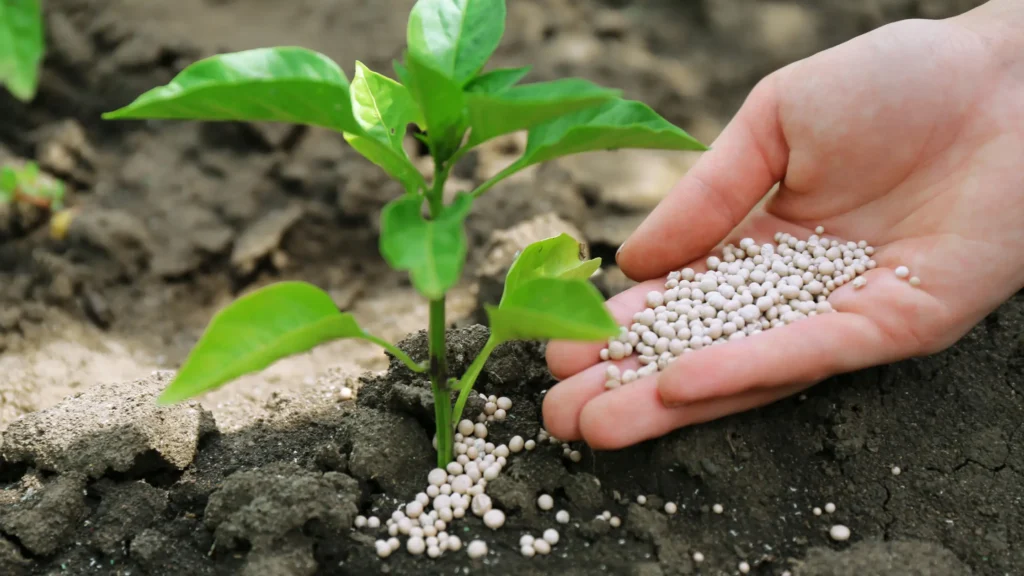
Spring is the ideal time to fertilize your trees when they emerge from dormancy and go through a period of active growth. Adequate fertilization replaces winter losses and promotes healthy root growth, thick foliage, and tree vigor. Trees would struggle to grow if they do not have adequate nutrients and become more susceptible to pests, disease, and environmental stresses.
When you fertilize, cover it evenly over the tree’s drip line, the area below the branches that grow the farthest out from the trunk. Apply it rather than directly to the trunk. Continue by watering the fertilizer in so that it can soak into the soil and reach the roots. Avoid over-fertilizing because there can be too many nutrients, leading to weak growth or possibly harming the tree. You set them up for robust, vibrant growth the rest of the year by properly spring feeding your trees.
Watering Guidelines for Spring
Spring is a season of renewal, and with the right watering routine, your trees will flourish beautifully after the winter months. As temperatures rise, it’s essential to ensure they get the moisture they need to support fresh growth and strong roots.
The first step is to check if your trees need watering. Simply press your finger or a small shovel into the soil near the tree’s base. if the soil feels dry a few inches down, it’s time to water. Newly planted and young trees require more frequent watering, while established trees can rely more on natural rainfall.
To keep your trees healthy, water deeply but infrequently. A slow, steady soak encourages roots to grow deeper, making trees more resilient during hot summer months. Avoid overwatering, as standing water can lead to root rot and other issues.
The best time to water is early in the morning when temperatures are cooler, reducing evaporation and giving trees time to absorb moisture before the heat of the day. With the right balance of watering, your trees will thrive, adding beauty and vitality to your outdoor space all season long.
Mulching for Protection
As spring arrives, giving your trees the right care is essential for their health and growth. One of the simplest yet most effective ways to support them is by applying mulch. Mulching helps retain moisture, regulate soil temperature, and suppress weed growth, creating the perfect environment for strong, thriving trees.
For the best results, apply a 2 to 4-inch layer of mulch around the base of the tree, keeping it a few inches away from the trunk. In New York’s climate, organic mulch like wood chips or shredded bark works best, breaking down over time to enrich the soil.
Spring is also the season to protect your trees from pests and diseases that will weaken or kill them. As the weather warms up, common New York pests such as aphids, caterpillars, and borers become more active, feeding on leaves, bark, and sap. Such pests can result in stunted growth and leave the trees vulnerable to infections.
To manage pests effectively, turn to natural alternatives like introducing beneficial insects (ladybugs for aphids) or spraying with neem oils. For severe infestations, chemical applications like horticultural oils or insecticides may be necessary, but always apply following safe guidelines to avoid harm to beneficial wildlife.
Early disease symptom detection is important in preventing widespread damage. Inspect for leaves with coloration, unusual spots, sap dripping, or fungal growths on the bark. Prune diseased branches and spray appropriate fungicides as needed. Consulting a professional arborist can also ensure correct treatment.
With our Spring Tree Care Checklist, as a New York resident, you can protect your trees and ensure they grow and thrive at the same time. However, sometimes you may need a professional tree care service to keep them in top condition. That’s why we have a recommendation for you!
Trust KD Tree Service for Expert Tree Care!
Your trees deserve the best care, and KD Tree Service is here to provide it! With over 14 years of experience, we specialize in safe, reliable, and affordable tree care for both residential and commercial properties. Whether you need routine maintenance, emergency tree removal, or expert advice on keeping your landscape healthy, our skilled team is ready to help. Trusted by homeowners across the USA, we ensure your trees thrive in every season.
Don’t leave your green space to chance, call KD Tree Service today and let us bring out the best in your trees!
Most of the time, people love to grow a healthy green garden because it adds beauty to the property, and a well-maintained, healthy yard always improves the curb appeal. However, sometimes you need assistance from professional tree care services to maintain and keep your garden in good shape. So, you may wonder how to choose a suitable tree care service. Don’t worry.
In this guide, we’ll answer the most common FAQs about tree services, from tree removal to pruning and storm preparation. Whether you’re curious about permits or looking for professional tree care tips and FAQs, this article will provide clear, reliable answers.
So, let’s check what we’ve summarized for you.
How Much Does Tree Removal Cost?
Sometimes, it becomes necessary to remove trees from our garden. Usually, most people think tree removal is a bit expensive and that can be true. But the cost can vary depending on several common factors, like the size of the tree, its location, and the complexity of the job. If you need emergency tree services, the price is usually higher as well.
Tip: It’s always a good idea to ask for an estimate before you proceed with the project. This way, you can get a clear idea of the costs involved and avoid surprises.
When Should I Remove a Tree from My Property?
Many people ask, When is the best time to remove a tree?
There are a few clear signs that tell you it’s time to remove a tree. If the tree is diseased, leaning dangerously, or has a lot of dead branches, it could be a serious risk to your property and safety. In some cases, trees can fall unexpectedly, especially during storms, so keep an eye on these warning signs. When it comes to the best time for removal, late winter or early spring is often recommended because trees are usually dormant, making the job easier. However, in emergencies. like storm damage or sudden leaning; don’t wait. Emergency tree removal should be done immediately to prevent accidents or property damage.
What’s the Difference Between Tree Trimming and Tree Pruning?
Tree Trimming and Tree Pruning are often confused, but they serve different purposes in maintaining tree health.
Tree Trimming is focused on improving the appearance and shape of the tree. It involves cutting back overgrown branches and leaves to create a tidy look and prevent safety hazards.
Tree Pruning improves tree health. It involves removing dead, diseased, or damaged branches to encourage better growth and prevent the spread of disease.
Both practices help enhance the tree’s appearance and overall health, but pruning is more beneficial for long-term tree care. Regular tree trimming maintains the tree’s shape, while tree pruning supports strong, healthy growth.
Do I Need a Permit to Remove a Tree in My Area?
When it comes to tree removal, you may have this question: Do I need a permit for tree removal?
The answer depends on local regulations. Many cities or counties have specific rules in place, especially for larger or protected trees. These regulations ensure that trees are removed responsibly and that important ecosystems aren’t disturbed.
To determine if you need a permit, reach out to your local zoning or public works department. They will inform you of the specific requirements, including any necessary paperwork or fees. Be sure to check with local authorities before proceeding, as removing a tree without a permit could result in fines.
How Can I Tell if My Tree Needs to Be Removed?
When discussing tree health and maintenance questions, one of the most common inquiries is,
“How can I tell if my tree needs to be removed?” Typically, signs like dead or rotting branches, cracks in the trunk, leaning, or fungal growth may indicate the tree should be removed. If these issues pose a risk to lives or property, removal is essential. If you’re unsure whether the tree should be removed, it’s a good idea to contact a professional tree care service.
They can provide expert advice, ensuring the safety of your family and property while making the best decision.
What’s the Best Time of Year to Prune or Trim My Trees?
When considering how often you should trim your trees, it’s essential to follow seasonal guidelines. The best time for pruning is typically during the winter months when the tree is dormant. This allows for more controlled growth in the spring. Summer trimming, on the other hand, helps maintain the shape and size of trees, but it should be done carefully to avoid stress during the growing season. Proper pruning and trimming promote tree health, prevent disease, and improve safety by removing dead or weak branches.
Tip – Timing matters, ensuring the right seasonal care will lead to healthier, stronger trees.
How Do I Prevent My Trees from Being Damaged During a Storm?
To prevent storm damage, professional tree care tips and FAQs recommend regular maintenance. Before a storm, inspect trees for weak branches or signs of disease, and remove any potentially hazardous growth. Regular trimming and pruning help maintain the tree’s structure, ensuring it can better withstand strong winds. Additionally, ensure trees are properly watered and mulched to maintain healthy roots.
It’s also important to consider the tree’s location; keep it away from structures or power lines to minimize damage risks during storms.
What’s the Difference Between Stump Grinding and Stump Removal?
Stump grinding and stump removal are two methods for removing tree stumps. Stump removal FAQs highlight that stump removal involves completely digging out the stump and roots, which can be a more invasive and costly process. On the other hand, stump grinding grinds the stump down to a few inches below the soil level, leaving the roots intact. Grinding is quicker and less expensive, but may leave the tree roots to potentially sprout new growth. The choice depends on factors like cost, time, and whether the area will be used for planting or construction.
If you need any further details about the difference between stump grinding and stump removal,
When looking for a tree service provider, the frequently asked questions describe the importance of checking certifications, insurance, and customer reviews. Ensure the provider is licensed and follows safety standards. Ask for references or photos of past work, and verify if they have proper liability insurance. Professional expertise is crucial for tree health and safety, so choose a provider with a solid reputation for quality work and reliable service.
Is Tree Removal Covered by Homeowners Insurance?
Homeowners insurance may cover tree removal under certain circumstances. Tree removal questions indicate that if the tree is damaged by a storm or causes damage to your property, insurance might help with the cost of removal. However, insurance typically does not cover tree removal for aesthetic reasons or when a tree is healthy. In emergency cases, such as tree removal required after a natural disaster, insurance might offer some financial assistance.
Always review your policy and consult with your insurer to understand what’s covered.
If you’re wondering whether tree removal is covered by homeowners insurance, this article explains the circumstances in which homeowners insurance may cover tree removal and what to consider before making a claim.
Sometimes, it becomes necessary to remove trees from our garden. Usually, most people think tree removal is a bit expensive and that can be true. But the cost can vary depending on several common factors, like the size of the tree, its location, and the complexity of the job. If you need emergency tree services, the price is usually higher as well.
Tip: It’s always a good idea to ask for an estimate before you proceed with the project. This way, you can get a clear idea of the costs involved and avoid surprises.
Many people ask, When is the best time to remove a tree?
There are a few clear signs that tell you it’s time to remove a tree. If the tree is diseased, leaning dangerously, or has a lot of dead branches, it could be a serious risk to your property and safety. In some cases, trees can fall unexpectedly, especially during storms, so keep an eye on these warning signs. When it comes to the best time for removal, late winter or early spring is often recommended because trees are usually dormant, making the job easier. However, in emergencies. like storm damage or sudden leaning; don’t wait. Emergency tree removal should be done immediately to prevent accidents or property damage.
Tree Trimming and Tree Pruning are often confused, but they serve different purposes in maintaining tree health.
Tree Trimming is focused on improving the appearance and shape of the tree. It involves cutting back overgrown branches and leaves to create a tidy look and prevent safety hazards.
Tree Pruning improves tree health. It involves removing dead, diseased, or damaged branches to encourage better growth and prevent the spread of disease.
Both practices help enhance the tree’s appearance and overall health, but pruning is more beneficial for long-term tree care. Regular tree trimming maintains the tree’s shape, while tree pruning supports strong, healthy growth.
When it comes to tree removal, you may have this question: Do I need a permit for tree removal?
The answer depends on local regulations. Many cities or counties have specific rules in place, especially for larger or protected trees. These regulations ensure that trees are removed responsibly and that important ecosystems aren’t disturbed.
To determine if you need a permit, reach out to your local zoning or public works department. They will inform you of the specific requirements, including any necessary paperwork or fees. Be sure to check with local authorities before proceeding, as removing a tree without a permit could result in fines.
When discussing tree health and maintenance questions, one of the most common inquiries is,
“How can I tell if my tree needs to be removed?” Typically, signs like dead or rotting branches, cracks in the trunk, leaning, or fungal growth may indicate the tree should be removed. If these issues pose a risk to lives or property, removal is essential. If you’re unsure whether the tree should be removed, it’s a good idea to contact a professional tree care service.
They can provide expert advice, ensuring the safety of your family and property while making the best decision.
When considering how often you should trim your trees, it’s essential to follow seasonal guidelines. The best time for pruning is typically during the winter months when the tree is dormant. This allows for more controlled growth in the spring. Summer trimming, on the other hand, helps maintain the shape and size of trees, but it should be done carefully to avoid stress during the growing season. Proper pruning and trimming promote tree health, prevent disease, and improve safety by removing dead or weak branches.
Tip – Timing matters, ensuring the right seasonal care will lead to healthier, stronger trees.
To prevent storm damage, professional tree care tips and FAQs recommend regular maintenance. Before a storm, inspect trees for weak branches or signs of disease, and remove any potentially hazardous growth. Regular trimming and pruning help maintain the tree’s structure, ensuring it can better withstand strong winds. Additionally, ensure trees are properly watered and mulched to maintain healthy roots.
It’s also important to consider the tree’s location; keep it away from structures or power lines to minimize damage risks during storms.
Stump grinding and stump removal are two methods for removing tree stumps. Stump removal FAQs highlight that stump removal involves completely digging out the stump and roots, which can be a more invasive and costly process. On the other hand, stump grinding grinds the stump down to a few inches below the soil level, leaving the roots intact. Grinding is quicker and less expensive, but may leave the tree roots to potentially sprout new growth. The choice depends on factors like cost, time, and whether the area will be used for planting or construction.
If you need any further details about the difference between stump grinding and stump removal,
When looking for a tree service provider, the frequently asked questions describe the importance of checking certifications, insurance, and customer reviews. Ensure the provider is licensed and follows safety standards. Ask for references or photos of past work, and verify if they have proper liability insurance. Professional expertise is crucial for tree health and safety, so choose a provider with a solid reputation for quality work and reliable service.
Homeowners insurance may cover tree removal under certain circumstances. Tree removal questions indicate that if the tree is damaged by a storm or causes damage to your property, insurance might help with the cost of removal. However, insurance typically does not cover tree removal for aesthetic reasons or when a tree is healthy. In emergency cases, such as tree removal required after a natural disaster, insurance might offer some financial assistance.
Always review your policy and consult with your insurer to understand what’s covered.
If you’re wondering whether tree removal is covered by homeowners insurance, this article explains the circumstances in which homeowners insurance may cover tree removal and what to consider before making a claim.
So, with these 10 questions, we believe most of your tree care concerns are solved. But we understand you might still have a lot on your mind. Don’t worry! We have a solution for you.
You can contact the professional tree care service, KD Tree Service, for friendly customer service and get answers to all of your questions. The best part? They’re offering free estimates for each and every service!
So, what makes KD Tree Service stand out?
Certified Arborists with Advanced Expertise – Their skilled professionals have extensive knowledge of tree health, disease management, and proper care techniques.
Transparent and Competitive Pricing – No hidden fees—just honest pricing for top-quality service.
Customer-Focused Solutions – They prioritize your needs, providing personalized care for your trees.
Extensive Tree Health & Care – They offer comprehensive tree care from inspections to treatments.
Sustainable and Eco-Friendly Practices – They focus on environmentally responsible methods to maintain a healthy landscape.
On-Time, Reliable Service – Count on them for prompt and dependable tree care.
With KD Tree Service, you get the best care available in your area. So why wait? Don’t wait until it’s too late! Contact KD Tree Service today and ensure your yard stays green and thriving all year round.
Call us now for a free estimate! Your trees deserve the best care.