[email protected] ⚡ Same-day emergency available

Author: KD Tree Services

  • Why Professional Tree Service in Asbury Park is Essential for Your Property

    There is a saying, Plants are the heart of the Earth; save them to save the planet. This statement is entirely true because trees play an important role in sustaining life on our planet. They provide shade, improve air quality, and promote a healthy ecosystem. Therefore, it is our responsibility to protect them.

    If you are a proud property owner in Asbury, then you should not miss this blog.

    In Asbury, there are some challenging weather conditions throughout the year. The first one is the winter season, followed by lake-effect snow, strong winds, and significant temperature changes. Due to these challenges, trees in this area sometimes face difficult situations, and that is why you should help them.

    Sometimes, your trees need a professional and well-equipped tree service provider rather than simple DIY solutions. In this blog, we will reveal exactly why you need professional tree service in your local area.

    Why Hiring a Professional Tree Service Is Beneficial for You

    1. They Have Expertise and Knowledge
      When you face a tree-related problem, a trained arborist can provide the most effective solution within a few hours. They have years of experience and knowledge from working with trees for many years.

    What Can They Do for You?

      • By checking your trees, they can diagnose diseases and identify pests early.
      • Professional arborists can recommend effective treatments for your trees.
      • They can identify future dangers like weak branches, structural issues, or storm damage and help prevent accidents.
    1. You Should Put Safety First

    When handling a tree or branches that pose a danger, proper training is important. Even if you think you can manage it, it may cause a huge mess, putting your life and property in danger. By contacting a professional service, you can avoid any risks and get the job done properly.

    A professional tree service usually follows safety protocols, uses specialized equipment, and has insurance coverage for the protection of both parties.

    1. Proper Tree Service Can Save You Time and Effort

    You may love having a green yard, but with your busy schedule, you might not be able to give it the attention it needs. In that case, a professional tree care service can help by saving you hours of effort and time. They know simple and effective methods, so they will handle the hard work for you.

    Services Offered by Professional Tree Services
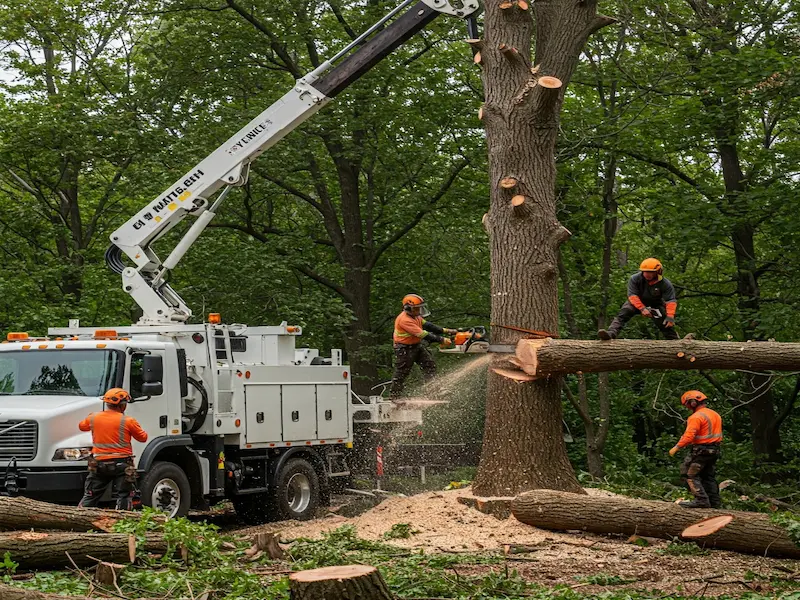
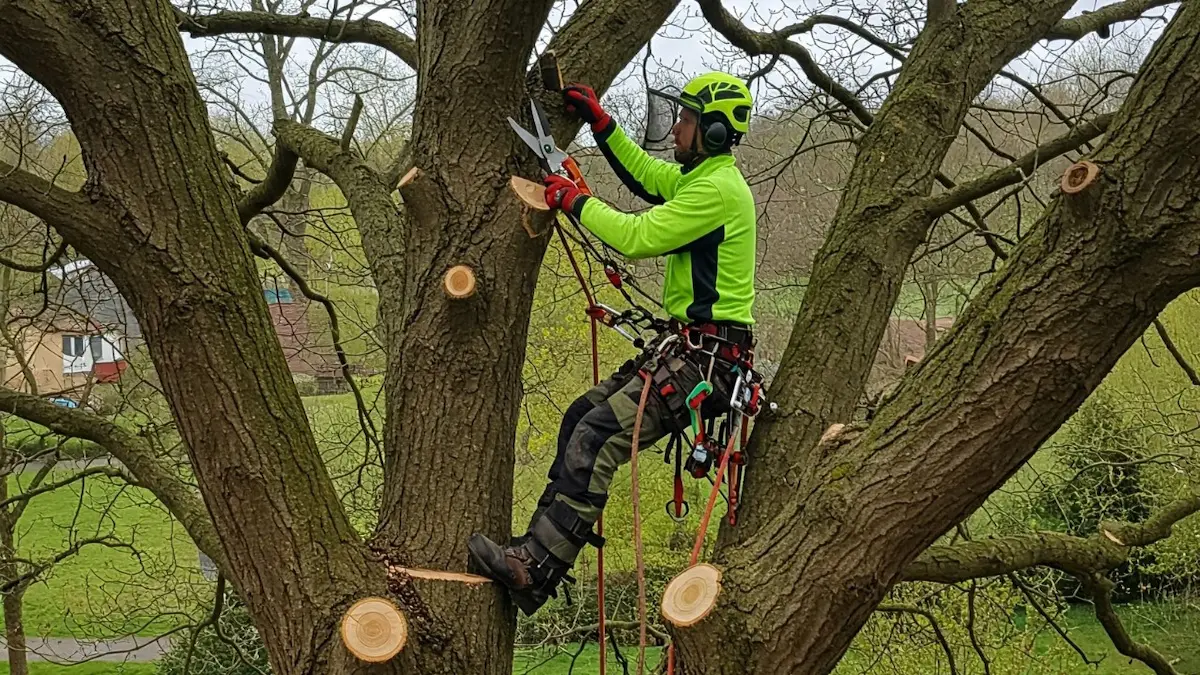
    Tree service team performing tree removal with the help of a crane for safe operation
    Tree Removal
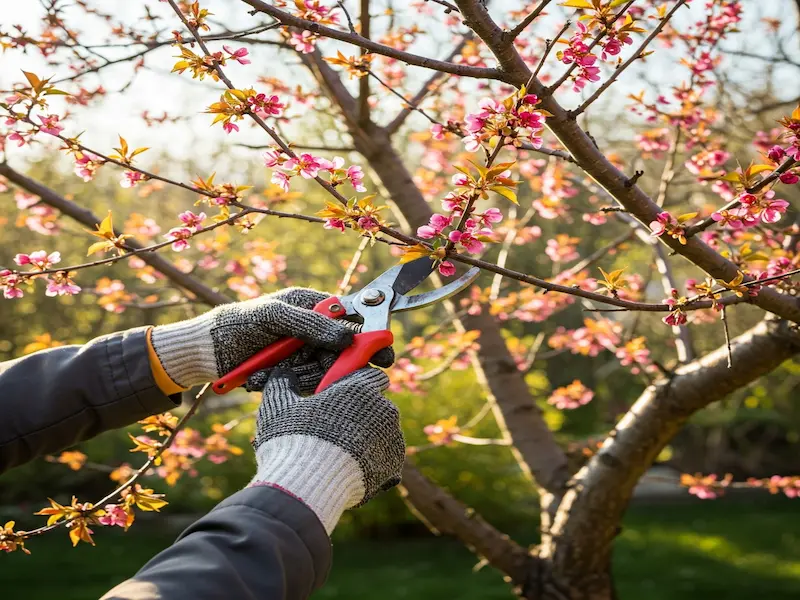
    A person pruning a tree with scissors to maintain its shape and promote healthy growth
    Tree Prunning and Trimming
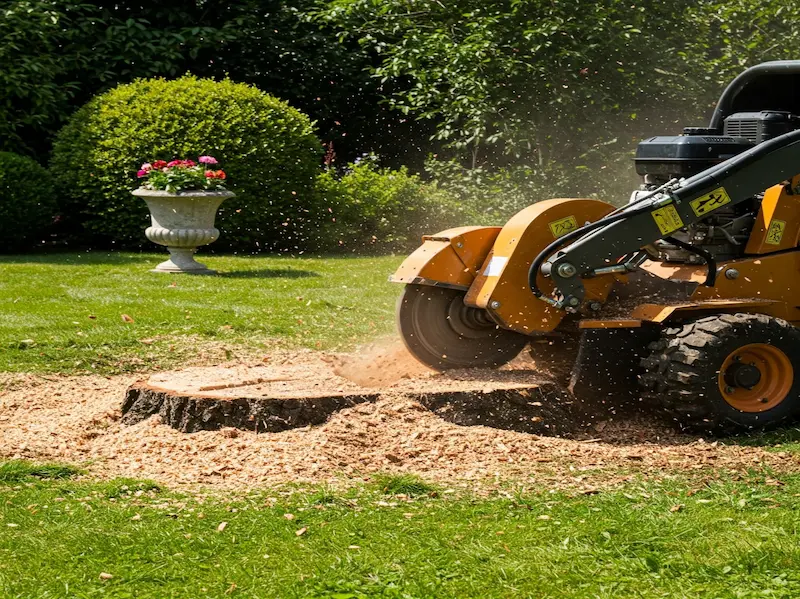
    Heavy machinery removing a tree stump as part of a professional stump removal service
    Stump Grinding and removal
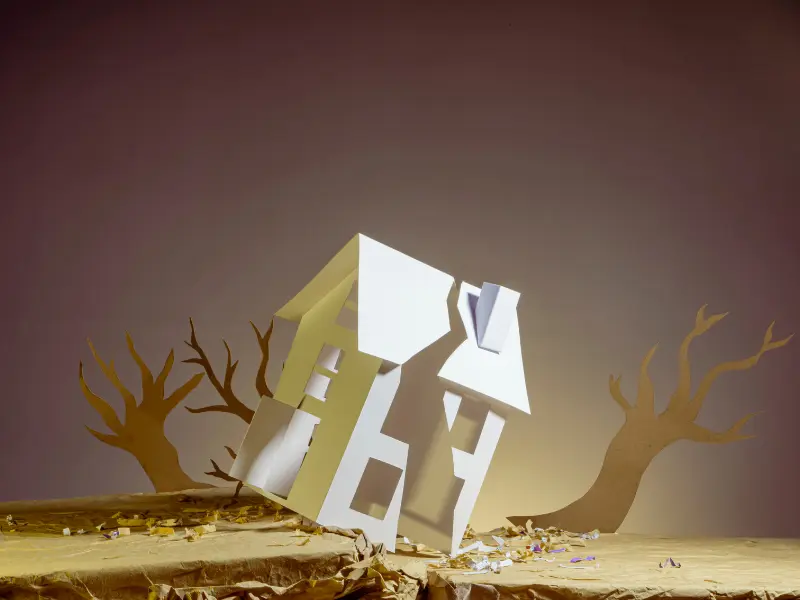
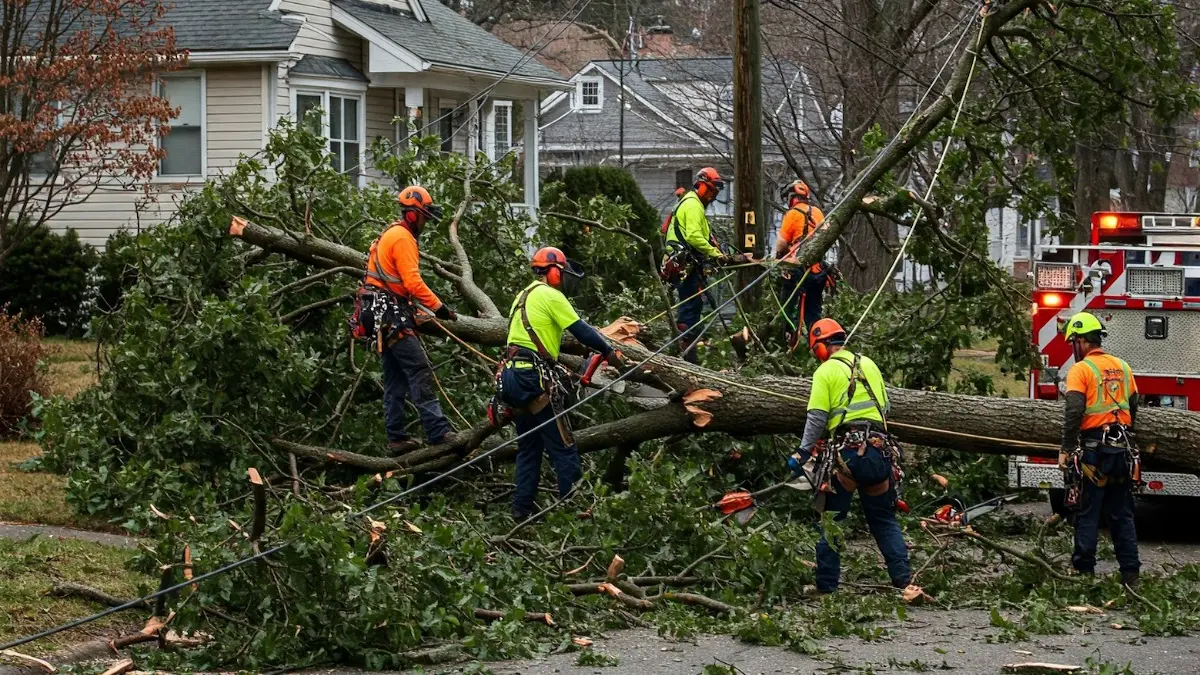
    A fallen tree leaning against a house in Albany, NY, requiring emergency tree services
    Emergency tree Care

    Professional tree services help keep your property safe, beautiful and well-maintained. But what exactly do they offer? Let’s go through their key services one by one.

    When a tree is dead, diseased, or poses a danger, such as leaning precariously, suffering storm damage, or overcrowding other plants, professional services may recommend removal. This ensures the safety of both property and people. Professionals use the right techniques and safety protocols to remove trees efficiently and securely.

    Regular and proper trimming is crucial for tree health, strong growth, and improved aesthetics. Professional pruning removes dead or weak branches, reducing the risk of breakage and ensuring adequate sunlight penetration for healthier growth. Trimming also helps shape trees properly and prevents overgrowth that could interfere with power lines, buildings, or landscaping features, minimizing potential accidents.

    After cutting down a tree, the remaining stump can attract pests like termites and ants, negatively affecting your yard’s appearance. Stump grinding is a process that removes stumps below ground level, allowing for replanting, improved aesthetics, and better use of outdoor space. Professionals handle this efficiently using the right equipment.

    Storms and harsh weather conditions can cause trees to split, fall, or lose branches, creating immediate safety risks. Trained professionals respond quickly, removing fallen trees, clearing debris, and preventing further damage to homes, power lines, or nearby structures.

    These are the primary services offered by professional tree care companies. However, depending on your specific needs, they can customize their services to suit your property.

    How Professional Tree Services Improve Property Value

    1. Aesthetic Appeal

    A well-maintained garden with healthy trees enhances the overall look and feel of any property. Not only does it improve curb appeal, but it also creates a welcoming environment that brings a sense of peace and relaxation.

    To achieve this, professional tree care includes:

      • Pruning
      • Trimming
      • Shaping

    Proper maintenance ensures that your landscape remains visually appealing and well-balanced.

    2. Increased Property Value

    Healthy, well-kept trees increase property value over time. According to Realtor.com, properties with mature, healthy trees can have up to 15% higher market value compared to those without.

    Why? Because:

      • Buyers and visitors appreciate beautiful greenery
      • Trees enhance the property’s charm
      • Professional care prevents diseases, pest infestations, and damage, protecting your investment

    Investing in professional tree care is essential if you want long-term value for your property.

    3. Landscaping and Tree Services Integration

    Many assume tree services are only about cutting and trimming, but they go beyond that. Professional tree service providers also play a role in landscaping, ensuring proper tree placement, Growth pattern analysis, and compatibility with other plants.

    This balanced landscape design enhances not only the beauty of your property but also its growing value over time. 

    How to Choose the Right Tree Services Near Asbury Park

    Searching for the best tree service near Asbury Park requires some research and effort, but it is worth it. Before choosing a tree company, you should first identify your specific needs.

    1. Define Your Requirements

    Before starting your search, be clear about what services you need: tree removal, pruning, trimming, or emergency tree services. Knowing your requirements will help you find the right professionals for the job.

    2. Research Local Companies

    Once you know what you need, research tree service companies in your area. You can:

      • Check online reviews and testimonials
      • Ask neighbors, friends, or family for recommendations 
      • Visit the company’s website to review their experience and services

    3. Verify Credentials and Certifications

    Hiring a licensed, insured, and certified arborist is crucial to avoid future complications. Proper credentials ensure that the company follows industry standards and prioritizes safety. 

    Learn more about the Licensing of Tree Experts and Tree Care Operators

    4. Get Multiple Quotes

    Once you have a shortlist of potential companies, request multiple quotes and compare:

      • Prices – Avoid extremely low or overpriced services; aim for a fair price
      • Services offered – Check what’s included in the package
      • Expertise level – Ensure they have the experience and knowledge to handle the job properly

    By following these steps, you can confidently choose a reliable and professional tree service near Asbury Park. 

    The Best Tree Service, Asbury Park

    As we mentioned at the beginning of this blog, we have a recommendation for you. If you’re in Asbury Park, the best tree service you can hire is KD Tree Services. Their expert tree removal, cutting, and trimming services help maintain overall tree health and prevent unnecessary property damage. With professional tree care, your property will remain beautiful, safe, and flourishing all year round.

    KD Tree Service is a leading full-service tree company with multiple locations across the USA and over 14 years of experience in the industry. Their skilled team ensures top-quality service, handling everything from routine maintenance to emergency tree care.

    So why not choose KD Tree Services for your tree care needs? They’ll take care of everything for you. 

    Give them a call today and get a free estimate!

    Get a Free Estimate

  • Storm Damage? Emergency Tree Services in Albany, NY

    Storm Damage? Emergency Tree Services in Albany, NY

    Albany, NY, is a highly diverse city rich in biodiversity. Entangled with the Hudson River Valley, it is enriched with dense forests, wetlands, and lush greenery in the seasons. But the beauty of nature always comes with struggles. Albany, NY, experiences winter storms, thunderstorms, and tropical storms that can become harsh and cause severe damage to trees. 

    These circumstances can cause certain risks like property damage and power outages. In such moments, emergency tree services in Albany, NY, play a major role in taking precautions and restoring and preserving the city’s natural beauty. KD Tree Service is expertise in emergency tree services and storm damage tree removal in Albany, NY. With fast and efficient services, the team provides 24/7 tree service in Albany and ensures the natural landscape remains strong and healthy despite the natural challenges. 

    Common Types of Storm Damage to Trees

    Sometimes, a tree may require emergency removal after facing harsh weather conditions like storms. Understanding the different types of storm damage can help homeowners take the proper steps for recovery and storm damage tree care.

    Uprooted or Fallen Trees

    A fallen tree leaning against a house in Albany, NY, requiring emergency tree services

    Harsh storms can lead to strong winds and heavy rain. This can cause saturated soil, which can uproot or cause trees to fall entirely. Once the roots are uprooted, trees lose their grip on the ground and leave a large gap. Fallen trees, on the other hand, can damage properties and powerlines, block roads, and create harmful occasions. Old or diseased trees are mostly vulnerable to being tumbled during such weather conditions. Therefore, immediate Fallen Tree Removal in Albany ensures safety and prevents further property damage.   

    Broken limbs and hanging branches

    Storms can damage tree branches and cause them to break or hang, which can pose a serious issue for nearby properties and people. Heavy snow, storms, and strong rainfall can often crack weak branches and leave them hanging dangerously. If not removed at the right time, they can suddenly fall, resulting in injuries and property damage. Proper trimming and early inspections can help decrease any of the above risks.

    Leaning trees

    A leaning tree in front of a house in Albany, NY, posing a risk and requiring emergency tree services

    Some trees tend to lean after severe storms. This can be due to root damage or any other instability in the structure. In some cases, a leaning tree can be recovered with the support of professional arborists in Albany, NY. However, some may be at risk of falling. If you see signs of exposed roots, fresh soil near the tree base, or visible cracks in the trunk, these can be signs of collapsing. learn more about identifying hazardous trees from the USDA Forest Service

    Flooding and Root Damage

    Extreme rain can flood a tree’s trunk base area and weaken the roots. This will reduce the tree’s ability to stay anchored to the soil and force it to topple even after a storm. Flooding will also block oxygen and nutrients from entering the rooting system, eventually causing the entire tree structure to fall. 

    Why Emergency Tree Services Are Crucial After a Storm

    Storms can brutally harm the environment and leave behind traumas like damaged trees. Damaged trees can pose significant risks to properties and even people. Therefore, it is crucial to get help from tree care professionals in Albany, NY. Let’s look into the importance of emergency tree services after a storm and the benefits of post-storm tree care. 

    Safety hazards

    Safety hazards

    One of the main concerns after a storm is the safety hazards a damaged tree poses. Broken branches and uprooted trees can take a sudden fall, severely damaging properties, people, and animals. It is crucial to assess the trees after a storm, as there can be dangerous features even in a stable tree that can make it prone to a sudden collapse later on. 

    On the other hand, damaged trees can block roads and make it hard for emergency teams to reach people, properties, damaged trees, and electric lines in need. Clear and safe paths are important during emergencies, and 24/7 tree service in Albany can help by quickly removing fallen trees and branches. When you search for ‘tree emergency services near’ me and choose a tree service, ensure they help keep people safe and make disaster response more effective by taking care of these hazards. 

    Prevent further property damage

    Storm-damaged trees give rise to serious threats to all types of properties and living beings. Large branches or entire trees can fall on buildings, causing serious damage that is costly to fix. In some cases, this damage can make buildings unsafe to live in. Tree services help by checking for dangerous trees and removing them before they become an issue.

    Taking care of trees in advance can also prevent future damage. Regular trimming and maintenance keep trees strong and less likely to break during storms. Professional arborists and tree care experts in Albany, NY, can suggest ways to protect trees, prevent or minimize damage, and reduce risks. This not only keeps buildings and people safe but also helps maintain the beauty and value of the property.

    Insurance claim support

    Dealing with insurance claims after a storm can be complicated. Professional tree services can assess the damage and provide the required reports to help with the claim process. This makes it easier for property owners to get the funds needed for tree removal and repairs.

    Having experts handle the cleanup also speeds up the insurance process. Insurance companies are more likely to approve claims when they see professionals taking care of the damage. This helps property owners get financial support from the insurance to restore their property quickly and efficiently. 

    KD Tree Service’s Storm Response Process

    Fallen trees and broken branches can create serious safety hazards and property damage when storms strike. KD Tree Service is dedicated to providing fast, reliable, and professional storm recovery solutions to restore safety. Our professional team follows a well-organized process to handle emergencies, ensuring efficient storm cleanup in Albany, NY, and helping homeowners with pre-storm tree care to prevent future risks.

    24/7 Availability – “We’re Here When Disaster Strikes”

    Storms are unexpected, and that’s why KD Tree Service offers 24/7 emergency response to handle urgent tree hazards. Whether it’s a fallen tree blocking a road or storm-damaged branches risking your property, our team is always ready to assist. Immediate action is crucial in storm situations, and we’re here whenever you need us.

    Rapid Assessment and Safety Protocols

    Before any tree removal begins, our certified arborists conduct a thorough safety assessment to identify potential hazards. We inspect unstable trees, hanging limbs, and damaged root systems to determine the best actions. Safety is our priority, and we take every precaution to protect your home, property, and loved ones.

    Professional Removal and Cleanup

    Once the assessment is complete, our team quickly and efficiently removes fallen trees and broken branches. We use modern equipment to ensure that storm cleanup in Albany, NY, is handled safely and effectively. We also clear debris and leave your property clean and hazard-free.

    Storm Damage Prevention Tips for the Future

    Preventing tree damage before a storm is key to protecting your property. Our storm preparedness tree care services include pruning weak and damaged branches, inspecting tree health, and strengthening weak trees. We also offer expert advice on tree placement and maintenance to reduce risks in future storms.

    At KD Tree Service, we are committed to helping Albany, NY, residents recover quickly from storm damage while providing the best tree care solutions. 

    How to Choose the Right Emergency Tree Service in Albany

    Finding a reliable tree service to ensure safety and quick recovery is crucial after a storm emergency. Out of many emergency tree service options, knowing which service will provide professional, efficient, and affordable service is important. Here is a checklist to help you make the right choice when deciding on a tree service after a storm emergency. 

    Certified Arborists and Insured Services

    Always choose a company that is insured and has certified arborists. Certified professionals have the knowledge to evaluate storm damage correctly and provide the best solutions. Insurance coverage protects you from liability in case of accidents during tree removal.

    24/7 Availability

    Storm damage can happen at any time, and immediate response is necessary to prevent further risks. Look for a tree service that offers 24/7 emergency assistance, ensuring that fallen trees and hazardous branches are removed effectively. 

    Local Experience

    Albany, NY,  is a proud owner of unique tree species and has weather patterns. Therefore, it is important to hire a local tree service who is familiar with the area. They  understand how different trees react to storms or weather changes, and provide the most effective solutions.

    Transparent Pricing

    Emergency tree removal can be expensive, so choosing a company that offers clear, upfront estimates is important. Make sure to get an estimate before work begins to avoid hidden costs. If you’re wondering about the cost of emergency tree services in Albany, NY, choose reputable tree care services that will provide fair pricing based on the tree size, damage level, and the urgency of the task.

    FAQs About Storm Damage and Tree Services

    Why Choose KD Tree Service?

    When storms hit, you need a trusted tree care professional team to handle tree damage safely and efficiently. At KD Tree Service, we provide expert emergency tree services in Albany, NY, providing fast and professional emergency tree service. Here’s why:

    Local Expertise

    With 14+ years of experience serving Albany, NY, we understand the unique weather patterns and tree species of the region, allowing us to provide the best storm recovery solutions.

    Certified Arborists

    Our team is trained in storm damage management and pre-assessment, ensuring safe and effective tree removal, pruning, and preventive care.

    Advanced Equipment

    We use modern equipment to handle tree removal efficiently and safely, minimizing risks to your property.

    Free Estimates & Insurance Assistance

    We offer free inspections and help with insurance claims, making the process hassle-free.

    When disaster hits, trust KD Tree Service for fast and trustworthy 24/7 tree service in Albany. Call Now for 24/7 emergency service at (518) 425-TREE

    Conclusion

    Taking immediate steps after a storm is important to prevent further damage and ensure safety. Fallen trees, broken branches, and unstable trees can pose serious risks to any property. A professional tree care service can help restore safety and minimize long-term issues.

    Trust us, KD Tree Service, for reliable, expert emergency tree care in Albany, NY. With certified arborists, advanced equipment, and 24/7 service, we’re here to handle all your storm damage needs quickly and efficiently.

    Don’t risk DIY fixes – contact Albany’s storm damage experts today!


    Get a Free Estimate

  • Tree Pruning vs Tree Trimming: What’s the Difference?

    Tree Pruning vs Tree Trimming: What’s the Difference?

    Tree Pruning vs. Tree Trimming

    It takes a lot of effort to keep trees healthy and visually appealing in any type of property. Among many tree-maintaining practices, tree pruning and tree trimming are the two most important techniques. Many homeowners and property owners get confused with these two terms, thinking that both are the same. But they are actually quite different. 

    Understanding the difference between tree pruning vs. tree trimming will help property owners learn the importance of these two techniques, and KD Tree Services offers tree trimming and tree pruning services across multiple states in the US. 

    So, without dragging, let’s learn the difference between pruning and trimming and why they are important for trees. 

    Tree trimming in progress to maintain shape, health, and safety of the tree
    Tree Trimming
    A person pruning a tree with scissors to maintain its shape and promote healthy growth
    Tree Prunning

    Key Takeaways: Pruning vs. Trimming

    Pruning is for Health: 

    • It is the process of removing dead or diseased branches.
    • Improves the airflow and sunlight penetration.
    • Best timing- later winter or early spring

    Trimming is for Aesthetics:

    • Shaping trees for beauty.
    • Clearing hazardous branches.
    • Best timing- as required or 1-2 times a year.

    Tips from the pros:

    • Use sharp tools to avoid damaging the trees.
    • Do not remove over 25% of a canopy in a single season.

    Get the help of a tree care professional if the job looks risky.  

    What is the difference between tree pruning and tree trimming?

    What is Tree Pruning?

    Tree pruning is the process of removing damaged, diseased, or dead branches that can cause harm to other healthy parts of a tree. It helps in the prevention of the further spreading of diseases, and pests and promotes the growth and flourishing of a tree. It can also help in removing any unwanted limbs that will interfere with the growth of other parts. 

    The main goals of tree pruning are,

    • Promoting the healthy growth of trees.
    • Removing dead, diseased, and infested branches.
    • Enhancing fruition and flourishing.
    • Safe removal of hazardous branches and tree parts. 

    There are several different tree pruning methods used to prune a tree, depending on the nature of the location and the health of the tree. Below are some common tree pruning techniques used: 

    Crown thinning

    This is the process of selectively removing branches in the canopy to reduce density and maintain overall shape. The main goal of crown thinning is to allow sunlight and air circulation to penetrate the tree. It will improve the tree’s health while reducing the risk of diseases. This process should be done carefully; otherwise, excessive thinning could weaken the tree. 

    Crown raising

    Crown raising involves removing the lower branches of a tree to increase the clearance between the ground and the lowest branches. This technique often creates space for pedestrians, vehicles, buildings, or other infrastructure beneath the tree. It can also help improve visibility and access while maintaining the tree’s structural integrity.

    Crown reduction

    The crown reduction process is involved in the process of reducing the size of a tree canopy by cutting its branches carefully. This is done to reduce the height or the spreading of a tree when it is overgrown and becomes hazardous. This method helps to maintain the natural form of a tree and encourages healthy growing. 

    Directional pruning

    Directional pruning is used to guide the growth of a tree to a certain direction. This method is utilized to prevent the branches from interfering with any structure or location. It will encourage branch growth in a safer direction and help maintain the tree’s health while minimizing the risks. 

    Tree pruning requires the correct tools to make sure to give minimal damage to the tree while performing clean cuts. Pruning shears are used for cutting small branches and loppers for thicker limbs. Pruning saws are used to prune the largest branches, which cannot be handled using smaller tools. Pole pruners help reach the higher branches without climbing the tree. The right tools will ensure precise tree pruning while promoting healthy growth. 

    For most trees, the best time to prune is during the dormant season, which is late fall to early spring. But for some tree species, this might be different. At this stage, the tree has stopped growing. Pruning at this stage helps reduce stress and prevent the transmission of diseases while promoting growth at the beginning of spring. 

    What is Tree Trimming?

    Tree trimming refers to removing tree parts other than the health of trees. This process is usually done to improve the overall appearance of a tree and maintain its size. Trimming can promote the healthy growth of a plant and prevent the uncontrolled growth of branches. It allows the penetration of light to the lower branches as well. 

    The main goals of tree trimming are,

    • Maintaining a clean appearance.
    • Controlling overgrowth near structures and power lines.
    • Encouraging a balanced canopy growth.

    Proper tree trimming is important for maintaining the health, safety, and appearance of trees. Different trimming techniques are used depending on the purpose. Below are some of the common tree-trimming methods: 

    Hedge trimming

    This process involves cutting back overgrown hedges to preserve a consistent appearance. It is commonly used in landscaping. Hedge trimming can prevent the hedges from becoming too dense.

    Canopy shaping

    Canopy shaping is all about trimming branches in a selective manner to improve the natural structure of a tree. This will enhance the overall appearance and growth. It can also help increase sunlight penetration and air circulation, which reduces the risk of getting diseases. 

    Clearance trimming

    When there are branches that block buildings, roads, sideways, or powerlines, this method is used to remove them. It improves safety by taking early precautions from falling or damaged branches. This method is important when it comes to urban areas where trees can be grown close to different structures.

    Just like tree pruning, tree trimming also requires special tools to ensure an accurate and safe result. Hedge trimmers shape and maintain the looks of small trees and shrubs. Chainsaws are helpful in cutting large branches or in the removal of limbs. These are mainly used in heavy trimming tasks. For fine-trimming jobs like cutting small branches, hand pruners can be a perfect option. 

    When trimming a tree mainly depends on the type of the tree. It may be required for a tree to be trimmed every 1-2 years to keep its shape and improve health. Slower-growing trees do not need frequent trims.  

    Key Differences Between Pruning and Trimming

    Choosing between pruning and trimming depends on your needs and specific requirements.

    Edit
    Characteristic Pruning Trimming
    Purpose Improving tree health Enhancing overall appearance
    Tools Pruning shears, loppers, pruning saws, pole pruners Hedge trimmers, chainsaws, hand pruners
    Frequency As required Regularly
    Techniques Targeted branch removal General branch removal
    Best for Large fruit and flowering trees Ornamental trees and bushes
    Outcome Strong and healthy trees Aesthetically pleasing trees
    Impact on trees Improves the health of trees Enhances the appearance of trees

    When to Prune vs. When to Trim

    One thing that you should understand is that tree pruning is mainly done when trees have health issues, and tree trimming is mostly for beauty. 

    You can do tree pruning when,

    • There are dead or diseased branches.
    • Trees are overgrown and lack stability.
    • There are storms and seasonal changes.

    And tree trimming when,

    • Branches extend towards buildings, walkways, or power lines.
    • Trees appear uneven or messy.
    • The landscaping requires a more polished appearance.

    If you have no idea whether a tree needs trimming or pruning, get help from a local certified arborist at KD Tree Service. They can assess the trees and recommend the best solutions. 

    Common Mistakes to Avoid

    To protect trees’ health and safety, avoiding common mistakes when trimming and pruning is crucial. Here are some common mistakes that we came across:

    Over-pruning

    Removal of too many branches and leaves can stress out a tree. This will weaken the structure and make it vulnerable to diseases and pests.

    Using dull or improper tools

    Dull tools can create rough cuts, leading to slow healing and the risk of infection.

    Trimming in the wrong season

    Wrong-season trimming can cause the risk of attracting pests and diseases.

    Improper cutting techniques

    Making random, unaware cuts can damage the natural healing process of a tree.

    Ignoring safety protocols

    Always follow safety guidelines or hire a tree service professional to do the job and prevent dangerous outcomes.

    Regional Considerations

    KD Tree Service operates in regions with various climates, from the humid Southeast to the cooler Northeast and the dry conditions of California. These climate differences influence the best pruning and trimming practices.

    The warm, humid climates of Georgia, South Carolina, and North Carolina support many local tree species. Pruning is best done in late winter or early spring before the growing season begins.

    In New Jersey and New York, cold winters and warm summers make winter pruning ideal for maples and oaks. This helps prevent disease and encourages strong spring growth.

    In California, the drier climate favors drought-resistant trees. Over-pruning in summer can stress trees due to heat and limited rainfall.

    Some region-specific tips for pruning and trimming trees across KD Tree Service’s operating states can be given below:

    Avoid pruning palm trees during hurricane season to prevent storm damage in Georgia. In South Carolina, eliminate heavy pruning of live oaks in spring to prevent the spread of tree diseases in late winter.

    In North Carolina, prevent pruning pine trees during summer to reduce the risk of infestations. In New York, prune fruit trees in late winter to improve fruit production and disease resistance. Avoid over-trimming drought-sensitive trees in California during summer to stop excessive water loss. 

    Learn more about tree pruning and trimming best practices by region from Penn State Extension

    Why Hire a Professional?

    Pruning and trimming trees can seem simple, but it comes with considerable risks when done improperly. DIY pruning poses safety risks, such as falling branches or injury from tools, and the use of inappropriate techniques can lead to tree stress, disease, or even death. This is where hiring a tree care professional like KD Tree Service comes into play. 

    Benefits of KD Tree Service:

    Certified Arborists:

    Our team includes certified arborists who understand tree biology, ensuring proper care and trimming techniques.

    State-Specific Expertise:

    We have in-depth knowledge of local tree species, climate conditions, and best pruning and trimming practices in each state, helping trees flourish in their environment.

    Advanced Equipment and Insurance:

    We use the latest equipment for efficient, safe trimming and pruning, and our services are fully insured, giving you peace of mind.

    FAQs

    Can Pruning Kill a Tree?

    Improper pruning can harm a tree, but when done right, pruning won’t kill it.

    How Much Does Trimming Cost Compared To Pruning?

    Trimming usually costs less than pruning because it’s a simpler process, but the price depends on the tree’s size and the job’s complexity.

    Is Trimming Necessary For Small Trees?

    Yes. Trimming small trees helps keep them healthy, encourages proper growth, and shapes them as they grow.

    What Trees Require The Most Frequent Pruning?

    Fast-growing trees like willows, oaks, and fruit trees typically need more frequent pruning.

    Can I Prune Or Trim In The Fall?

    Light trimming is okay in the fall, but heavy pruning should be avoided as it can stress the trees before winter.

    Conclusion

    Tree pruning and trimming are essential for maintaining your trees’ health, safety, and aesthetics, but they serve different purposes. Pruning is focused on removing dead or damaged branches to improve the tree’s health, structure, and growth. Trimming is generally done to shape the tree or shrub and maintain its appearance. Both are important for preventing risks, encouraging strong growth, and ensuring trees survive year-round.

    The importance of professional tree pruning and trimming cannot be amplified. KD Tree Service offers expert services tailored to your needs, with certified arborists, knowledgeable and skilled tree care professionals, and advanced equipment to do the job right.

    Schedule your pruning or trimming service today! Contact us for a free consultation, and let us help you keep your trees healthy and safe.


    Get a Free Estimate

  • 5 Signs Your Tree Is Dying & Needs Immediate Removal

    5 Signs Your Tree Is Dying & Needs Immediate Removal

    Trees are a vital part of any landscape, providing shade, beauty, and even boosting property value. However, just like any living thing, trees can suffer from disease, damage, and decline. Ignoring the warning signs of a tree can lead to dead tree hazards, costly removals, and even damage to your property. In this blog, we’ll explore eight key signs that indicate your tree may be in distress and ways for a tree health assessment- so you can take action before it’s too late!

    Why Early Detection Matters?

    Before getting to know the signs, first let’s get to know the importance of identifying the risk earlier!.Regardless of external factors like extreme weather conditions, trees can be dangerous due to inbuilt weaknesses. A dying or hazardous tree can lead to falling branches, property damage, and even personal injury – especially during extreme weather emergency tree removal services are required. While trees naturally drop branches, only a few become dangerous enough to cause harm.

    As a tree owner, it’s your responsibility to monitor its health and take action when warning signs appear. Regular tree care helps identify potential hazards early, allowing you to address issues before they escalate. Consulting a professional arborist can ensure proper evaluation and safe hazardous tree removal  if necessary. Detecting problems early not only protects your property and loved ones but also helps maintain a healthy environment.

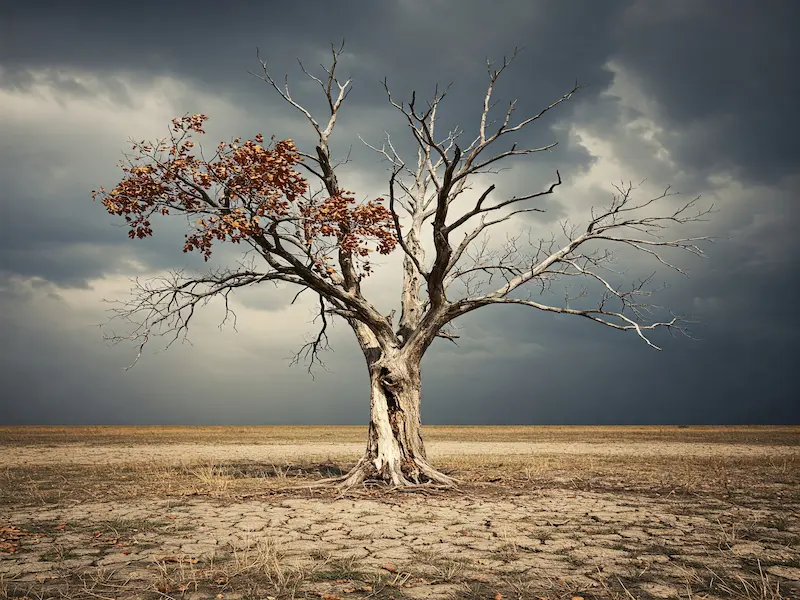
    A dying tree with bare branches and decaying bark, indicating poor health

    5 Signs Your Tree Is Dying

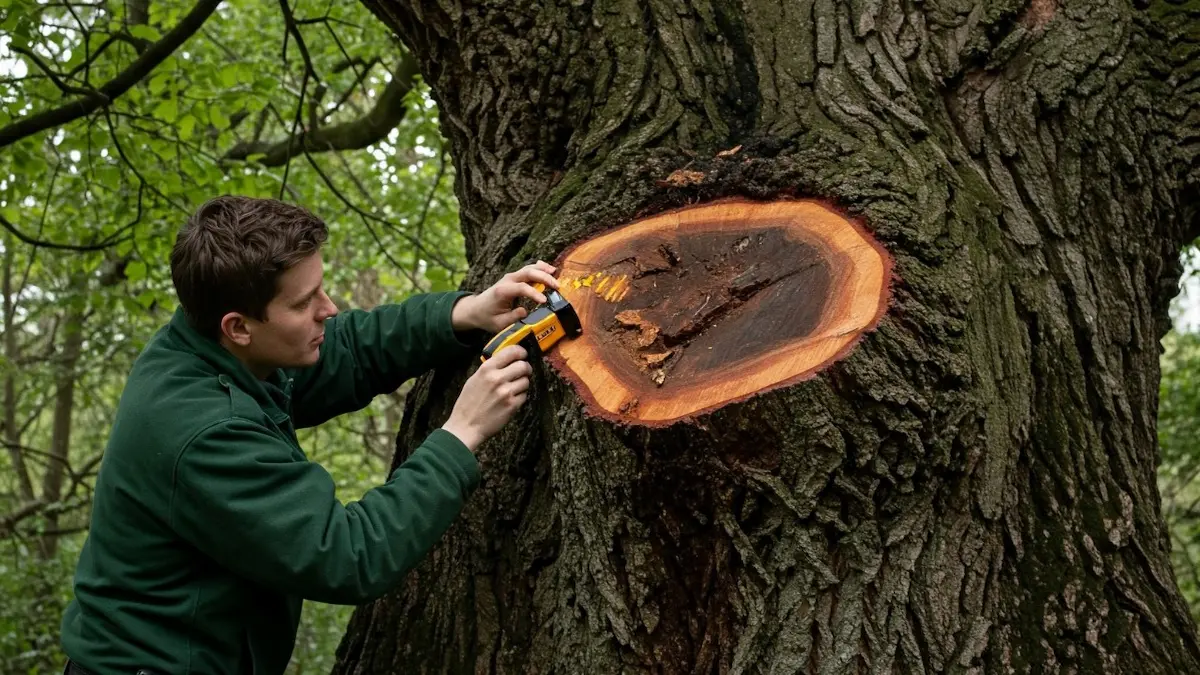
    how to tell if a tree is dead?, look for signs like no leaves during the growing season, peeling or cracked bark, fungus growth, brittle branches, deep trunk cracks, or significant leaning. Regular inspections, such as examining leaf color, checking for strong bark, and conducting a scratch test, help determine how to check if a tree is healthy. – if the layer beneath the bark is dry and brown, then the tree is more likely dead. Here let me explain the signs more in detail,

    Dead or Falling Branches

    Tree parts which have stopped growing or died are called “Dead wood”. It can be caused by aging, disease, pests or environmental stress. Leafless branches, missing bark and brittle or decaying wood are the signs for a dying tree. Traits like temperature and moist change variations will lead stress to a tree.Seasonal abnormalities like extreme cold, heavy snow, strong winds, and drought can weaken trees, causing branches to die or break and fall into the ground or a property or a person. Regular pruning and care help prevent these risks.

    Dead branches or falling branches are a clear sign of a dying tree, as they indicate a breakdown in the tree’s circulatory system. When branches of a tree die, nutrient flow of the tree is disrupted, it will affect the tree’s overall health. If the dieback starts at the top and spreads downward, it’s a strong indication that the tree is in serious decline.

    To avoid dead trees certified arborists suggest tree canopy thinning as a solution. Tree canopy thinning is basically removing selective branches from the tree. By doing this the interior of the canopy can be able to get more sunlight and air, this leads to a healthy journey for a tree!

    Bark Damage or Peeling

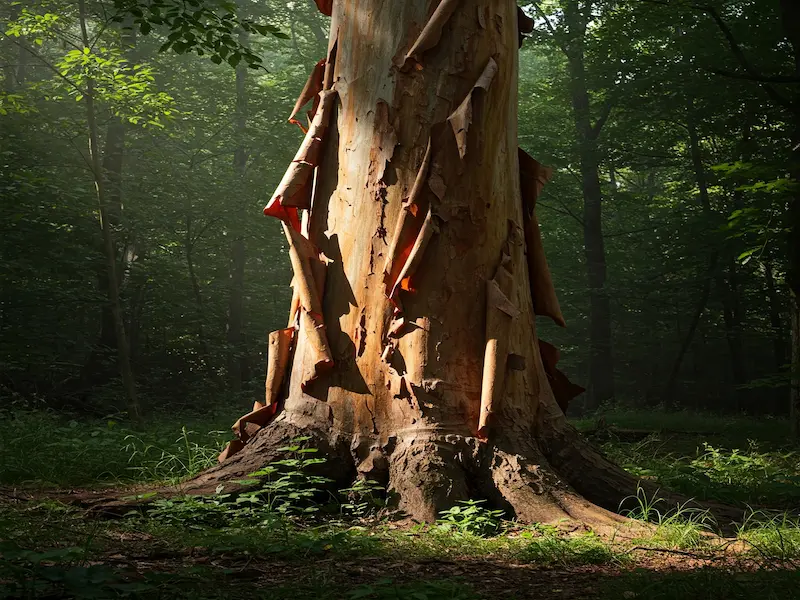
    A tree with bark peeling off, which can indicate disease, pest infestation, or environmental stress

    Bark damage or peeling can signal that a tree is dying, as it disrupts nutrient transport and weakens the tree’s structure. While some trees naturally drop bark, large sections falling off may indicate disease or decay. If extensive damage is present, consulting a professional is essential to assess the tree’s health.

    Cracks and splits in tree branches or trunks let the internal tissues of the tree get affected by harmful pathogens, and allowing fungi or bacterias inside which will cause tree diseases. Tree trunk cracks and bark damages will weaken the tree’s structure. It will leads to disrupt tree’s natural defences, and leave it more exposed to additional damage, disease and make a way for premature deaths of a tree. 

    Fungus or Mushroom Growth

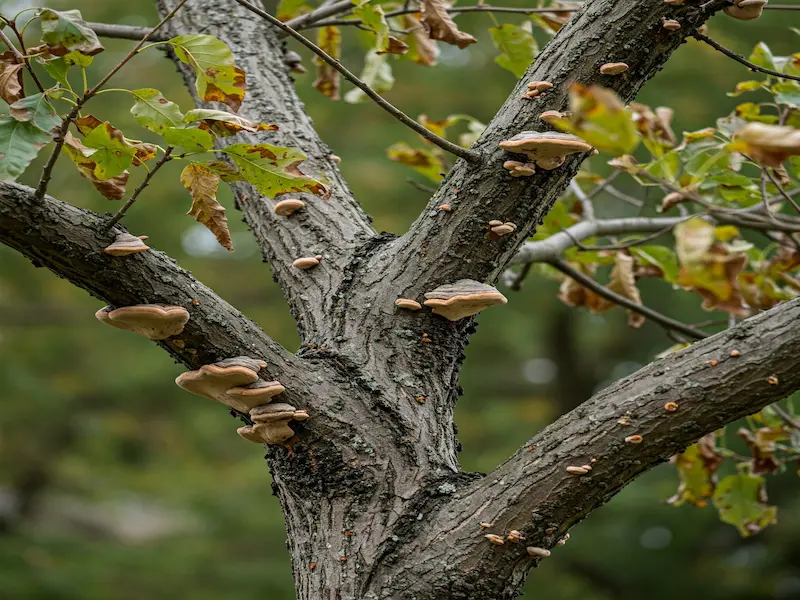
    A tree with visible signs of infection, such as discolored leaves and bark damage.

    The presence of fungus or mushrooms on a tree is a strong sign of decay and potential tree death. Fungi enter inside a tree through wounds in bark and grow inside. Extensive fungal growth leads to enzyme release which breaks down cellulose and lignin which weakens the tree’s structure, leading to instability of a tree which results in internal decay. Causes like improper pruning, fire and lightning can lead to growth of shelf mushrooms in a tree. Root rot disease can also be a consequence of mushroom growth. If the tree leans or shows root rot signs, conducting an urgent inspection could be a wise option. 

    Leaning Tree or Trunk Instability

    A leaning tree or trunk instability is a major warning sign that a tree is dying. It often signals root damage, structural weakness, or internal decay, making the tree vulnerable to collapse. A sudden shift in lean in a tree indicates root system issues, generally triggered by soil erosion, intense weather and root damages, this will make the tree unsteady and leaning tree danger increase the risk of falling particularly nearby homes or pathways. 

    Soil heaving occurs when soil around a tree moves upward, frequently due to tree removal, saturated soil or extreme weather.Storm damage refers to injuries a tree sustains from strong winds, heavy rain, hail, or lightning. The intensity of storm conditions together with tree health conditions determines whether trees sustain broken branches or full uprooting. An arborist Consultation can help assess the severity of the issue and sometimes to prevent potential damage an emergency tree removal required. 

    Root Decay or Soil Issues

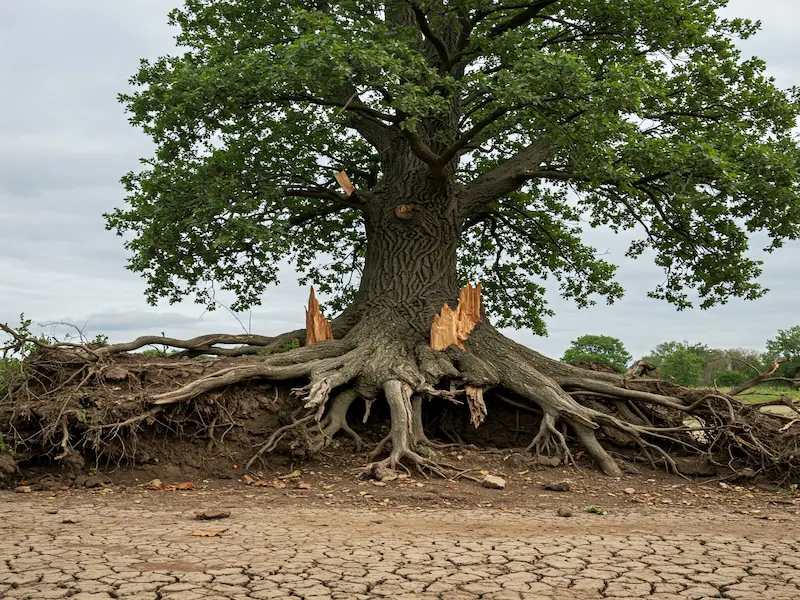
    A tree with exposed or damaged roots, showing signs of instability and stress

    Root decay or soil problems are serious signs that a tree is dying. Decaying roots struggle to absorb water and nutrients, leading to drying leaves, limited growth, and discoloring leaves. Visible signs like rotting roots or fungal growth at the bottom indicate severe issues in a tree.

     A common root decay symptom is soft, mushy roots, which are caused by fungal infections and excessive moisture decomposing the roots and impairing their ability to absorb nutrients and water. Poor drainage, soil compaction, and nutrient imbalances can further weaken the tree, and left construction damages. These kinds of tree root problems will accelerate its decline.

    For a more in-depth guide on spotting signs of a dying or dead tree, check out this resource on how to tell if a tree is dead from Penn State Extension.

    Immediate Actions to Take

    Identifying when to remove a dead tree is crucial to prevent potential hazards like falling branches or structural collapse. In this phase you require more help and assistance.

    Consult a Certified Arborist

    If your tree shows any sign mentioned above, it means your tree is in danger. To save your tree from a black and white life and add getting back to its colorful era all you need to have to do is an arborist consultation. By consulting certified arborists and conducting a tree health assessment you are postponing the unfortunate farewell of your tree.

    Professional Removal Process

    Professional tree removal ensures safety with proper gear and controlled cutting. It is necessary to obtain permits before. The cost of tree removal varies based on factors like tree size, location, and complexity of the job. DIY tree removal attempts are dangerous but hiring tree professionals ensure both safety and efficient performance.

    Preventing Future Issues

    Inspect trees regularly for any indications of decay and pests and structural issues. By following tree care tips such as proper pruning and proper assessment of water supply and soil conditions will promote strong root systems. Prevent tree diseases by ensuring proper watering, mulching, and early pest control. 

    FAQs

    Can a Dying Tree Be Saved?

    Yes, by identifying threats earlier a dying tree can be saved through proper care such as pruning, pest control, and improving soil conditions. but if the tree is in severe condition then it requires removal.

    How Quickly Should a Dangerous Tree Be Removed?

    To avoid potential risks removing the tree earlier as possible is recommended. or else consulting an arborist and conducting a tree health assessment is suggested.

    Is tree removal covered by insurance?

    Insurance for tree removal may be covered if the tree poses a risk due to a storm or damage to property. It’s essential to check your specific policy for details regarding coverage.

     If you failed to recognize those signs and ignored the actions required to take then you may have to face property damage coupled with the risk of falling branches. A safe environment requires both early detection and quick action between proper tree maintenance or expert professional intervention. Contact a certified arborist immediately for complete tree health assessment when you think your tree shows signs tree is dying. Address security needs first and then proceed with necessary steps for danger prevention. Reaching out to emergency tree services or searching for dependable tree removal services near you!

    For expert assistance, contact KD tree services!


    Get a Free Estimate