[email protected] ⚡ Same-day emergency available

Category: DIY vs. Professional Tree Services

  • Albany Is Losing Hundreds of Aging Trees Near New Scotland Ave and Your Property Could Be Next

    Albany Is Losing Hundreds of Aging Trees Near New Scotland Ave and Your Property Could Be Next

    For decades, the towering maple trees lining New Scotland Avenue helped define some of Albany’s most recognizable neighborhoods. Streets throughout Pine Hills, Buckingham Pond, and nearby residential corridors became known for mature tree canopies that shaded homes, cooled sidewalks during humid summers, and gave older properties timeless curb appeal.

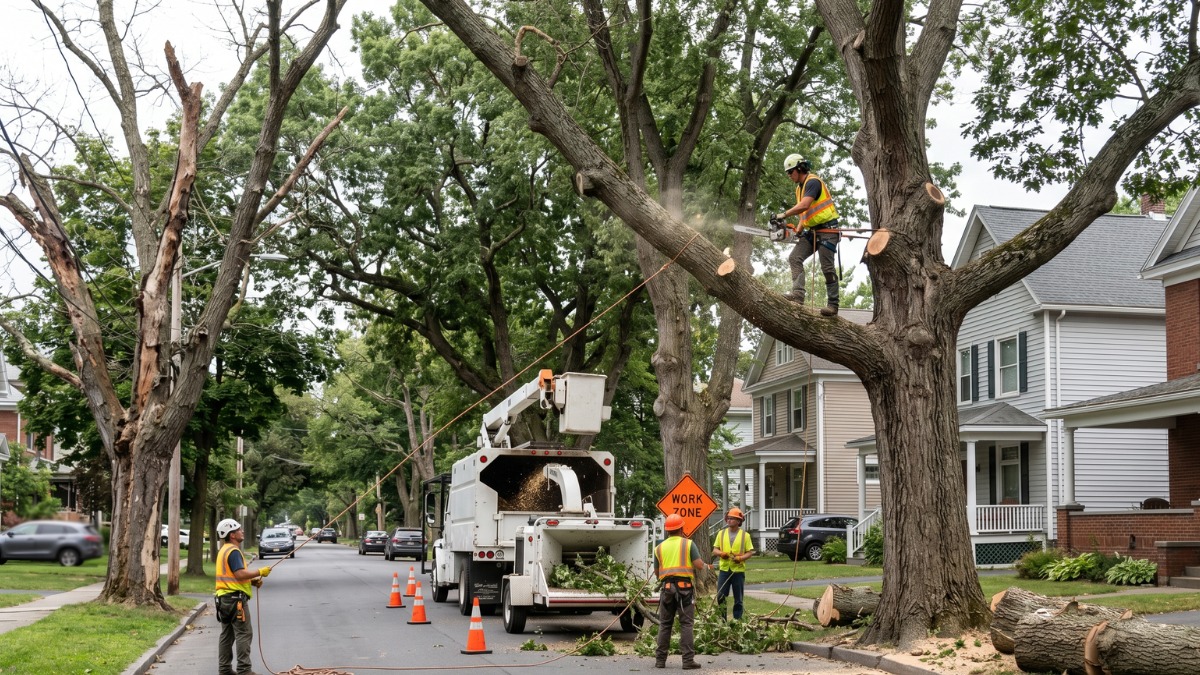
    Now many of those same trees are entering dangerous decline at the same time, leading more homeowners to search for professional tree removal in Albany NY before severe weather causes major property damage.

    Across Albany, aging silver maples and Norway maples are increasingly showing signs of structural failure, internal decay, and storm-related weakness. Local arborists and urban forestry professionals throughout the Capital Region have been warning that many trees planted during Albany’s post-war expansion years are simultaneously reaching the end of their safe lifespan.

    And most homeowners have no idea their tree is failing until something serious happens.

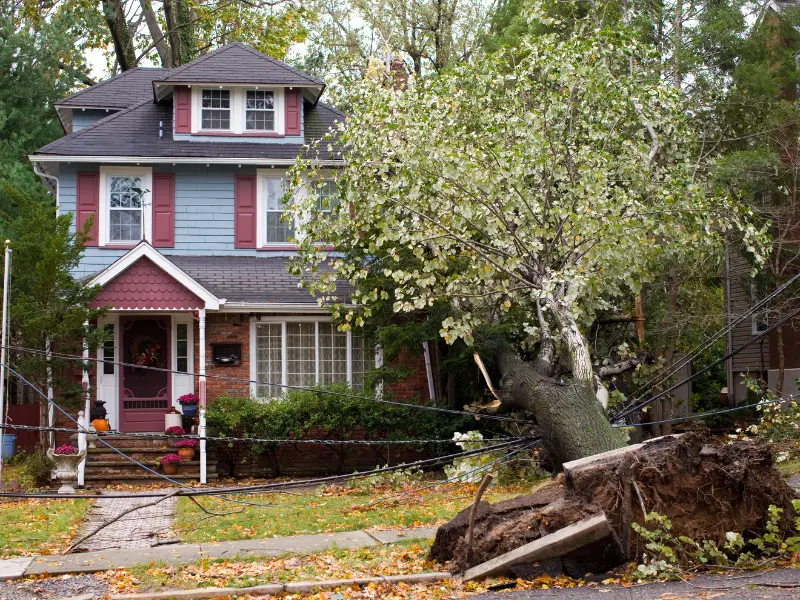
    Sometimes it starts with a heavy limb crashing onto a roof during a summer thunderstorm. Other times, homeowners notice splitting branches after a wet snowstorm or discover large dead sections high in the canopy that suddenly appeared over winter.

    In some cases, trees that looked “healthy” from the street were already hollow inside.

    That is exactly why more Albany homeowners are beginning to ask an important question:

    “Could my tree be next?”

    If your property contains mature maple trees planted decades ago, the answer may be yes.
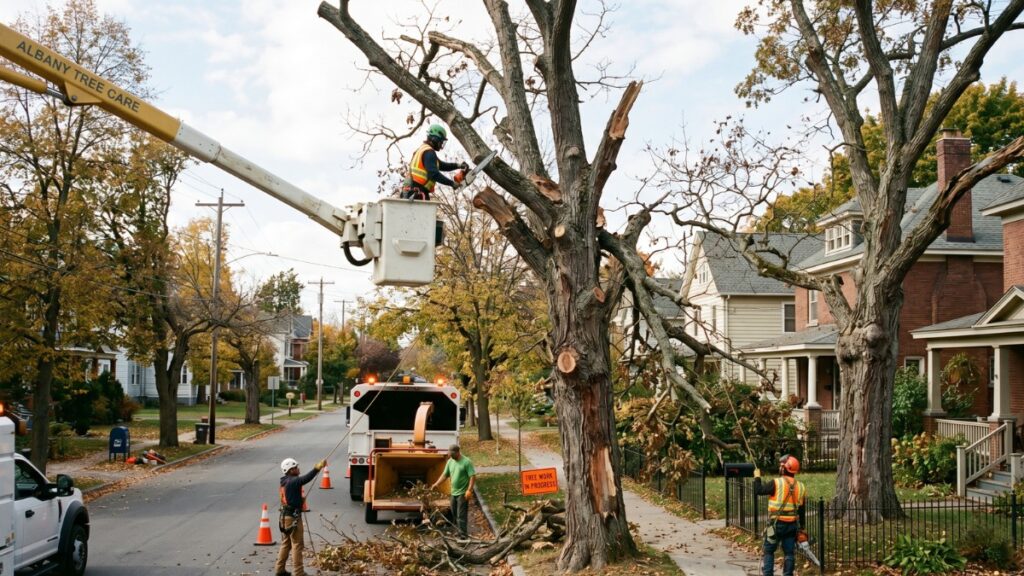
    Best Tree Removal in Albany NY

    Why So Many Albany Trees Are Suddenly Failing

    What’s happening across New Scotland Avenue is not random.

    It’s the result of a long-developing urban forestry problem that many Northeastern cities are now facing.

    During the 1940s through 1970s, fast-growing shade trees like silver maple and Norway maple became extremely popular throughout Albany neighborhoods. Developers and municipalities planted them heavily because they grew quickly, created large canopies fast, and gave new neighborhoods an established appearance.

    The problem is that thousands of these trees were planted within the same general time period.

    Today, many are aging out together.

    Urban forestry professionals often refer to this as an “even-aged canopy issue,” where large groups of trees decline simultaneously because they share similar species, age, environmental stress, and growing conditions.

    Throughout Albany, tree crews and ISA-certified arborists are increasingly seeing:

    hollow trunks

    severe canopy dieback

    internal decay

    root instability

    splitting trunks

    fungus growth near the base

    dead upper limbs

    sudden branch failures during storms

    Silver maples are especially vulnerable because they grow rapidly but develop weaker wood than many slower-growing native hardwood species. As they mature, large limbs become increasingly prone to cracking under stress from wind, ice, or heavy snow.

    Norway maples create different long-term problems. Their shallow root systems often struggle in compacted urban soil while mature trees become more brittle over time.

    What makes the situation particularly dangerous is that many declining trees still appear alive and full from a distance even while serious internal decay is already progressing.

    Why New Scotland Avenue Became a Hotspot

    The New Scotland Avenue corridor contains many residential blocks where trees were planted uniformly decades ago.

    That means entire streets may now contain trees of nearly identical age and species.

    When one begins declining, neighboring trees often show similar structural problems within only a few years.

    Several Albany-specific conditions have accelerated the issue dramatical.

    1. Albany’s Harsh Freeze Thaw Cycles

    Capital Region winters are especially hard on aging trees.

    Water enters small cracks in trunks and limbs during warmer daytime temperatures. Overnight freezing causes that moisture to expand internally, slowly worsening structural weakness year after year.

    Older maples already suffering from decay become highly vulnerable during these repeated freeze-thaw cycles.

    This is one reason some trees suddenly split or collapse after winter even if they appeared stable the previous fall.

    2. Road Salt Damage

    Trees near roads, sidewalks, and driveways absorb salt runoff every winter.

    Over time, road salt damages root systems and interferes with nutrient uptake.

    Common symptoms include:

    thinning leaves

    premature fall color

    dead branch tips

    weak spring growth

    bark splitting

    canopy thinning

    Combined with decades of urban stress, mature trees become far less resilient during severe weather.

    3. Storm Damage That Builds Over Time

    Many Albany residents remember storms that caused widespread limb failures and National Grid outages across the region.

    But one major misconception is that surviving a storm means the tree is fine.

    In reality, structural damage often remains hidden for years.

    A tree weakened during one storm may not fully fail until much later. Arborists frequently discover internal cracking and decay inside trees homeowners believed were still healthy.

    During recent storm seasons across Upstate New York, many emergency tree removals involved mature maples that had shown warning signs long before complete failure occurred.

    4. Soil Compaction Around Older Properties

    Urban trees rarely receive ideal growing conditions long term.

    Driveways, sidewalks, parked vehicles, construction activity, and heavy foot traffic slowly compact soil around roots over decades.

    Compacted soil reduces oxygen movement underground and weakens root health.

    This creates chronic stress that slowly reduces structural stability over time, which is why many homeowners eventually require professional tree removal in Albany NY after years of unnoticed decline.

    The Warning Signs Many Homeowners Miss

    One of the biggest mistakes homeowners make is assuming:

    “If the tree still has leaves, it must be healthy.”

    Unfortunately, that is not always true.

    Many structurally compromised trees continue producing leaves even while severe internal decay develops.

    Here are the warning signs Albany homeowners should never ignore.

    Large Dead Sections High in the Canopy

    If major limbs stop producing leaves during spring or summer, internal decline may already be progressing significantly.

    Dead upper canopy growth is one of the clearest indicators of stress.

    Vertical Cracks Along the Trunk

    Deep splits in the trunk often signal severe structural weakness.

    These cracks commonly worsen during freeze-thaw cycles.

    Hollow Cavities

    Large openings or hollow sections inside the trunk usually indicate decay.

    Although some hollow trees survive temporarily, stability becomes unpredictable.

    Mushrooms or Fungus Near the Base

    Fungal growth near the trunk flare or roots may indicate internal rot.

    This is especially common in older silver maples throughout Albany neighborhoods.

    Sudden Leaning

    A tree that suddenly leans after storms or heavy rain may have root failure beginning underground.

    This should always be professionally inspected immediately.

    Frequent Limb Drops

    If branches regularly fall during mild wind or normal weather conditions, structural integrity may already be compromised.

    Many Albany emergency tree service calls begin with repeated limb-drop complaints.

    How Old Is Your Tree? It May Be Older Than You Think

    Many homeowners underestimate the age of trees on their property.

    A maple planted by previous homeowners during Albany’s suburban expansion decades could already be approaching advanced decline stages, increasing the likelihood of needing emergency tree service in Albany NY during future storms or heavy winter weather.

    A rough age estimate can be calculated using trunk diameter.

    Measure the tree circumference approximately 4.5 feet above ground level and divide by 3.14 to estimate diameter.

    For silver maples:

    20-inch diameter → often 50–60 years old

    30-inch diameter → frequently 80+ years old

    However, urban conditions often shorten lifespan significantly.

    Trees exposed to:

    road salt

    poor pruning

    storm stress

    root restriction

    compacted soil

    repeated construction damage

    …may decline earlier than expected.

    Who Is Responsible for Dangerous Trees in Albany?

    This is one of the most misunderstood issues homeowners face.

    Trees Near Streets and Sidewalks

    Some trees located between sidewalks and roads may involve city oversight or permit requirements.

    However, responsibility can vary depending on exact location and property boundaries.

    Homeowners should never assume the city will automatically remove a hazardous tree.

    Trees on Private Property

    If the tree originates on private property, the homeowner is typically responsible for:

    inspections

    maintenance

    pruning

    removal

    damage liability

    If a neglected tree damages a neighboring home, fence, vehicle, or utility line, liability issues can become expensive very quickly.

    Why Waiting Often Costs More

    Many homeowners delay inspections because the tree still “looks okay.”

    Unfortunately, emergency tree removal is usually far more expensive than planned preventive work.

    Emergency situations may require:

    crane removals

    blocked-road coordination

    power line safety procedures

    nighttime storm response crews

    hazardous climbing conditions

    Meanwhile, storm damage can include:

    roof destruction

    broken siding

    crushed vehicles

    damaged fences

    electrical hazards

    insurance complications

    A professional arborist inspection costs far less than major structural repairs after a tree failure.

    What Albany Homeowners Should Do Right Now

    If your neighborhood contains mature maples, proactive inspection is critical.

    Step 1: Walk Your Property Carefully

    Look for:

    dead limbs

    hanging branches

    trunk cracks

    hollow cavities

    fungus growth

    sudden leaning

    canopy thinning

    Photograph changes yearly to monitor decline progression.

    Step 2: Schedule an ISA Certified Arborist Inspection

    Professional arborists can identify structural problems long before visible collapse occurs.

    This becomes especially important after:

    wind storms

    ice storms

    wet snow accumulation

    summer thunderstorm activity

    Step 3: Avoid Improper Pruning

    “Topping” mature maples often accelerates decline and creates weak regrowth that becomes even more hazardous later.

    Improper pruning can shorten tree lifespan dramatically.

    Step 4: Plan Tree Replacement Before Failure Happens

    Waiting until a tree collapses creates unnecessary risk and significantly higher costs.

    Planned removal allows homeowners to safely transition their property before emergency conditions develop.

    Best Replacement Trees for Albany Properties

    Urban forestry experts increasingly recommend greater species diversity throughout Albany neighborhoods.

    Overreliance on a few fast-growing species is exactly what contributed to today’s widespread aging-tree problem.

    Several replacement trees perform much better in modern urban conditions.

    Red Maple

    Excellent fall color with stronger adaptability than silver maple.

    Swamp White Oak

    Long lifespan, strong storm resistance, and excellent shade potential.

    Kentucky Coffeetree

    Highly tolerant of difficult urban environments and compacted soils.

    Hackberry

    Surprisingly resilient against city stress and harsh weather conditions.

    Disease Resistant Elm Varieties

    Modern elm cultivars provide classic canopy beauty with far better disease resistance than older generations.

    Native and climate-adapted species generally provide the best long term stability for Capital Region properties, especially for homeowners exploring long-term tree replacement services after removing aging or hazardous maples.

    Albany’s Tree Problem Is Bigger Than One Street

    What is happening near New Scotland Avenue reflects a much larger challenge affecting older cities throughout the Northeast.

    Entire generations of urban trees are aging simultaneously.

    Communities that once depended heavily on fast-growing species are now facing:

    mass removals

    declining canopy coverage

    rising maintenance costs

    increasing storm hazards

    expensive long-term replanting efforts

    For homeowners, the lesson is clear:

    A mature tree adds enormous beauty, shade, and property value but only when it remains structurally safe and properly maintained.

    Ignoring warning signs can turn a beautiful shade tree into a major financial and safety risk surprisingly quickly.

    Final Thoughts

    Albany’s mature tree canopy remains one of the city’s greatest assets, especially throughout neighborhoods surrounding New Scotland Avenue.

    But many silver maples and Norway maples planted generations ago are now entering serious decline at the same time.

    Homeowners who act early can:

    reduce storm damage risk

    avoid emergency removals

    protect nearby structures

    prevent costly property damage

    safely transition to healthier replacement trees

    If your property contains mature maples, now is the time for a professional tree inspection not after the next severe storm warning moves through Albany.

    Because once a large aging tree begins visibly failing, the internal damage is often already far worse than most homeowners realize.
  • Why DIY Tree Removal Can Cost You More Than Hiring a Pro

    Why DIY Tree Removal Can Cost You More Than Hiring a Pro

    Removing a beloved tree from your yard is never an easy decision; neither is it a decision to go alone. Certified and licensed arborists have the experience, the credentials, and the tools to safely remove the tree’s branches, trunk, or stump, even if it costs a bit more than breaking out the chainsaw yourself. But do the pros of hiring a tree service outweigh the cons? Before you consider taking on the job yourself, let’s review the facts.

    The Hidden Costs of DIY Tree Removal

    One might assume that cutting down a tree is a straightforward task. Yet people often overlook the hidden costs that come with DIY tree removal. You will still have to acquire tree removal tools, like chainsaws, safety equipment, climbing gear, and ropes.

    Buying or renting these tools can be very expensive. Even if you already own some equipment, it might not be powerful or safe enough to handle large trees.

    Another hidden cost comes from time. Tree removal is not a one-hour task; it requires planning, safety setup, and cleanup. You might spend your entire weekend or more just trying to remove one tree. Repairing costs will be way up compared to the price of professional help.

    The Danger of DIY Tree Cutting

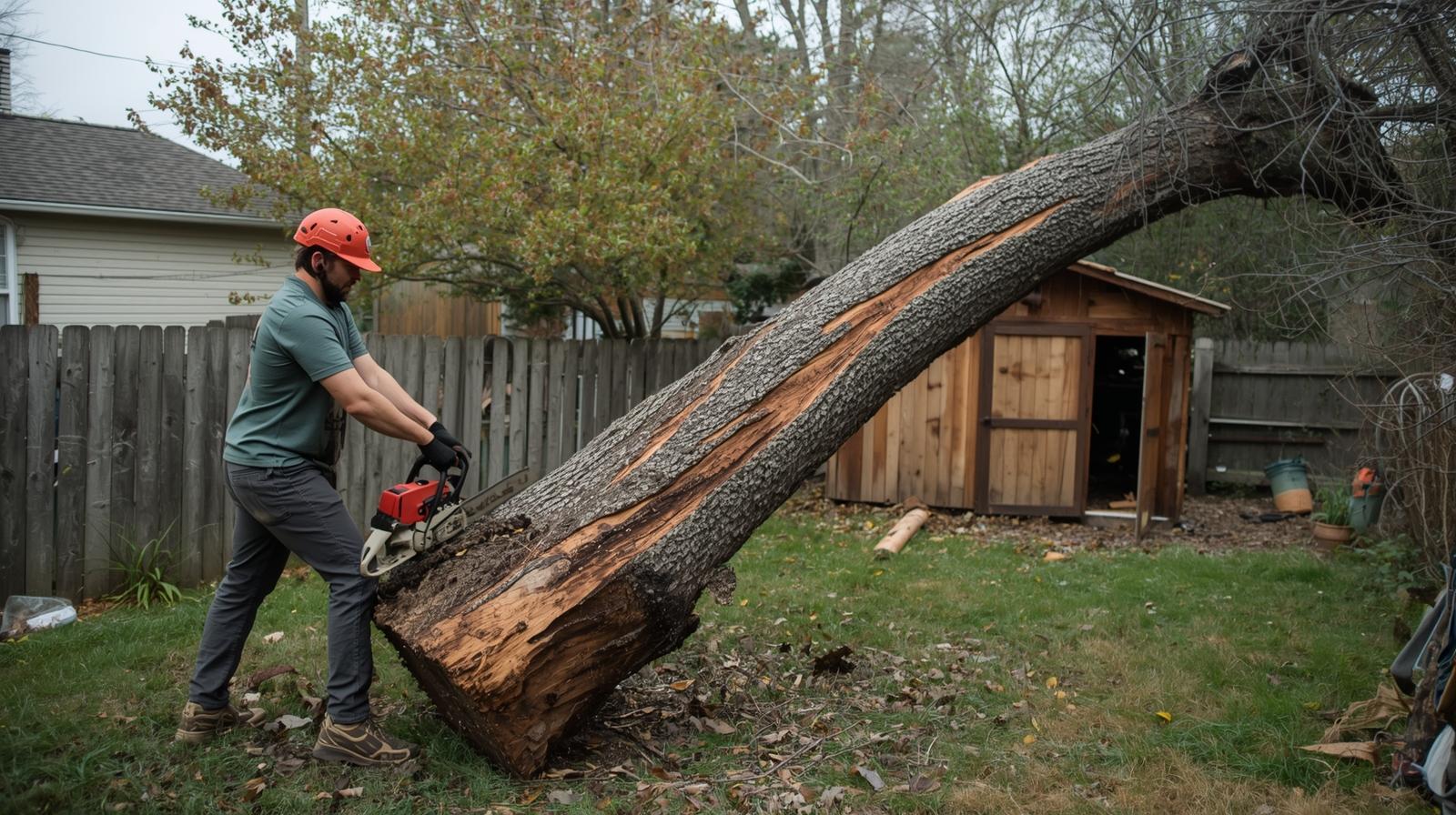
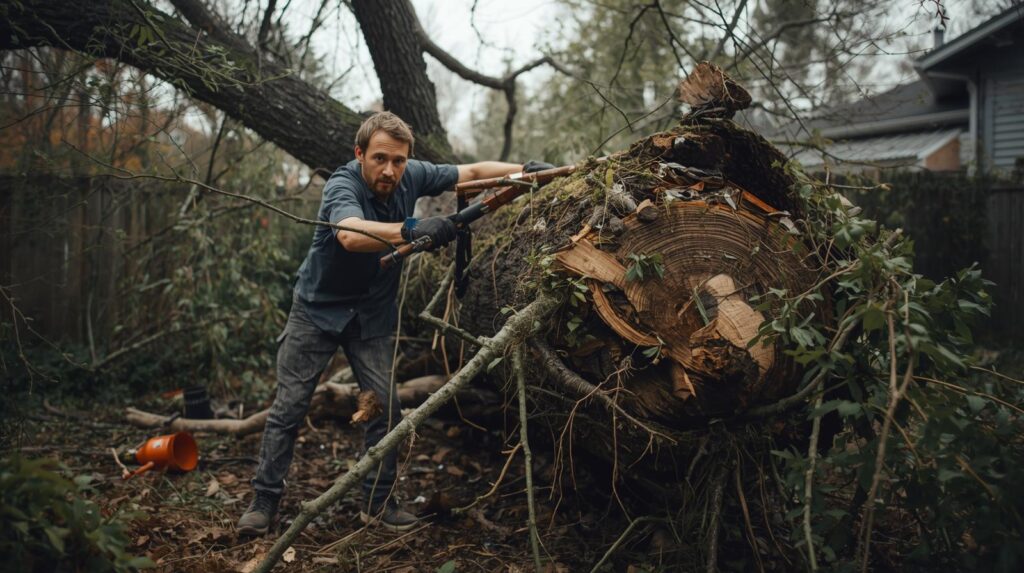
    Personal injury is the main reason for the highest risk in tree removal by the DIY method. Tree cutting is a process that includes working high up, dealing with sharp tools, and guessing the tree’s direction of falling. A tiny error can cause an injury or even death. The force and direction of the fall are often misjudged by homeowners, which can cause the tree to fall on nearby houses, cars, or power lines.

    The professional arborists and workers from a licensed tree company can cope with these risks. They know how to evaluate the tree’s structure, find the weak points, and apply the right technique to remove it safely. Also, they carry insurance that covers the tree falling and causing damage to anything.

    The Process of Hiring a Tree Removal Company as a Cost-Effective One

    When you engage tree removal experts, you are not merely paying for their time; you are paying for their knowledge, technology, and safety measures. A professional tree removal KD Tree Services crew comes equipped with all the necessary machinery, such as cranes and stump grinders, wood chippers, and safety equipment. You won’t even have to hire or purchase anything yourself.

    They are able to finish the work within a short period compared to the time a homeowner would take. Plus, they know how to avoid damaging your lawn, home, or nearby property. Cleanup is another thing that is usually done after the removal, which saves you even more time and effort, which is valuable.

    What might seem like a ”money-saving DIY project” can actually become much more expensive than anticipated. This is simply because the cost of renting equipment and tools, repairing the damage, and the potential of sustaining injuries can certainly go beyond the price of hiring a professional tree removal service.

    The Importance of a Licensed Tree Company

    tree removal Grand rapids MI

    For safety and quality, a licensed tree company should be considered. Licensed experts are mandated to abide by state and local laws. They are insured, compliant with environmental regulations, and use certified tree removal tools.

    In places like Belmont, MI, where the weather and conditions of the property can be unpredictable, it is even more crucial to put your trust in a licensed crew. A professional tree removal service in Belmont MI understands local tree species, soil types, and seasonality. This allows for removal to be completed safely and efficiently, protecting nearby structures and vegetation.

    Homeowners’ DIY Tree Removal Blunders

    One of the biggest mistakes is underestimating how a tree will fall. A tree can fall unpredictably when the angles to cut and the tree’s weight distribution are unknown, which can cause damage to property and cause injuries.

    Using inappropriate equipment for tree removal is another mistake.

    Household tools are not made for cutting thick trunks or managing large branches. Even with the right tools, improper use can cause kickbacks or equipment failure.

    Some homeowners also forget about stump removal. Just because a tree has been cut down to the ground level doesn’t mean the problem of DIY tree removal is solved. Stumps have the potential to sprout, and their roots may even invite some uninvited bugs, plus they spoil the appearance of your garden. The service of a professional Tree Removal company does not only end at stump grinding or removal, but it also encompasses leaving your yard clean and safe.

    Professional Help Gives Peace of Mind

    By hiring tree removal company specialists, you are actually buying peace of mind. It is basically letting you know that competent workers are dealing with the task in a safe and effective manner. They manage everything from tree evaluation and setting up the location to cleaning and discarding the waste.

    Moreover, you are dodging possible lawsuits. If your DIY tree removal gets you to damage a neighbor’s property or hit a power line, the law will hold you responsible. On the other hand, an Authorized Tree Company or Licensed Tree Company carries insurance that will cover you against such risks.

    Eco-friendly Tree Removal

    Another thing is that professional firms are also concerned about the ecosystem. A professional tree removal Belmont MI service makes sure that trees are taken down in a way that won’t harm the environment, and often the wood is recycled or turned into mulch. Besides, they also suggest to homeowners which trees can be pruned rather than uprooted so that the ecosystem remains healthy.

    People doing DIY tree removal rarely think of these things. You may inadvertently damage nearby trees or the ground if you lack the right know-how or the proper tree removal equipment. The experts from a Licensed Tree Company can keep the tree’s necessary removal area healthy and maintain a safe exclusion zone during the operation.

    For more information on safe and responsible tree care practices, visit the U.S. Forest Service website, https://www.fs.usda.gov/.

    When Should You Call a Professional Tree Removal Belmont MI Service?

    If a tree in your yard starts leaning in a strange way, drops dead branches, or looks unhealthy, that’s a clear sign to reach out to a professional tree removal Belmont MI company. Their trained eyes can quickly tell whether the tree should come down or if a simple trim will do the job.

    Even smaller trees can turn risky when they’re close to your home, fences, or power lines. In those cases, it’s smarter and more affordable in the long run to hire tree removal company experts who already have the right tools, experience, and safety know-how to handle it properly.

    FAQ

    Is it possible for me to take down a little tree on my own?

    In case the tree is of small size and situated at a considerable distance from the buildings or power lines, you can probably deal with it without any danger. Still, it is always best to get a second opinion from a licensed tree company.

    What are the reasons for the high costs of professional tree removal?

    The high cost of tree removal covers insurance, skilled labor, and modern tree removal equipment, which guarantees safe and quick work.

    What if the tree is very close to my house?

    Do not try removing the tree by yourself if it is near your house. A professional tree removal team in Belmont MI will be able to handle the situation, be in control of how the tree falls, and prevent any possible damage.

    If you start noticing any of these warning signs, don’t wait; get in touch with KD Tree Service Belmont, your trusted professional tree removal Belmont MI company, to take care of the work safely and efficiently, (616) 947-8809.

  • The Role of Trees in Urban Landscapes and Their Environmental Benefits

    The Role of Trees in Urban Landscapes and Their Environmental Benefits

    Cities around the world are growing very fast. The main reason is that many people have recently moved to urban areas. Since the population is increasing rapidly, roads, buildings, and houses are also being built very quickly.

    However, the problem is that green spaces like parks and forests are more likely to be removed when this process happens. Some may think this is a normal process, but the reality is different. Because of these changes, air pollution has increased, temperatures have become hotter, and it is becoming harder to find clean water.

    That is why experts suggest that while developing, it is very important to keep trees in urban landscapes.

    This is because trees can help solve the problems we mentioned earlier. Trees have many environmental benefits, which is why many people are focusing on urban planning with trees nowadays.

    Importance of Trees in Urban Landscapes

    Importance of Trees in Urban Landscapes

    When a city has more trees, it becomes a healthier and more comfortable environment for everyone. That is why Trees in urban landscapes play a very important role, and they make cities are better place to live. Trees are not just for beauty — they give many benefits. They provide shade on hot days, which helps people stay cool when they walk outside. Trees also help to reduce noise from busy roads and traffic. Their green color and natural look add beauty to streets, parks, and neighborhoods, making the city look fresh and peaceful.

    In city planning, tree planting in cities is becoming very popular because people now understand that trees help improve life in crowded places. Trees also support urban biodiversity by giving homes to birds, insects, and small animals.

    Another big benefit is that trees help to control the temperature of a city. The tree canopy and climate regulation work together to reduce heat and keep the air cooler. This is very important for sustainable urban landscaping, where the aim is to create green spaces that protect the environment and support healthy living.

    So, planting more trees in cities is one of the best ways to build a cleaner, cooler, and more beautiful place for everyone.

    How Trees Improve Air Quality in Urban Areas

    How Trees Improve Air Quality in Urban Areas

    One of the biggest environmental benefits of trees is their ability to clean the air in cities. Many people don’t realize how much trees help us breathe better every day.

    Trees work like natural air filters. They absorb harmful gases like carbon dioxide (CO₂) from the air and release clean oxygen, which is very important for people and animals to live. This is why trees are often called the “lungs” of a city.

    Not only that, but air purification by trees also happens when they catch dust, smoke, and other tiny particles from the air on their leaves. These particles could cause breathing problems if they stay in the air for a long time.

    In busy cities, pollution from vehicles, factories, and construction makes the air dirty and unhealthy. But how trees improve air quality in urban areas is by reducing these harmful elements. Trees also help to remove bad smells and cool down the air, making the environment fresher and more comfortable.

    Because of this, planting more trees in cities is not just about beauty. It is a smart and natural solution to fight air pollution and create a healthier life for everyone living in urban areas.

    The Role of Urban Forestry in Reducing City Heat

    The Role of Urban Forestry in Reducing City Heat

    One of the biggest problems in cities is how hot they can get. All the buildings, roads, and cars trap heat, creating what’s called the urban heat island effect. But trees in urban landscapes help fight this. Planting more trees in cities is a smart way to cool things down.

    Trees provide shade with their branches and leaves, known as the tree canopy. This shade lowers the temperature of the ground and buildings underneath. In fact, shaded areas can be several degrees cooler than places without trees. This helps people feel more comfortable and reduces the need for air conditioning.

    Another way trees help is through a process called evapotranspiration. This means trees release water from their leaves into the air, which cools the surrounding area. This is a key part of how tree canopy and climate regulation works.

    So, the role of urban forestry in reducing city heat is very important. Trees don’t just look nice—they are natural cooling systems that help make cities more livable, especially during hot summer months. Adding more greenery is one of the best solutions to deal with rising city temperatures.

    Water Management Systems and Global Warming Contingencies

    Water Management Systems and Global Warming Contingencies

    The environment benefits from trees as they provide shade and many other services. One of the major ways in which trees help cities is by controlling water runoff. During heavy rains, water usually collects on the roads and leads to flooding. This is where trees actually help.

    In addition to soaking up rainwater, tree roots also help reduce water runoff to street and drains. This is one aspect of storm water management. Tree roots help improve soil structure which enables soils to be held without eroding easily and withstand a lot of water.

    The urban tree also makes water cleaner and improves air quality because of cutting down pollution. As we all know, trees play a very important role in controlling the amount of dangerous substances in rain water. They also assist in cooling the areas around the city. The canopy provided by trees helps in regulating urban climate which as we have seen, makes city planning and infrastructure important.

    The more the number of trees in cities, the more efficient the management of stormwater of that city becomes. This significantly reduces cthe hances of floods and keeps the environment clean for all citizens

    Urban Biodiversity and Wildlife Habitat

    Urban Biodiversity and Wildlife Habitat Urban Biodiversity and Wildlife Habitat

    Trees in urban landscapes are more than just shade and decoration—they are vital homes for wildlife. In busy cities, green spaces with trees offer shelter and food for birds, insects, and small mammals.

    This supports urban biodiversity and trees by allowing nature to thrive even in concrete-heavy areas. Birds use trees for nesting, insects live in the bark and leaves, and squirrels and other animals find food and protection in branches. These animals all play a part in keeping city ecosystems balanced.

    Adding trees is also a key part of sustainable urban landscaping. It helps bring back nature, even in small parks or along roads. When a city supports biodiversity, it becomes a healthier place for people too.

    So, planting and protecting trees in cities helps build strong, living ecosystems. Every tree planted is a step toward a more balanced, green, and vibrant urban environment.

    So with all these details, we hope you have a clear understanding about the environmental benefits of trees and how trees in urban landscapes are beneficial.

    Whether you live in an urban area or not, being around trees is always a great way to live. But with the busy lifestyle and limited time we all face, there can be some challenges. That’s where hiring a professional tree care service can really help.

    If you’re wondering how to choose the right tree service, you can refer to our blog. We’ve summarized all the key questions you need to ask a tree service provider before hiring them.

    And now, we have a recommendation for you.

    Introducing KD Tree Service

    KD Tree Service is a leading full-service tree company with multiple locations across the USA and over 14 years of experience in the industry. Our journey began in 2011, serving just a few locations, and has expanded over time.

    We now specialize in everything from consulting services, tree removal, and pruning to emergency services. The extensive knowledge of our tree care specialists guarantees quality service. That’s why we’ve built a reputation as a trusted tree care provider across the USA.

    So don’t wait—give us a call for a free estimate. We’re ready to take care of your project and make your dream possible.

    Get a Free Estimate
  • A Day in the Life of a Tree Service Professional

    A Day in the Life of a Tree Service Professional

    We all love to make our neighborhoods safe and green. Most of the time, tree service professionals are helping us do that, but we rarely appreciate their hard work. These unsung heroes work hard to maintain our yards and properties, making them safe and beautiful by handling the tough and dangerous parts.
    What exactly goes into a day in the life of a tree service worker? Most people aren’t aware of that. So, in this blog, we’re going to explore behind the scenes in tree care professionals and get an understanding of tree care job duties.

    Morning Briefings and Equipment Prep

    Morning Briefings and Equipment Prep

    The day for a tree service professional starts early. As the sun rises, the crew gathers at the yard for a quick but essential morning briefing. This is where supervisors assign locations, go over the planned tasks, and address any safety concerns. Part of the tree service work routine includes thorough checks on tree service tools and equipment, ensuring everything from chainsaws to harnesses is in perfect working order. Team members inspect their safety gear, plan routes, and load the trucks accordingly. These early hours set the tone for the rest of the day.

    So, what does a tree service professional do on a daily basis? It all begins here.

    First Stop: Light Maintenance and Tree Trimming

    First Stop: Light Maintenance and Tree Trimming

    The tree service crew usually gets ready in the morning and heads out to trim the trees at a customer’s house. This type of work is performed routinely to maintain the health of a tree and avoid potential problems like branches falling off in close proximity to a house or a power line. When scheduling these jobs, the company takes into consideration the season, the type of tree, and its growth speed. 

    Throughout the entire procedure, communication is maintained between the climbers and the ground crew. All personnel abide by safety protocols as a form of ensuring everyone’s safety—guides which are standard operating procedures for tree care services. These are some of the daily activities that are completed by tree care professionals with extensive training related to safety measures and other operational procedures.

    First Stop: Light Maintenance and Tree Trimming

    Midday Challenge: Emergency Tree Removal Job

    It was midday when a call came in—an urgent request to remove a large tree that was leaning dangerously after a recent storm. These types of calls aren’t unusual for tree service professionals, so the crew quickly prepared for their next mission.

    Upon arrival, the first task was a risk assessment, which included evaluating the condition of the tree, surrounding structures, and any possible hazards.

    After this quick process, the supervisor assigned roles to the team members based on their experience and training.

    Tree removal is a high-risk task, so the supervisor reminded everyone to stay highly alert, adaptable, and to work in perfect sync.

    After an hour of focused effort, the team successfully removed the tree another mission accomplished thanks to the full support and coordination of the crew.

    Lunch Break: Team Culture and Camaraderie

    Lunch Break: Team Culture and Camaraderie

    Lunchtime is not only a time for a meal but also a much-needed break. During this time, the whole crew eats together, sharing laughs, telling stories, and building a really good bond with their co-workers. Usually, at that time, co-workers discuss what happened during the day and what duties they have after lunch. We know the tree service work routine is filled with risk, so they need to have proper communication between them. After lunch, they get a little bit of rest, and then they’re ready for the next task.

    Afternoon Grind: Working in Commercial Zones

    Afternoon Grind: Working in Commercial Zones

    In the second half of the day, the crew gets ready for the next task, which is at a commercial job site. These sites often have bigger trees and are located in busier areas, so the crew must ensure the safety of both people and property. Unlike residential work, commercial zones come with stricter rules and more complex logistics.

    So, the crew first sets up traffic control and safety barriers. Then, the planned tree service, including trimming, begins, with an effort to minimize disruption to others in the area. Using specialized tree service tools and equipment, they work efficiently and safely. The crew completes the job within the expected time period.

    Clean-up and Equipment Maintenance

    Clean-up and Equipment Maintenance

    After the project is completed, it’s time for one of the most important tasks—cleaning up. As standard practice, all the workers make sure to leave the work site spotless. All the branches are chipped, stumps are removed, and finally, all debris is cleared.

    Then the crew heads back to the base. Once there, the next step is to clean and maintain all the tools and sharpen them. They inspect each item, and if repairs are needed, they report it to the manager. If everything is in working order, they prep the tools and safety gear for the next day, ensuring everything is ready even for an urgent call, so the crew can respond without delay.

    At the end of the day, they log the tasks completed and review the schedule for tomorrow. That way, they’re fully prepared to start the next job without wasting any time.

    Safety First: Training and Continual Education

    After the project is completed, it’s time for one of the most important tasks—cleaning up. As standard practice, all the workers make sure to leave the work site spotless. All the branches are chipped, stumps are removed, and finally, all debris is cleared.

    Then the crew heads back to the base. Once there, the next step is to clean and maintain all the tools and sharpen them. They inspect each item, and if repairs are needed, they report it to the manager. If everything is in working order, they prep the tools and safety gear for the next day, ensuring everything is ready even for an urgent call, so the crew can respond without delay.

    At the end of the day, they log the tasks completed and review the schedule for tomorrow. That way, they’re fully prepared to start the next job without wasting any time.

    Why This Job Matters: Ecological Footprint and Sociable Care

    Now you are familiar with the daily routine of a tree worker. They encounter life-threatening risks and supervise that our gardens, lawns, and commercial properties are well maintained, clean, and above all, safe.

    How is it to serve in tree services? It is fulfilling. Their responsibilities may vary occasionally, but the work they do is always good for the ecosystem and protects nature as well as people.

    So we think you now have a good idea of a day in the life of a tree service professional, and you also understand how valuable their work really is. If you need your yard, garden, or commercial space taken care of by professionals like we discussed, then you should choose the best tree service company for your needs.

    Need help picking the right one? Follow this blog — you’ll find everything you need.

    Now, back to tree services — let us introduce you to the best company you can hire: KD Tree Service.

    KD Tree Services offers the best tree care with safety and reliability at affordable prices. With over 14 years in the industry, KD Tree Services

    specializes in both residential and commercial tree work. We’ve become a trusted provider for residents across the USA, offering everything from routine maintenance to emergency tree removal.

    Contact KD Tree Services today and make sure the job is done safely and right — they’re just one call away!


    Get a Free Estimate

  • DIY Tree Trimming: Is It Worth the Risk?

    DIY Tree Trimming: Is It Worth the Risk?

    When you are a yard owner, you need to follow a proper maintenance routine, including regular tree trimming. Sometimes, some homeowners think doing it themselves is a smart way to save some money.

    That’s how DIY tree trimming is becoming more popular, and most people try to handle it on their own using tutorials and tools. But before you start a DIY tree trimming project, there is one question you should ask yourself:

    Should I trim my own trees or leave the task to trained professionals?

    So, what do you think? You may feel it’s better to save some money and do it yourself. That’s okay. But with all the details we’re going to provide, your idea may change. So, let’s check: Is it worth the risk?

    Why Homeowners Choose DIY Tree Trimming

    Like we said before, the main reason why DIY tree trimming is becoming more popular is that most people think it’s a great way to save some money. And we have to admit, hiring professional tree services can be expensive, while trimming trees yourself offers a more budget-friendly alternative.

    Another reason is that many people genuinely enjoy gardening. It gives them a sense of accomplishment and can be a great way to relieve stress after a long day.

    There’s also the fact that hardware stores and workshops now offer a wide variety of tools for purchase or rent. So, homeowners can easily get the tree trimming equipment for homeowners and get the job done themselves.

    We’re not saying DIY tree trimming is wrong, but there is a limit to what you should handle. You need to know when the job exceeds your skill level. At that point, it’s best to step back and call in a professional team.

    Is DIY Tree Trimming Safe?

    While DIY tree trimming might seem like an easy and cost-effective solution, it does come with serious risks. Without proper training, homeowners can underestimate the dangers involved. One of the biggest risks is working near power lines. Accidentally touching or cutting branches that are too close to electrical wires can lead to severe injuries or even fatalities. Similarly, trimming large trees or those with unstable, heavy branches requires specialized equipment and expertise to manage safely.

    Common mistakes in DIY tree cutting include using the wrong tools, poor ladder placement, and incorrect cutting techniques. These errors can result in falling branches, personal injuries, or even property damage. In some cases, homeowners might misjudge the weight or tension of a branch, causing it to snap back unexpectedly.

    Additionally, unstable weather, like high winds or rain, can turn a routine trimming job into a hazardous situation. Wet surfaces and strong gusts reduce stability and control, increasing the risk of accidents.

    If you’re facing any of these high-risk situations, it’s always safer to call in the professionals. Trained arborists have the right tools, knowledge, and experience to handle dangerous tasks safely, protecting both you and your property.

    Tree Trimming Injuries and Liability Issues

    Tree trimming might look harmless, but statistics show it’s riskier than many assume. According to safety reports, falls from ladders are among the most common causes of tree trimming injuries, often leading to fractures, head injuries, or worse. Climbing trees or using unstable ladders without proper support increases the danger significantly. Even experienced DIYers underestimate the risks of losing balance while handling heavy tools at height.

    Beyond personal injury, legal liability is another serious concern. If you accidentally damage your neighbor’s property or cause an injury during tree work, you could be held financially responsible. Without proper insurance, these costs come straight out of pocket. Worse, if an injury occurs to someone else while you’re trimming, you might face costly legal action.

    Using ladders around trees can be extremely risky this article on why ladders and trees can be a dangerous combination explains the hazards and how to avoid them.

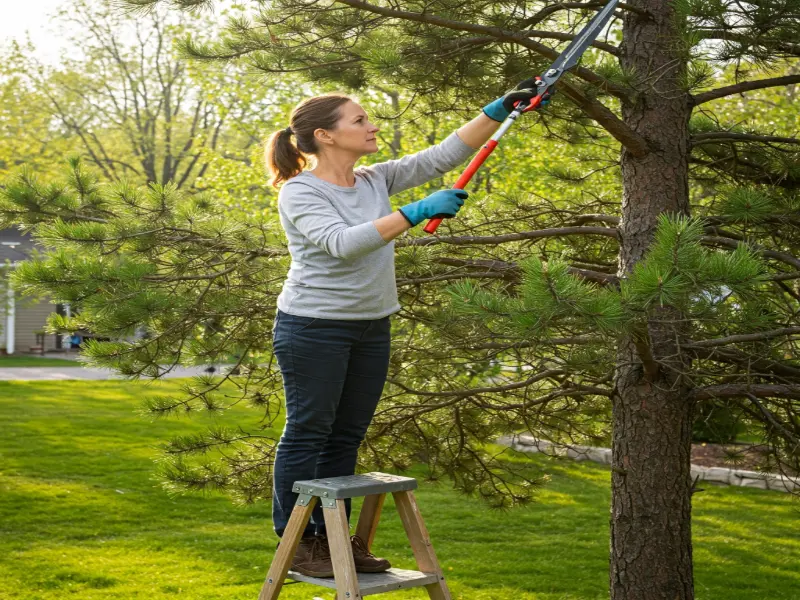
    A person standing on a ladder trimming tree branches with a handsaw in a residential yard

    Pros and Cons of DIY Tree Trimming vs Hiring a Pro

    So, with all the details we’ve discussed, you might be wondering: What should I do? Let’s break down the pros and cons, so you can easily decide what works best for you.

    When you choose to proceed with DIY tree trimming, the biggest advantage you get is cost-saving. You can avoid service fees and keep full control over your property maintenance. Once you have the basic tools, you can easily handle light trimming tasks like cutting small branches or simple projects. As we mentioned earlier, it also provides some stress relief, and you can turn it into a relaxing activity during weekends or holidays with your family.

    However, the major downside of DIY is the serious safety risks. When you deal with tall trees, heavy branches, or work near power lines, the dangers increase significantly. Even with proper tools, accidents can happen. You may face injuries, property damage, or make costly mistakes that could have been avoided with professional help. So, while DIY can save money, it’s important to know its risks and limits.

    On the other hand, hiring a professional arborist comes with a price tag but offers undeniable advantages. Pros bring specialized tools, knowledge of tree biology, and safety training. They can identify hidden issues like disease or weak limbs, ensuring healthier growth and improved tree longevity. Most importantly, they’re insured, which shields you from liability if something goes wrong.

    Tip – In summary, for small tasks DIY might work, but for complex, risky jobs, professional services are the safer and smarter choice.

    To ensure your trees thrive year-round, follow these Tree Trimming Best Practices for a Healthier Landscape and keep your landscape looking its best.

    When to Hire a Tree Trimming Service

    Knowing when to hire a professional tree trimming service can save you time and money, as well as potential hazards. If you’re dealing with large trees, heavy branches, or trees near power lines, it’s best to leave the job to the experts. Professionals have the right equipment, experience, and safety training to handle complex trimming without risking injuries or property damage. While hiring a service does come with a cost, the benefits outweigh the risks. 

    Pros can spot underlying health issues in your trees and provide proper care to promote long-term health and growth. Plus, professional services are insured, giving you peace of mind in case of accidents or unexpected damage. In the long run, maintaining healthy trees adds value to your property. 

    So now you have a clear understanding of when DIY tree trimming is appropriate and when it’s time to call in the professionals. But the next big question is: how do you choose the right tree care service? Let us help with that!

    Introducing KD Tree Services: Your trusted partner in expert tree care.

    What makes KD Tree Services stand out?

    • Certified Arborists with Advanced Expertise — Their skilled team understands tree health, disease management, and proper care techniques.
    • Transparent and Competitive Pricing — No hidden fees, just honest, upfront costs.
    • Customer-Focused Solutions — They prioritize your unique needs for personalized care.
    • Comprehensive Tree Health & Care — From detailed inspections to effective treatments.
    • Eco-Friendly Practices — Committed to sustainable, environmentally responsible methods.
    • On-Time, Reliable Service — Count on them for prompt and dependable care.

    For everything from professional tree trimming to complete tree health solutions, KD Tree Services is your best choice. 

    Don’t risk injuries, property damage, or costly mistakes with DIY projects. 

    Contact KD Tree Services today and make sure the job is done safely and right! They’re just one call away!


    Get a Free Estimate