[email protected] ⚡ Same-day emergency available

Category: Tree Trimming & Pruning

  • Oak Tree Care, Pruning Season & Oak Wilt Prevention in Loudonville NY: The Complete Homeowner’s Guide

    Oak Tree Care, Pruning Season & Oak Wilt Prevention in Loudonville NY: The Complete Homeowner’s Guide

    Healthy oak trees are among the defining landscape features of residential properties across Loudonville, Colonie, and greater Albany County. Whether providing expansive shade over a home, enhancing property values, or serving as vital ecological anchors, these majestic hardwoods deserve specialized, science-backed care. Unlike ornamental trees or fast-growing softwoods, mature oaks require a strategic, long-term maintenance strategy. Pruning at the wrong time of year, ignoring structural deadwood, or overlooking early vector signals can trigger rapid health decline, structural canopy failure, or fatal fungal infections.

    If you are searching for oak tree pruning Loudonville NY, you are likely seeking actionable answers to these critical questions:

    1. When is the safest biological window to prune an oak tree in Upstate New York?
    2. What specific risks does summer pruning introduce to local oak populations?
    3. How can property owners prevent the spread of Oak Wilt disease?
    4. What is the difference between general trimming and structural deadwooding?
    5. When is it necessary to consult an ISA Certified Arborist?

    This comprehensive guide delivers research backed answers tailored to the Capital Region’s unique climate, soil conditions, and municipal environment. You will learn how seasonal timing affects tree physiology, how to identify structural risks before storms hit, and what specific steps homeowners can take to keep mature oak trees thriving for centuries.

    Quick Answer: The Golden Rule of Oak Pruning in Loudonville

    For oak trees in Loudonville and surrounding Capital District communities, routine pruning must strictly occur during the dormant season from late fall through late winter (November to March).

    To comply with New York State Department of Environmental Conservation (NYS DEC) disease management protocols, never perform non emergency oak pruning between April 1 and July 31. Pruning during this active growth window produces open wounds that release volatile chemical compounds. These scents attract sap-feeding Nitidulid beetles, the primary insect vectors capable of carrying and transmitting the deadly fungal pathogen Bretziella fagacearum (Oak Wilt).

    If severe weather or mechanical impact creates an immediate safety hazard during warmer months, corrective pruning must be performed immediately, and all fresh cuts must be sealed with a specialized wound dress or water based latex paint.

    Why Oak Trees Require Specialized Arboricultural Care

    Oak trees (Quercus species) are long lived, slow-growing hardwoods capable of surviving for centuries when properly maintained. Many mature specimens throughout Loudonville including dominant Northern Red Oaks (Quercus rubra) and White Oaks (Quercus alba) predate local residential developments.

    Because of their massive canopy volume, heavy wood density, and broad root systems, mature oak tree care in Loudonville cannot be treated like routine landscape maintenance. Improper pruning cuts (such as flush cuts or stub cuts), aggressive crown reduction, or off-season trimming can create permanent decay pathways, structural instability, and extreme pest vulnerability.

    Key Benefits of Specialized Oak Maintenance

    1. Mitigating Structural Hazards: Identifying and removing dead, dying, or structurally compromised limbs before winter ice storms and high-wind events.
    2. Optimizing Canopy Dynamics: Thinning overly dense canopies to reduce wind drag (the “sail effect”) while improving sunlight penetration to understory lawns and gardens.
    3. Preventing Fungal Pathogen Ingress: Timing all mechanical cuts to align with insect dormancy, preventing airborne spores and insect vectors from invading vascular tissues.
    4. Protecting Property & Infrastructure: Maintaining clear, safe clearance over roofs, driveways, sidewalks, and overhead service lines without compromising tree health.
    5. Preserving Property Value: Studies consistently show that healthy, mature shade trees add significant appraisal value to residential real estate in established neighborhoods like Loudonville.

    Best Time to Trim Oak Trees in NY

    One of the most frequent questions Upstate New York homeowners ask arborists is regarding the best time to trim oak trees in NY.

    From a physiological perspective, the biological golden rule for all oak species in New York State is clear: Prune strictly during full tree dormancy.

    +-----------------------------------------------------------------------------------+
    |                        SEASONAL OAK PRUNING RISK TIMELINE                         |
    +-------------------+---------------------------------------+-----------------------+
    | MONTHS            | RISK LEVEL                            | RECOMMENDED ACTION    |
    +-------------------+---------------------------------------+-----------------------+
    | November - March  | 🟢 LOWEST RISK (Dormant Season)       | Safe for all pruning  |
    | April 1 - July 31 | 🔴 CRITICAL RISK (Active Vector Window)| NO NON-EMERGENCY CUTS |
    | August - October  | 🟡 MODERATE RISK (Pre-Dormancy)       | Limit to minor cuts   |
    +-------------------+---------------------------------------+-----------------------+
    

    The Science Behind Dormant Season Pruning

    1. Pathogen & Vector Inactivity

    The primary driver of Oak Wilt transmission is the Nitidulid beetle family (sap beetles). These insects are drawn to the fresh, sugary sap oozing from newly pruned oak wounds. During the cold winter months in Loudonville, these beetles are entirely inactive, hibernating beneath leaf litter and soil. Additionally, fungal spores do not sporulate in freezing temperatures.

    2. Enhanced Structural Visibility

    Deciduous oaks drop their leaves in late autumn. Without dense foliage obstructing the view, a certified arborist for pruning can thoroughly evaluate the underlying architecture of the tree. Structural defects such as co-dominant stems, tight branch unions with included bark, internal decay pockets, and hidden cracks become clearly visible.

    3. Optimized Wound Compartmentalization

    Trees do not “heal” damaged tissue in the way animals do; instead, they wall it off through a biological process called CODIT (Compartmentalization Of Decay In Trees). When an oak is pruned during winter dormancy, its energy reserves remain stored safely within the root system and trunk. As spring arrives, the tree immediately utilizes these stored carbohydrates to form callus tissue over the cut edges, rapidly sealing the wound against decay organisms.

    Oak Wilt Prevention Tips

    Oak Wilt is a devastating vascular disease caused by the fungal pathogen Bretziella fagacearum. Once inside the tree, the fungus travels through the xylem vessels—the tissue responsible for transporting water and nutrients from the roots to the leaves. In response to the infection, the tree attempts to plug its own vascular system to stop the fungus, effectively causing itself to wilt and die from dehydration.

    Species Vulnerability Comparison

    Not all oak species respond to Oak Wilt in the same manner. Understanding which group your tree belongs to is critical for assessing risk:

    +-----------------------------------------------------------------------------------+
    |                            OAK WILT VULNERABILITY MATRIX                          |
    +------------------------------------+----------------------------------------------+
    | RED OAK GROUP                      | WHITE OAK GROUP                              |
    | (Northern Red, Pin, Scarlet, Black)| (White, Bur, Swamp White, Post)              |
    +------------------------------------+----------------------------------------------+
    | • Leaf Margins: Pointed/Bristled   | • Leaf Margins: Rounded lobes                |
    | • Vulnerability: EXTREMELY HIGH    | • Vulnerability: MODERATE / RESISTANT        |
    | • Progression: Rapid (weeks)       | • Progression: Slow (months to years)        |
    | • Outcome: Nearly always fatal     | • Outcome: Can often isolate infection       |
    +------------------------------------+----------------------------------------------+
    

    Actionable Oak Wilt Prevention Tips for Homeowners

    1. Adhere Strictly to the NYS DEC Pruning Moratorium: Do not prune, trim, or mechanically wound oak trees between April 1 and July 31 under any non-emergency circumstances.
    2. Prevent Mechanical Trunk Damage: Lawn mowers, string trimmers, and heavy landscape equipment frequently strip bark from the root flare at ground level. These fresh wounds are prime entry points for beetles carrying fungal spores.
    3. Disinfect Tools Between Properties and Trees: Arborists must sterilize saws, shears, and climbing gear using a 70% isopropyl alcohol or 10% bleach solution when transitioning between job sites to eliminate cross-contamination risk.
    4. Disincentivize Firewood Movement: Never transport unseasoned oak firewood from outside Albany County into your neighborhood. Fungal spore mats can develop beneath the bark of cut logs and infect living trees nearby via airborne beetles.
    5. Address Root Grafting in Dense Stands: In neighborhoods where oak trees stand close together (within 30 to 50 feet), their root systems naturally graft together underground. If one tree becomes infected, the fungus can travel through these root connections to adjacent trees. Trenching or root-severing techniques may be required to break these underground pathways.

    ⚠️ Emergency Protocol for Summer Oak Tree Trimming Risks: If severe wind, lightning, or vehicle impact damages an oak limb during the active vector window (April 1 – July 31), standard guidelines must be adjusted. Cleanly prune the jagged, torn wood back to the nearest branch collar, and immediately apply a thin, even coat of tree wound dressing or water-based latex paint. This seals in sap odors and creates a physical barrier against Nitidulid beetles. (Note: Wound sealants are discouraged during normal winter pruning, as they can trap moisture, but they are essential for summer emergency cuts).

    Deadwooding Oak Trees: Why It Matters

    Deadwooding oak trees is the targeted, systematic removal of dead, dying, diseased, or broken branches throughout the canopy. Unlike aggressive crown topping which damages tree health deadwooding preserves the natural silhouette and energy balance of the oak while significantly mitigating safety risks.

    The Mechanics of Deadwood Formation

    Deadwood naturally occurs as an oak matures. Interior branches that no longer receive adequate sunlight naturally die back as the tree reallocates energy to the outer, sunlit canopy. However, storm damage, drought stress, soil compaction, and root decay can accelerate deadwood production.

    +-----------------------------------------------------------------------------------+
    |                        ARBORICULTURAL PRUNING METHODOLOGY                         |
    +-------------------+-----------------------------------+---------------------------+
    | TECHNIQUE         | PRIMARY OBJECTIVE                 | BEST USED FOR             |
    +-------------------+-----------------------------------+---------------------------+
    | Deadwooding       | Removes dead/dying/broken wood    | Safety, preventing decay  |
    | Crown Cleaning    | Clears deadwood & rubbing limbs   | General canopy hygiene    |
    | Crown Thinning    | Reduces foliage density (10-15%)  | Airflow & light passage   |
    | Crown Reduction   | Scales back overall canopy size   | Utility/roof clearance    |
    | Structural Cut    | Establishes strong central leader | Young/developing oaks     |
    +-------------------+-----------------------------------+---------------------------+
    

    Why Deadwooding Is Essential in Loudonville:

    1. Public and Property Safety: Mature oak limbs can weigh hundreds of pounds. Deadwood loses structural flexibility and can snap unexpectedly during high wind, ice accumulation, or summer soil-saturation events.
    2. Preventing Trunk Decay: When a dead branch remains attached to a tree, fungi gradually break down the wood fibers, moving inward toward the trunk core. Removing the branch cleanly at the branch collar allows the tree to wall off the tissue before internal heartwood decay sets in.
    3. Insect Habitat Management: While deadwood provides valuable habitat in wild forest settings, dead limbs located near homes become breeding grounds for wood-boring beetles, carpenter ants, and termites that can spread to residential structures.

    Summer Oak Tree Trimming Risks

    Elective summer oak tree trimming introduces several severe, interconnected biological risks:

    1. High Vector Attraction (Oak Wilt Transmission)

    The smell of fresh, flowing sap from a summer pruning cut can attract sap-feeding beetles from over a mile away within minutes. If those beetles have previously visited an infected tree, the infection cycle is initiated immediately.

    2. Sunscald and Bark Scorch

    The upper bark of interior oak branches is thin and accustomed to continuous shade provided by the leaf canopy. Aggressive summer pruning sudden exposes this tender bark to intense direct UV radiation, causing tissue necrosis (sunscald). Dead bark then cracks, creating secondary entry points for opportunistic wood-boring insects.

    3. Severe Energy Depletion

    Leaves are a tree’s energy factories, producing carbohydrates through photosynthesis. Pruning during the peak summer growing season removes functional foliage when the tree’s energy expenditure is highest, depleting stored starch reserves and weakening the tree’s defensive response against pests.

    Understanding Oak Trees in Loudonville’s Local Climate

    Loudonville experiences a humid continental climate characterized by hot summers, cold winters, and highly variable seasonal transitions. Soil types across Loudonville range from well-drained sandy loam near Colonie borders to heavy clay pockets that retain moisture. Each season imposes distinct physical demands on oak trees.

    +-----------------------------------------------------------------------------------+
    |                          SEASONAL OAK CARE CALENDAR                               |
    +-----------+-----------------------------------------------------------------------+
    | SEASON    | RECOMMENDED MAINTENANCE ACTIONS                                       |
    +-----------+-----------------------------------------------------------------------+
    | Spring    | • Monitor leaf emergence and canopy density                           |
    |           | • Check root flare for physical or mower damage                       |
    |           | • ENFORCE STRICT PRUNING BAN starting April 1                         |
    +-----------+-----------------------------------------------------------------------+
    | Summer    | • Provide deep, supplemental root watering during heat waves          |
    |           | • Perform visual canopy inspections after heavy thunderstorms         |
    |           | • Apply wound sealant immediately to storm-damaged limbs              |
    +-----------+-----------------------------------------------------------------------+
    | Autumn    | • Evaluate canopy color transitions for early leaf drop (Oak Wilt)    |
    |           | • Schedule professional dormant-season arborist consultations         |
    |           | • Apply 2–4 inches of organic wood mulch around drip line             |
    +-----------+-----------------------------------------------------------------------+
    | Winter    | • Perform major structural pruning, deadwooding, and canopy shaping   |
    |           | • Clear heavy ice/snow load hazards from structurally weak limbs      |
    |           | • Complete clearance pruning near roofs and utility drops             |
    +-----------+-----------------------------------------------------------------------+
    

    Climate Specific Stressors in Upstate NY

    Heavy Winter Ice and Wet Snow Loads

    Upstate New York winters frequently feature heavy, wet snow and freezing rain events. Oaks with weak branch attachments, co dominant trunks, or heavy deadwood are especially susceptible to catastrophic limb failure under ice weight. Dormant winter pruning corrects these architectural weaknesses before storm events occur.

    Summer Drought & Soil Compaction

    During hot summer stretches, residential soils in Loudonville can bake and compact, particularly in areas with clay content. Compacted soil restricts oxygen and water movement to feeder roots, weakening the tree’s natural resin production and making it more susceptible to opportunistic secondary invaders like Two-Lined Chestnut Borers (Agrilus bilineatus) and Armillaria root rot.

    Common Signs Your Oak Tree Needs Professional Inspection

    Many homeowners do not notice oak distress until a large limb fails or significant dieback occurs. Conducting regular visual inspections from the ground can help identify issues while they remain treatable.

    +-----------------------------------------------------------------------------------+
    |                     OAK HEALTH WARNING SIGNS & DIAGNOSTICS                        |
    +-----------------------+----------------------------------+------------------------+
    | VISUAL SYMPTOM        | POTENTIAL UNDERLYING CAUSE       | URGENCY LEVEL          |
    +-----------------------+----------------------------------+------------------------+
    | Early leaf drop       | Oak Wilt or Severe Drought       | 🔴 CRITICAL (Immediate)|
    | Dead upper branches   | Root Rot / Soil Compaction       | 🟡 HIGH                |
    | Fungal fruiting bodies| Internal Heartwood Decay         | 🟡 HIGH                |
    | Vertical trunk cracks | Stress / Freeze-Thaw Splitting   | 🟡 HIGH                |
    | Sawdust at tree base  | Wood-Boring Insect Infestation   | 🟡 HIGH                |
    | Canopy yellowing      | Chlorosis (Iron/Manganese Deficiency) 🟢 MODERATE         |
    +-----------------------+----------------------------------+------------------------+
    

    Key Indicators to Watch For:

    1. Mid-Summer Leaf Bronze & Premature Leaf Drop: Leaves turning pale green, bronzing along the outer margins, and dropping rapidly in July or August is the classic signature of Oak Wilt infection.
    2. Dieback in the Upper Crown (Stag heading): When the uppermost branches of a mature oak lose their leaves and die, it indicates that the root system is struggling to transport water to the top of the canopy.
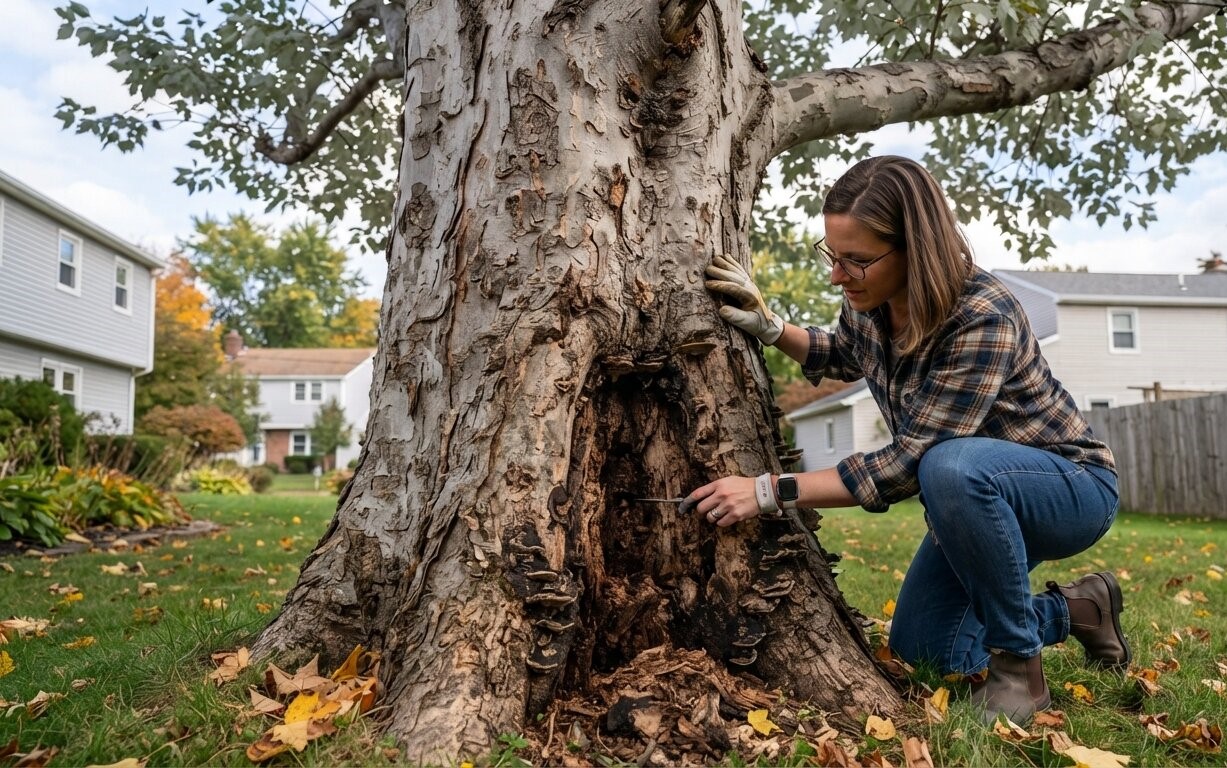
    3. Fungal Conks and Mushrooms Near the Root Flare: The presence of shelf-like fungi (Ganoderma, Inonotus) or mushrooms growing around the trunk base signals active internal decay in the structural wood or major support roots.
    4. Co-Dominant Stems with Included Bark: Trunks that split into two equal-sized stems forming a tight “V” shape rather than a wide “U” shape are prone to splitting down the middle as the tree matures.

    Proper Pruning Techniques: Anatomy of a Correct Cut

    Improper pruning cuts cause permanent damage to mature oak trees. Understanding basic arboricultural cutting standards helps homeowners ensure that hired contractors perform safe, professional work.

                      TYPICAL THREE-CUT PRUNING TECHNIQUE
                      
           Step 2: Top Cut               Step 3: Final Clean Cut
           (Failsafe drop)               (Just outside Branch Collar)
                 │                                 │
                 ▼                                 ▼
           ┌───────────┐                         ┌───┐
      ═════╧═══════════╧═════════════════════════╪═══╪══════════════════ (Branch)
      ───────────────────────────────────────────┤   │
           ▲                                     └───┘
           │
      Step 1: Undercut 
      (Prevents bark stripping)
    

    The Three Cut Method

    When removing a large, heavy oak limb, a professional arborist always uses the three cut method to prevent the weight of the falling branch from tearing bark down the side of the trunk:

    1. Cut 1 (Undercut): Made on the underside of the limb, 12 to 18 inches away from the trunk, cutting about one-third of the way through the branch. This stops tearing bark if the branch drops prematurely.
    2. Cut 2 (Top Cut): Made a few inches further out on the branch, cutting completely through from above. This removes the weight of the limb cleanly.
    3. Cut 3 (Final Collar Cut): Made cleanly just outside the branch bark ridge and branch collar (the swollen area where the branch meets the trunk).

    🚫 Never Flush Cut: Cutting flush against the trunk destroys the branch collar, removing the tree’s natural defense zone and opening the main trunk to decay.

    🚫 Never Leave Stubs: Leaving a long branch stub prevents the wound from closing, leaving a rotting stick that allows decay-causing fungi directly into the heartwood.

    Essential Homeowner Maintenance Checklist

    To preserve the health, safety, and structural integrity of mature oak trees on your property, implement this seasonal checklist:

    1. [ ] Strict Schedule Adherence: Book all routine structural pruning and deadwooding between November and March.
    2. [ ] Proper Mulch Application: Apply a 2- to 4-inch layer of aged wood mulch around the root drip zone. Keep mulch at least 6 inches away from direct trunk contact to prevent moisture retention against the bark (avoid “mulch volcanoes”).
    3. [ ] Root Flare Clearance: Ensure soil and mulch do not bury the root flare the widened base where the trunk transitions into the root system.
    4. [ ] Avoid Soil Compaction: Never park heavy vehicles, store construction supplies, or install impervious paving beneath the canopy drip line of a mature oak.
    5. [ ] Perform Post-Storm Audits: Scan the upper canopy with binoculars following winter ice storms or summer windstorms to detect hanging branches (“widowmakers”) or fresh structural cracks.
    6. [ ] Emergency Wound Sealing: If storm damage occurs during spring or summer (April 1 – July 31), ensure all broken limbs are cleanly cut and immediately sealed with tree wound dressing or water-based latex paint.
    7. [ ] Professional Evaluations: Schedule a formal inspection with a certified arborist for pruning every 1 to 3 years.

    Frequently Asked Questions

    When is the safest season to prune mature oak trees in Loudonville, NY?

    The safest season to prune mature oak trees in Loudonville NY is during full dormancy, from late fall through late winter (November to March). Elective pruning should strictly be avoided from April 1 through July 31 to comply with New York State Department of Environmental Conservation (NYS DEC) safety guidelines and protect trees against Oak Wilt disease transmitted by sap-feeding beetles.

    What should I do if a storm breaks a major oak branch in June?

    If a storm breaks or damages an oak limb during the summer vector window, the situation must be handled as an emergency. Remove the broken, hanging wood by making a clean cut back to the branch collar, and apply a thin layer of tree wound paint or water-based latex paint immediately to seal the wound against beetles attracted to the sap.

    Why should I hire a certified arborist for pruning mature oaks?

    A certified arborist for pruning possesses specialized knowledge of tree biology, structural load distribution, climbing safety, and local disease protocols. Certified arborists adhere to ANSI A300 pruning standards, carry proper commercial liability insurance, and use specialized equipment to safely perform complex work without damaging your property or tree.

    Is topping an oak tree ever acceptable?

    No. Topping the indiscriminate cutting of large trunk limbs down to stubs is considered a harmful practice by professional arborists. Topping starves the tree by removing its leaf canopy, leaves massive open wounds that rapidly rot, and stimulates the growth of weakly-attached “water sprouts” that are extremely prone to snapping off in future storms.

    How do I distinguish between a Red Oak and a White Oak on my property?

    Look at the leaves: Red Oak leaves feature pointed, bristle-tipped lobes, and their bark has smooth, shiny strips running down the trunk. White Oak leaves feature rounded lobes without bristles, and their bark is lighter gray, shingled, or flaky. Red Oaks are far more susceptible to rapid death from Oak Wilt than White Oaks.

    Protect Your Landscape Investment

    Mature oak trees are irreplaceable natural assets that provide structural beauty, environmental cooling, and high real estate value to residential properties throughout Loudonville and the Capital Region. Because mature hardwoods represent a long term investment, proactive care by qualified arborists is always more cost-effective than emergency removals or structural repairs following preventable storm failures.

    Whether your property requires dormant structural deadwooding, clearance pruning away from your roofline, or an expert health assessment for an aging shade tree, partnering with a local professional ensures your oaks remain healthy, safe, and beautiful for generations to come.

    Ready to protect your trees? Contact a local ISA Certified Arborist in the Loudonville/Albany County area today to perform a comprehensive property inspection and schedule your dormant-season oak care.

  • Tree Branches Over Neighbor’s Fence in Colonie, NY: Who Is Liable?

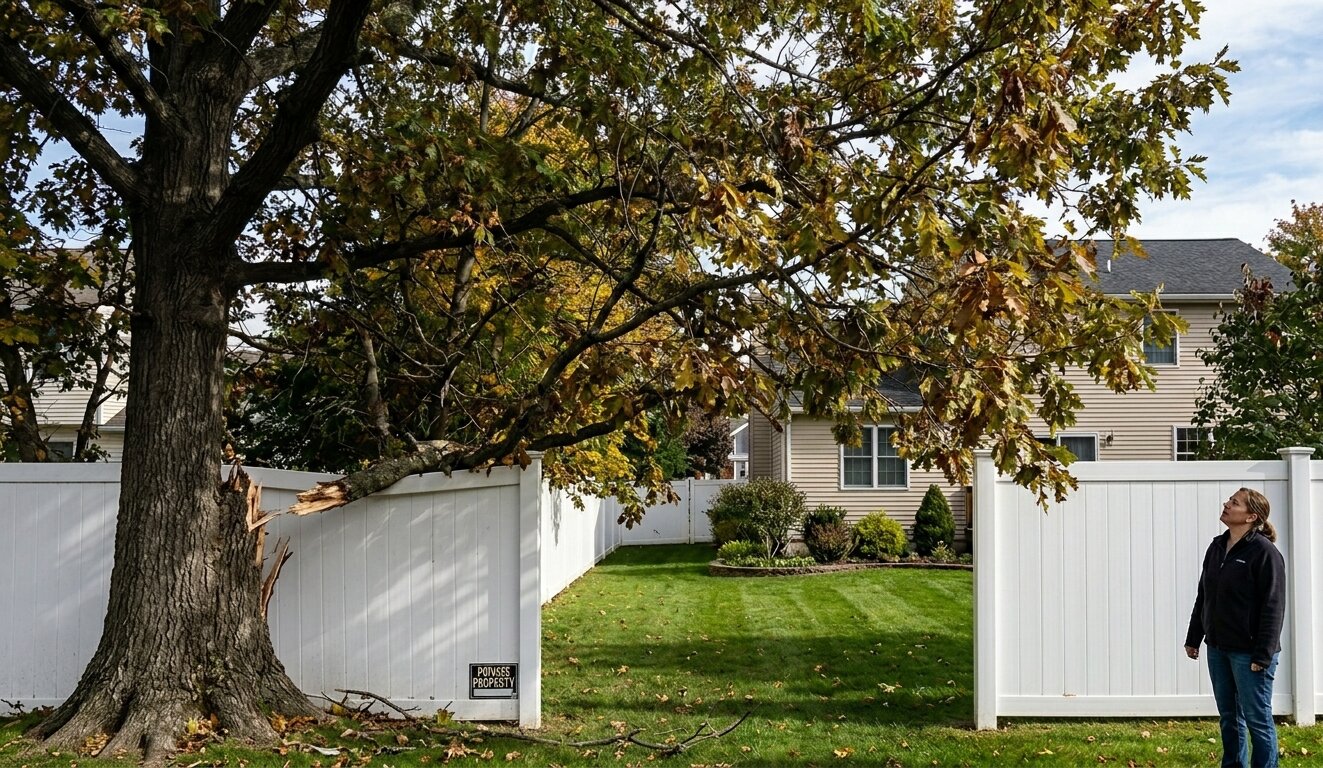
    Tree Branches Over Neighbor’s Fence in Colonie, NY: Who Is Liable?

    If your tree branches extend over your neighbor’s property in Colonie, NY, you are not automatically liable simply because the branches cross the property line. Under New York law, neighboring property owners generally have the right to trim branches back to the property line at their own expense. However, if a tree is dead, diseased, structurally unsound, or poses a known hazard, the tree owner may be held responsible for resulting property damage or injuries.

    For homeowners dealing with overhanging limbs, property line disputes, or hazardous trees, consulting a professional tree service in Colonie NY can help prevent costly legal and insurance issues.

    Understanding Tree Ownership and Property Lines in Colonie, NY

    Trees are one of the most valuable features of residential properties throughout Colonie, Loudonville, Latham, Menands, and the greater Albany County area. Mature trees provide shade, privacy, energy savings, and curb appeal.

    Problems arise when branches begin extending over fences, driveways, roofs, or neighboring yards.

    Many homeowners ask:

    1. Who owns the branches?
    2. Can my neighbor cut them?
    3. Who pays if they fall?
    4. Can I be sued for tree damage?

    The answer depends on tree condition, property boundaries, and whether negligence is involved.

    New York Property Line Tree Rules Explained

    Under established New York property law, a homeowner generally has the right to trim portions of a neighbor’s tree that extend onto their property.

    This means a neighbor may legally:

    1. Cut overhanging branches back to the property line.
    2. Remove roots that encroach onto their property.
    3. Protect structures from tree-related damage.

    However, they cannot:

    1. Enter your property without permission.
    2. Remove the entire tree.
    3. Cause unnecessary harm that kills the tree.

    Property owners should always use proper pruning methods because excessive cutting can create safety hazards and trigger legal disputes.

    What Happens When Tree Branches Hang Over a Fence?

    When tree branches over a fence line become a problem, liability depends on whether actual damage occurs and whether the tree owner acted responsibly.

    Common complaints include:

    Falling Branches

    Large limbs can break during storms and damage:

    1. Fences
    2. Sheds
    3. Vehicles
    4. Roofs
    5. Decks

    Excessive Debris

    Overhanging trees may create:

    1. Leaf accumulation
    2. Seed pods
    3. Pine needles
    4. Sap deposits

    Blocked Sunlight

    Branches can reduce sunlight for:

    1. Gardens
    2. Lawns
    3. Solar panels
    4. Outdoor living spaces

    While these situations can be frustrating, they do not automatically create legal liability.

    Am I Liable If My Tree Branches Overhang Into My Neighbor’s Yard in NY?

    Usually, No

    Simply having branches extend over a property line does not automatically make a homeowner liable under New York law.

    The neighboring owner typically has the right to trim those branches at their own expense.

    When Liability Can Occur

    Liability becomes more likely when the tree owner knew or reasonably should have known that the tree posed a danger.

    Examples include:

    1. Dead trees
    2. Diseased trees
    3. Decaying trunks
    4. Cracked limbs
    5. Leaning trees
    6. Previous storm damage

    If a homeowner ignores obvious warning signs and damage occurs, courts may view that as negligence.

    Neighbor Tree Damage Liability: Real World Examples

    Scenario 1: Healthy Tree Falls During a Storm

    A healthy maple tree loses a limb during a severe windstorm and damages a neighboring fence.

    In many cases:

    1. Insurance handles the claim.
    2. The tree owner is not considered negligent.
    3. Liability may not exist.

    Scenario 2: Dead Tree Damages a Home

    A homeowner ignores a dead oak tree for several years despite visible decay.

    A large limb falls onto a neighbor’s garage.

    Potential outcome:

    1. Tree owner may be liable.
    2. Insurance companies may pursue reimbursement.
    3. The neighbor may seek damages.

    This is why regular tree inspections are critical.

    Boundary Tree Law in NY

    A boundary tree is a tree whose trunk grows directly on the property line.

    In these situations:

    1. Both property owners may share ownership.
    2. Both parties may have maintenance rights.
    3. Significant removal typically requires mutual agreement.

    Removing or damaging a boundary tree without consent can result in legal complications and potential financial liability.

    Tree Cutting Laws in Colonie, NY

    Before removing large trees, homeowners should understand applicable regulations.

    Factors that may affect removal include:

    Local Ordinances

    Municipal requirements can vary.

    Utility Easements

    Trees near utility lines may require specialized clearance procedures.

    Protected Trees

    Certain properties or developments may have restrictions regarding tree removal.

    HOA Rules

    Neighborhood associations may impose additional requirements.

    A licensed tree service company can help determine what permits or approvals may be necessary.

    How Tree Inspections Protect Homeowners

    One of the strongest defenses against liability claims is documentation.

    Professional arborists can perform:

    Tree Risk Assessments

    Evaluating structural stability and health.

    Disease Detection

    Identifying decay, fungus, pest infestations, and structural weakness.

    Hazard Reports

    Documenting conditions that may require corrective action.

    Preventive Maintenance

    Reducing the risk of storm-related failures.

    These reports can be valuable if insurance or legal questions arise later.

    How to Prevent Tree Disputes With Neighbors

    Most tree conflicts can be avoided through proactive communication.

    Recommended steps include:

    Inspect Trees Annually

    Routine inspections help identify problems before they become hazards.

    Prune Trees Regularly

    Proper pruning prevents excessive encroachment.

    Address Safety Concerns Quickly

    Dead limbs should be removed immediately.

    Document Maintenance

    Keep records of inspections, trimming, and arborist recommendations.

    Communicate Early

    Friendly conversations often prevent legal disputes.

    When to Call a Tree Service in Colonie, NY

    Contact a professional tree service if:

    1. Branches are touching your roof.
    2. Limbs extend over neighboring structures.
    3. Storm damage has occurred.
    4. Trees show signs of disease.
    5. Property line disputes are developing.
    6. You need a professional arborist opinion.

    Early intervention is almost always less expensive than repairing property damage.

    Why Local Homeowners Trust Professional Tree Services

    Experienced tree professionals understand:

    1. New York tree regulations
    2. Property line concerns
    3. Arboricultural best practices
    4. Risk assessment procedures
    5. Safe pruning techniques

    Working with a qualified local expert helps homeowners protect their trees, property, insurance interests, and neighbor relationships.

    Final Thoughts

    If you’re wondering whether you’re liable for tree branches hanging over your neighbor’s fence in Colonie, NY, the answer is usually no unless negligence is involved. New York property owners generally have the right to trim branches that cross property lines, but responsibility can change when hazardous conditions are ignored.

    Regular inspections, professional pruning, and proactive communication remain the best ways to prevent disputes and reduce liability. If you have concerns about a tree near a property line, consulting a professional tree service in Colonie NY can provide clarity, protect your property, and help keep your neighborhood relationships intact.

    Frequently Asked Questions

    Can my neighbor cut branches that hang over their property in New York?

    Yes. Property owners can generally trim branches back to the property line as long as they do not unnecessarily damage the tree.

    Who is responsible for trimming overhanging branches?

    Typically, the property owner affected by the overhanging branches pays for trimming on their side of the property line.

    What if my neighbor’s tree damages my fence?

    Responsibility depends on whether the tree owner was negligent. If the tree was healthy and damage occurred during a storm, insurance often handles the claim.

    Can I force my neighbor to remove a hazardous tree?

    If a tree presents a documented safety risk, legal remedies may be available. Consulting an attorney or certified arborist is recommended.

    Should I hire an arborist before trimming large branches?

    Yes. Professional arborists can ensure pruning is performed safely and in a way that protects the long-term health of the tree.

    How often should trees be inspected?

    Most mature trees should be professionally inspected every 1-3 years, with additional inspections after major storms.

  • When to Trim Overgrown Trees Near NYSEG Power Lines in Colonie, NY

    When to Trim Overgrown Trees Near NYSEG Power Lines in Colonie, NY

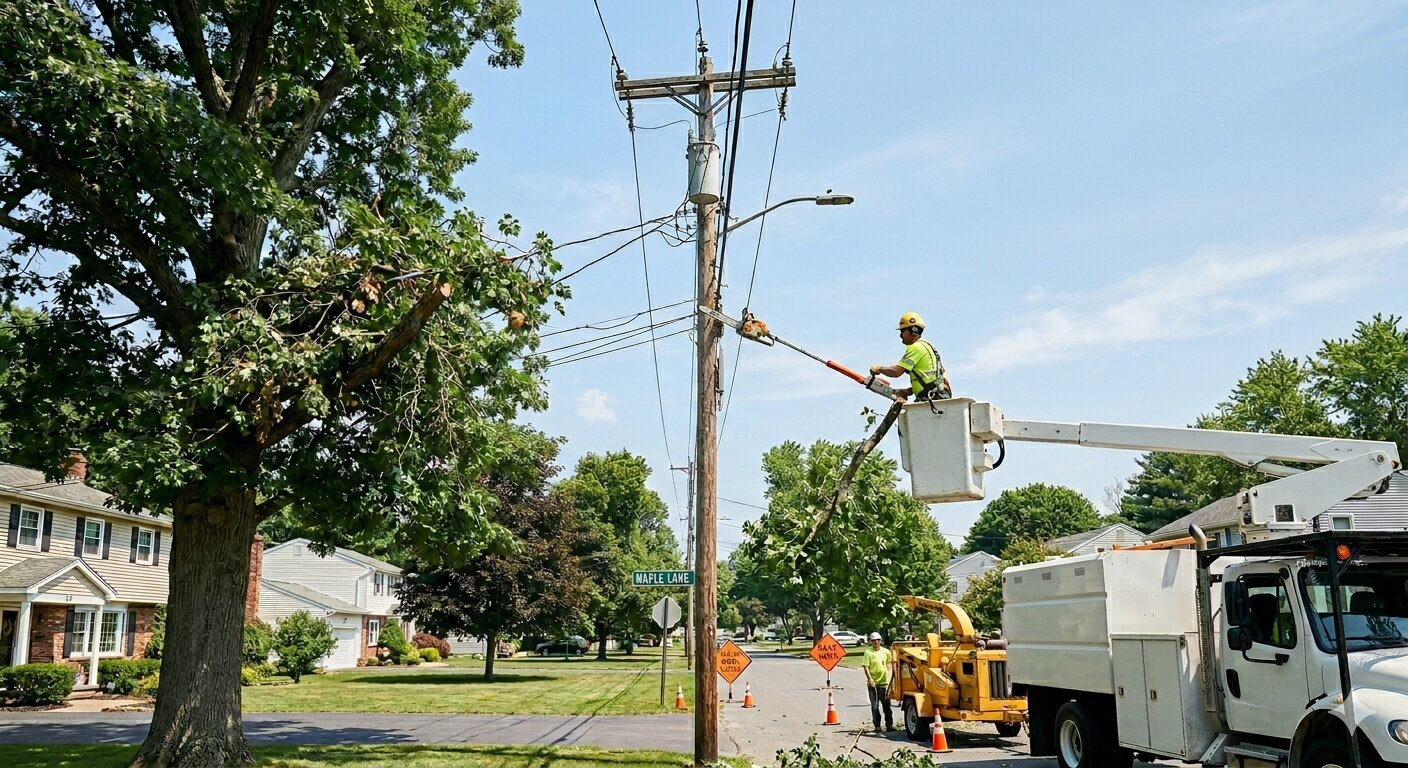
    Trees provide shade, beauty, privacy, and environmental benefits for homeowners throughout Colonie, NY. However, when trees grow too close to NYSEG power lines, they can become a serious safety concern. Overgrown branches can interfere with electrical infrastructure, increase the risk of outages, and create hazardous conditions during storms, high winds, snow, and ice events.

    Understanding when to trim overgrown trees near NYSEG power lines is essential for protecting your property, maintaining reliable electrical service, and reducing safety risks. Whether you live in Colonie, Loudonville, Latham, Menands, or another Albany County community, proactive tree care can help prevent costly emergencies and improve the health of your landscape.

    Quick Answer: When Should Trees Be Trimmed Near NYSEG Power Lines?

    Trees near NYSEG power lines should be inspected regularly and trimmed before branches grow into utility clearance zones. In most cases, late winter and early spring are considered the best times for routine tree trimming because trees are dormant and structural issues are easier to identify.

    However, immediate action may be necessary if:

    1. Branches are touching power lines
    2. Trees are leaning toward electrical infrastructure
    3. Storm damage has created hanging limbs
    4. Dead branches are overhanging utility lines
    5. Rapid tree growth threatens electrical clearance requirements

    Homeowners should never attempt to trim branches that are touching or growing dangerously close to energized power lines.

    Why NYSEG Tree Trimming Is Important

    NYSEG tree trimming programs are designed to help maintain safe clearance around electrical infrastructure and reduce vegetation-related power outages. Trees are one of the most common causes of service interruptions during storms and severe weather events.

    When branches grow too close to utility lines, they can:

    1. Cause neighborhood power outages
    2. Damage utility equipment
    3. Increase fire risks
    4. Create dangerous electrical hazards
    5. Lead to costly emergency repairs
    6. Threaten public safety

    Proper NYSEG tree trimming and vegetation management help improve reliability throughout the electrical distribution system while reducing the likelihood of unexpected outages.

    Understanding NYSEG Tree Trimming and Vegetation Management

    Many homeowners are unfamiliar with how utility vegetation management works.

    NYSEG tree trimming programs focus on maintaining safe clearances around portions of the electrical distribution network. These efforts help reduce outages and improve overall grid reliability.

    Vegetation management may include:

    1. Tree trimming near power lines
    2. Removal of hazardous branches
    3. Clearance maintenance around utility corridors
    4. Inspection of vegetation growth
    5. Storm preparation activities

    Because utility infrastructure varies by location, trimming schedules and maintenance activities may differ throughout Colonie and surrounding communities.

    Who Is Responsible for Tree Trimming Near Power Lines?

    One of the most common questions homeowners ask is:

    Who is responsible for tree trimming near power lines?

    The answer depends on several factors, including:

    1. Tree location
    2. Property ownership
    3. Utility easements
    4. Type of power line involved
    5. Local safety requirements

    Utility providers generally manage vegetation around portions of their electrical distribution systems to maintain reliability and safety.

    Property owners are often responsible for:

    1. General tree maintenance
    2. Landscaping on private property
    3. Removal of hazardous trees
    4. Pruning trees that do not directly impact utility-maintained areas

    If you are unsure who is responsible for a specific tree, it is best to contact the utility provider or a qualified tree care company for guidance.

    Why You Should Never Trim Trees Near Power Lines Yourself

    Many homeowners believe they can safely trim a branch as long as they avoid touching the wire directly.

    Unfortunately, electricity does not work that way.

    Electrical current may travel through:

    1. Tree branches
    2. Tree trunks
    3. Ladders
    4. Pruning tools
    5. Nearby objects

    Attempting DIY tree trimming near energized utility lines can result in severe injury, electrocution, fires, or property damage.

    Professional tree care companies have specialized equipment and training to work safely around electrical hazards.

    Best Time of Year for Tree Trimming Near NYSEG Power Lines

    Late Winter

    Late winter is often considered the ideal time for tree trimming because:

    1. Trees are dormant
    2. Branch structure is easier to evaluate
    3. Disease transmission risks are lower
    4. Tree stress is minimized

    Early Spring

    Before leaves emerge, arborists can identify structural defects and remove problematic branches before rapid seasonal growth begins.

    Summer Monitoring

    Summer inspections are important for fast-growing tree species that may quickly encroach upon utility corridors.

    Fall Maintenance

    Fall is an excellent time to prepare trees for winter weather. Heavy snow and ice can place significant stress on overextended limbs near power lines.

    Signs Your Trees Need Immediate Attention

    Routine maintenance is important, but some situations require urgent action.

    Watch for:

    1. Branches touching power lines
    2. Dead or dying limbs
    3. Cracked branches
    4. Split trunks
    5. Trees leaning toward utility lines
    6. Storm-damaged canopies
    7. Visible decay
    8. Root instability

    If any of these conditions are present, professional evaluation is recommended as soon as possible.

    Common Tree Species in Colonie That Grow Near Power Lines

    Several tree species commonly found throughout Colonie and Albany County can grow rapidly and interfere with utility infrastructure.

    Examples include:

    Silver Maple

    Known for rapid growth and large spreading canopies.

    Norway Maple

    Common in residential neighborhoods and capable of significant branch expansion.

    Red Maple

    A popular landscape tree that requires periodic maintenance.

    Willow

    Fast-growing with aggressive branching habits.

    Cottonwood

    Can reach substantial heights and spread quickly.

    Poplar

    Rapid growth often requires frequent monitoring.

    Ash Trees

    Mature ash trees can develop large canopies near utility corridors.

    Oak Trees

    Long-lived trees that may eventually require clearance pruning around power lines.

    How Overgrown Trees Cause Power Outages

    Trees are among the leading causes of weather-related electrical service interruptions.

    Common outage causes include:

    Branch Contact

    Branches touching energized lines can create faults and service disruptions.

    Falling Limbs

    Storm-damaged branches may break and fall onto utility infrastructure.

    Entire Tree Failures

    Weak or diseased trees can collapse during severe weather events.

    Ice and Snow Loads

    Winter weather can add significant weight to limbs, increasing failure risks.

    Proper tree trimming helps reduce these hazards before they become emergencies.

    Emergency Tree Service Near Power Lines

    Not all tree issues can wait for routine maintenance.

    Emergency tree service may be required when:

    1. A tree falls on a power line
    2. Branches are actively contacting electrical wires
    3. Storm damage creates immediate hazards
    4. Trees begin leaning after severe weather
    5. Utility service is interrupted

    Emergency tree service professionals have the equipment and experience necessary to respond quickly and safely.

    When Emergency Tree Removal Is Necessary

    In some situations, trimming alone may not solve the problem.

    Emergency tree removal may be necessary when:

    1. Trees are structurally compromised
    2. Root systems have failed
    3. Storm damage is extensive
    4. Trees present an immediate threat to power lines
    5. Dead trees become unstable

    Prompt emergency tree removal can help protect nearby homes, vehicles, utility infrastructure, and public safety.

    Benefits of Professional Tree Trimming

    Professional tree trimming provides numerous advantages.

    Improved Safety

    Proper pruning reduces hazards around electrical infrastructure.

    Healthier Trees

    Correct pruning techniques encourage stronger growth patterns.

    Reduced Storm Damage

    Maintained trees are less likely to experience catastrophic failures.

    Better Property Appearance

    Regular trimming improves curb appeal and overall landscape aesthetics.

    Increased Reliability

    Managing vegetation near power lines helps reduce outage risks.

    How Often Should Trees Near NYSEG Power Lines Be Inspected?

    Most properties benefit from annual inspections.

    Additional inspections are recommended:

    1. After major storms
    2. Following heavy snowfall
    3. During periods of rapid growth
    4. When signs of damage appear
    5. Before severe weather seasons

    Routine monitoring allows homeowners to address problems before they become expensive emergencies.

    What to Do If a Tree Falls on a Power Line

    If a tree contacts a power line:

    1. Stay away from the area.
    2. Keep others at a safe distance.
    3. Do not touch the tree.
    4. Do not touch nearby objects.
    5. Contact the utility provider.
    6. Contact emergency services if immediate danger exists.

    Never assume a power line is de-energized.

    Even downed lines can remain energized and extremely dangerous.

    Frequently Asked Questions

    When should trees be trimmed near NYSEG power lines?

    Late winter and early spring are generally ideal for routine trimming, although hazardous conditions may require immediate action.

    Who is responsible for tree trimming near power lines?

    Responsibility varies depending on property ownership, utility infrastructure, and the location of the tree.

    Does NYSEG trim trees around power lines?

    Utility vegetation management programs are designed to help maintain safe clearances around portions of the electrical distribution system.

    Can I trim branches touching power lines myself?

    No. Trees near energized utility lines should only be handled by qualified professionals.

    How often should trees near power lines be inspected?

    Annual inspections are recommended, along with additional evaluations after severe weather events.

    What should I do if a tree falls on a power line?

    Stay away from the area and contact the utility provider immediately.

    Are overgrown trees a common cause of power outages?

    Yes. Trees and branches are among the most common causes of storm-related electrical service interruptions.

    When is emergency tree service needed?

    Emergency tree service is often required after storms, when branches contact power lines, or when trees become unstable.

    When is emergency tree removal necessary?

    Emergency tree removal may be required when a tree becomes structurally unsafe or poses an immediate threat to people, property, or utility infrastructure.

    Protect Your Property with Proactive NYSEG Tree Trimming

    Knowing when to trimming trees near NYSEG power lines in Colonie, NY can help homeowners improve safety, reduce outage risks, and maintain healthier landscapes. Regular inspections, professional tree trimming, and timely emergency tree service can prevent minor vegetation issues from becoming major hazards.

    Whether you are concerned about branches growing toward utility lines, storm damaged trees, or the need for emergency tree removal, proactive tree care remains the safest and most effective solution. By addressing vegetation growth before it becomes a problem, homeowners throughout Colonie, Loudonville, Latham, Menands, and Albany County can help protect their property while supporting reliable electrical service for the community.

  • Tree Branches Blocking Your Business Sign on Madison Ave Albany NY? Here’s What Business Owners Need to Know

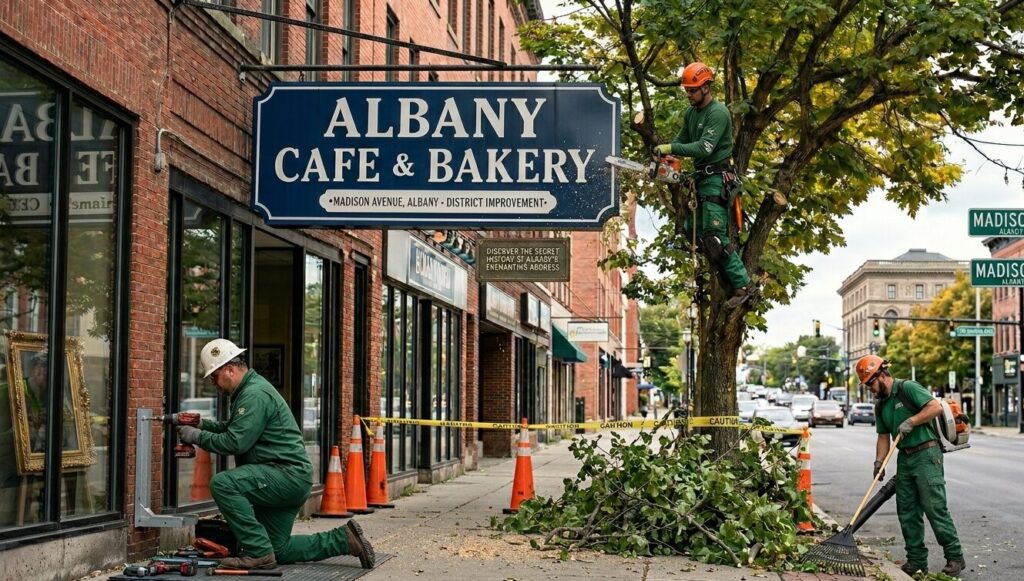
    For businesses on Madison Ave in Albany NY, storefront visibility directly impacts customer traffic, walk in sales, and local brand recognition. But one increasingly common problem for commercial property owners is overgrown tree branches blocking business signage.

    A partially hidden sign may not seem serious at first. However, in a competitive commercial corridor like Madison Avenue, reduced visibility can quickly affect customer awareness, drive by traffic, and even long term revenue.

    Many business owners are unsure about:

    – Whether they can legally trim branches themselves

    – Who owns the trees near sidewalks

    – If Albany requires permits for trimming

    – How to request city maintenance

    – Whether hiring a private tree company is allowed

    – How long the process takes

    – What commercial tree trimming typically costs

    This guide explains the legal rights, city rules, permit requirements, and fastest solutions available when tree branches block commercial signage on Madison Ave Albany NY.

    ⚡ 24/7 Emergency Tree Service Available
    📞 Call Now 🚀 Get Estimate
    Fully Insured • Fast Response

    Quick Answer: What Should Business Owners Do First?

    If tree branches are blocking your storefront sign on Madison Ave Albany NY, the first step is determining whether the tree is city-owned or privately owned.

    If the tree is located within the public right-of-way or near sidewalks, Albany may regulate trimming activities. Unauthorized cutting of municipal trees can lead to penalties, permit violations, or liability issues.

    The safest process is:

    1. Document the obstruction with photos
    2. Verify tree ownership
    3. Contact the city or urban forestry department
    4. Determine permit requirements
    5. Use a licensed commercial tree service if approved

    Acting early usually prevents larger visibility and compliance problems later.

    Why Blocked Commercial Signage Is a Major Business Problem

    Tree Removal Madison Ave Albany NY

    Business signage is one of the most important visibility tools for commercial properties on Madison Avenue. Customers driving through Albany often make split-second decisions based on storefront recognition.

    When branches obstruct signage, businesses can lose:

    – Walk-in customers

    – Street visibility

    – Brand awareness

    – Nighttime exposure

    – Competitive positioning

    – Customer trust

    – Impulse visits

    This issue becomes especially severe during spring and summer when canopy growth accelerates across Albany’s tree-lined commercial streets.

    For restaurants, salons, retail shops, offices, medical practices, and mixed-use buildings, hidden signage can reduce daily customer engagement significantly.

    Why Madison Ave Albany NY Faces Frequent Signage Obstruction Problems

    Madison Avenue is known for:

    – Mature urban tree canopy

    – Dense commercial frontage

    – Historic streetscape design

    – Mixed residential-commercial zoning

    – Heavy pedestrian traffic

    While the trees improve curb appeal and neighborhood aesthetics, they also create recurring visibility issues for storefronts and mounted signs.

    Common obstruction problems include:

    – Tree limbs covering illuminated signs

    – Seasonal canopy growth hiding awnings

    – Branches blocking monument signage

    – Reduced visibility from intersections

    – Overgrown branches affecting storefront lighting

    Commercial properties with older signage placement are particularly vulnerable because many signs were installed before trees reached current canopy height.

    📍 Get Exact Directions
    Open Google Maps & navigate instantly
    📍 Get Directions
    ⭐ Trusted Local Tree Experts

    Understanding Albany NY Tree Ownership Rules

    Before trimming any branches, business owners must determine who owns the tree.

    1. City Owned Street Trees

    Many trees located between sidewalks and streets are municipal trees maintained or regulated by Albany.

    These trees often fall within:

    – Public right-of-way zones

    – Streetscape maintenance areas

    – Urban forestry management programs

    Unauthorized trimming of city trees may require:

    – Approval

    – Permits

    – Licensed contractors

    – Inspection compliance

    2. Private Commercial Property Trees

    If the tree is fully inside your property boundary, trimming is generally your responsibility.

    However, regulations may still apply if:

    – Branches extend over sidewalks

    – Work affects pedestrians

    – Utility lines are nearby

    – Historic district rules apply

    3. Neighbor Owned Trees

    Some businesses face visibility problems caused by trees on adjacent private property.

    In these cases:

    – You may have limited trimming rights near your property line

    – You cannot trespass or damage tree health

    – Cooperative solutions are usually recommended

    Professional arborist guidance often helps avoid legal disputes.

    Albany NY Commercial Signage Clearance Rules

    Albany regulates vegetation and tree maintenance primarily for:

    – Public safety

    – Sidewalk accessibility

    – Traffic visibility

    – Streetscape preservation

    – Urban canopy protection

    Commercial signage visibility may justify pruning requests if:

    – Signs become unreadable from traffic lanes

    – Branches interfere with business lighting

    – Visibility creates navigation confusion

    – Tree growth affects customer access

    In some cases, obstructed signage may also impact emergency visibility or ADA-related access concerns.

    Who Is Responsible for Tree Branches Blocking Commercial Signs?

    Responsibility depends on where the tree is located.

    Tree LocationLikely Responsibility
    Public sidewalk stripCity or municipal authority
    Private commercial lotProperty owner
    Neighbor propertyNeighbor/tree owner
    Utility easementUtility coordination may apply

    Never assume trimming rights without verification.

    ⚡ 24/7 Emergency Tree Service Available
    Fully Insured • Fast Response • Local Experts

    How to Request City Tree Trimming in Albany NY

    If the tree appears city-managed, requesting municipal evaluation is usually the safest option.

    Step 1: Take Detailed Photos

    Document:

    – Entire storefront

    – Hidden sign sections

    – Driver visibility angles

    – Branch proximity

    – Nighttime obstruction if applicable

    Good documentation improves approval chances.

    Step 2: Gather Business Information

    Prepare:

    – Business address

    – Type of signage affected

    – Duration of obstruction

    – Safety concerns

    – Visibility impact explanation

    Mention if the sign is permitted or legally installed.

    Step 3: Submit a Maintenance Request

    Albany may handle requests through:

    – Public works departments

    – Urban forestry divisions

    – Municipal maintenance systems

    – Commercial corridor management programs

    Professional and concise requests usually receive better responses.

    How Long Does Tree Trimming Take in Albany NY?

    Commercial property owners often underestimate municipal timelines.

    Typical Timeframes

    ProcessEstimated Timeline
    Initial request review1–2 weeks
    Site inspection2–6 weeks
    Approval decision1–4 weeks
    Scheduled trimming2–12 weeks

    Storm seasons and summer growth periods may increase delays.

    Businesses experiencing severe visibility loss should follow up periodically and maintain documentation.

    Can You Hire a Private Tree Service Instead?

    Yes — but only if regulations allow it.

    Commercial properties may hire private arborists when:

    – Trees are privately owned

    – City approval is granted

    – Proper permits are obtained

    – Public safety compliance exists

    Never hire an unlicensed contractor for roadside commercial tree trimming.

    What Permits May Be Required?

    Permit requirements vary depending on:

    – Tree ownership

    – Branch size

    – Equipment used

    – Sidewalk obstruction

    – Traffic interference

    Commercial trimming near public streets may require:

    – Tree work permits

    – Traffic control plans

    – Contractor insurance proof

    – Sidewalk closure approvals

    – Utility clearance coordination

    Ignoring permit rules can create:

    – Municipal fines

    – Liability claims

    – Insurance issues

    – Work stoppages

    ⚡ 24/7 Emergency Tree Service

    Fast response, fully insured local experts

    Average Cost to Trim Tree Branches Blocking Business Signs

    Costs vary based on:

    – Tree height

    – Accessibility

    – Equipment needs

    – Traffic conditions

    – Permit complexity

    – Emergency scheduling

    Typical Commercial Tree Trimming Costs

    Service TypeEstimated Cost
    Minor pruning$200–$500
    Moderate trimming$500–$1,500
    Large canopy reduction$1,500–$4,000+
    Emergency commercial trimmingPremium pricing possible

    Madison Ave properties may cost more because:

    – Urban traffic complicates access

    – Parking limitations slow work

    – Safety compliance requirements increase labor

    Why Businesses Should Avoid DIY Tree Trimming

    Many owners consider cutting branches themselves to restore visibility quickly.

    This creates major risks.

    Potential Problems Include:

    – Municipal violations

    – Personal injury

    – Falling branch liability

    – Electrical hazards

    – Property damage

    – Insurance claim denial

    – Tree health damage

    Commercial roadside trimming should almost always involve qualified professionals.

    Fastest Legal Solution for Restoring Storefront Visibility

    For most Madison Ave businesses, the fastest compliant approach is:

    1. Verify ownership
    2. Contact the city immediately
    3. Request visibility-focused pruning
    4. Consult a licensed arborist
    5. Obtain permits if necessary
    6. Schedule professional trimming

    Businesses that wait too long often face larger canopy problems and higher costs later.

    How Blocked Signage Impacts Local SEO and Google Business Profile Visibility

    Physical visibility affects digital performance more than many businesses realize.

    When fewer people notice your storefront:

    • Fewer branded searches occur
    • Walk-in traffic decreases
    • Customer reviews may decline
    • Repeat visits may drop
    • Brand recognition weakens

    Over time, reduced real-world engagement can indirectly affect local marketing performance.

    For businesses competing on Madison Ave Albany NY, storefront visibility remains a critical local branding factor.

    Best Practices for Preventing Future Signage Obstruction

    Schedule Seasonal Tree Inspections

    Commercial properties should inspect trees:

    • Early spring
    • Mid-summer
    • After storms
    • Before winter

    Routine maintenance prevents emergency visibility issues.

    Keep Documentation Records

    Maintain:

    • Inspection photos
    • Permit approvals
    • Contractor invoices
    • Municipal communication
    • Maintenance schedules

    These records help during future disputes or compliance reviews.

    Work With Certified Arborists

    Professional arborists understand:

    • Proper pruning methods
    • Urban tree health
    • Commercial visibility needs
    • Municipal regulations
    • Public safety standards

    Improper trimming can permanently damage trees and create legal complications.

    Signs You Should Act Immediately

    Do not delay if:

    – Your sign is completely hidden

    – Branches block intersection visibility

    – Tree limbs interfere with lighting

    – Falling branches threaten customers

    – Visibility impacts nighttime traffic

    -Emergency access visibility is reduced

    These situations may qualify for higher-priority review.

    Temporary Visibility Solutions While Waiting for Trimming

    Municipal approvals can take time.

    While waiting, businesses may improve visibility using:

    – Window graphics

    – Sidewalk signs where permitted

    – Additional storefront lighting

    – Reflective lettering

    – Temporary directional signage

    – Parking lot branding

    – Blade signs

    Temporary improvements help reduce revenue loss during approval delays.

    How to Choose the Right Commercial Tree Service in Albany NY

    Not all tree companies understand urban commercial work.

    Look for:

    – Commercial insurance

    – ISA-certified arborists

    – Municipal permit experience

    – Urban traffic management knowledge

    – Positive commercial reviews

    – Experience with Albany streetscape projects

    – Qualified contractors reduce compliance risks and improve long-term results.

    Key Takeaways for Madison Ave Business Owners

    If tree branches are blocking your commercial signage on Madison Ave Albany NY:

    – Verify whether the tree is city-owned or private

    – Avoid unauthorized trimming

    – Document obstruction carefully

    – Contact Albany for municipal evaluation

    – Understand permit requirements

    – Use licensed commercial arborists

    Schedule ongoing seasonal maintenance

    Maintaining storefront visibility is not just a landscaping concern it directly affects customer traffic, local branding, and commercial performance.

    For Albany businesses competing in busy commercial corridors, clear signage visibility remains essential for long-term success.

    ⚡ 24/7 Emergency Tree Service Available
    Fully Insured • Fast Response • Local Experts

    Frequently Asked Questions

    Can I legally trim branches blocking my business sign in Albany NY?

    Possibly, but only after confirming ownership and permit requirements. City-owned trees often require municipal approval before trimming.

    Who maintains street trees near commercial properties on Madison Ave?

    Many street trees are regulated or maintained by municipal departments, though exact responsibility depends on property boundaries and right-of-way placement.

    How long does city tree trimming usually take?

    Commercial trimming requests may take several weeks or months depending on seasonal demand and inspection schedules.

    Do commercial properties need permits for tree trimming?

    In many cases, yes — especially if trimming affects sidewalks, streets, public trees, or traffic access.

    Can blocked signage reduce business visibility and revenue?

    Yes. Hidden signage can significantly decrease walk-in traffic, customer awareness, and storefront recognition.

    What should I do if a neighboring tree blocks my sign?

    Start with cooperative communication and professional evaluation. Avoid unauthorized cutting or trespassing.

    Is hiring a certified arborist important?

    Yes. Certified arborists understand safe pruning practices, municipal regulations, and commercial compliance

  • Large Tree Near Your Delmar Home? When You Absolutely Need Crane Removal (Not a Chainsaw Crew)

    Large Tree Near Your Delmar Home? When You Absolutely Need Crane Removal (Not a Chainsaw Crew)

    One wrong cut from an inexperienced tree crew can destroy a custom patio, crack a luxury pool deck, crush a roofline, or send thousands of pounds of wood into your landscaping within seconds.

    In affluent neighborhoods throughout Delmar, mature trees are part of what makes properties beautiful and valuable. But when one of those trees becomes hazardous, diseased, storm-damaged, or structurally unstable, the removal method matters just as much as the removal itself.

    Many homeowners assume all tree companies handle large tree removals the same way. They don’t.

    A standard chainsaw crew may work for smaller trees in open yards. But when massive trees stand close to homes, pools, garages, retaining walls, and luxury landscaping, crane assisted tree removal is often the safest and smartest solution available.

    This guide explains:

    1. When crane tree removal is truly necessary
    2. Why crane-assisted removal protects expensive property
    3. The real difference between crane crews and standard tree crews
    4. Actual crane tree removal cost comparisons
    5. Questions every Delmar homeowner should ask before hiring a tree company

    Why Large Tree Removal in Delmar Requires Specialized Equipment

    Crane Tree Removal Bethlehem NY

    Many homes throughout Delmar, Bethlehem, Slingerlands, and the surrounding Capital Region were built decades ago around mature hardwood trees.

    Over time, homeowners added:

    1. Luxury patios
    2. In-ground pools
    3. Outdoor kitchens
    4. Stone walkways
    5. Expanded garages
    6. Decorative fencing
    7. Premium landscaping

    Today, many large trees stand directly above valuable structures.

    That creates serious risk during removal.

    Traditional tree cutting methods rely heavily on:

    1. Gravity
    2. Manual rigging
    3. Rope systems
    4. Limited drop zones
    5. Free-falling wood sections

    For high-risk tree removal near expensive property, that approach can become dangerous quickly.

    That’s why many homeowners now choose crane assisted tree removal for technical tree dismantling and precision tree removal projects.

    What Is Crane Assisted Tree Removal?

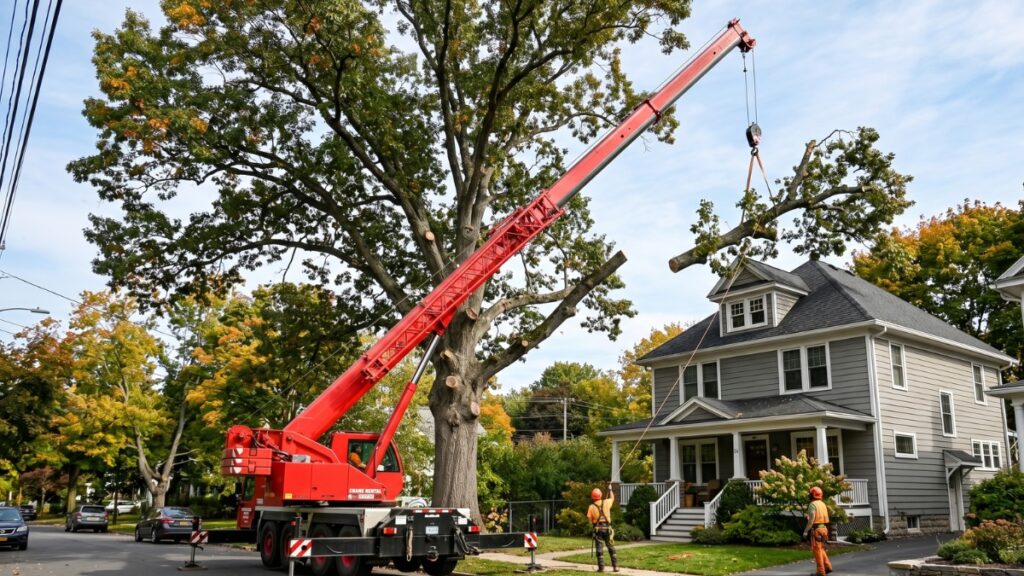
    Crane tree removal uses a specialized crane to lift sections of a tree safely away from structures before lowering them to the ground in a fully controlled manner.

    Instead of:

    1. Dropping heavy limbs
    2. Swinging branches with ropes
    3. Risking uncontrolled movement
    4. Overloading climbing systems
    5. Damaging landscaping below

    …the crane stabilizes and removes each section with precision.

    This method is commonly used for:

    1. Large oak tree removal
    2. Hazardous tree removal
    3. Dead tree removal near homes
    4. Storm-damaged tree removal
    5. Technical tree dismantling
    6. Precision tree removal near structures
    7. High-risk suburban tree removals

    For luxury homes in Delmar, crane assisted tree removal is often less about convenience and more about protecting the property itself.

    When You Absolutely Need Crane Tree Removal

    Not every tree requires a crane. However, there are situations where crane removal becomes the safest, fastest, and most responsible option.

    1. Trees Hanging Over Your Home

    If major limbs extend above:

    1. Rooflines
    2. Chimneys
    3. Skylights
    4. Gutters
    5. Solar panels

    …traditional cutting methods dramatically increase the risk of structural damage.

    Crane assisted removal allows sections to be lifted vertically away from the house instead of dropped.

    2. Trees Above Pools, Patios, or Landscaping

    Affluent Delmar homes often feature:

    1. Custom hardscaping
    2. Luxury pools
    3. Outdoor entertainment areas
    4. Irrigation systems
    5. Decorative stonework

    One uncontrolled branch can cause damage worth far more than the tree removal job itself.

    Professional crane crews minimize impact by controlling every movement precisely.

    3. Dead or Structurally Weak Trees

    Dead trees become highly unpredictable because:

    1. Wood fibers weaken
    2. Limbs snap unexpectedly
    3. Internal decay spreads
    4. Climbing becomes dangerous
    5. Rigging points may fail

    In many cases, crane-assisted removal is the safest OSHA-compliant solution for hazardous trees.

    4. Tight Property Access

    Many Delmar and Bethlehem neighborhoods have:

    1. Narrow side yards
    2. Neighboring homes nearby
    3. Limited drop zones
    4. Fencing obstacles
    5. Landscaping restrictions

    Without enough space for safe traditional rigging, cranes become essential.

    5. Storm Damaged Trees

    Storm-damaged trees may contain:

    1. Split trunks
    2. Hanging limbs
    3. Root instability
    4. Leaning canopies
    5. Internal fractures

    These trees can shift suddenly during cutting.

    Crane stabilization reduces the chance of uncontrolled collapse during removal.

    Why Crane Removal Protects Your Property

    Many homeowners initially focus only on price. But the real question should be:

    “What happens if the removal goes wrong?”

    Property damage from improper tree removal can include:

    1. Roof punctures
    2. Broken windows
    3. Cracked driveways
    4. Pool damage
    5. Destroyed retaining walls
    6. Landscape destruction
    7. Fence collapse
    8. Structural foundation issues

    Professional crane assisted tree removal minimizes these risks through:

    1. Engineered lift planning
    2. Controlled sectional dismantling
    3. Precision rigging systems
    4. Weight-balanced lifting
    5. Reduced ground impact

    For homes with expensive outdoor investments, this level of protection matters.

    Crane Removal vs Standard Chainsaw Crew

    Traditional Tree Removal

    A standard tree crew may:

    1. Climb manually
    2. Cut sections free
    3. Lower limbs with ropes
    4. Depend heavily on gravity
    5. Use improvised landing zones

    This approach works well for:

    1. Smaller trees
    2. Open rural properties
    3. Trees far from structures
    4. Low-risk removals
    5. Wide-open yards

    But risk increases dramatically around luxury homes and confined suburban spaces.

    Crane Assisted Tree Removal

    A crane removal crew:

    1. Calculates lift weights
    2. Secures sections before cutting
    3. Lifts wood vertically
    4. Controls all movement precisely
    5. Avoids dangerous swing zones

    Benefits include:

    1. Reduced property damage risk
    2. Faster project completion
    3. Safer hazardous removals
    4. Less lawn destruction
    5. Better protection for landscaping
    6. Lower liability exposure

    For many Delmar homeowners, crane removal is the smarter long-term financial decision.

    Real Crane Tree Removal Cost Comparison

    One of the biggest misconceptions is that crane tree removal is “too expensive.”

    Standard Tree Removal Costs

    Typical pricing:

    1. Small tree removal: $500–$1,500
    2. Medium tree removal: $1,500–$3,500
    3. Large tree removal: $3,000–$5,000+

    Crane Tree Removal Costs

    Complex crane-assisted removals may range from:

    1. $3,500
    2. $5,000
    3. $7,500
    4. $10,000+
    5. Higher for emergency storm work

    Pricing depends on:

    1. Tree height
    2. Tree condition
    3. Accessibility
    4. Crane size required
    5. Risk level
    6. Cleanup complexity

    At first glance, crane removal appears more expensive.

    But compare that to:

    1. Roof repair costs exceeding $15,000
    2. Pool damage reaching $20,000+
    3. Patio reconstruction costs
    4. Insurance deductibles
    5. Liability claims from neighboring damage

    Suddenly, professional crane tree removal becomes the safer investment.

    Warning Signs of an Unqualified Tree Crew

    Avoid companies that:

    1. Offer extremely low pricing
    2. Lack proof of insurance
    3. Cannot explain lift planning
    4. Avoid written contracts
    5. Have no certified arborist
    6. Use outdated equipment
    7. Ignore property protection planning

    Cheap tree removal often becomes expensive after avoidable damage occurs.

    Questions Every Delmar Homeowner Should Ask Before Hiring

    Before hiring any crane tree removal company, ask these questions.

    1. Are You Fully Licensed and Insured?

    Request proof of:

    1. General liability insurance
    2. Workers’ compensation
    3. Crane operation coverage
    4. Property damage coverage
    5. Commercial equipment insurance

    Never rely on verbal assurances alone.

    2. Do You Have ISA-Certified Arborists?

    ISA-certified arborists understand:

    1. Tree biology
    2. Structural weaknesses
    3. Failure risks
    4. Safe dismantling methods
    5. Hazard assessment procedures

    That expertise matters on high-risk removals.

    3. Who Calculates the Crane Lift Plan?

    Professional crane removals require:

    1. Weight estimation
    2. Rigging calculations
    3. Load balancing
    4. Lift sequencing
    5. Safety zone planning

    Experienced companies should explain this process confidently.

    4. How Will You Protect My Landscaping?

    Professional crews often use:

    1. Ground protection mats
    2. Controlled access routes
    3. Specialized rigging systems
    4. Protective barriers
    5. Low-impact equipment placement

    This is especially important for upscale Delmar properties.

    5. What Happens If Property Damage Occurs?

    The answer should be:

    1. Clear
    2. Written into the contract
    3. Fully insured
    4. Easy to verify
    5. Professionally documented

    If a company avoids this conversation, move on.

    Signs Your Tree Should Be Removed Before Storm Season

    Do not wait until the tree becomes an emergency.

    Watch for:

    1. Dead upper canopy sections
    2. Large trunk cracks
    3. Leaning after storms
    4. Hollow trunk areas
    5. Fungus growth near roots
    6. Falling large limbs
    7. Visible root upheaval

    Delaying removal can increase:

    1. Emergency removal costs
    2. Insurance complications
    3. Structural damage risk
    4. Liability exposure
    5. Safety hazards for your family

    Why Affluent Homeowners Often Choose Crane Removal First

    Homeowners with premium properties understand:

    1. Cheap bids rarely mean lower total cost
    2. Precision matters
    3. Insurance matters
    4. Safety matters
    5. Prevention is cheaper than repair

    For homes with:

    1. Luxury landscaping
    2. Multi-level patios
    3. Swimming pools
    4. Outdoor kitchens
    5. Expensive roofing systems
    6. Tight lot lines
    7. Mature canopy trees

    …crane-assisted tree removal is often the most responsible choice.

    Frequently Asked Questions About Crane Tree Removal

    Is crane tree removal safer than traditional tree removal?

    Yes. Crane assisted tree removal provides greater control when removing large trees near homes, pools, garages, and landscaping. It significantly reduces the risk of uncontrolled falling limbs and property damage.

    How much does crane tree removal cost in Delmar?

    Most crane tree removal projects range between $3,500 and $10,000+, depending on:

    1. Tree size
    2. Accessibility
    3. Risk level
    4. Storm damage
    5. Cleanup requirements

    Complex emergency removals may cost more.

    Can cranes remove trees over swimming pools?

    Yes. Crane-assisted removal is one of the safest methods for removing trees hanging above pools, patios, and outdoor living areas because sections are lifted vertically instead of dropped.

    Does homeowners insurance cover tree removal?

    Insurance may cover hazardous tree removal if the tree falls due to storms or causes structural damage. Coverage varies by policy, so homeowners should contact their insurance provider directly.

    Do I need a certified arborist for large tree removal?

    For hazardous or high-risk tree removals, working with an ISA-certified arborist is strongly recommended. Certified arborists understand tree structure, safety risks, and proper removal techniques.

    Schedule a Professional Crane Tree Removal Assessment in Delmar

    If you have a large tree hanging over your home, pool, garage, or landscaping, waiting too long can turn a manageable project into a costly emergency.

    A professional crane tree removal Delmar assessment can help determine:

    1. Whether crane assistance is necessary
    2. The safest removal strategy
    3. Potential property risks
    4. Structural concerns
    5. The most cost-effective solution

    The right tree company will:

    1. Prioritize safety
    2. Protect your property
    3. Carry full insurance
    4. Use certified professionals
    5. Remove hazardous trees with precision and care

    Because when thousands of pounds of wood are suspended over valuable property, avoiding damage is the real job.

  • Trees growing into power lines on Central Ave Albany: who is responsible and what happens next?

    Trees growing into power lines on Central Ave Albany: who is responsible and what happens next?

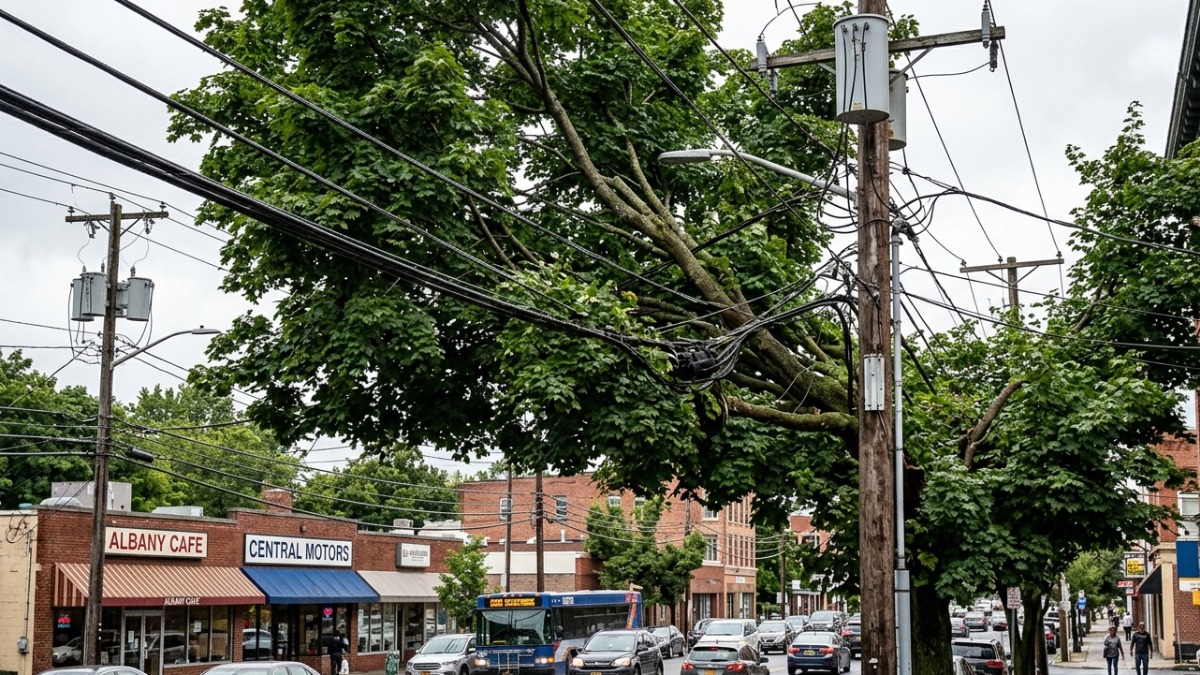
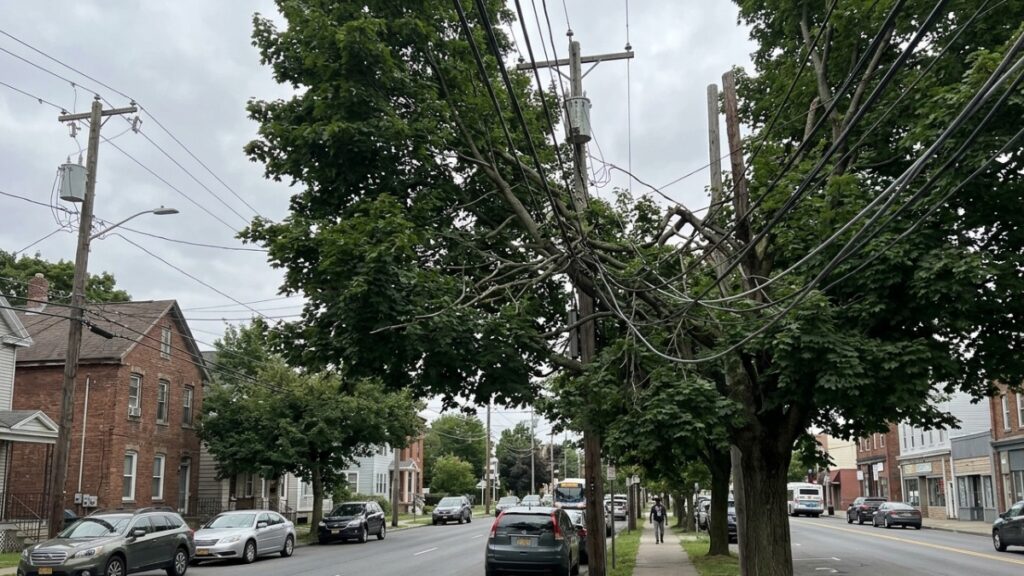
    Central Ave is the heartbeat of Albany’s commercial activity. With heavy traffic, dense storefronts, and a complex network of overhead utility lines, an overgrown tree isn’t just an eyesore it’s a liability. When branches push into high voltage lines, it creates an immediate risk for outages, fires, and safety hazards for pedestrians and business owners alike. In the Capital Region, these situations escalate fast during lake-effect winds or summer storms. Understanding the importance of calling an emergency tree service in Albany NY before the lights go out is the difference between a routine trim and an expensive emergency.

    ⚠️ SAFETY FIRST: The 10-Foot Rule

    Never attempt to trim a tree touching a power line yourself. Electricity can “arc” or jump from the wire to a branch (and then to you) without direct contact. Always maintain a 10-foot clearance and leave high-voltage work to OSHA-certified line clearance arborists.

    Tree service near Central Ave NY

    Who Is Responsible for Tree Trimming in Albany?

    Responsibility is determined by the type of line and the location of the tree. In the City of Albany, there are three main players:

    1. The Utility Provider (National Grid)

    While NYSEG serves the surrounding suburbs, National Grid manages the vast majority of the electrical infrastructure along the Central Ave corridor.

    Their Responsibility: Main distribution lines (the wires at the very top of the poles).

    The Deal: They perform “Vegetation Management” to protect the grid. If a tree poses a threat to the main line, they will often trim it at no cost to the property owner.

    The Catch: They trim for clearance, not aesthetics. They may leave the tree looking “V-shaped” to keep the wires safe.

    2. The Property Owner (Service Lines)

    If the tree is interfering with the service drop the specific line running from the utility pole directly to your home or business—it is almost always the property owner’s responsibility.

    What you need: A licensed arborist in Albany NY who is insured to work near energized equipment.

    Urgency: If this line is ripped down by a branch, you may be responsible for the cost of the “mast” repair on your building before National Grid will reconnect your power.

    3. City of Albany (Department of General Services)

    Central Ave is lined with “Street Trees” located in the public right-of-way (between the sidewalk and the curb).

    Their Responsibility: Trees owned by the City. The DGS handles maintenance, safety pruning, and removal of dead city trees.

    Coordination: If a city tree is hitting a power line, DGS and National Grid coordinate the shutdown and trim.

    The “Shared Responsibility” Confusion

    This is where most Central Ave property owners get stuck. If a tree trunk is on private property but the branches are hitting main utility lines, National Grid may trim the branches, but they will not remove the tree.

    If you are a business owner on Central Ave, a quick inspection from a local tree service can clarify exactly whose “zone” the tree falls into, saving you from waiting on a city inspector who may take weeks to arrive.

    What Happens If You Ignore the Problem?

    Neglecting a high-risk tree on a busy corridor like Central Ave can lead to:

    Compliance Warnings: The City may issue a notice to trim if the tree obstructs signage or sidewalks.

    Business Interruption: A single falling limb can knock out power to an entire block of businesses.

    Liability: If a private tree falls and damages city infrastructure or a neighbor’s vehicle, the owner may be held liable for negligence.

    Common Questions: Albany Tree & Power Line Safety

    Does National Grid charge to trim trees near power lines?
    If it’s a main distribution line, no. If it’s your private service drop, they usually won’t perform the work at all; you must hire a private contractor.

    How do I report a tree on a city sidewalk?
    You can contact the Albany Department of General Services (DGS) or use the city’s “Albany 311” system to log a request for a street tree inspection.

    Can I get emergency tree removal on Central Ave?
    Yes. Because of the high traffic volume on Central Ave, most professional tree services prioritize this area to prevent road closures or hazards to the public.

    Proactive Steps to Take Now

    1. Identify the line: Is it the “top” wire (Main) or the “low” wire going to your house (Service)?
    2. Call the Utility: If it’s a main line, call National Grid’s non-emergency line.
    3. Consult an Expert: If it’s a service line or on your private lot, get an estimate for affordable tree trimming near Central Ave Albany to handle the issue before the next storm hits.

    Don’t wait for a spark. Early action is always cheaper than an emergency restoration.

  • Tree Service in Syracuse NY (2026): The Complete Homeowner’s Guide

    Tree Service in Syracuse NY (2026): The Complete Homeowner’s Guide

    ⚠️ If you’re searching for Best tree service in Syracuse NY, you’re likely dealing with a real risk storm damage, leaning trees, or potential property hazards. In Central New York, lake effect snowstorms regularly turn healthy trees into roof crushing liabilities overnight. This guide is your roadmap to safe, legal, and affordable tree care in Onondaga County.

    🚨 Get a Free Tree Safety Inspection (Same Day Available)

    ✔ ISA Certified Arborists on Staff
    ✔ Fully Insured (Liability + Workers Comp)
    ✔ 24/7 Emergency Response
    ✔ Serving all of Onondaga County

    📞 Call Now: (315) 902-1222 👉 Or request a same day quote online.


    🌲 Tree Removal in Syracuse NY: Is It Time to Act?

    In neighborhoods like Strathmore and Eastwood, mature trees are beautiful but they are aging.

    🚨 5 Signs You Need Tree Removal ASAP:

    1. The “Ice-Heavy” Lean: Tree tilting toward your home or driveway.
    2. Hollow Trunks: Common in aging Silver Maples (Syracuse’s most common hazard).
    3. Fungal Growth: Mushrooms at the base = root decay.
    4. Power Line Risk: Branches within 10 ft of National Grid lines.
    5. Root Heave: Cracking sidewalks or foundation damage.

    💡 Local Insight: Most emergency removals in Syracuse happen because of “internal rot” that isn’t visible until a heavy windstorm hits Tipperary Hill or the Valley.

    Highest Experienced tree Service Syracuse NY


    ✂️ Tree Trimming & Pruning: The “Syracuse Specific” Strategy

    Regular trimming isn’t just for looks; it’s about weight distribution for the winter.

    – The “Lake Effect” Advantage: We prune specifically to reduce snow accumulation in the canopy.

    – Winter Pruning (Jan – March): This is the “Dormant Season,” which is the best time for the tree to heal and prevent disease spread.

    – Structural Pruning: Keeps limbs away from your roof and gutters.


    🌪️ 24/7 Emergency Tree Service in Syracuse

    Storm hits at 2 AM? You don’t need a voicemail, you need a crew with a crane.

    – Lightning Fast Response: We prioritize calls in DeWitt, Manlius, and Fayetteville.

    – Insurance Claim Support: We provide the “Before & After” photos and detailed documentation your insurance adjuster needs to approve your claim fast.


    📜 Syracuse Tree Ordinances: Avoid Fines

    Central NY has strict rules that most homeowners don’t know:

    1. City Right-of-Way (ROW): Trees between the sidewalk and the street belong to the City of Syracuse Forestry Division. You must have a permit to touch these.
    2. Emerald Ash Borer (EAB) Update 2026: Ash trees in Onondaga County are under high risk. We provide specialized removal and “Incentive-based” quotes for Ash tree management.


    💰 Tree Service Cost in Syracuse (2026 Pricing)

    ServiceTypical Price Range
    Basic Trimming$350 – $900
    Small Tree Removal$450 – $800
    Large Tree Removal$1,500 – $4,000+
    Stump Grinding$150 – $500

    Note: Pricing depends on proximity to structures and equipment access.


    🏆 Why We Are The #1 Rated Tree Service Near You

    – Local Expertise: We know the soil and weather of Central New York.
    – Certified Equipment: From bucket trucks to stump grinders, we own our gear.
    – Safety First: We follow ANSI A300 standards for every cut.

    📍 Areas We Serve:

    Syracuse, DeWitt, Manlius, Fayetteville, Camillus, Cicero, Liverpool, and all surrounding Onondaga County towns.


    ❓ Frequently Asked Questions

    Q: Do I need a permit to remove a tree in Syracuse? A: Only if it’s on the City’s Right-of-Way. For private property, usually no, but we check local zoning for you.

    Q: Is tree removal covered by insurance? A: If the tree falls on a “covered structure” (like your house or fence) due to a storm, usually yes. We can help with the paperwork.

    Q: What is the cheapest time of year for tree work? A: Late winter (Dormant Season) is often more cost effective and better for the tree’s health.

    🔥 Final Step: Don’t Wait for the Next Storm

    A small crack today is a fallen tree tomorrow.

    👉 Call (315) 902-1222 for a 100% Free Safety Inspection.

  • Why Tree Trimming in Albany NY is a Smart Investment for Homeowners

    Why Tree Trimming in Albany NY is a Smart Investment for Homeowners

    Most homeowners consider tree trimming as simply another chore thrown on their overflowing to-do list. But what if we told you that regular maintenance could stand out on your list as one of the smartest financial decisions to ever be made for your property? Beyond the obvious aesthetic enhancements, professional tree trimming could deliver dramatic returns that go beyond curb appeal.

    Nestled among savvy property owners is one key understanding: Trees are living entities that gain value over time, if appropriately maintained. A landscape that has undergone proper trimming looks great and actually works to increase the value of your home, save on energy costs, and turn away expensive emergencies from your doorstep. The question isn’t whether you can afford tree trimming services; rather, it’s whether you can afford not to have them.

    Tree Trimming Matters for Commercial Properties

    Importance of Tree Trimming

    Tree trimming service plays a key role in keeping your trees healthy and looking their best. Branches that grow too long or are weak can become dangerous during storms or heavy snow, putting your home, vehicles, and family at risk. Regular trimming not only avoids these problems but also helps trees grow in a more balanced and attractive way.

    In Albany, where the weather can change dramatically with the seasons, keeping trees healthy takes careful attention. Cutting away dead or weak branches prevents possible damage and helps the tree stay strong overall. Additionally, trimmed trees let more sunlight reach your garden, which benefits the plants around them.

    Maximizing Tree Health Through Pruning

    In general terms, pruning a tree is simply cutting away branches. However, in the strict sense, it is a science. It can involve cutting away branches that are diseased, damaged, or cramped. This action acts against pest infestation and diseases. In urban settings like Albany, such trees are especially prone to environmental stressors caused by pollution and soil compaction.

    Aware of the correct methods utilized in the pruning process, the tree trim service in Albany would carry out proper pruning. Improper pruning causes stress to the trees, killing them along the way or shortening their lifespan. A certified arborist knows how and when to prune to encourage strong growth and preserve, as much as possible, the natural shape of your trees.

    Safety First: Property-Prevention

    Foremost among the reasons for investing in a tree-trimming service is greater safety. Trees that have grown too much or have weak branches can cause a lot of damage during storms. In Albany, strong winds and ice storms during winter are nothing unusual. Such storms take out limbs when they are large threats; otherwise, regular trimming maintains the limbs free of risk.

    This form of cutting also preserves sight lines around the property and reduces the chances of accidents within the boundary. Also, overhanging branches can obscure the view, damage roofs, and interfere with utility lines. A qualified certified arborist trimming limbs in Albany, can mitigate these risks and take the necessary steps to eliminate them.

    Pruning boosts the property value and improves its curb appeal.

    In addition to that, the vicinity of the house also enjoys the view of healthy, well-maintained trees. In addition to that, a well-maintained tree adds to the curb value of the property. Homeowners who are considering selling the house, cutting down on the tree pruning costs can add aesthetic value and appeal to the buyers. 

    Carefully trimmed and shaped trees enhance the property and the feel of the neighborhood. In addition to that, real estate experts say that mature and healthy trees increase the value of a property by up to 20%. Pairing these services of tree trimming Albany NY, adds value to the property while also increasing its aesthetic appeal.

    Certified arborist removing a large tree in Rochester, NY

    Seasonal Pruning and Maintenance

    The time of undertaking is really essential for the very task of summer tree pruning in Albany. Some trees have preferred seasons for trimming. For instance, summer pruning is best for shaping control and growth, whereas winter trimming is used to shed dead or damaged branches.

    By having some consultation with the professionals, one may arrive at a seasonal maintenance schedule that retains the health of trees year-round. A proactive approach acts on lessening the incidence of disease, promoting growth, while maintaining the aesthetic look of your trees through all seasons.

    Why Professional Services Matter

    Hiring professionals for tree trimming service gives you advantages that DIY trimming just can’t match. Certified arborists have the skills, proper equipment, and knowledge needed to care for your trees safely and effectively. Issues may lurk that cannot be seen by the untrained eye, such as early signs of disease or structural weaknesses.

    The realization of professional services not only saves time for the homeowner but also lessens liability. Professional services reject tree climbing or chainsaw use, which is dangerous, and improper pruning may cause irreparable damage. Trees Albany NY expert tree-trimming services give you peace of mind because you know the work is done properly and safely.

    For more in-depth information on urban tree care and resources available to homeowners, visit the NYSDEC Urban and Community Forestry page, https://dec.ny.gov/nature/forests-trees/urban-and-community-forestry?utm.

    Environmental Benefits of Tree Care

    Frequent trimming and pruning favor a healthier environment. Trees perform a very important function in absorbing carbon dioxide, producing oxygen, and providing shelter for birds and wildlife. By caring for your trees, you help support local biodiversity and the environment in a greener and cleaner Albany.

    Pruning promotes the growth of good foliage that cleans the air and provides shade. This, in turn, helps reduce energy costs by cooling the house naturally during hot summer days. A mature and balanced tree canopy further assists in mitigating soil erosion and stormwater runoff, thereby protecting one’s property and that of the neighborhood.

    Choosing the Right Tree Trimming Service in Albany

    Picking the right service provider is very important for keeping your trees healthy and long-lasting. You should look for companies with certified arborists who provide thorough assessments, follow safe practices, and offer solutions tailored to your needs. KD Tree Services, for instance, offers certified arborist trimming near me, giving expert care for your trees and property.

    A skilled arborist will carefully check your trees, spot any potential problems, and create a maintenance plan that fits your landscape perfectly. Every tree gets personal attention concerning both attention and aesthetics, thus guaranteeing the property remains secure and attractive at all times.

    FAQs

    How often should I get tree trimming in Albany?


    Most trees appreciate being trimmed every 2-3 years, but high-risk trees or fast-growing trees may need trimming on shorter intervals.

    Although you may perform minor tree trimming, it is recommended to allow professional pruning to guarantee safety and prevent any possible damage to the tree.

    Summer is ideal for shaping trees and controlling their growth; however, a certified arborist will know the best timing for your tree species.

    Look for a tree service company located in Albany with a certified arborist to make sure your trees are well cared for, safely and professionally, such as KD Tree Services.

    Most trees appreciate being trimmed every 2-3 years, but high-risk trees or fast-growing trees may need trimming on shorter intervals.

    Although you may perform minor tree trimming, it is recommended to allow professional pruning to guarantee safety and prevent any possible damage to the tree.

    Summer is ideal for shaping trees and controlling their growth; however, a certified arborist will know the best timing for your tree species.

    Look for a tree service company located in Albany with a certified arborist to make sure your trees are well cared for, safely and professionally, such as KD Tree Services.

    Conclusion

    Investing in a tree trimming service in Albany, NY, is a smart choice for any homeowner. It helps keep your trees healthy, prevents damage to your property, enhances curb appeal, and can raise your home’s value. Whether you need tree pruning, summer tree pruning Albany, or expert tree trimming services Albany NY, professional care makes sure your trees stay safe, strong, and attractive for years to come.

    Routine maintenance not only protects your home but also supports the environment and improves the overall charm of your neighborhood. By hiring certified professionals, you are making a long-term investment that benefits both your property and the surrounding community.

    For expert care and professional tree trimming service in Albany, call KD Tree Services today (518) 625-8733.

  • How Long Does Tree Trimming

    How Long Does Tree Trimming

    Tree trimming Rochester, NY, is one of the most significant tasks for maintaining healthy, beautiful trees. However, as a homeowner with a grand backyard oak or a business owner with a row of landscaped maples, you are probably asking: How long does Tree Trimming in Rochester, NY?

    The response varies depending on several factors, including tree size, health, and location, as well as the procedure adopted by local tree trimming experts in Rochester, NY. 

    That is why, in this guide, we will review all that you need to know about timing, preparation, and efficiency, which will help you plan your preparations without compromising the rest of your day.

    Why Timing Matters in Tree Trimming

    You might want to trim trees because of safety, curb appeal, or tree health, but in all those cases, you can use the duration of tree trimming to plan time and resources. 

    For instance, when a large number of people are passing by your business premises on foot, you would want to minimize the downtime of your unit. 

    However, as a homeowner, there is a need to get the work done in time to invite guests who drop over to enjoy a weekend barbecue.

    In addition to convenience, time is also important since tree trimming Rochester, NY, work may be as simple as a 30-minute cut or as complex as an entire day due to the complexity of the job.

    Tree Trimming Matters for Commercial Properties

    Factors That Affect How Long Tree Trimming Takes

    1. Tree Size and Species

    • Dogwoods or redbuds, ornamental trees- 30 minutes to 1 hour.
    • Such trees as maples or birches, medium height landscape- 1-2 hours.
    • Oaks or elms- large shade trees- 2-4+ hours.

    There are also those species whose branches are more complicated and demand a more accurate cut.

    2. Tree Health

    Trimming a tree takes more time when it’s diseased, overgrown, or storm-damaged. Branches that are infected could be removed with caution to prevent the dissemination of pests or fungi.

    3. Location

    Projects involving tree cutting Rochester, NY, where homes, power lines, or busy sidewalks are present, require extra care. Cane-assisted tree removal or aerial lifts may be necessary for the arborists, and this costs time.

    4. Tools & Equipment Used

    The professional crews use lifts, chainsaws, and pole saws to hasten work. The homeowners might require additional time when equipped with simple tools.

    5. Number of Trees

    It could be fast to trim one tree, but a complete property with 10+ trees could be a one-day or more business.

    6.Canopy Density

    Large trees with extensive foliage require more time to work around, especially when using climbing or bucket trucks. Sometimes it is difficult to see and access part of the branches due to thick canopies, and they need to reposition or use certain tools, such as a pole saw.

    7. Weather Conditions

    Efficiency is greatly affected by the weather. Crews and teams can work long hours and days in the cool, dry weather, whereas wind, rain, or too high temperatures may make everything sluggish due to safety concerns. Wet branches are more slippery and heavier, which increases the risk and adds time.

    8.Cleaning and Waste

    It is half the battle to trim, but sometimes the elimination of debris takes as long. Big branches might need to be chopped into chips, removed, or chopped freely to dispose of them. A team that cleans as it moves will accomplish the task more quickly than one that leaves cleanup for the end.

    9.safety Precautions

    Additional precautionary measures, such as harnessing on a tall tree, working around the power line, or the use of traffic cones on any roadside job, take more time but are unavoidable.

    tree removal i Rochester NY

    Typical Timeframes for Tree Trimming

    Here’s a quick reference table for both residential and commercial properties

    Edit
    Tree Size Time for Homeowner Time for Professionals
    Small (under 20 ft) 1-2 hours 30-45 minutes
    Medium (20-40 ft) 2-4 hours 1-2 hours
    Large (40+ ft) 4-8 hours 2-4 hours
    Multiple Trees (5+) 1-2 days Half-Full Day

    Residential vs. Commercial Tree Trimming in Rochester, NY

    Residential Properties

    To individual homeowners, tree service in Rochester, NY, is usually shaped by safety, aesthetics, and seasonal health. Jobs tend to be shorter (because there are fewer trees), although access (such as narrow yards/gardens) can be a slowdown factor.

    Commercial Properties

    The commercial tree work can entail large landscapes, parking areas, and visibility issues. These businesses will need local tree trimming experts in Rochester, NY, who have the necessary equipment for large-scale work. Yet, safety preparation and access control for personnel might prolong the schedule.

    Best Seasons for Faster Tree Trimming

    Timing does not only mean hours on the clock, but also the season!

    • Winter- Trees are resting, so it takes less time and is less hazardous to trim the tree (not much sap comes out, fewer pests).
    • Spring- Best suited to forming new growth, can be more sluggish with increased levels of leaf density.
    • Summer- It can be trimmed, but thick foliage can increase the time.
    • Fall– Excellent to help curb the hazards before a storm, but can be sluggish in wet weather.

    Wanna know more about tree pruning? Then read this helpful article given by the Arboriculture Association:  Guide to Tree Pruning .

    How to Speed Up Tree Trimming Without Cutting Corners

    • Pick specialists – Seasoned crews complete work more efficiently and securely than weekend stunts by enthusiasts.
    • Obvious access – Remove vehicles, furniture, or landscaping objects before work commences.
    • Schedule during ideal weather- Avoid scheduling during windy and wet days, as these conditions take more time and are not safer for work.
    • Combine services-When you require services in tree cutting in Rochester, NY, stump grinding, or removing trees, you are saving set-up time by bundling jobs.

    Real-World Example: How long does Tree Trimming in Rochester, NY

    A local business downtown Rochester required three 35-foot maples to be pruned due to a pedestrian safety issue last summer. Two arborists and a bucket truck completed the work, powered down in less than 3 hours, and then performed cleanup.

    In the meantime, a property owner with just one giant backyard oak spent nearly an entire day trimming by hand. It is therefore due to these reasons that local tree cutting experts in Rochester, NY, may be worth their weight in gold; you will get efficiency, safety, and professional results.

    DIY vs. Professional Tree Trimming: Time Comparison

    Edit
    Approach Time Estimate Pros Cons
    DIY 2–8+ hours Cost savings, personal control Slower, risk of injury, possible tree damage
    Professional Crew 30 min–4 hours Fast, safe, high-quality results Service cost

    -If you want to learn more about tree trimming tips, check out our detailed guide on Tree Trimming Best Practices for a Healthier Landscape.

    Conclusion

    Then how long does tree trimming in Rochester, NY take? For professionals, 30 minutes or less with a small ornamental tree, or a couple of hours with a larger shade tree. It may be a full-time job for the homeowner, especially if they lack the proper equipment.

    Hiring tree trimming professionals in Rochester, NY, has been beneficial to homeowners and commercial property owners due to the safe, effective, and high-quality work they provide. You can ensure your trees stay healthy by taking the proper steps and schedule, and causing minimal disturbance.

    CTA

    Call KD Tree Service today at tel:+15186258733 or visit https://kdtreeservices.com/ to schedule fast, professional tree trimming in Rochester, NY. Keep your property safe, beautiful, and storm-ready!

    FAQs

    How fast would it take to cut a tree in Rochester, NY?


     Trimming of small ornamental trees most often takes less than 30 minutes.

     Yes, commercial buildings usually involve more plants and safety precautions, which could add more time.

     Absolutely. Work can be delayed or postponed when it is exhibited in rain, wind, or snow.

     The majority of trees respond well to the trimming period that should be performed on a semi-annual basis

     An honest and experienced tree service in Rochester, NY, serving both residential and commercial clients.

     Trimming of small ornamental trees most often takes less than 30 minutes.

     Yes, commercial buildings usually involve more plants and safety precautions, which could add more time.

     Absolutely. Work can be delayed or postponed when it is exhibited in rain, wind, or snow.

     The majority of trees respond well to the trimming period that should be performed on a semi-annual basis

     An honest and experienced tree service in Rochester, NY, serving both residential and commercial clients.

  • How Tree Trimming Boosts Curb Appeal in Binghamton, NY

    How Tree Trimming Boosts Curb Appeal in Binghamton, NY

    In a city like Binghamton, New York, where most neighborhoods have green lawns and mature trees, curb appeal is more important than most homeowners realize. Tree trimming is one of the easiest and most efficient methods to increase the appeal of your home, whether you’re considering selling it or just want to make it seem better.

    We’ll look more closely at how tree trimming boosts curb appeal in Binghamton, NY, why it’s important for general tree care, and how it can help elevate your landscaping and property aesthetics.

    Professional tree trimming in front yard of Binghamton home

    Why Should You Care About Tree Trimming?

    Tree trimming, which is often known as tree pruning, is the process of carefully cutting off particular branches to control growth, remove sick or dead limbs, or shape the tree. Not only does it make trees seem better, but it also makes them stronger, safer, and healthier.

    Regular tree care goes a great way toward maintaining your outside space tidy, secure, and inviting in Binghamton, where many residential properties have enormous, lovely trees.

    The Relationship Between Curb Appeal and Tree Trimming

    The general attractiveness of a home as viewed from the street is what is meant when someone speaks of curb appeal. People’s perceptions of your house, whether they are driving into the driveway or just passing by, are greatly influenced by the trees in your yard.

    In Binghamton, New York, tree trimming improves curb appeal in the following ways:

    1.  Creates a Polished, Clean Look

    Your yard may begin to appear unkempt or wild when trees become too big or lose their shape. A little pruning gives your trees a tidy, balanced look that immediately improves the appeal of your house.

    2. Displays Your Home’s Splendor

    Important architectural details may be obscured by branches that hang over windows, porches, or paths. Removing them lets the qualities of your house take center stage. This is particularly useful for Binghamton homes with distinctive designs or vintage charm.

    3. Lowers Risks and Promotes Safety

    Limbs that are broken or weak may fall at any time, particularly in Binghamton’s windy or snowy conditions. You lower the hazards to people and property by getting rid of them. Visitors and possible buyers will find a safe yard much more inviting.

    4. Promotes the Growth of Neighboring Plants

    More light and air can reach the plants below when overcrowded or broken branches are removed. This makes your overall landscaping arrangement more beautiful by promoting healthier grass, shrubs, and flowers.

    5. Adds a Professional Touch to Your Yard

    Even if you’re doing the work yourself, trimming your trees gives your yard the look of expert landscaping services. Neatly trimmed trees show care and attention traits that always reflect well on a homeowner.

    Tips from Arborists: Smart Tree Trimming at Home

    If you’re doing little trimming jobs on your own, seasoned experts in tree care services Binghamton, NY, frequently provide these helpful pointers:

    • Start by inspecting the tree: Always look for any dead, damaged, or diseased limbs.
    • Employ the right tools: Clean, sharp instruments produce cleaner cuts and cause less damage to the tree.
    • Utilize the tree’s shape: Steer clear of cutting too near the trunk or bending the tree into odd forms.
    • Trim conservatively: Don’t remove more than a quarter of the canopy at once, as it can harm the tree.
    • Know your limits: If branches are too high or near power lines, it’s time to call a pro.

    When in doubt, a skilled arborist can handle complex jobs and help your trees stay in their best shape.

    Tree trimming can raise the value of a property.

    In addition to being attractive, a well-kept yard can increase your home’s selling value. Healthy trees and beautiful landscaping can really raise a home’s value by up to 20%, according to numerous studies.

    Potential buyers frequently search for indications that the property has been well-maintained in Binghamton, where trees are an integral element of a home’s personality. In fact, diseased or overgrown trees can pique people’s interest or cause them to worry.

    You can make sure your trees increase the value of your house without having to worry about it by working with reputable tree trimming Binghamton, NY, pros.

    Why Consider Professional Tree Care in Binghamton?

    There are several reasons why it’s a smart move to hire expert help for tree trimming in Binghamton, NY:

    • Safety matters: Pruning large trees without the right gear can be dangerous.
    • Trained eyes help: Professionals know exactly which branches to remove without harming the tree.
    • Save your time: Tree care can take hours, especially for beginners.
    • Cleanup is included: Reliable crews will remove branches and leave your yard spotless.

    When choosing a company, make sure they’re fully insured, well-reviewed, and understand the specific types of trees common in Binghamton.

    Tree trimming errors.

    When it comes to tree cutting, even the most well-meaning homeowners can make mistakes. Keep an eye out for these typical problems:

    • Over-trimming: A tree that has too many limbs removed may become stressed and feeble.
    • Poor cutting angles: Poor cuts can cause incorrect healing or deterioration.
    • Poor timing: Pruning certain trees during the wrong season can cause problems.
    • Incorrect or dull instruments: This might cause branches to tear or sustain harm.

    Your trees will remain gorgeous and healthy for many years to come if you take good care of them.

    Before and after tree trimming showing improved home exterior

    Conclusion: Improve the Appearance of Your House with Binghamton Tree Trimming

    Start by paying attention to your trees if you want your Binghamton, New York home to really sparkle. Tree pruning on a regular basis significantly improves the appearance and feel of your yard. It not only makes your outside area look better, but it also protects your property, promotes plant health, and increases the value of your house overall.

    Taking the effort to properly care for your trees is always a wise investment, whether you’re getting ready for an open house, greeting guests, or simply want to enjoy a clearer view out your front window.

    For year-round assistance with pruning, shaping, and tree maintenance, get in touch with a reputable tree care company in Binghamton, New York, for the finest results. It will improve the curb appeal of your property.

    FAQs

    Can I increase the value of my house by trimming trees?


    Yes. The market value of your house can be raised by keeping your trees healthy and your landscaping neat and orderly. Trees that are healthy and well-maintained increase the appearance of your property to potential purchasers and help allay worries about safety.

    Is it better to have a professional cut your tree?

    Yes, for big trees or challenging tasks. Trimming can be done safely and correctly by certified arborists. They possess the necessary equipment and expertise to maintain your trees without causing harm, which is crucial for safeguarding both your trees and the visual appeal of your house.

    Tree trimming, which just involves cutting off growth or removing dead or overgrown branches, will allow your home to look its best by trimming overgrown trees.  Easy as it may sound, tree trimming could make your property look its best and enhance value with curb appeal in Binghamton, New York, where most properties have mature trees.

    Yes. The market value of your house can be raised by keeping your trees healthy and your landscaping neat and orderly. Trees that are healthy and well-maintained increase the appearance of your property to potential purchasers and help allay worries about safety.

    Is it better to have a professional cut your tree?

    Yes, for big trees or challenging tasks. Trimming can be done safely and correctly by certified arborists. They possess the necessary equipment and expertise to maintain your trees without causing harm, which is crucial for safeguarding both your trees and the visual appeal of your house.

    Tree trimming, which just involves cutting off growth or removing dead or overgrown branches, will allow your home to look its best by trimming overgrown trees.  Easy as it may sound, tree trimming could make your property look its best and enhance value with curb appeal in Binghamton, New York, where most properties have mature trees.

    You can rely on the knowledgeable staff at KD Tree Services for professional tree trimming assistance in Binghamton, New York. They have the know-how to perform it correctly, whether it’s regular tree care, tree pruning, or enhancing the curb appeal of your house. To keep your trees healthy and your property looking its best, give KD Tree Services a call right now (518) 425-TREE.


    Get a Free Estimate