[email protected] ⚡ Same-day emergency available

Category: Tree Health & Care

  • How to Tell If a Silver Maple Is Rotting Inside: Albany NY Homeowner Guide

    How to Tell If a Silver Maple Is Rotting Inside: Albany NY Homeowner Guide

    A large Silver Maple can develop internal decay, cavities, cracks, root problems, or weak branch unions without obvious canopy decline. Signs such as fungal growth, visible decay, major deadwood, trunk cavities, and structural changes warrant evaluation. If you are concerned about a Silver Maple near Western Ave, an experienced tree service Albany NY can assess the tree, site, defects, and potential targets before recommending pruning or tree removal.

    Silver Maple Tree Decay on Western Ave in Albany NY

    Silver Maple (Acer saccharinum) is a large, fast growing deciduous shade tree commonly found in residential landscapes throughout the Albany area.

    Because mature Silver Maples can become very large, structural condition becomes increasingly important as the tree ages.

    Trunk wounds, cavities, weak branch unions, root disturbance, storm damage, and decay can all affect a mature tree’s condition.

    For a homeowner on or near Western Ave, the key question is not simply whether a Silver Maple is old, large, or hollow.

    The better question is:

    Does the tree have defects that materially increase the likelihood or consequences of failure?

    Tree risk assessment considers the tree, its surrounding site, potential targets, weather exposure, defects, risk level, and possible mitigation measures. The International Society of Arboriculture’s Tree Risk Assessment Best Management Practices use this broader approach rather than treating one visible symptom as an automatic removal decision.

    A Silver Maple growing away from buildings and frequently occupied areas presents a different risk situation from a similar tree positioned directly over a home, driveway, sidewalk, vehicle, or other important target.

    How Can I Tell If a Large Silver Maple Is Rotting Inside?

    You cannot reliably determine the complete extent of internal decay by examining the bark or canopy alone.

    However, several visible conditions can justify a closer professional evaluation:

    • Large trunk cavities
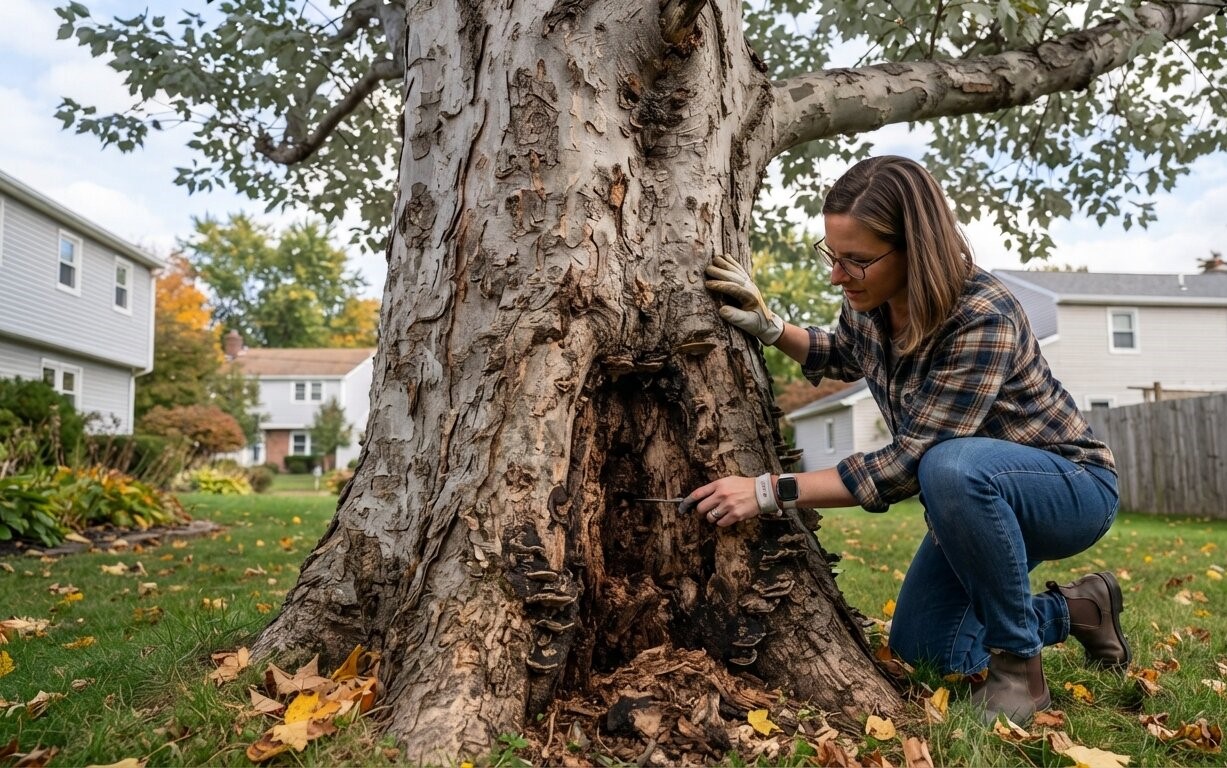
    • Fungal conks or mushrooms
    • Visible decayed wood
    • Significant deadwood
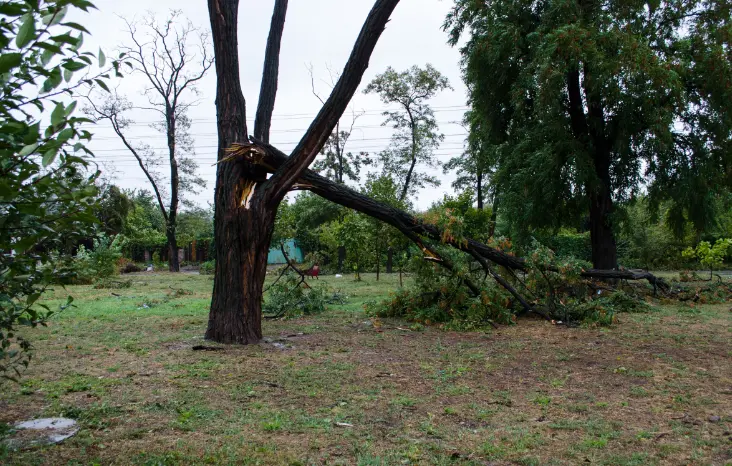
    • Large broken limbs
    • Trunk or major branch cracks
    • Weak or poorly attached branch unions
    • Large old wounds
    • Root-collar abnormalities
    • Root disturbance or damage
    • A new or worsening lean
    • Structural changes following severe weather

    Penn State Extension identifies cavities, fungal conks or mushrooms, visible decay, and other conditions as indicators associated with expanding decay. It also identifies Silver Maple as a weaker compartmentalizer of decay than species such as oak and sugar maple.

    Important: A Warning Sign Does Not Automatically Mean Tree Removal

    Seeing a cavity, mushroom, crack, or dead branch does not by itself establish that the entire Silver Maple should be removed.

    The significance depends on factors such as:

    • Where the defect is located
    • How extensive the defect is
    • How much sound wood remains
    • Overall trunk and branch structure
    • Root condition
    • Site exposure
    • Potential targets
    • Whether the defect can be reasonably mitigated

    That distinction is important for Albany homeowners because tree condition and tree risk are related, but they are not exactly the same thing.

    Why Internal Tree Decay Can Be Difficult to Detect

    Trees respond to injury through complex biological processes that help limit the spread of decay.

    This defense process is commonly described as Compartmentalization of Decay in Trees (CODIT).

    CODIT can restrict the movement of decay organisms through healthy wood, although its effectiveness varies between tree species and individual circumstances.

    Penn State Extension identifies Silver Maple as a weaker compartmentalizer of decay and explains that some Silver Maples can continue producing new wood while internal decay progresses.

    That is why a mature Silver Maple can sometimes maintain a relatively healthy-looking canopy even when structural evaluation is warranted.

    What This Means for Albany Homeowners

    If you discover a large cavity on a Silver Maple near Western Ave, avoid two common assumptions:

    “The tree is hollow, so it automatically has to come down.”

    That is too simplistic.

    “The leaves look healthy, so the tree must be safe.”

    That is also too simplistic.

    A better assessment considers:

    Tree condition + structural defects + failure potential + target exposure = meaningful risk context

    Does a Hollow Silver Maple Tree Need to Be Removed?

    No. A hollow section does not automatically mean a Silver Maple must be removed.

    A cavity is a condition that needs to be interpreted within the context of the entire tree and its surroundings.

    Assessment FactorWhy It Matters
    Cavity locationThe position of a defect can affect its structural significance
    Cavity configurationHelps characterize the affected portion of the tree
    Remaining sound woodImportant when considering structural capacity
    Trunk architectureOverall structure influences how the tree carries loads
    CracksAdditional structural defects can increase concern
    Root conditionRoot damage or decay can affect stability
    Branch structureHeavy or weakly attached limbs may create additional concerns
    LeanA new or worsening lean can warrant prompt evaluation
    Site exposureWind and surrounding conditions influence loading
    Potential targetsConsequences depend on what could be struck

    The visible size of a cavity should therefore not be used as a stand-alone tree-removal rule.

    Likewise, homeowners should not attempt to determine internal trunk strength by drilling into, cutting, filling, or sealing a cavity without appropriate professional guidance.

    Penn State Extension notes that older wound sealant practices do not prevent decay and can interfere with normal wound closure.

    Silver Maple Tree Lifespan in New York

    There is no single guaranteed lifespan that applies to every Silver Maple growing in New York.

    Individual longevity can be influenced by:

    • Soil conditions
    • Root health
    • Available growing space
    • Storm exposure
    • Previous pruning
    • Trunk wounds
    • Construction activity
    • Soil compaction
    • Grade changes
    • Pests and diseases
    • Structural condition
    • Maintenance history

    For homeowners searching for Silver Maple tree lifespan in NY, the more useful question is not simply:

    “How old is my tree?”

    It is:

    “What is the tree’s current condition, and can its risk be reasonably managed?”

    A mature Silver Maple with sound structure and favorable site conditions may continue providing shade and landscape value.

    Conversely, a younger tree with serious structural defects can require more immediate attention.

    Age is a factor. It is not, by itself, a removal diagnosis.

    Silver Maple Tree Decay Warning Signs

    The following guide can help homeowners understand which visible conditions may justify professional evaluation.

    Warning SignWhat It May IndicateRecommended Response
    Large trunk cavityPossible internal deteriorationProfessional assessment
    Fungal conk or mushroomPossible decay activityEvaluate location and surrounding structure
    Major deadwoodPotential falling limb concernInspection and possible pruning
    Trunk crackPotential structural weaknessPrompt professional evaluation
    Weak branch unionIncreased branch-failure concernStructural assessment
    Sudden or worsening leanPossible stability changePrompt evaluation
    Root damagePossible health or stability concernRoot-zone assessment
    Major storm breakStructural damageHazard assessment
    Extensive trunk decaySignificant structural concernEvaluate mitigation or removal
    Tree over a houseHigher consequence if failure occursPrioritize assessment

    This table is a screening guide, not a diagnosis of an individual tree.

    The combination of multiple defects can be more significant than any single symptom considered in isolation.

    What Does a Silver Maple Trunk Cavity Mean?

    A trunk cavity indicates that some wood has been lost or compromised, but the visible opening does not reveal the complete internal condition of the tree.

    Important questions include:

    • Where is the cavity?
    • How does it relate to the trunk’s structure?
    • Are additional cracks present?
    • Is decay visible around the defect?
    • Is substantial deadwood present?
    • Are major roots affected?
    • What structurally sound wood remains?
    • What is located beneath or near the tree?

    A cavity near an important structural area may deserve closer evaluation than a small, localized defect.

    However, cavity size alone does not establish that removal is necessary.

    What Does Fungal Growth on a Silver Maple Mean?

    Fungal conks or mushrooms growing on a tree can be associated with wood decay.

    Penn State Extension identifies fungal fruiting structures among visible indicators associated with expanding decay.

    However, fungal growth alone cannot tell a homeowner exactly how much structurally important wood remains.

    When fungal growth is present, consider:

    • Where it is growing
    • Whether it is on the trunk, roots, root flare, or branch
    • Whether cavities are also present
    • Whether visible decay exists
    • Whether major deadwood is present
    • Whether cracks or weak unions exist
    • Whether root damage is visible
    • Whether important targets are nearby

    The correct interpretation comes from evaluating the complete tree and site, rather than treating one mushroom or conk as a stand alone diagnosis.

    Structural Weakness in a Mature Silver Maple

    1. Large Trunk Cavities

    Large cavities can indicate internal deterioration.

    Their significance depends on their location, configuration, surrounding sound wood, and relationship to other structural defects.

    2. Trunk and Major Branch Cracks

    Cracks involving major structural components deserve attention.

    A crack associated with movement, separation, or an important branch union can present a different concern from superficial bark damage.

    3. Weak Branch Unions

    Some branches develop poor attachment geometry or included bark.

    Large, heavy branches with questionable attachments deserve professional evaluation, particularly when they extend over occupied areas.

    4. Large Dead Branches

    Deadwood does not automatically mean the entire tree is hazardous.

    However, large dead limbs can become falling hazards, particularly above homes, vehicles, driveways, sidewalks, or frequently occupied spaces.

    5. Root and Root-Collar Problems

    The trunk is only one part of a tree’s support system.

    Root damage, construction activity, excavation, soil compaction, grade changes, drainage problems, and decay near the root flare can affect both tree health and stability.

    Why the Root Zone Matters

    A mature Silver Maple should not be evaluated by examining only the trunk.

    The root flare and surrounding soil can provide important information about growing conditions and potential stability concerns.

    Watch for:

    • Excavation near structural roots
    • Construction damage
    • Soil compaction
    • Grade changes
    • Root decay
    • Damaged structural roots
    • Poor drainage
    • Significant soil disturbance

    If a property has recently experienced construction, excavation, major landscaping changes, or severe storm damage, those site changes should be considered during the assessment.

    Dangerous Tree Inspection on Western Ave, Albany NY

    Tree risk cannot be evaluated independently of the surrounding property.

    A large Silver Maple in an isolated portion of a yard presents a different consequence profile from a similar tree standing beside a house, driveway, sidewalk, vehicle parking area, utility infrastructure, or frequently occupied space.

    For a property on or near Western Ave in Albany, the surrounding site therefore matters alongside the visible tree defect.

    ISA tree risk assessment materials emphasize examining the tree, site, targets, exposure, defects, risk categories, and possible mitigation rather than relying on a single symptom.

    A practical way to think about the process is:

    Identify the defect → evaluate the tree → assess the target → determine the risk → choose appropriate mitigation

    What Does a Professional Tree Inspection in Albany NY Evaluate?

    A professional tree inspection in Albany NY should consider the entire tree and its surrounding environment.

    Crown and Major Branches

    The assessment may consider:

    • Deadwood
    • Broken limbs
    • Dieback
    • Excessive end weight
    • Weak unions
    • Structural imbalance
    • Poor branch attachment

    Trunk

    The trunk should be evaluated for:

    • Cavities
    • Cracks
    • Visible decay
    • Old wounds
    • Bark abnormalities
    • Structural defects
    • Areas of deterioration

    Root Flare and Root Zone

    Important observations can include:

    • Root damage
    • Root decay indicators
    • Soil disturbance
    • Grade changes
    • Compaction
    • Stability concerns

    Site and Potential Targets

    The surrounding area may include:

    • Houses
    • Garages
    • Vehicles
    • Driveways
    • Sidewalks
    • Utility infrastructure
    • Neighboring properties
    • Frequently occupied areas

    ISA’s Tree Risk Assessment Best Management Practices identify target analysis, site assessment, tree defects, risk categorization, mitigation, and reporting as important components of professional tree-risk assessment.

    Pruning vs. Silver Maple Tree Removal in Albany NY

    The presence of decay does not automatically determine the treatment.

    Depending on the tree’s condition, appropriate management may include pruning, monitoring, target modification, structural support where appropriate, or removal.

    The objective is to determine which strategy can reasonably manage the identified risk rather than assuming removal is always the answer.

    When Pruning May Be Appropriate

    Examples can include:

    • Dead branches
    • Broken limbs
    • Selected structurally defective branches
    • Excessive branch weight
    • Localized defects that can reasonably be mitigated

    Proper pruning should have a defined objective and should avoid unnecessary removal of healthy canopy.

    When Removal May Be Considered

    Removal may be considered when conditions include:

    • Severe structural decay
    • Extensive trunk deterioration
    • Significant root instability
    • Major structural separation
    • Severe storm damage
    • A hazardous dead tree
    • Defects that cannot reasonably be mitigated

    The goal is not to remove every defective tree.

    The goal is to select an appropriate risk-management strategy for the specific tree and site.

    Silver Maple Removal vs. Pruning: Quick Decision Guide

    Tree ConditionMore Likely Approach
    Small amount of deadwoodTargeted pruning
    Limited broken branchesInspection and pruning
    Minor structural defectProfessional assessment
    Large trunk cavityDetailed structural evaluation
    Major trunk crackPrompt professional evaluation
    Extensive trunk decayEvaluate removal
    Serious root instabilityPrompt evaluation
    Severe storm damageHazard assessment
    Hazardous dead treeRemoval may be appropriate
    Multiple severe structural defectsRemoval may be appropriate

    These are general categories rather than a diagnosis for any specific Silver Maple.

    When Should You Call an Arborist in Albany NY?

    Consider arranging a professional evaluation when you notice:

    • A large trunk cavity
    • Significant fungal growth
    • Major deadwood
    • A substantial trunk or limb crack
    • A worsening lean
    • Root damage
    • Severe storm damage
    • A major broken limb
    • Structural separation
    • A tree positioned directly over an important target

    Penn State Extension recommends qualified arboricultural evaluation when decay raises concerns about tree safety and points readers toward an ISA Certified Arborist with Tree Risk Assessment Qualification for appropriate risk assessment.

    For potentially hazardous trees, homeowners should not climb or attempt to dismantle the tree themselves.

    Emergency Tree Removal in Albany NY

    Not every decaying Silver Maple is an emergency.

    Urgent tree service becomes more appropriate when a significant structural change creates an immediate threat to people or property.

    Examples include:

    • A large limb has broken and remains suspended
    • A tree has suddenly shifted
    • A major trunk crack has developed
    • Severe storm damage has compromised the structure
    • Major roots have failed
    • A tree has become unstable near a structure
    • A large section is threatening people or property

    Storm-damaged trees can behave unpredictably.

    If a large tree or major limb has become unstable, keep people away from the danger area and seek professional assistance rather than attempting to climb, cut, or dismantle it yourself.

    Tree Removal in Albany NY: What Should You Ask Before Hiring a Company?

    If you are comparing tree removal companies Albany NY, price should not be the only consideration.

    Ask:

    1. What specific defect was identified?
    2. Where is the defect located?
    3. Why is removal being recommended?
    4. Could pruning or another mitigation measure reasonably address the concern?
    5. How will nearby structures be protected?
    6. What equipment and removal method will be used?
    7. Is debris cleanup included?
    8. Is stump grinding available?
    9. Does the company carry appropriate insurance?
    10. Who will assess and perform the work?

    Large Silver Maple removal can involve sectional dismantling, ropes and rigging, controlled lowering of limbs, specialized equipment, and careful property protection.

    A professional tree company should be able to explain the proposed work and why that approach is appropriate for the property.

    Tree Service Near Western Ave, Albany NY

    Homeowners searching for tree service near Western Ave Albany may be looking for:

    • Tree inspection
    • Tree pruning
    • Tree trimming
    • Tree removal
    • Storm cleanup
    • Emergency tree service
    • Stump grinding
    • Hazardous tree assessment

    Geographic proximity is useful, but it should not replace qualifications, experience, appropriate equipment, insurance, and a clearly explained work plan.

    For a potentially hazardous Silver Maple, a sensible process is:

    Inspect → identify the defect → evaluate the risk → choose mitigation → perform the work safely.

    That approach helps prevent tree removal from becoming the default answer before the actual condition is understood.

    Albany Tree Service for Western Ave, Colonie and Loudonville

    Local search intent around Western Ave can extend into nearby Albany area communities.

    Depending on the property’s actual location, homeowners may search for:

    These geographic terms should only be used where they accurately describe the business’s actual service coverage.

    Natural geographic relevance is more useful than repeatedly inserting city names simply to increase keyword frequency.

    Why Local Tree Service Experience Matters

    Tree work is highly dependent on the individual property.

    A large Silver Maple may require a different work method depending on:

    • Tree size
    • Access
    • Nearby structures
    • Landscaping
    • Utility infrastructure
    • Driveways
    • Sidewalks
    • Property boundaries
    • Available landing areas
    • Tree structure

    For an Albany property, these conditions should be considered before cutting begins.

    The objective is not simply to cut wood.

    It is to identify the problem, reduce unnecessary risk, protect the property, and complete the appropriate work safely.

    Silver Maple Tree Decay Assessment Checklist

    If you are concerned about a mature Silver Maple near Western Ave, use this screening checklist to identify conditions that may justify professional evaluation.

    AreaWhat to Look For
    CrownDeadwood, dieback, broken limbs
    Major branchesCracks, weak unions, excessive weight
    TrunkCavities, cracks, wounds, visible decay
    Root flareDamage, decay indicators, abnormalities
    SoilCompaction, excavation, grade changes
    LeanSudden or worsening change
    SurroundingsHomes, vehicles, sidewalks, driveways
    Recent eventsStorm damage or construction
    Overall conditionMultiple defects occurring together

    This checklist does not determine whether a tree is safe or unsafe.

    It helps homeowners recognize when a professional evaluation may be warranted.

    KD Tree Service Albany NY for Silver Maple Tree Concerns

    If your Silver Maple near Western Ave has a cavity, fungal growth, major deadwood, storm damage, cracks, root concerns, or another structural issue, the first step should be understanding the condition of the tree and the available management options.

    KD Tree Service Albany NY provides tree care services for homeowners in Albany and the surrounding Capital Region, including tree removal, pruning, storm cleanup, stump grinding, and emergency tree service.

    A public Albany business listing identifies KD Tree Service Albany NY at 310 Western Ave, Albany, NY 12203 and lists tree removal, pruning, consulting, and emergency tree services among its offerings.

    For a mature Silver Maple near Western Ave, the right question is not simply:

    “Can this tree be removed?”

    It is:

    “What is wrong with the tree, what risk does it create, and what is the most appropriate way to manage it?”

    Visit KD Tree Service Albany NY

    Frequently Asked Questions

    How can I tell if a large Silver Maple is rotting inside?

    Look for large cavities, fungal growth, visible decay, major deadwood, cracks, weak branch unions, old wounds, root abnormalities, or other structural changes.

    These signs can indicate decay, but they cannot reliably reveal the complete extent of internal deterioration by themselves.

    Is a hollow Silver Maple automatically dangerous?

    No.

    A hollow section should be evaluated in relation to its location, surrounding structure, remaining sound wood, other defects, root condition, site exposure, and potential targets.

    What are the biggest signs of Silver Maple decay?

    Common visible indicators include cavities, fungal fruiting structures, visible decayed wood, major dead branches, cracks, and structural defects.

    Penn State Extension identifies cavities, conks and mushrooms, and visible decay among indicators associated with expanding decay.

    How long does a Silver Maple live in New York?

    There is no universal lifespan that applies to every Silver Maple.

    Soil, root health, storm exposure, wounds, construction activity, pests, disease, structural condition, and maintenance history can all influence individual longevity.

    Should I remove a Silver Maple with mushrooms on the trunk?

    Not automatically.

    Fungal growth can be an important warning sign, but its location and relationship to cavities, decay, roots, cracks, and other structural defects should be evaluated before deciding on removal.

    Can pruning save a decaying Silver Maple?

    Sometimes.

    If significant defects are limited to particular branches, targeted pruning may reduce risk. Extensive trunk or root deterioration can require a different strategy, including possible removal.

    When should I call an arborist in Albany NY?

    Consider an evaluation when you see a large cavity, significant fungal growth, major deadwood, serious cracks, root damage, structural separation, severe storm damage, or a worsening lean.

    The need for evaluation becomes especially important when the tree is near a home, driveway, sidewalk, vehicle, or other important target.

    Does storm damage mean a Silver Maple must be removed?

    No.

    Storm damage can range from minor broken branches to severe structural failure.

    The appropriate response depends on the extent and location of the damage and whether the remaining tree can be managed safely.

    What is the difference between a tree inspection and tree removal?

    A tree inspection evaluates the tree’s condition, structure, defects, surroundings, and potential risk.

    Tree removal is the physical dismantling and removal of a tree when removal has been determined to be an appropriate management option.

    What should I search for if I need a tree company near Western Ave?

    Useful searches include tree service Albany NY, tree removal Albany NY, arborist Albany NY, tree inspection Albany NY, hazardous tree removal Albany NY, and tree service near Western Ave Albany.

    The best choice should be based on qualifications, experience, insurance, equipment, the proposed work method, and the company’s ability to explain why the recommended service is appropriate.

    Final Takeaway: Assess the Tree Before You Remove It

    A mature Silver Maple on or near Western Ave should not be classified as hazardous simply because it is old, large, or contains a hollow section.

    The better approach is to evaluate:

    Decay + structural condition + root condition + failure potential + target exposure

    Silver Maple is recognized as a weaker compartmentalizer of decay, which makes significant wounds, cavities, and suspected internal deterioration worth taking seriously.

    However, these conditions do not create an automatic removal rule.

    If the tree can reasonably be retained, targeted pruning, monitoring, target modification, or another appropriate mitigation strategy may be preferable.

    If severe structural deterioration creates a level of risk that cannot reasonably be mitigated, Silver Maple tree removal in Albany NY may become the appropriate option.

    ISA’s Tree Risk Assessment Best Management Practices emphasize evaluating the tree, site, targets, risk, and mitigation options rather than treating removal as the only possible response.

    For homeowners searching for tree service Albany NY, tree removal Albany NY, or arborist Albany NY, the most important step is not simply finding someone willing to cut the tree.

    It is finding a qualified professional who can identify the condition, explain the available options, and perform the appropriate work safely.

    Need Silver Maple Tree Service in Albany NY?

    If your Silver Maple near Western Ave has a cavity, fungal growth, major deadwood, storm damage, cracks, root concerns, or another structural issue, contact KD Tree Service Albany NY to discuss the appropriate next step.

    Serving Albany and the surrounding Capital Region.

    Tree Removal • Tree Trimming • Pruning • Storm Cleanup • Emergency Tree Service • Stump Grinding

    Contact KD Tree Service Albany NY

  • Spotted Lanternfly Control & Tree Damage in Voorheesville, NY

    Spotted Lanternfly Control & Tree Damage in Voorheesville, NY

    Spotted lanternfly treatment Voorheesville NY starts with correct identification, early detection, spread prevention, and integrated pest management. For homeowners in Voorheesville, the key warning signs are egg masses, nymphs, adults, honeydew, sooty mold, and unusual sap flow. A suspected infestation should be evaluated before choosing pest treatment or tree removal.

    What Is the Spotted Lanternfly?

    The Spotted Lanternfly (Lycorma delicatula) is an invasive plant hopper originally from Asia. It feeds on plants using piercing-sucking mouthparts and has been associated with more than 70 plant species.

    New York State identifies spotted lanternfly as a threat to agriculture and forestry as well as a nuisance pest.

    Cornell Integrated Pest Management (IPM) recommends an integrated approach that combines monitoring, spread prevention, physical controls, and appropriate professional treatment when necessary.

    For homeowners in Voorheesville, NY, the first step is not automatically spraying or removing a tree.

    The first step is determining whether the insect is actually spotted lanternfly and understanding whether the activity is affecting the tree’s health or simply creating a nuisance.

    Why Spotted Lanternfly Matters in Voorheesville, NY

    Spotted lanternfly has continued to spread in New York, and Cornell held a dedicated Managing Spotted Lanternfly at Home session in August 2026 because the pest can occur around residential properties and buildings.

    That makes seasonal monitoring valuable for homeowners in the Capital Region.

    However, a county level distribution map does not mean every property within a county is infested. Cornell specifically warns that reported distribution maps are regional and county-based, while an actual infestation may cover only part of a county.

    So homeowners should evaluate what they actually see on their property rather than assuming every unusual insect is SLF.

    ⚡ Voorheesville Local Support

    Unsure If Your Tree Has Spotted Lanternfly?

    Get a quick local arborist inspection before making costly decisions.

    How to Identify a Spotted Lanternfly

    Spotted lanternflies look different as they move through their life cycle.

    Homeowners may encounter egg masses during the colder months, nymphs during earlier active stages, and adults later in the season.

    Look for These Signs

    • Gray or putty-like egg masses
    • Black-and-white spotted nymphs
    • Red-spotted later-stage nymphs
    • Adults with spotted wings
    • Large numbers of insects on trunks or branches
    • Sticky honeydew beneath infested areas
    • Black sooty mold
    • Unusual sap or weeping from tree surfaces

    Cornell recommends photographing suspected insects, documenting the location, and reporting sightings when appropriate, particularly where a population is not already known.

    Do not diagnose spotted lanternfly from one symptom alone.

    For example, sap on a tree trunk can have several possible causes. The insect, tree species, location, feeding activity, wounds, and overall tree condition all need to be considered.

    Spotted Lanternfly Signs: Quick Homeowner Guide

    What You NoticeWhat It Could MeanWhat to Check Next
    Gray egg massPossible overwintering SLF eggsConfirm identification
    Black-and-white nymphsImmature SLFInspect nearby plants
    Red-spotted nymphsLater immature stageMonitor activity
    Adult spotted insectsActive SLF populationPhotograph and follow current NYS guidance
    Sticky surfacesPossible honeydewInspect trees above
    Black sooty moldMold growing on honeydewFind the feeding source
    Wet or bleeding barkPossible insect activity or tree injuryEvaluate other symptoms
    Dead branchesSeparate tree-health issueConsider professional inspection
    Trunk decay or major cracksPotential structural concernObtain a tree-risk assessment

    This distinction is important because pest presence and tree safety are not the same thing.

    🚨 Noticed Any Of These Warning Signs?

    Get a Fast Tree Hazard & Pest Assessment

    Identify insect activity versus real structural damage before taking action.

    How to Kill Spotted Lanternfly Eggs

    One of the most common homeowner questions is how to kill spotted lanternfly eggs.

    Egg masses can occur on tree bark, but they can also be attached to hard outdoor surfaces and movable objects.

    Cornell recommends egg-mass destruction as one component of spotted lanternfly management.

    Inspect areas such as:

    • Tree trunks
    • Lower branches
    • Fence posts
    • Firewood
    • Outdoor furniture
    • Landscaping materials
    • Vehicles
    • Trailers
    • Equipment
    • Other outdoor hard surfaces

    New York State guidance can vary depending on where a sighting occurs. Because the official reporting requirements can change as populations spread, homeowners should check the current NYS instructions when they discover a suspected SLF.

    For a suspected sighting in an area where reporting is required, NYS currently instructs residents to photograph the insect, collect a sample, and contact the state’s SLF responders.

    Why Egg-Mass Inspection Matters

    Egg masses are particularly important because they can survive through winter and produce another generation.

    Checking outdoor items is also a spread-prevention strategy.

    An egg mass attached to a vehicle, trailer, piece of furniture, or landscaping material can potentially travel to another property.

    When Should You Look for Lanternfly Eggs?

    Winter is an important inspection period because egg masses remain after adult activity declines.

    A practical seasonal sequence is:

    Fall → Egg laying → Winter → Egg masses remain → Spring → Hatch → Summer → Nymphs and adults

    Exact timing can vary with weather and local conditions.

    Cornell maintains a spotted lanternfly prediction model through NEWA that tracks development based on seasonal conditions.

    For homeowners, the key lesson is simple:

    Do not wait until you see large numbers of adult lanternflies to begin inspecting your property.

    Lanternfly Host Trees in Albany and Voorheesville

    Spotted lanternfly has a broad host range.

    Tree-of-heaven (Ailanthus altissima) is an especially important host, while New York State identifies crops and trees including apple, grape, hops, maple, and walnut among plants affected by SLF.

    That means homeowners searching for lanternfly host trees Albany should think beyond one species.

    Important Host Plants Include:

    • Tree-of-heaven
    • Maple
    • Walnut
    • Apple
    • Grape
    • Hops
    • Other susceptible plants

    Finding SLF on a host tree does not automatically mean the tree should be removed.

    The correct response depends on infestation level, tree condition, location, season, and the management objective.

    🍂 Have Host Trees On Your Property?

    Protect Your Maples, Fruit Trees & Property

    Schedule an egg mass inspection or seasonal treatment before the next hatch.

    How Does a Lanternfly Infestation Damage Trees?

    Spotted lanternflies feed on plant fluids.

    When populations become heavy, feeding can stress susceptible plants. The insects also produce honeydew, a sugary waste material that accumulates on foliage and surfaces beneath infested trees.

    Honeydew can make:

    • Decks sticky
    • Vehicles difficult to clean
    • Patios messy
    • Leaves coated
    • Outdoor furniture sticky

    Sooty mold can grow on honeydew deposits, creating black, mold-like buildup.

    Cornell notes that spotted lanternflies rarely cause enough damage to landscape trees to require treatment solely for tree health.

    That is an important distinction for homeowners.

    A large infestation may be unpleasant and messy without meaning the tree is immediately dangerous.

    What Is Tree Sap Bleeding?

    Tree sap bleeding or weeping is sometimes associated with suspected spotted lanternfly activity.

    But sap alone does not prove an SLF infestation.

    Sap may also be associated with:

    • Bark wounds
    • Insect activity
    • Disease
    • Physical damage
    • Environmental stress
    • Other tree-health problems

    Look for multiple indicators together.

    If sap is accompanied by large numbers of lanternflies, honeydew, or sooty mold, the possibility of SLF activity becomes more relevant.

    If sap is accompanied by decay, cracks, cavities, dead limbs, or significant canopy decline, the tree may have a separate health or structural issue requiring professional evaluation.

    Voorheesville Tree Pest Control: When Should You Call a Professional?

    Professional Voorheesville tree pest control can be useful when:

    • You cannot confidently identify the insect
    • Large numbers of lanternflies are present
    • Honeydew is accumulating heavily
    • The tree appears stressed
    • You repeatedly find egg masses
    • A valuable landscape tree is affected
    • You are unsure whether treatment is necessary
    • Pest activity is occurring alongside structural tree problems

    Cornell’s IPM framework includes monitoring, traps, sticky bands, circle traps, egg-mass destruction, insecticides, biological control research, trap trees, and vacuum removal.

    The appropriate method depends on the property and situation.

    A professional should first identify the pest and assess the tree before recommending a treatment.

    🌳 Need Professional Pest Evaluation?

    Speak With a Local Certified Arborist Today

    Get expert guidance on treatment options or structural tree health.

    What Is an Arborist Tree Injection?

    An arborist tree injection is a professional method of delivering certain systemic treatments into a tree.

    Cornell’s current SLF management guidance identifies trunk injections, bark sprays, and soil drenches among methods used for systemic insecticides.

    However, an injection is not automatically appropriate for every tree or every lanternfly sighting.

    Treatment decisions depend on:

    1. Pest identification
    2. Tree species
    3. Tree health
    4. Infestation severity
    5. Timing
    6. Treatment objective
    7. Current product labeling
    8. New York requirements

    For residential properties, chemical treatment should be handled by appropriately qualified professionals when necessary.

    The goal should be targeted management, not unnecessary treatment.

    Spotted Lanternfly Treatment in NY: Why IPM Matters

    The strongest modern approach to spotted lanternfly treatment in NY is Integrated Pest Management.

    IPM means using several compatible strategies rather than automatically relying on one pesticide or one control method.

    Cornell identifies stopping the spread as a central part of SLF management.

    For a homeowner, the process can be simplified to:

    Identify → Monitor → Prevent Spread → Manage → Reassess

    This approach makes sense because the best strategy can change depending on the insect’s life stage and the condition of the tree.

    Can Spotted Lanternflies Spread From One Property to Another?

    Yes.

    Human transportation is an important pathway for spotted lanternfly spread.

    Adults and egg masses can hitchhike on vehicles, equipment, furniture, firewood, trailers, and other outdoor materials. Cornell identifies transportation as an important part of SLF spread prevention.

    Before moving outdoor items from an area where SLF is present, inspect them carefully.

    Check:

    • Cars and trucks
    • Trailers
    • Firewood
    • Outdoor furniture
    • Landscaping equipment
    • Recreational equipment
    • Building materials
    • Other outdoor items

    Stop the spread before it starts.

    🚫 Stop The Spread On Your Property

    Moving Equipment or Yard Materials in Voorheesville?

    Schedule a rapid property evaluation to keep your yard pest-free.

    Is Spotted Lanternfly a Reason to Remove a Tree?

    No, not by itself.

    Finding spotted lanternflies on a tree does not automatically justify tree removal.

    Tree removal is a separate decision based on structural condition, defects, decay, deadwood, root problems, risk to people or property, and overall tree health.

    Cornell specifically notes that SLF rarely damages landscape trees enough to require treatment for tree health alone.

    This means homeowners should distinguish:

    Pest problem ≠ automatic tree-removal problem

    A healthy tree may need monitoring or pest management.

    A structurally hazardous tree may need professional attention regardless of whether lanternflies are present.

    Lanternfly Infestation vs. Dangerous Tree

    SituationPrimary ConcernBest Next Step
    Few suspected insectsIdentificationConfirm the pest
    Egg massesFuture SLF emergenceFollow current NYS guidance
    Heavy honeydewActive feedingInspect the tree and canopy
    Sooty moldHoneydew accumulationIdentify the source
    Dead branchesFalling-limb riskTree inspection
    Trunk decayStructural weaknessProfessional assessment
    Large cracksPotential failure riskPrompt evaluation
    Root damageTree stabilityProfessional assessment
    Severe lean with root disturbancePossible failurePrompt tree-risk evaluation

    This is where homeowners often make an expensive mistake.

    Do not confuse an insect infestation with a hazardous tree.

    How Do I Protect My Yard’s Trees From Spotted Lanternfly in Voorheesville?

    The best starting point is regular inspection and early identification.

    Walk around the property and inspect both trees and nearby outdoor surfaces.

    7-Step Voorheesville SLF Checklist

    1. Inspect tree trunks

    Look for egg masses, nymphs, adults, wounds, and unusual activity.

    2. Check lower branches

    Pay particular attention to areas where insects congregate.

    3. Inspect hard surfaces

    Egg masses can occur away from trees.

    4. Look for honeydew

    Sticky surfaces beneath a tree can indicate feeding activity.

    5. Check for sooty mold

    Black growth may develop where honeydew accumulates.

    6. Photograph suspicious insects

    Clear photographs help with identification and reporting.

    7. Verify current NYS guidance

    Reporting rules and known population information can change.

    📋 Completed The Checklist?

    Found Signs Of Spotted Lanternfly In Your Yard?

    Get a professional local inspection and targeted IPM treatment plan today.

    What Should a Voorheesville Homeowner Do After Finding a Suspected SLF?

    First, document the sighting.

    Take clear photographs of the insect, egg mass, or infestation and note where you found it.

    New York State currently instructs residents outside its listed no-report counties to report SLF sightings, collect a sample, and contact the state’s SLF responders. Albany County is not included in the current NYS list of counties exempt from reporting.

    Because these instructions can change, verify the current NYS guidance at the time of the sighting.

    Cornell’s reported-distribution map is also useful for understanding regional status, but Cornell warns that county-level shading does not mean every property in that county is infested.

    Spotted Lanternfly Seasonal Calendar for Voorheesville

    SeasonWhat to Look ForMain Property Priority
    WinterEgg massesInspect trunks and outdoor surfaces
    Early SpringNewly emerged nymphsMonitor host plants
    Late SpringDeveloping nymphsWatch tree trunks and vegetation
    SummerNymphs and adultsMonitor activity and honeydew
    Late SummerIncreasing adult activityInspect susceptible trees
    FallAdults and new egg massesCheck trees and movable items
    After adult activity declinesOverwintering eggsPrepare for winter inspection

    Weather can shift insect development, so these periods are approximate.

    Cornell’s NEWA prediction model can provide more precise seasonal development information based on weather conditions.

    What Are the Biggest Mistakes Homeowners Make?

    Mistake 1: Removing a tree immediately

    SLF presence does not automatically mean the tree is unsafe.

    Mistake 2: Treating every insect as SLF

    Correct identification matters.

    Mistake 3: Looking only at tree bark

    Egg masses can occur on outdoor objects and movable materials.

    Mistake 4: Ignoring transportation

    Vehicles and outdoor equipment can move egg masses.

    Mistake 5: Assuming sap proves infestation

    Tree sap has multiple possible causes.

    Mistake 6: Using outdated reporting information

    New York’s distribution and guidance can change.

    Mistake 7: Treating without evaluating the tree

    The pest, tree health, and treatment objective should be considered together.

    ⚠️ Avoid Expensive Tree Removal Errors

    Get an Expert Opinion Before You Cut or Spray

    Let our arborists evaluate pest activity and structural health together.

    Frequently Asked Questions About Spotted Lanternfly in Voorheesville

    What is the best spotted lanternfly treatment in NY?

    There is no single treatment that is best for every property. Cornell recommends an integrated pest management approach involving identification, monitoring, spread prevention, physical controls, and appropriate professional treatments when justified.

    How do I kill spotted lanternfly eggs?

    First confirm that the material is actually an SLF egg mass. Then follow the current New York State and Cornell guidance for your location. Egg-mass destruction is a recognized component of SLF management.

    What trees do lanternflies attack in Albany?

    Spotted lanternflies have a broad host range. Important New York hosts include tree-of-heaven, maple, walnut, apple, grapes, and hops.

    Can spotted lanternflies kill a mature tree?

    Heavy feeding can stress susceptible plants, but the presence of SLF does not automatically mean a mature landscape tree will die. Cornell notes that SLF rarely causes enough damage to landscape trees to require treatment for tree health alone.

    What is tree sap bleeding?

    Tree sap bleeding is liquid or sap emerging from a tree’s bark or damaged area. It can have several causes, so sap alone should not be used to diagnose spotted lanternfly.

    What is honeydew from lanternflies?

    Honeydew is a sugary substance produced by spotted lanternflies while feeding. It can coat plants and surfaces underneath infested trees and can support the growth of sooty mold.

    When should I look for lanternfly eggs?

    Egg masses are especially relevant during fall and winter because they can remain attached to trees and outdoor surfaces before the next generation emerges.

    Should I remove a tree because it has spotted lanternflies?

    Not automatically. Tree removal should be based on tree health, structural condition, risk, and other arboricultural factors not simply the presence of SLF.

    What is an arborist tree injection?

    An arborist tree injection is a professional treatment technique used to deliver certain systemic products into a tree. Cornell identifies trunk injections as one potential insecticide-delivery method, but treatment suitability depends on the tree, pest, product, timing, and applicable requirements.

    How do I protect my yard’s trees from Spotted Lanternfly in Voorheesville?

    Inspect trees and outdoor surfaces regularly, look for egg masses and active insects, document suspicious sightings, prevent potentially infested materials from being transported, and follow current New York State reporting guidance.

    When Should You Call a Voorheesville Tree Professional?

    Professional evaluation is especially useful when spotted lanternfly activity occurs alongside:

    • Dead or hanging branches
    • Large cracks
    • Trunk cavities
    • Significant decay
    • Root damage
    • Severe canopy decline
    • Major leaning
    • Property or pedestrian exposure
    • Uncertainty about whether removal is necessary

    The goal is to answer three separate questions:

    Is this actually spotted lanternfly?

    Is the tree being significantly affected?

    Does the tree have an independent structural or safety problem?

    Those answers determine whether the next step should be monitoring, pest management, tree care, or a separate hazard assessment.

    Protect Your Voorheesville Trees With the Right Strategy

    Spotted lanternfly management in Voorheesville, NY should begin with accurate identification, seasonal inspection, and prevention of spread.

    The most useful warning signs include egg masses, nymphs, adults, honeydew, sooty mold, and unusual sap flow.

    But none of these signs should automatically trigger tree removal.

    The better approach is:

    Identify the pest.

    Inspect the tree.

    Prevent spread.

    Use appropriate IPM strategies.

    Address genuine tree hazards separately.

    New York’s spotted lanternfly distribution and management guidance can change as populations expand and new information becomes available. Cornell and New York State remain the strongest sources for current identification, reporting, and management information.

    For a Voorheesville property where suspected lanternfly activity is accompanied by dead limbs, decay, major cracks, root problems, or other structural concerns, a professional tree evaluation can help determine the appropriate next step.

    ⚠️ CRITICAL WARNING FOR VOORHEESVILLE HOMEOWNERS

    Is This Silent Pest Destroying Your Tree From The Inside?

    Don’t spend $3,000+ on tree removal before checking this! Get an instant expert assessment now.

  • Landlord Tree Maintenance Liability & Rules on Western Ave Albany

    Landlord Tree Maintenance Liability & Rules on Western Ave Albany

    Rental Property Tree Care Albany: What Every Landlord Needs to Know About Liability, Tenant Safety & New York Law

    Trees are one of the most valuable assets on a rental property. They provide shade, improve curb appeal, increase property value, and create a welcoming environment for tenants. However, when trees are neglected, diseased, or structurally compromised, they can quickly become one of a landlord’s greatest liabilities. Understanding rental property tree care Albany requirements is essential for protecting tenants, neighboring properties, and your investment.

    For landlords and property managers along Western Ave, Albany, tree maintenance is more than seasonal landscaping. Dead branches hanging over parking areas, leaning trees near buildings, roots damaging sidewalks, or storm-damaged limbs can create significant safety risks. In New York, property owners may face legal liability if they knew or reasonably should have known about a hazardous tree and failed to take appropriate action.

    Whether you own a single-family rental home, a duplex, a multi-unit apartment building, or a commercial rental property, proactive tree care reduces the likelihood of accidents, costly emergency removals, insurance disputes, and tenant complaints.

    This guide explains what landlords need to know about landlord liability for dead trees in NY, practical property manager tree care strategies, and how routine inspections help protect both tenants and long-term property value.

    Key Takeaways

    1. Landlords are generally responsible for maintaining trees located on their rental property.
    2. Routine inspections help identify hazardous trees before they become emergencies.
    3. Dead, diseased, or structurally unstable trees can expose landlords to legal and financial liability.
    4. Regular tenant safety tree pruning improves safety, property appearance, and tenant satisfaction.
    5. Hiring a qualified commercial arborist helps document inspections and supports responsible property management.
    6. Preventive maintenance is usually far less expensive than emergency tree removal after storm damage.

    Why Rental Property Tree Care Matters in Albany

    Proper rental property tree care Albany involves much more than trimming overgrown branches. It includes identifying structural defects, monitoring tree health, reducing storm risks, and maintaining safe outdoor spaces for tenants.

    Western Avenue is lined with mature shade trees that contribute to Albany’s character. While these trees provide many benefits, aging trees often develop problems that are difficult to identify without professional inspections.

    Common issues include:

    1. Dead limbs over driveways
    2. Large branches extending above roofs
    3. Trees growing too close to utility lines
    4. Decaying trunks
    5. Hollow cavities
    6. Root damage affecting sidewalks
    7. Storm-weakened limbs
    8. Insect infestations
    9. Fungal decay
    10. Leaning trees after severe weather

    These conditions may worsen gradually, making regular inspections an important part of responsible property ownership.

    Understanding Landlord Liability for Dead Trees in NY

    One of the most common questions landlords ask is whether they are legally responsible when a tree causes damage.

    The answer depends on the circumstances.

    Under New York law, property owners are generally expected to maintain reasonably safe conditions on their property. If a tree appears healthy and unexpectedly fails during an extreme weather event, liability may differ from a situation where obvious signs of decay or structural failure were ignored.

    Potential warning signs include:

    1. Large dead branches
    2. Cracked trunks
    3. Visible fungal growth
    4. Extensive decay
    5. Significant lean
    6. Root damage
    7. Hollow sections
    8. Previous storm damage

    When these warning signs exist, delaying maintenance may increase both safety risks and legal exposure.

    Routine inspections by experienced tree professionals help identify issues before they become dangerous.

    Why Western Ave Properties Face Unique Tree Risks

    Properties located along Western Avenue often feature mature hardwood trees planted decades ago. While these established trees add beauty and shade, they also require ongoing maintenance as they age.

    Several factors increase tree management challenges in this area:

    Mature Urban Trees

    Large maples, oaks, ashes, and other mature species naturally develop heavier limbs and more complex canopies over time.

    Without periodic pruning, these trees may produce deadwood that becomes hazardous during windstorms or heavy snow.

    Heavy Pedestrian Traffic

    Many rental properties near Western Ave experience regular foot traffic from tenants, visitors, students, and pedestrians.

    A falling branch over a walkway, parking lot, or entrance can create serious safety concerns.

    Frequent Storm Exposure

    Albany experiences thunderstorms, heavy snowfall, ice accumulation, and strong seasonal winds.

    Even healthy trees can sustain damage during severe weather, while weakened trees become much more likely to fail.

    Older Rental Properties

    Many buildings along Western Ave were constructed decades ago.

    Older foundations, sidewalks, driveways, and underground utilities may be more susceptible to root-related damage if trees are left unmanaged.

    Common Tree Hazards Every Landlord Should Watch For

    Understanding tree hazards helps landlords schedule maintenance before emergencies occur.

    Dead Branches

    Dead branches often fall without warning.

    They may remain attached for months before eventually breaking due to wind, rain, or snow.

    If branches extend over parking spaces, sidewalks, patios, or tenant entrances, prompt removal improves safety.

    Cracks in the Trunk

    Vertical cracks or split trunks may indicate structural weakness.

    Although not every crack requires removal, significant structural defects should be evaluated promptly.

    Leaning Trees

    A tree that suddenly begins leaning after a storm deserves immediate inspection.

    Recent leaning may indicate root failure or soil instability.

    Root Damage

    Construction projects, sidewalk repairs, excavation work, and compacted soil can damage root systems.

    Root damage often reduces stability long before symptoms appear in the canopy.

    Disease and Decay

    Decay is not always visible from the outside.

    Common indicators include:

    1. Mushrooms growing near the base
    2. Soft wood
    3. Hollow cavities
    4. Bark separating from the trunk
    5. Dead upper branches
    6. Large sections without leaves during the growing season

    Professional evaluation helps determine whether treatment, pruning, or removal is the safest option.

    Tenant Safety Tree Pruning: A Preventive Approach

    Routine tenant safety tree pruning is one of the most effective ways to reduce risks on rental properties.

    Pruning removes dead, damaged, diseased, or structurally weak branches before they become hazards.

    Benefits include:

    1. Improved tenant safety
    2. Better visibility around parking areas
    3. Reduced storm damage risk
    4. Healthier tree growth
    5. Better property appearance
    6. Lower emergency maintenance costs
    7. Reduced interference with roofs and gutters
    8. Improved clearance over sidewalks and driveways

    Rather than waiting for problems to develop, scheduling regular pruning as part of a preventive maintenance program helps protect both people and property.

    Why Documentation Matters

    Professional tree inspections and maintenance records can demonstrate that a landlord is actively managing tree-related risks.

    Keeping records of inspections, pruning, storm assessments, and recommended work helps establish a history of responsible property maintenance. This documentation may also be useful when coordinating with insurance providers or planning long term property upkeep.

    Rental Property Tree Care Albany: Property Manager Best Practices, Hazard Tree Notices & Cost Guide

    Maintaining trees on rental properties is not just about reacting to emergencies it requires a proactive management plan. For landlords and property managers in Albany, especially along Western Ave, scheduled inspections, timely pruning, and proper documentation can significantly reduce liability while preserving property value.

    A well-maintained landscape also creates a positive first impression for prospective tenants, improves tenant retention, and helps prevent expensive emergency tree removals after storms.

    Property Manager Tree Care: Building a Preventive Maintenance Plan

    Professional property manager tree care begins with routine inspections instead of waiting until visible damage occurs.

    An annual maintenance program allows landlords to identify potential hazards early and budget for tree work before it becomes an emergency expense.

    A comprehensive tree maintenance plan should include:

    1. Annual professional tree inspections
    2. Seasonal pruning
    3. Deadwood removal
    4. Storm damage assessments
    5. Root zone protection
    6. Clearance from roofs and buildings
    7. Sidewalk and parking lot inspections
    8. Monitoring trees near utility lines
    9. Removal of hazardous or dying trees

    Preventive maintenance not only reduces risks but also extends the lifespan of healthy trees, helping landlords avoid larger replacement costs in the future.

    Why Preventive Tree Maintenance Saves Money

    Many landlords postpone tree maintenance until tenants report a problem or a storm causes visible damage.

    Unfortunately, emergency work is almost always more expensive than scheduled maintenance.

    For example, removing a dead limb during a routine visit typically requires less equipment and labor than responding to a fallen tree blocking a driveway or damaging a rental home after severe weather.

    Routine maintenance can help reduce:

    1. Emergency tree removal costs
    2. Roof damage
    3. Broken fences
    4. Vehicle damage
    5. Sidewalk repairs
    6. Insurance claims
    7. Tenant complaints
    8. Vacancy caused by unsafe conditions

    For rental property owners, preventive care is often one of the most cost-effective long-term investments.

    Understanding Hazard Tree Notices

    One term landlords may encounter is a hazard tree notice.

    Although terminology can vary depending on the situation, a hazard tree notice generally refers to documentation identifying a tree that presents a potential safety risk due to structural instability, disease, decay, or other hazardous conditions.

    Common reasons a tree may require professional evaluation include:

    1. Extensive dead branches
    2. Hollow trunk
    3. Severe trunk cracks
    4. Advanced decay
    5. Root failure
    6. Leaning toward occupied structures
    7. Storm damage
    8. Large hanging limbs

    Ignoring obvious warning signs increases the likelihood of property damage and personal injury.

    After receiving recommendations from a qualified tree professional, landlords should schedule corrective work promptly to reduce future risks.

    Warning Signs That Should Never Be Ignored

    Many dangerous trees show warning signs months or even years before failure occurs.

    Some of the most common indicators include:

    Large Dead Limbs

    Dead branches become brittle over time and can fall without warning during windy conditions or heavy snow.

    Mushrooms Growing Around the Base

    Certain fungal growth may indicate internal decay affecting structural strength.

    Cracks Running Through the Trunk

    Large vertical or horizontal cracks can reduce a tree’s stability.

    Trees Leaning More Than Before

    A sudden lean after storms may indicate root damage.

    Exposed Roots

    Construction work, erosion, or soil movement can weaken root systems.

    Missing Bark

    Large sections of missing bark sometimes signal disease or declining health.

    Hollow Cavities

    Although some mature trees remain stable with cavities, significant internal decay requires professional assessment.

    Western Ave Tree Service Cost Factors

    One of the most frequently searched topics is Western Ave tree service cost.

    There is no universal price because every property presents different challenges.

    Several factors influence tree service pricing:

    Tree Size

    Larger trees generally require more equipment, labor, and time.

    Tree Condition

    Dead or storm-damaged trees often require specialized rigging and safety procedures.

    Accessibility

    Trees located behind buildings, inside fenced yards, or close to neighboring structures may require additional planning.

    Nearby Structures

    Trees growing over homes, garages, parking lots, or utility lines increase removal complexity.

    Equipment Requirements

    Some projects require cranes, aerial lifts, stump grinders, or specialized climbing equipment.

    Emergency Response

    Emergency work following storms is typically more complex than scheduled maintenance.

    Although every property differs, obtaining a professional inspection is the best way to receive an accurate estimate based on your property’s specific conditions.

    Why Commercial Properties Need Specialized Tree Care

    Rental properties owned by investors or management companies often require ongoing maintenance rather than one-time service.

    A commercial arborist Albany can help develop long-term maintenance schedules designed for:

    1. Apartment complexes
    2. Multi-family housing
    3. HOA communities
    4. Condominium developments
    5. Office buildings
    6. Retail centers
    7. Medical facilities
    8. Industrial properties

    Commercial tree care programs often include scheduled inspections, pruning cycles, storm preparation, risk assessments, and documentation for property records.

    Seasonal Tree Care Schedule for Albany Rental Properties

    Instead of waiting until a problem develops, landlords benefit from following a seasonal maintenance calendar.

    Spring

    1. Inspect winter storm damage
    2. Remove broken limbs
    3. Check for disease
    4. Evaluate new growth

    Summer

    1. Monitor tree health
    2. Prune hazardous branches
    3. Inspect irrigation around newly planted trees
    4. Watch for insect activity

    Fall

    1. Remove weakened limbs before winter storms
    2. Clear branches from roofs
    3. Inspect trees after heavy rain

    Winter

    1. Assess snow and ice damage
    2. Schedule structural pruning when appropriate
    3. Prepare for spring maintenance

    Consistent seasonal care helps reduce emergency situations while improving the long-term health of mature trees.

    Protecting Tenants Through Regular Tree Maintenance

    Safe outdoor spaces contribute to positive tenant experiences.

    Routine tenant safety tree pruning helps maintain:

    1. Safe sidewalks
    2. Well-lit parking areas
    3. Clear emergency exits
    4. Visible security lighting
    5. Accessible entrances
    6. Safe playgrounds
    7. Outdoor gathering spaces

    Reducing tree-related hazards demonstrates responsible property management while creating a more attractive rental environment.

    Why Documentation Is Important

    Good recordkeeping is often overlooked.

    Property owners should maintain records of:

    1. Inspection dates
    2. Arborist recommendations
    3. Completed pruning
    4. Tree removals
    5. Storm inspections
    6. Photographs
    7. Maintenance invoices

    These records help track long-term tree health and demonstrate consistent property maintenance practices.

    Investing in Long Term Property Value

    Healthy trees are valuable assets.

    Well-maintained landscapes improve curb appeal, attract prospective tenants, and contribute to neighborhood aesthetics.

    Conversely, neglected trees may lead to emergency expenses, property damage, tenant dissatisfaction, and avoidable maintenance issues.

    Developing a long-term tree management strategy allows landlords to protect both their investment and the people who live on their property.

    Frequently Asked Questions, Landlord Responsibilities & Protecting Your Rental Property

    As a landlord or property manager, staying proactive with tree maintenance is one of the best ways to protect your investment, support tenant safety, and reduce the likelihood of unexpected expenses. Below are answers to common questions property owners ask about rental property tree care Albany, along with practical guidance for maintaining safe and attractive rental properties.

    Frequently Asked Questions

    Is a landlord responsible for cutting down dead trees on a rental property in Albany, NY?

    In many situations, yes. Property owners are generally responsible for maintaining reasonably safe conditions on their property. If a dead, dying, or structurally hazardous tree poses a foreseeable risk to tenants, neighboring properties, or the public, addressing the issue promptly is an important part of responsible property management.

    Because every situation is different, especially when property boundaries, weather events, or neighboring trees are involved, landlords with legal questions should consult an attorney familiar with New York property law.

    How often should rental property trees be inspected?

    Most rental properties benefit from a professional inspection at least once each year.

    Additional inspections are recommended after:

    1. Severe windstorms
    2. Heavy snowfall
    3. Ice storms
    4. Lightning strikes
    5. Major construction near trees
    6. Visible changes in tree health

    Older trees located near homes, sidewalks, parking lots, or power lines may require more frequent monitoring.

    What are the warning signs that a tree may become dangerous?

    Some of the most common warning signs include:

    1. Dead or hanging branches
    2. Mushrooms growing near the trunk
    3. Large cracks
    4. Hollow cavities
    5. Sudden leaning
    6. Root damage
    7. Significant canopy decline
    8. Large areas without leaves during the growing season
    9. Trees that continue declining year after year

    Early identification often allows problems to be addressed before they become emergencies.

    Can tree branches hanging over walkways create liability concerns?

    Potentially, yes.

    Branches extending over sidewalks, parking spaces, driveways, playgrounds, or tenant entrances should be inspected regularly.

    Routine tenant safety tree pruning helps reduce the risk of falling limbs while improving visibility and property appearance.

    Should landlords remove healthy mature trees?

    Not necessarily.

    Healthy mature trees provide many benefits, including shade, energy savings, improved curb appeal, and increased property value.

    Professional evaluations help determine whether maintenance, structural pruning, or removal is the most appropriate option.

    What does a commercial arborist do?

    A commercial arborist Albany provides specialized services for larger residential and commercial properties.

    These services may include:

    1. Tree risk assessments
    2. Health evaluations
    3. Structural pruning
    4. Disease identification
    5. Storm damage inspections
    6. Long-term maintenance planning
    7. Removal recommendations
    8. Documentation for property managers

    Professional assessments help landlords prioritize maintenance while protecting valuable landscape assets.

    How can landlords reduce emergency tree removal costs?

    Preventive maintenance remains the most effective strategy.

    Scheduling regular inspections, pruning deadwood, monitoring tree health, and addressing small problems before they worsen can reduce the likelihood of expensive emergency work after severe weather.

    Best Practices for Rental Property Tree Care Albany

    Successful property owners treat tree maintenance as an ongoing investment rather than a one-time expense.

    A practical maintenance strategy includes:

    1. Annual tree inspections
    2. Seasonal pruning
    3. Prompt removal of hazardous limbs
    4. Monitoring mature trees
    5. Keeping branches clear of roofs and structures
    6. Maintaining safe pedestrian access
    7. Protecting root systems during construction
    8. Documenting inspections and completed work
    9. Responding quickly after storms

    Consistent maintenance supports tenant safety while helping preserve long-term property value.

    Why Local Tree Expertise Matters

    Trees growing along Western Ave, Albany experience environmental conditions that differ from those in newer developments or rural areas.

    Urban trees often face:

    1. Limited root space
    2. Compacted soil
    3. Road salt exposure
    4. Traffic-related stress
    5. Construction impacts
    6. Utility conflicts
    7. Aging infrastructure

    Understanding these local conditions helps property owners make informed maintenance decisions and prioritize tree care based on site-specific risks.

    Building Long Term Property Value

    Tree maintenance is about more than preventing hazards it also enhances the overall quality of a rental property.

    Well-maintained trees can:

    1. Improve curb appeal
    2. Create shaded outdoor spaces
    3. Increase tenant satisfaction
    4. Enhance neighborhood appearance
    5. Support long-term property value

    By integrating tree care into routine property maintenance, landlords demonstrate a commitment to providing safe, attractive, and well-managed rental housing.

    Final Thoughts

    Managing trees on rental properties requires planning, regular inspections, and timely maintenance. A proactive approach to rental property tree care Albany helps reduce safety risks, preserve healthy trees, and avoid costly emergency situations.

    Whether you manage a single rental home or a portfolio of apartment buildings along Western Ave, investing in preventive tree care is an investment in the long-term success of your property.

    Regular inspections, professional evaluations, and scheduled maintenance help protect tenants, improve the appearance of your property, and support responsible ownership.

    Need Professional Rental Property Tree Care in Albany?

    If you own or manage rental property in the Albany area, don’t wait until a damaged tree becomes an emergency. Routine inspections, preventive pruning, and timely removal of hazardous trees can help protect your tenants, reduce liability risks, and preserve the health and appearance of your landscape.

    Whether you need ongoing property manager tree care, an evaluation of a potentially hazardous tree, or guidance from a commercial arborist Albany, scheduling a professional assessment today can help prevent costly problems tomorrow.

    Key Takeaways

    1. Prioritize rental property tree care Albany with annual inspections and seasonal maintenance.
    2. Address dead or hazardous trees promptly to improve safety and reduce potential liability.
    3. Use tenant safety tree pruning to keep walkways, parking areas, and building entrances clear.
    4. Consider professional assessments for mature or storm-damaged trees.
    5. Maintain records of inspections and completed tree work as part of your overall property management program.
  • Oak Wilt Symptoms, Identification & Prevention in Bethlehem, NY: The Complete Homeowner’s Guide

    Oak Wilt Symptoms, Identification & Prevention in Bethlehem, NY: The Complete Homeowner’s Guide

    Healthy oak trees are one of the most valuable features of a residential landscape. They provide decades of shade, increase curb appeal, improve property value, help manage storm water, and support local wildlife. Throughout Bethlehem, NY, mature oaks are an important part of established neighborhoods, parks, and residential properties, making them both an environmental asset and a long term investment for homeowners.

    Unfortunately, these iconic trees can also be vulnerable to Oak Wilt, one of the fastest spreading and most destructive diseases affecting oak species. Unlike many common tree health problems that develop gradually over several years, Oak Wilt can progress surprisingly quickly once the fungus enters the tree’s vascular system. In susceptible oak species, visible decline may begin within weeks, and without proper management, the disease can spread to nearby healthy trees through underground root connections or insects carrying fungal spores.

    Because the earliest symptoms often resemble drought stress, seasonal leaf scorch, construction related root damage, or natural aging, many homeowners don’t realize there’s a serious problem until significant canopy decline has already occurred. By then, treatment options may be more limited, and neighboring oaks may also be at risk.

    If you’re researching oak wilt treatment Bethlehem NY, you’ve likely noticed unusual changes in your tree and want reliable information before making an important decision. This guide explains how professional arborists identify Oak Wilt, why the disease spreads so efficiently, what warning signs homeowners should never ignore, and the practical steps that can help reduce the risk of further damage.

    Whether you’re trying to identify a single declining oak or protect multiple mature trees across your property, understanding the disease early is the most effective way to preserve both tree health and landscape value.

    Quick Answer: What Is Oak Wilt?

    Oak Wilt is a serious fungal disease that blocks the movement of water inside an oak tree. As the infection spreads through the tree’s vascular system, leaves begin to wilt, branches gradually die back, and the canopy declines. Without early diagnosis and proper management, susceptible oak species—especially those in the red oak group can deteriorate rapidly. Because the disease also spreads through interconnected root systems and insects visiting fresh pruning wounds, prompt identification is essential to protect nearby healthy trees.

    Why Bethlehem, NY Homeowners Should Take Oak Wilt Seriously

    Bethlehem’s mature landscapes create an ideal environment for beautiful oak trees—but they can also create favorable conditions for Oak Wilt to spread.

    Many residential properties contain established oaks that have grown for decades. Beneath the soil, neighboring trees may develop naturally connected root systems known as root grafts. These underground connections allow trees to share water and nutrients, but they can also provide a direct pathway for Oak Wilt to move from one infected tree to another without any visible warning above ground.

    This means a disease that begins in a single oak has the potential to affect several nearby trees if it isn’t identified and managed promptly.

    Local environmental conditions also influence disease activity. Warm spring and summer temperatures, storm-damaged branches, landscaping injuries, and pruning during periods of active insect movement can all increase the opportunity for fungal spores to enter healthy trees. While these factors don’t guarantee infection, they highlight why routine observation and timely professional evaluation are important for homeowners who value mature oaks.

    Another challenge is that Oak Wilt doesn’t always begin with dramatic symptoms. Early changes are often subtle a few discolored leaves, minor canopy thinning, or branches that appear less vigorous than the rest of the tree. These signs are easy to dismiss as seasonal stress, but they may represent the earliest stages of a disease that continues spreading internally.

    What Causes Oak Wilt?

    Oak Wilt is caused by the fungus Bretziella fagacearum, a pathogen that attacks the tree’s vascular tissue. This specialized tissue functions like an internal transportation network, carrying water and dissolved nutrients from the roots to every leaf and branch.

    When fungal spores enter a susceptible oak tree, they begin multiplying within these water-conducting vessels. As the infection advances, the tree naturally attempts to defend itself by producing structures that restrict fungal movement. While this defensive response helps slow the spread of the pathogen, it also reduces the tree’s ability to transport water efficiently.

    The result is a chain reaction that gradually affects the entire canopy.

    Leaves lose access to moisture even when soil conditions are adequate. They begin wilting, developing brown margins, and dropping prematurely. As water movement becomes increasingly restricted, branches weaken, sections of the canopy decline, and overall tree health deteriorates.

    This internal process explains why Oak Wilt often progresses much faster than ordinary environmental stress. Water may still be available in the soil, but the tree can no longer move it where it’s needed most.

    For homeowners, this distinction is important because adding more irrigation or fertilizer will not eliminate the underlying fungal infection. Effective management begins with accurate oak tree disease identification, allowing treatment decisions to address the actual cause of decline rather than the visible symptoms alone.

    Why Early Identification Can Save More Than One Tree

    One of the biggest misconceptions about Oak Wilt is that it affects only the tree showing visible symptoms.

    In reality, the disease may already be spreading below ground before the first leaves begin browning. Mature oaks growing close together often share interconnected root systems, allowing the fungus to move silently between neighboring trees. By the time one tree appears unhealthy, nearby oaks may already have been exposed.

    This is why experienced arborists focus on the entire landscape rather than a single declining tree.

    During a certified arborist inspection, professionals evaluate symptom patterns, tree species, site history, surrounding vegetation, potential root connections, recent pruning activity, and environmental stress factors before recommending a management strategy. This comprehensive approach helps distinguish Oak Wilt from other conditions with similar symptoms, such as drought stress, construction-related root injury, insect activity, nutrient deficiencies, or other fungal diseases.

    Early diagnosis also expands the range of possible management options. While severely affected trees may require removal to reduce further spread, identifying the disease during its initial stages can help protect nearby healthy oaks through timely preventive measures and informed landscape management.

    In the next section, we’ll explore oak tree disease identification in detail, including the earliest warning signs, the progression of dying oak tree symptoms, and the characteristics arborists use to distinguish Oak Wilt from other causes of tree decline.

    Oak Tree Disease Identification: How to Recognize Oak Wilt Before It Causes Irreversible Damage

    Accurate oak tree disease identification is the foundation of effective tree care. While many tree health problems produce similar symptoms, Oak Wilt follows a recognizable pattern that experienced arborists evaluate when inspecting declining oak trees.

    One of the biggest mistakes homeowners make is assuming that leaf discoloration automatically means a tree is suffering from drought or a nutrient deficiency. In reality, Oak Wilt is an internal vascular disease, meaning the fungus disrupts the tree’s ability to transport water from the roots to the canopy. Because the problem begins inside the tree, visible symptoms often appear only after the infection has already progressed.

    For homeowners researching oak wilt treatment Bethlehem NY, understanding these early warning signs can help determine when professional evaluation is necessary and may reduce the risk of the disease spreading to nearby healthy oaks.

    The Earliest Warning Signs of Oak Wilt

    Oak Wilt rarely appears overnight. Instead, the disease usually develops through a sequence of symptoms that become more noticeable as the infection spreads throughout the tree.

    Although every tree responds differently depending on its species, age, health, and environmental conditions, several warning signs consistently appear in infected oaks.

    1. Leaves Begin Wilting While Still Green

    One of the earliest symptoms is a subtle loss of leaf firmness. Instead of appearing full and healthy, affected leaves begin to droop or curl even when soil moisture is adequate.

    Unlike drought stress, where an entire landscape may show signs of water deficiency, Oak Wilt often affects a single tree while nearby trees remain healthy.

    This localized decline is an important clue during a professional inspection.

    2. Brown Leaf Margins Develop from the Outside In

    As water movement becomes increasingly restricted, leaves typically develop brown or bronze discoloration around their edges while portions of the center remain green.

    This pattern, known as leaf margin scorch, is commonly associated with Oak Wilt because water can no longer reach the outer portions of the leaf.

    While several conditions can produce similar symptoms, widespread marginal browning combined with rapid canopy decline often warrants immediate evaluation by a certified arborist inspection professional.

    3. Premature Leaf Drop During the Growing Season

    Healthy oak trees normally retain their leaves until autumn.

    Trees affected by Oak Wilt frequently begin shedding leaves much earlier than expected, sometimes during late spring or summer while neighboring oaks remain fully leafed out.

    Homeowners often notice unusually large numbers of green leaves with partially brown edges covering the lawn beneath the tree.

    Premature defoliation is one of the strongest visual indicators that something more serious than seasonal stress may be occurring.

    4. Progressive Canopy Thinning

    As the fungal infection advances through the vascular system, entire sections of the canopy begin losing density.

    Rather than producing a full, uniform crown, affected trees develop scattered areas where foliage becomes sparse, allowing more sunlight to pass through the canopy.

    This thinning usually becomes more pronounced over time and often progresses from the upper portions of the tree downward.

    5. Branch Dieback Becomes Increasingly Noticeable

    When branches no longer receive enough water, they gradually lose vigor and begin dying back from the tips toward the trunk.

    Initially, only a few small limbs may appear affected.

    As the disease progresses, larger scaffold branches can decline, reducing structural integrity and increasing the likelihood of branch failure during storms or high winds.

    Because dead wood also creates potential safety hazards, prompt evaluation is recommended whenever widespread dieback develops.

    Dying Oak Tree Symptoms Every Homeowner Should Know

    Understanding dying oak tree symptoms is essential because advanced decline often indicates that the disease has been active for some time.

    While not every declining oak has Oak Wilt, the following combination of symptoms deserves immediate attention:

    1. Sudden wilting despite normal rainfall.
    2. Brown or bronze leaf margins.
    3. Leaves dropping weeks or months before autumn.
    4. Noticeable canopy thinning.
    5. Dead or dying upper branches.
    6. Rapid decline occurring within a single growing season.
    7. One oak declining while nearby non-oak trees remain healthy.

    The presence of multiple symptoms together provides a much stronger indication of Oak Wilt than any single symptom alone.

    Oak Wilt vs. Drought Stress: How to Tell the Difference

    Because both conditions affect leaves, Oak Wilt is frequently mistaken for drought stress.

    However, several important differences help distinguish the two.

    Oak WiltDrought Stress
    Often affects one oak while nearby trees remain healthy.Usually affects multiple plants across the landscape.
    Progresses rapidly during the growing season.Develops gradually during prolonged dry conditions.
    Premature leaf drop is common.Leaves often remain attached longer.
    Canopy decline may appear uneven.Symptoms are generally more uniform throughout the tree.
    Continues progressing even after rainfall.Often improves once adequate moisture returns.

    Although these comparisons can be helpful, visual observations alone cannot confirm Oak Wilt. A professional diagnosis remains the most reliable way to determine the underlying cause.

    Why Professional Identification Matters

    Oak Wilt shares symptoms with several other tree health issues, including root damage, construction stress, insect infestations, bacterial leaf scorch, environmental stress, and other vascular diseases.

    Misidentifying the problem can delay appropriate management while allowing the fungus additional time to spread through underground root connections.

    A professional certified arborist inspection goes far beyond examining leaf color. Arborists evaluate tree species, symptom progression, canopy distribution, site history, nearby oak populations, recent pruning activity, storm damage, soil conditions, and other contributing factors before developing a management recommendation.

    Accurate diagnosis not only improves treatment planning but also helps protect surrounding healthy trees from unnecessary exposure.

    By recognizing these early warning signs and seeking expert evaluation before symptoms become severe, homeowners can make informed decisions that improve the long-term health of their landscape.

    In the next section, we’ll examine oak wilt spread prevention, including how the disease moves between trees, the importance of proper pruning timing, and practical steps homeowners in Bethlehem, NY can take to reduce future risk.

    Oak Wilt Spread Prevention: How to Protect Healthy Oak Trees in Bethlehem, NY

    Preventing Oak Wilt is often more effective and less expensive than managing a widespread infection after it has become established. Once the fungus spreads through interconnected root systems or enters multiple trees, treatment options become more complex, and in some cases, removal of severely affected trees may be necessary to protect the surrounding landscape.

    For homeowners in Bethlehem, NY, understanding how Oak Wilt spreads is the first step toward reducing the risk of future infections.

    1. Avoid Pruning During High Risk Periods

    One of the most effective oak wilt spread prevention strategies is scheduling pruning at the appropriate time of year.

    Fresh pruning cuts expose living tissue that can attract sap-feeding beetles. If these insects have recently visited an infected oak, they may carry fungal spores to healthy trees through newly created wounds.

    For this reason, arborists generally recommend performing routine maintenance during the safest oak tree trimming season, when the likelihood of insect transmission is lower. Unless storm damage creates an immediate safety concern, avoiding unnecessary pruning during periods of high beetle activity can significantly reduce the chance of infection.

    If emergency pruning is unavoidable, proper wound management and professional guidance become especially important.

    2. Protect Root Systems During Construction and Landscaping

    The health of an oak tree begins below the surface.

    Excavation, trenching, driveway expansions, utility work, and heavy equipment can damage roots or place stress on mature trees. Although root injuries do not directly cause Oak Wilt, they can weaken a tree’s natural defenses and complicate its recovery from disease.

    When planning landscaping or construction projects near valuable oaks, protect the root zone by minimizing soil disturbance, avoiding unnecessary grading, and preventing heavy machinery from compacting the soil around the tree.

    Healthy roots support healthy trees, making them more resilient to environmental stress.

    3. Remove Diseased Trees Strategically

    If Oak Wilt is confirmed in a tree, simply removing it does not always stop the disease from spreading.

    Because the fungus may already be moving through underground root grafts, professional management often involves evaluating nearby oaks before removal begins. In some situations, arborists recommend root disruption techniques to reduce underground transmission before an infected tree is removed.

    Every property is different, which is why treatment plans should be based on the location of surrounding trees, species composition, and the stage of the disease rather than applying a one-size-fits-all approach.

    4. Monitor Nearby Oak Trees Regularly

    Homeowners often focus only on the tree showing visible symptoms, but neighboring oaks deserve equal attention.

    Regularly inspect nearby trees for:

    1. Wilting leaves during the growing season.
    2. Brown leaf margins.
    3. Premature leaf drop.
    4. Canopy thinning.
    5. Branch dieback.
    6. Sudden changes in overall appearance.

    Early detection provides the greatest opportunity to limit additional infections before they spread throughout the landscape.

    5. Schedule Routine Professional Evaluations

    Even healthy-looking trees benefit from periodic assessments, particularly on properties with mature oak populations.

    A certified arborist inspection can identify subtle warning signs that homeowners may overlook, evaluate environmental stress factors, and recommend preventive care tailored to your landscape.

    Routine inspections are especially valuable after severe storms, nearby construction, or when Oak Wilt has been confirmed on neighboring properties.

    When Should You Consider Oak Wilt Treatment in Bethlehem, NY?

    Not every oak tree showing brown leaves requires removal, and not every declining tree is infected with Oak Wilt. The key is determining the underlying cause before symptoms become severe.

    Professional evaluation is recommended if you notice:

    1. Sudden canopy decline during spring or summer.
    2. Leaves wilting despite adequate rainfall.
    3. Brown edges forming on otherwise green leaves.
    4. Large numbers of leaves falling months before autumn.
    5. Branches dying back rapidly.
    6. Multiple oak trees showing similar symptoms on the same property.

    Seeking oak wilt treatment Bethlehem NY early allows arborists to assess the extent of the infection, evaluate surrounding trees, and recommend an appropriate management strategy before the disease progresses further.

    Why Professional Diagnosis Is Essential

    Oak Wilt cannot be confirmed through photographs or leaf color alone.

    A comprehensive diagnosis considers:

    1. The oak species.
    2. The pattern and timing of symptoms.
    3. Site history and recent disturbances.
    4. Nearby oak populations.
    5. Root connectivity.
    6. Environmental conditions.
    7. Potential alternative causes of decline.

    This detailed evaluation helps ensure that management decisions are based on evidence rather than assumptions.

    Working with a knowledgeable local tree service Bethlehem homeowners trust can make a significant difference in protecting valuable landscape trees while reducing unnecessary removals or ineffective treatments.

    Key Takeaways for Homeowners

    Oak Wilt is a serious disease, but informed action can greatly reduce its impact.

    Remember these essential points:

    1. Identify unusual symptoms early rather than waiting for widespread decline.
    2. Avoid unnecessary pruning during high-risk periods.
    3. Protect root systems from construction damage.
    4. Monitor nearby oak trees after one tree becomes infected.
    5. Schedule a certified arborist inspection if symptoms appear.
    6. Develop a management plan before the disease has an opportunity to spread.

    By combining early detection, thoughtful tree care, and professional guidance, homeowners in Bethlehem, NY can help preserve mature oak trees for future generations while reducing the risk of Oak Wilt affecting the broader landscape.

    Frequently Asked Questions About Oak Wilt in Bethlehem, NY

    How do you identify and treat Oak Wilt in Bethlehem NY?

    Oak Wilt is identified by evaluating a combination of symptoms rather than relying on a single sign. Homeowners should watch for wilting green leaves, brown leaf margins, premature leaf drop during the growing season, canopy thinning, and progressive branch dieback. Because these symptoms can resemble drought stress, root damage, or other tree diseases, a certified arborist inspection is the most reliable way to determine whether Oak Wilt is present.

    Treatment depends on several factors, including the oak species, the stage of the disease, the overall condition of the tree, and whether nearby oaks may be connected through underground root systems. Early diagnosis gives homeowners the greatest opportunity to protect surrounding trees and develop an appropriate management plan.

    Can Oak Wilt spread from one tree to another?

    Yes. Oak Wilt commonly spreads through underground root grafts that naturally connect nearby oak trees. It can also spread when insects carrying fungal spores visit fresh wounds created by storm damage or pruning. This is why preventing unnecessary injuries and following proper pruning practices are important components of oak wilt spread prevention.

    Which oak trees are most vulnerable to Oak Wilt?

    Trees in the red oak group are generally the most susceptible because the fungus moves rapidly through their vascular system. White oaks can also become infected, but they often decline more slowly and may have a greater ability to limit the spread of the fungus within the tree.

    When is the best oak tree trimming season?

    The safest time for routine pruning depends on local conditions and disease activity. In areas where Oak Wilt is a concern, arborists often recommend scheduling non-emergency pruning during lower-risk periods to reduce the likelihood of insect transmission. If a tree has storm damage or poses an immediate safety hazard, pruning should be performed promptly using appropriate tree care practices.

    Can a tree recover from Oak Wilt?

    Recovery depends on the tree species, the extent of the infection, and how early the disease is identified. Some infected trees decline rapidly, while others may respond differently depending on their natural resistance and overall health. Because every situation is unique, professional evaluation is the best way to determine appropriate management options.

    How often should mature oak trees be inspected?

    Large, established oak trees should be evaluated periodically, particularly after severe storms, nearby construction, or when unusual symptoms develop. Regular inspections help identify developing problems before they become major safety hazards or lead to widespread landscape damage.

    Protect Your Bethlehem, NY Landscape Before Oak Wilt Spreads

    Healthy oak trees add beauty, shade, environmental value, and long-term character to residential properties throughout Bethlehem. Protecting those trees begins with recognizing the earliest warning signs and taking informed action before minor symptoms become major problems.

    If you notice wilting leaves, premature leaf drop, canopy thinning, or unexplained branch dieback, don’t assume the tree will recover on its own. Early evaluation can help determine whether Oak Wilt or another tree health issue is responsible and guide the next steps for protecting your landscape.

    Whether you’re researching oak wilt treatment Bethlehem NY, looking for expert oak tree disease identification, or seeking advice on oak wilt spread prevention, working with an experienced local tree service Bethlehem homeowners trust can help you make informed decisions based on the condition of your trees and property.

    A timely certified arborist inspection provides valuable insight into tree health, identifies potential risks, and supports proactive care that helps preserve mature oaks for years to come.

    Final Thoughts

    Oak Wilt is one of the most significant diseases affecting oak trees, but it doesn’t have to define the future of your landscape. Knowledge, early detection, and thoughtful tree care remain the most effective tools for reducing risk.

    Throughout this guide, you’ve learned:

    1. How Oak Wilt affects the internal vascular system of oak trees.
    2. The earliest warning signs homeowners should recognize.
    3. The importance of accurate oak tree disease identification.
    4. The most common dying oak tree symptoms.
    5. Practical oak wilt spread prevention strategies.
    6. Why routine inspections and proper pruning practices matter.
    7. When to seek professional evaluation for declining trees.

    By applying these best practices and monitoring your trees throughout the growing season, you’ll be better prepared to protect your property’s most valuable landscape assets while reducing the likelihood of future disease spread.

  • Leaning Tree in Albany NY? Buckingham Lake Root Rot Warning

    If a mature yard tree on your property near Buckingham Lake has started leaning, sits in soggy soil weeks after a major rain event, or shows exposed surface roots after a heavy Upstate downpour, underground structural decay may already be putting your home at risk.

    For homeowners around the Buckingham Lake reservoir, the historic Pine Hills border, and the surrounding Western Avenue corridors in Albany NY, damp lawns are an expected part of local geography. The low lying basin of the lake bowl, coupled with seasonal Adirondack snowmelt runoff, heavy spring precipitation, and compact urban soil profiles, creates a persistent water logging effect for residential root zones.

    The Core Danger: Tree root damage caused by waterlogged soil develops entirely out of sight. A mature canopy can look vibrant, green, and full throughout the summer while its critical underground anchoring roots are actively decaying from oxygen starvation and aggressive fungal pathogens.

    Many catastrophic tree failures in Albany County happen during sudden seasonal windstorms or heavy winter freezes precisely because early warning signs like minor soil heaving, recurring fungal brackets, and standing water were overlooked as minor drainage inconveniences. When structural integrity fails below the surface, an unexpected storm can instantly turn a beautiful landscape asset into a severe property hazard.

    Why Neighborhoods Around Buckingham Lake Face Elevated Root Risks

    Properties surrounding the Buckingham Lake basin experience prolonged subsurface moisture due to a distinct combination of Albany’s unique geological layout, urban development history, and localized micro-climates:

    – Glacial Lake Basin Topography: The entire Buckingham Lake neighborhood sits in a natural topographic low point. Surface runoff and shallow groundwater naturally migrate downward from higher surrounding city blocks, concentrating water volumes into residential yards.

    – Hudson-Vergennes Silt Loam Soils: The native soil profile across urban Albany features high silt and clay fractions. These fine-grained soils pack tightly under urban development, severely restricting downward water percolation and trapping moisture in the upper 18 to 24 inches of earth where tree roots live.

    – Fluctuating Lake-Adjacent Water Tables: The water table surrounding the lake basin rises rapidly during wet spring cycles. This forces groundwater up into the structural root plate zone, effectively submerging the root systems for weeks at a time.

    – Aging Stormwater Infrastructure: In established residential neighborhoods like those near Berkshire Boulevard, Colonial Avenue, or Lenox Avenue, older municipal drainage systems and clay pipes often back up during intense storms, forcing excess runoff to pool on private lawns.

    The 3-Stage Process of Saturated Root Decay

    [STAGE 1: ANAEROBIC SUFFOCATION] ➔ [STAGE 2: PATHOGENIC ATTACK] ➔ [STAGE 3: ROOT PLATE ANCHOR FAILURE]
     Roots drown; gas exchange stops.   Phytophthora & Armillaria feed.   The soil cracks; tree fails under
     Canopy remains visually normal.    Structural anchors turn soft.    the leverage of heavy canopy weight.
    

    Stage 1: Anaerobic Suffocation (Oxygen Deprivation)

    Tree roots breathe through small spaces between soil particles. When heavy rain or lake runoff fills these spaces, oxygen is completely pushed out. Within 48 to 72 hours of continuous saturation, fine feeder roots begin to drown. The tree enters survival mode, closing its pores to preserve energy. Because mature trees rely on deep structural reserves, the upper canopy will continue to push out normal green leaves, masking the internal crisis beneath the turf.

    Stage 2: Pathogenic Attack (Fungal Root Rot)

    Drowned root tissue dies and decays, creating an open invitation for destructive soil-borne water molds and fungi common to New York ecosystems, such as Phytophthora and Armillaria (Shoestring Root Rot). These pathogens thrive in cold, wet, anaerobic environments. They eat through the protective outer bark of the roots, destroying the structural fibers that provide stability. At this point, the tree is losing its physical connection to the earth.

    Stage 3: Root Plate Anchor Failure

    As the main horizontal structural roots decay into a soft, spongy texture, they lose their tensile strength. The weight of a large, water-heavy summer canopy creates immense physical leverage. When the soil becomes saturated again during the next storm, the weakened roots can no longer hold against the pulling forces of the wind, leading to sudden, unprovoked failure.

    6 High Alert Visual Signals Every Homeowner Should Monitor

    1. A New, Worsening, or Dynamic Lean: An old tree that grew at a slight angle over decades has adapted its wood density to balance its weight. A tree that has suddenly shifted its lean by even a few degrees over the past year is in active failure. Use home structures or fence lines as a visual grid to check for changes.
    2. Soil Heaving or Shifting at the Base: Walk to the side opposite the tree’s lean. If the soil is cracked, mounded, or lifting up away from the turf line, the root plate is physically pulling out of the earth. This is a critical structural failure indicator.
    3. Persistent Puddling in the Root Zone: Water that ponds around the base of the trunk for more than 24 to 48 hours after a rainfall indicates a severe drainage failure that is actively suffocating the root system.
    4. Fungal Fruiting Bodies (Mushrooms & Brackets): The presence of Conks (hard, shelf-like fungal growths) directly on the lower trunk flares or clusters of honey-colored mushrooms spreading across the root zone are visible signs of advanced inner wood rot. The fungus is actively consuming the heartwood that holds the tree upright.
    5. Tip Dieback and Stunted Leaf Growth: Because damaged roots cannot pump nutrients to the highest points of the tree, the topmost branches will show bare tips, early autumn coloring, or unusually small, sparse leaves.
    6. Cracking in the Ground Fissures: Deep, crescent-shaped cracks forming in the soil around the perimeter of the canopy’s drip line mean the soil matrix is breaking apart under the physical rocking of an unstable root system.

    The Structural Urgency Matrix: When to Take Action

    If you notice changes in your tree’s stability, utilize this triage matrix to determine the necessary response timeline:

    1.Level 1: Routine Observation:Monitor Annually.

    The tree exhibits a historic lean that hasn’t altered in years. The surrounding turf remains completely flat, the trunk flares are firm and free of fungal growths, and the canopy flushes out completely and evenly each spring.

    2.Level 2: Professional Diagnostic Review:Schedule Within 14 Days.

    You notice localized standing water after minor rains, fine deadwood appearing in the upper canopy, or sporadic mushroom growth around the base. The tree isn’t shifting, but the root environment is actively degraded.

    3.Level 3: Immediate Emergency Mitigation:24/7 Priority Evaluation.

    The soil on one side of the trunk is noticeably lifting or cracking, groundwater bubbles up around the root flare when the wind blows, or a new lean points directly toward your roofline, garage, or public power lines.

    Localized Species Vulnerability Matrix

    Not all trees handle Albany’s wet, clay-heavy lakeside soils the same way. Different mature species show varied tolerance levels and specific structural failure modes when exposed to waterlogged ground:

    Tree SpeciesWet Soil TolerancePrimary Root Failure Risk Profile
    Silver Maple (Acer saccharinum)Moderate to LowFast-growing, shallow root systems that are highly prone to aggressive Phytophthora decay and sudden root-plate shearing under high wind loads.
    White Pine (Pinus strobus)Very LowHighly sensitive to anaerobic conditions. Roots drown quickly in standing water, leading to rapid instability and whole-tree tipping during heavy winter snow or spring thaws.
    Norway Maple (Acer platanoides)LowSusceptible to girdling roots and root rot. Waterlogged conditions speed up interior base decay, often resulting in sudden trunk failure right at the soil line.
    Weeping Willow (Salix babylonica)High ToleranceThrives in moisture but possesses highly invasive, soft-wooded root systems. While they rarely drown, their massive canopies catch high winds, putting severe mechanical leverage on soft, saturated soils.

    Proactive Preservation Cost vs. Emergency Remediation

    Intervention LevelEstimated Cost RangePractical Benefits & Structural Impact
    Certified Arborist Inspection$100 – $350Includes structural root crown examinations, moisture testing, and early decay detection using specialized diagnostic probes.
    Subsurface Air Spading & Aeration$400 – $1,200Uses high-pressure compressed air to break up compacted clay loams without cutting roots, injecting oxygen directly to starving root systems.
    Crown Weight Reduction Pruning$300 – $1,500Strategically removes selective limbs to minimize wind-sail effect and reduce the physical tipping leverage on a compromised root plate.
    Controlled, Planned Removal$600 – $3,000+Performed safely using controlled rigging, cranes, and planned drop zones before the tree becomes structurally unclimbsable.
    Emergency Removal & Property Repair$2,500 – $7,500+Requires rapid crew deployment, storm-condition rigging, crane access on soft yards, plus the added expense of structural home repairs.

    Financial Reality: Investing in early subsurface drainage modifications or canopy weight reduction is significantly more affordable than resolving a sudden structural failure after a major storm pushes an unstable root plate past its breaking point.

    Tactical Drainage Fixes to Protect Tree Root Plates

    If soil saturation issues are caught before advanced fungal decay ruins the structural heartwood, you can effectively dry out the root plate and preserve your mature trees using targeted landscape engineering:

    – Subsurface French Drain Installation: Install a gravel-filled trench lined with perforated pipe along the uphill boundary of your property. This intercepts migrating subsurface groundwater and routes it safely around the tree’s root zone toward municipal storm channels.

    – Downspout Disconnection and Diversion: Ensure all residential gutter extensions discharge water at least 10 to 15 feet away from a tree’s canopy perimeter. Never allow a sump pump or gutter system to pool directly onto a tree’s root flare.

    – Vertical Soil Mulching & Compost Incorporation: Utilizing an air spade to create radial channels, professionals can backfill dense clay soils with coarse organic compost and expanded shale. This creates permanent pathways for water to drain and oxygen to reach suffocating root structures.

    – Corrective Surface Swales: Gently grading a shallow, turf-lined depression along your property line allows heavy surface sheet flow to bypass your trees during torrential downpours, preventing water from collecting in stagnant pools.

    Safeguard Your Landscape Investment

    For residents living around the Buckingham Lake basin, dealing with wet lawns comes with the territory. However, allowing your largest trees to stand in waterlogged, compacted soils year after year is a silent gamble against structural integrity.

    Because tree root decay happens entirely out of sight, waiting for visible symptoms like a shifting trunk or cracking sod often means the damage is already severe. By addressing drainage issues early, breaking up compacted clay loams, and seeking timely professional evaluations, you can preserve Albany’s beautiful urban canopy, enhance your property value, and keep your home protected from the unexpected dangers of subsurface root failure.

    Schedule an Expert Tree Stability Assessment Today

    Don’t wait for the next heavy storm or seasonal thaw to test the strength of a compromised root system. If you are concerned about a leaning tree, standing water, or suspected root rot on your Albany property, protect your home by getting an expert evaluation early.

    Contact our certified local tree specialists today at (518)-625-8733 to schedule a professional root health audit and structural stability inspection before minor soil movement turns into a costly emergency.

  • Albany Is Losing Hundreds of Aging Trees Near New Scotland Ave and Your Property Could Be Next

    Albany Is Losing Hundreds of Aging Trees Near New Scotland Ave and Your Property Could Be Next

    For decades, the towering maple trees lining New Scotland Avenue helped define some of Albany’s most recognizable neighborhoods. Streets throughout Pine Hills, Buckingham Pond, and nearby residential corridors became known for mature tree canopies that shaded homes, cooled sidewalks during humid summers, and gave older properties timeless curb appeal.

    Now many of those same trees are entering dangerous decline at the same time, leading more homeowners to search for professional tree removal in Albany NY before severe weather causes major property damage.

    Across Albany, aging silver maples and Norway maples are increasingly showing signs of structural failure, internal decay, and storm-related weakness. Local arborists and urban forestry professionals throughout the Capital Region have been warning that many trees planted during Albany’s post-war expansion years are simultaneously reaching the end of their safe lifespan.

    And most homeowners have no idea their tree is failing until something serious happens.

    Sometimes it starts with a heavy limb crashing onto a roof during a summer thunderstorm. Other times, homeowners notice splitting branches after a wet snowstorm or discover large dead sections high in the canopy that suddenly appeared over winter.

    In some cases, trees that looked “healthy” from the street were already hollow inside.

    That is exactly why more Albany homeowners are beginning to ask an important question:

    “Could my tree be next?”

    If your property contains mature maple trees planted decades ago, the answer may be yes.

    Best Tree Removal in Albany NY

    Why So Many Albany Trees Are Suddenly Failing

    What’s happening across New Scotland Avenue is not random.

    It’s the result of a long-developing urban forestry problem that many Northeastern cities are now facing.

    During the 1940s through 1970s, fast-growing shade trees like silver maple and Norway maple became extremely popular throughout Albany neighborhoods. Developers and municipalities planted them heavily because they grew quickly, created large canopies fast, and gave new neighborhoods an established appearance.

    The problem is that thousands of these trees were planted within the same general time period.

    Today, many are aging out together.

    Urban forestry professionals often refer to this as an “even-aged canopy issue,” where large groups of trees decline simultaneously because they share similar species, age, environmental stress, and growing conditions.

    Throughout Albany, tree crews and ISA-certified arborists are increasingly seeing:

    hollow trunks

    severe canopy dieback

    internal decay

    root instability

    splitting trunks

    fungus growth near the base

    dead upper limbs

    sudden branch failures during storms

    Silver maples are especially vulnerable because they grow rapidly but develop weaker wood than many slower-growing native hardwood species. As they mature, large limbs become increasingly prone to cracking under stress from wind, ice, or heavy snow.

    Norway maples create different long-term problems. Their shallow root systems often struggle in compacted urban soil while mature trees become more brittle over time.

    What makes the situation particularly dangerous is that many declining trees still appear alive and full from a distance even while serious internal decay is already progressing.

    Why New Scotland Avenue Became a Hotspot

    The New Scotland Avenue corridor contains many residential blocks where trees were planted uniformly decades ago.

    That means entire streets may now contain trees of nearly identical age and species.

    When one begins declining, neighboring trees often show similar structural problems within only a few years.

    Several Albany-specific conditions have accelerated the issue dramatical.

    1. Albany’s Harsh Freeze Thaw Cycles

    Capital Region winters are especially hard on aging trees.

    Water enters small cracks in trunks and limbs during warmer daytime temperatures. Overnight freezing causes that moisture to expand internally, slowly worsening structural weakness year after year.

    Older maples already suffering from decay become highly vulnerable during these repeated freeze-thaw cycles.

    This is one reason some trees suddenly split or collapse after winter even if they appeared stable the previous fall.

    2. Road Salt Damage

    Trees near roads, sidewalks, and driveways absorb salt runoff every winter.

    Over time, road salt damages root systems and interferes with nutrient uptake.

    Common symptoms include:

    thinning leaves

    premature fall color

    dead branch tips

    weak spring growth

    bark splitting

    canopy thinning

    Combined with decades of urban stress, mature trees become far less resilient during severe weather.

    3. Storm Damage That Builds Over Time

    Many Albany residents remember storms that caused widespread limb failures and National Grid outages across the region.

    But one major misconception is that surviving a storm means the tree is fine.

    In reality, structural damage often remains hidden for years.

    A tree weakened during one storm may not fully fail until much later. Arborists frequently discover internal cracking and decay inside trees homeowners believed were still healthy.

    During recent storm seasons across Upstate New York, many emergency tree removals involved mature maples that had shown warning signs long before complete failure occurred.

    4. Soil Compaction Around Older Properties

    Urban trees rarely receive ideal growing conditions long term.

    Driveways, sidewalks, parked vehicles, construction activity, and heavy foot traffic slowly compact soil around roots over decades.

    Compacted soil reduces oxygen movement underground and weakens root health.

    This creates chronic stress that slowly reduces structural stability over time, which is why many homeowners eventually require professional tree removal in Albany NY after years of unnoticed decline.

    The Warning Signs Many Homeowners Miss

    One of the biggest mistakes homeowners make is assuming:

    “If the tree still has leaves, it must be healthy.”

    Unfortunately, that is not always true.

    Many structurally compromised trees continue producing leaves even while severe internal decay develops.

    Here are the warning signs Albany homeowners should never ignore.

    Large Dead Sections High in the Canopy

    If major limbs stop producing leaves during spring or summer, internal decline may already be progressing significantly.

    Dead upper canopy growth is one of the clearest indicators of stress.

    Vertical Cracks Along the Trunk

    Deep splits in the trunk often signal severe structural weakness.

    These cracks commonly worsen during freeze-thaw cycles.

    Hollow Cavities

    Large openings or hollow sections inside the trunk usually indicate decay.

    Although some hollow trees survive temporarily, stability becomes unpredictable.

    Mushrooms or Fungus Near the Base

    Fungal growth near the trunk flare or roots may indicate internal rot.

    This is especially common in older silver maples throughout Albany neighborhoods.

    Sudden Leaning

    A tree that suddenly leans after storms or heavy rain may have root failure beginning underground.

    This should always be professionally inspected immediately.

    Frequent Limb Drops

    If branches regularly fall during mild wind or normal weather conditions, structural integrity may already be compromised.

    Many Albany emergency tree service calls begin with repeated limb-drop complaints.

    How Old Is Your Tree? It May Be Older Than You Think

    Many homeowners underestimate the age of trees on their property.

    A maple planted by previous homeowners during Albany’s suburban expansion decades could already be approaching advanced decline stages, increasing the likelihood of needing emergency tree service in Albany NY during future storms or heavy winter weather.

    A rough age estimate can be calculated using trunk diameter.

    Measure the tree circumference approximately 4.5 feet above ground level and divide by 3.14 to estimate diameter.

    For silver maples:

    20-inch diameter → often 50–60 years old

    30-inch diameter → frequently 80+ years old

    However, urban conditions often shorten lifespan significantly.

    Trees exposed to:

    road salt

    poor pruning

    storm stress

    root restriction

    compacted soil

    repeated construction damage

    …may decline earlier than expected.

    Who Is Responsible for Dangerous Trees in Albany?

    This is one of the most misunderstood issues homeowners face.

    Trees Near Streets and Sidewalks

    Some trees located between sidewalks and roads may involve city oversight or permit requirements.

    However, responsibility can vary depending on exact location and property boundaries.

    Homeowners should never assume the city will automatically remove a hazardous tree.

    Trees on Private Property

    If the tree originates on private property, the homeowner is typically responsible for:

    inspections

    maintenance

    pruning

    removal

    damage liability

    If a neglected tree damages a neighboring home, fence, vehicle, or utility line, liability issues can become expensive very quickly.

    Why Waiting Often Costs More

    Many homeowners delay inspections because the tree still “looks okay.”

    Unfortunately, emergency tree removal is usually far more expensive than planned preventive work.

    Emergency situations may require:

    crane removals

    blocked-road coordination

    power line safety procedures

    nighttime storm response crews

    hazardous climbing conditions

    Meanwhile, storm damage can include:

    roof destruction

    broken siding

    crushed vehicles

    damaged fences

    electrical hazards

    insurance complications

    A professional arborist inspection costs far less than major structural repairs after a tree failure.

    What Albany Homeowners Should Do Right Now

    If your neighborhood contains mature maples, proactive inspection is critical.

    Step 1: Walk Your Property Carefully

    Look for:

    dead limbs

    hanging branches

    trunk cracks

    hollow cavities

    fungus growth

    sudden leaning

    canopy thinning

    Photograph changes yearly to monitor decline progression.

    Step 2: Schedule an ISA Certified Arborist Inspection

    Professional arborists can identify structural problems long before visible collapse occurs.

    This becomes especially important after:

    wind storms

    ice storms

    wet snow accumulation

    summer thunderstorm activity

    Step 3: Avoid Improper Pruning

    “Topping” mature maples often accelerates decline and creates weak regrowth that becomes even more hazardous later.

    Improper pruning can shorten tree lifespan dramatically.

    Step 4: Plan Tree Replacement Before Failure Happens

    Waiting until a tree collapses creates unnecessary risk and significantly higher costs.

    Planned removal allows homeowners to safely transition their property before emergency conditions develop.

    Best Replacement Trees for Albany Properties

    Urban forestry experts increasingly recommend greater species diversity throughout Albany neighborhoods.

    Overreliance on a few fast-growing species is exactly what contributed to today’s widespread aging-tree problem.

    Several replacement trees perform much better in modern urban conditions.

    Red Maple

    Excellent fall color with stronger adaptability than silver maple.

    Swamp White Oak

    Long lifespan, strong storm resistance, and excellent shade potential.

    Kentucky Coffeetree

    Highly tolerant of difficult urban environments and compacted soils.

    Hackberry

    Surprisingly resilient against city stress and harsh weather conditions.

    Disease Resistant Elm Varieties

    Modern elm cultivars provide classic canopy beauty with far better disease resistance than older generations.

    Native and climate-adapted species generally provide the best long term stability for Capital Region properties, especially for homeowners exploring long-term tree replacement services after removing aging or hazardous maples.

    Albany’s Tree Problem Is Bigger Than One Street

    What is happening near New Scotland Avenue reflects a much larger challenge affecting older cities throughout the Northeast.

    Entire generations of urban trees are aging simultaneously.

    Communities that once depended heavily on fast-growing species are now facing:

    mass removals

    declining canopy coverage

    rising maintenance costs

    increasing storm hazards

    expensive long-term replanting efforts

    For homeowners, the lesson is clear:

    A mature tree adds enormous beauty, shade, and property value but only when it remains structurally safe and properly maintained.

    Ignoring warning signs can turn a beautiful shade tree into a major financial and safety risk surprisingly quickly.

    Final Thoughts

    Albany’s mature tree canopy remains one of the city’s greatest assets, especially throughout neighborhoods surrounding New Scotland Avenue.

    But many silver maples and Norway maples planted generations ago are now entering serious decline at the same time.

    Homeowners who act early can:

    reduce storm damage risk

    avoid emergency removals

    protect nearby structures

    prevent costly property damage

    safely transition to healthier replacement trees

    If your property contains mature maples, now is the time for a professional tree inspection not after the next severe storm warning moves through Albany.

    Because once a large aging tree begins visibly failing, the internal damage is often already far worse than most homeowners realize.

  • Trees growing into power lines on Central Ave Albany: who is responsible and what happens next?

    Trees growing into power lines on Central Ave Albany: who is responsible and what happens next?

    Central Ave is the heartbeat of Albany’s commercial activity. With heavy traffic, dense storefronts, and a complex network of overhead utility lines, an overgrown tree isn’t just an eyesore it’s a liability. When branches push into high voltage lines, it creates an immediate risk for outages, fires, and safety hazards for pedestrians and business owners alike. In the Capital Region, these situations escalate fast during lake-effect winds or summer storms. Understanding the importance of calling an emergency tree service in Albany NY before the lights go out is the difference between a routine trim and an expensive emergency.

    ⚠️ SAFETY FIRST: The 10-Foot Rule

    Never attempt to trim a tree touching a power line yourself. Electricity can “arc” or jump from the wire to a branch (and then to you) without direct contact. Always maintain a 10-foot clearance and leave high-voltage work to OSHA-certified line clearance arborists.

    Tree service near Central Ave NY

    Who Is Responsible for Tree Trimming in Albany?

    Responsibility is determined by the type of line and the location of the tree. In the City of Albany, there are three main players:

    1. The Utility Provider (National Grid)

    While NYSEG serves the surrounding suburbs, National Grid manages the vast majority of the electrical infrastructure along the Central Ave corridor.

    – Their Responsibility: Main distribution lines (the wires at the very top of the poles).

    – The Deal: They perform “Vegetation Management” to protect the grid. If a tree poses a threat to the main line, they will often trim it at no cost to the property owner.

    – The Catch: They trim for clearance, not aesthetics. They may leave the tree looking “V-shaped” to keep the wires safe.

    2. The Property Owner (Service Lines)

    If the tree is interfering with the service drop the specific line running from the utility pole directly to your home or business—it is almost always the property owner’s responsibility.

    –What you need: A licensed arborist in Albany NY who is insured to work near energized equipment.

    –Urgency: If this line is ripped down by a branch, you may be responsible for the cost of the “mast” repair on your building before National Grid will reconnect your power.

    3. City of Albany (Department of General Services)

    Central Ave is lined with “Street Trees” located in the public right-of-way (between the sidewalk and the curb).

    – Their Responsibility: Trees owned by the City. The DGS handles maintenance, safety pruning, and removal of dead city trees.

    – Coordination: If a city tree is hitting a power line, DGS and National Grid coordinate the shutdown and trim.

    The “Shared Responsibility” Confusion

    This is where most Central Ave property owners get stuck. If a tree trunk is on private property but the branches are hitting main utility lines, National Grid may trim the branches, but they will not remove the tree.

    If you are a business owner on Central Ave, a quick inspection from a local tree service can clarify exactly whose “zone” the tree falls into, saving you from waiting on a city inspector who may take weeks to arrive.

    What Happens If You Ignore the Problem?

    Neglecting a high-risk tree on a busy corridor like Central Ave can lead to:

    – Compliance Warnings: The City may issue a notice to trim if the tree obstructs signage or sidewalks.

    – Business Interruption: A single falling limb can knock out power to an entire block of businesses.

    – Liability: If a private tree falls and damages city infrastructure or a neighbor’s vehicle, the owner may be held liable for negligence.

    Common Questions: Albany Tree & Power Line Safety

    Does National Grid charge to trim trees near power lines?
    If it’s a main distribution line, no. If it’s your private service drop, they usually won’t perform the work at all; you must hire a private contractor.

    How do I report a tree on a city sidewalk?
    You can contact the Albany Department of General Services (DGS) or use the city’s “Albany 311” system to log a request for a street tree inspection.

    Can I get emergency tree removal on Central Ave?
    Yes. Because of the high traffic volume on Central Ave, most professional tree services prioritize this area to prevent road closures or hazards to the public.

    Proactive Steps to Take Now

    1. Identify the line: Is it the “top” wire (Main) or the “low” wire going to your house (Service)?
    2. Call the Utility: If it’s a main line, call National Grid’s non-emergency line.
    3. Consult an Expert: If it’s a service line or on your private lot, get an estimate for affordable tree trimming near Central Ave Albany to handle the issue before the next storm hits.

    Don’t wait for a spark. Early action is always cheaper than an emergency restoration.

  • Before hiring any tree service make sure insurance is at the top of your checklist.

    Before hiring any tree service make sure insurance is at the top of your checklist.

    Most homeowners do not hire a tree service every day. Trees are big, heavy, and unpredictable, and working on them is one of the most dangerous jobs in the home service industry. That is why it is important to always check insurance before you allow any crews onto your property. An experienced, Fully Insured Tree Service is safer for your home, your yard, and your money.

    Price or availability is an important consideration when choosing a tree company, but insurance is the difference between a professional and a risky tree business. An understanding of insurance will help you make a wise, safe decision.

    Why Tree Work Is High Risk

    emergency tree removal troy NY

    Tree trimming, stump grinding, or removal involves chainsaws, heavy equipment, falling branches, and heavy lifting. Even experienced arborists are at risk each day. It is possible that even a minor error or unfortunate event can lead to serious injury and property destruction.

    If an accident happens and a company is not insured, the homeowner may be liable. Medical bills, legal fees, and repair costs can quickly add up. In this respect, it is not optional to work with a Fully Insured Tree Service; it is absolutely necessary.

    What “Fully Insured” Really Means

    The phrase “fully insured” should never be accepted at face value. It means that both clients and workers are protected through multiple types of coverage carried by the company. These policies are designed to cover injuries, accidents, and unexpected damage.

    A professional tree company should be able to show proof of insurance upon request. If a firm avoids the topic or answers vaguely, that is a red flag. Insurance transparency is a sign of professionalism and responsibility.

    Workers’ Compensation and Why It Matters in New York

    Workers’ compensation insurance is one of the most important types of coverage. This is not just a good idea; in New York it is the law. Tree Service Workers’ Comp New York coverage ensures that if a worker is injured on your property, the employer pays for medical care and lost wages, not the homeowner.

    Without this insurance, you could be liable for job-related injuries. This can cause a lawsuit or a claim against your homeowner’s insurance. Hiring a company with proper Tree Service Workers Comp New York coverage helps protect you from these costly situations.

    More information on workers’ compensation regulations can be found at http://www.wcb.ny.gov/.

    Property Damage Is More Common Than You Think

    Even the best arborists cannot control everything. Tree work can be affected by weather, hidden decay, or unstable branches. A falling limb can strike a roof, fence, car, or power line in seconds.

    This is where Property damage insurance for arborists becomes a vital necessity. This coverage pays for repairs if your property is damaged during the job. Without it, you may have to pay out of pocket or face a long legal process to recover costs.

    Local Knowledge and Insurance Go Hand in Hand

    Hiring a local company has many benefits, especially when it comes to understanding regulations, weather patterns, and tree species. Local for Insured Tree Removal Troy NY is a further layer of protection you want to take advantage of.

    Local experts are also familiar with the threats specific to Troy, such as storm damage, decaying trees, and tight housing. Experience in the local community, along with insurance, gives service longevity and responsibility.

    The Role of a Licensed Arborist

    Tree care is about more than branch cutting. A trained arborist knows tree health, structure, and long-term security. By hiring a Licensed Arborist Troy NY you will be able to ensure that your trees are being treated correctly and responsibly.

    Licensing indicates the arborist has proper training and experience. When a license is combined with full insurance, it means that the firm is a firm believer in safety and quality. A Licensed Arborist Troy NY can also help you decide whether a tree should be removed, trimmed, or preserved.

    How Insurance Protects Homeowners

    Insurance is not only for worst-case situations. It provides peace of mind from the moment the crew arrives until the job is completed. Knowing you are working with a Fully Insured Tree Service allows you to feel confident throughout the process.

    If an accident occurs, you do not have to manage medical bills or repair costs yourself. Everything is handled through proper insurance channels. This protection is especially valuable for homeowners who care about time, money, and safety.

    Cheap Tree Services Can Be Very Expensive

    Uninsured or underinsured tree services often offer lower prices. While this may seem appealing, it comes with serious risks. A single accident can turn small savings into major financial loss.

    Professional insurance costs money, and responsible companies include that cost in their pricing. Foremost in safety is the cost of paying for insured work. Insured Tree Removal Troy NY services help to reduce unwanted costs and worry.

    Asking the Right Questions Before Hiring

    Ask for insurance proof prior to hiring a tree service. This should include workers’ compensation and liability insurance. A reliable company will gladly provide documentation and policies.

    Taking a few minutes to verify insurance can save you years of trouble. A trustworthy, Fully Insured Tree Service will respect and support your careful approach.

    FAQ

    Why is a Fully Insured Tree Service necessary?

    Fully Insured Tree Service also protects homeowners against workers’ injuries or property damage from tree work.

    Is Tree Service Workers Comp New York required by law?

    Yes, Tree Service Workers Comp New York coverage is legally required and protects both workers and homeowners from financial loss.

    What is property damage insurance?

    Property damage insurance for arborists provides coverage for repair costs that result from tree care services that damage your home, fence, and other properties.

    Should I hire a licensed arborist for tree removal?

    The Licensed Arborist Troy NY service delivers proper tree care together with safety standards and professional tree service expertise.

    Why choose a locally insured tree service in Troy?

    Insured Tree Removal Troy NY professionals use their knowledge of local conditions to deliver trustworthy services that include complete protection for their work.

    For safe, professional, and fully insured tree care, call KD Tree Service Albany NY today, (518) 625-8733.

  • What Are Overwintering Pests and How To Prevent Them

    What Are Overwintering Pests and How To Prevent Them

    You may have noticed insects invading your home as the cold winter weather arrives. This search for warmth is called “overwintering” and can be detrimental to your home. This blog will cover the topic of overwintering – its meaning, the main pests that overwinter, the reasons for their overwintering, and the measures that can be taken to stop them from occupying your house as a winter shelter.

    What Are Overwintering Pests?

    Overwintering pests are insects or rodents that look for warm spots when the weather outside turns cold. In the winter, these pests find shelter in parts of your home where they can stay safe from the chill, such as attics, basements, crawl spaces, and wall voids. Common overwintering pests include ants, spiders, cockroaches, rodents, and sometimes stink bugs.

    These pests don’t just vanish when temperatures drop. Instead, they stay quiet or move slowly, waiting for better conditions. Once they are inside your home, they can become active if they find food, water, and warmth. That’s why pest control winter prevention is so important to stop infestations before they get out of hand.

    Why Overwintering Pests Are a Problem

    Because of these risks, taking steps to prevent pests from entering your home during the winter is much easier and more effective than trying to eliminate them after an infestation starts.

    Winter does not necessarily mean that the pest problem is gone. One of the reasons for this is the series of seasons that pests take to survive in homes. Overwintering pests can:


    1. Make food and surfaces dirty with bacteria and allergens.

    2. Destroy the structure from the inside by eating wood, insulation, and wires.

    3. Trigger allergic reactions or asthma in sensitive individuals.

    4. Multiply quickly when they find favorable conditions indoors.

    As soon as summer comes to an end, many homeowners in Syracuse, NY must start thinking and taking action to protect their houses from pests. The best way to prevent overwintering pests includes a blend of inspection, maintenance, and precautionary measures.

    Make a Winter Pest Inspection

    tree service syracuse NY

    The first thing in the pest prevention Syracuse NY process that people living in Syracuse, NY, should do is to perform an exhaustive winter pest inspection of the house for pests. Sooner or later, the pests will find a way to get through the gaps and cracks in the walls and the main entrance of your house. Therefore, you should check the areas of windows, doors, vents, and the foundation very carefully. Apply caulk, weather stripping, or mesh screens to fill in the gaps. The right examination will allow you to spot the points of entry for pests before they become a problem again.

    Let Your House Be Clean and Dry

    Pests love to feed on food, moisture, and shelter. It is crucial during winter to have a clean and dry environment in your home. You should put food in airtight containers, vacuum the floor regularly, and do not leave pet food out at night. Look under sinks and in basements for leaks, and keep good airflow to eliminate moisture build-up. To pests that like to overwinter, a clean and dry house is not attractive.

    Prolong the Life of Your House’s Exterior

    The exterior of your house is the first line of defense against pests. Cut back any branches and bushes that reach the house because they may serve as a way for insects and rodents to get inside. Make sure your gutters and downspouts are unclogged to prevent water from accumulating and attracting pests. Limit the places where pests can hide by fixing broken siding, roof shingles, and foundation cracks. You cannot overemphasize the importance of these measures for pest control and winter prevention.

    Applying Preventive Treatments 

    Some homeowners choose to get preventive treatments done to keep overwintering pests at bay. Pest control specialists apply treatments around the household perimeter and at possible entryways. These treatments mitigate the odds of pests taking refuge indoors and provide you with assurance during the winter. 

    Winter Monitoring and Maintenance 

    Taking preventive measures does not mean you don’t have to pay attention to your home. Pests like to leave droppings, shed skins, and damaged food packaging as signs of their presence. This is a good time for you to take action, as the problem is still small. Keeping your preventive measures in place during winter ensures your home is safe from pests until spring. 

    Common Overwintering Pests in Syracuse, NY 

    Spiders: They search for sheltered spots where they can wait out winter; hence, they enter basements and attics.

    Ants: Some species look for winter warmth and shelter in walls and kitchens.

    Cockroaches: They favor nesting in basements and crawl spaces, which are dark and damp.

    Rodents: Rats and mice are destructive as they can gnaw through insulation and wiring.

    Stink Bugs: They gather in masses along the outside and inside walls of houses.

    For more detailed guidance on safe and effective pest prevention, you can visit the EPA’s Safe Pest Control page, https://www.epa.gov/safepestcontrol.

    Conclusion

    Keeping pests away during the winter takes attention, upkeep, and careful planning. How to prevent overwintering pests means checking your home carefully, making sure it stays clean and dry, taking care of the outside of your house, using preventive treatments, and keeping an eye out for any signs of pests. By following these steps and looking into professional pest control winter prevention, homeowners in Syracuse, NY can have a cozy, pest-free home throughout the cold season.

    FAQ

    What draws the pests to the houses in winter?

    The main reason for the pests to come to the houses during winter is the warmth, food, and shelter that the houses provide.

    Can the pests withstand the heated environment of the houses during winter?

    The answer is yes, the pests can remain in a heated house, and that will be the case especially when food and water are readily available.

    When is the best time to set up a winter pest inspection?

    It is best to do it in late fall before the temperature drops too much, so that the pests do not have a chance to enter your home.

    Are the professional treatments safe for children and pets?

    Pest control treatment that is done by professionals is safe in most cases when the applied amount is the recommended one. Always adhere to the company’s proper safety instructions.

    For expert help with pest prevention Syracuse NY and professional pest control winter prevention, call KD Tree Service Syracuse NY today, (833) 408-7333.

  •  7 Tree Warning Signs Before NY Winter Storms That Could Cost You Thousands

     7 Tree Warning Signs Before NY Winter Storms That Could Cost You Thousands

    Tree health is something that is often underestimated and taken for granted. We believe that our trees will never fall down, and they will not need any maintenance at all. However, if tree inspection is not included as a checklist item in your regular maintenance, then costly problems may sneak up on you. For expert tree inspection and storm preparation in Albany, NY, KD Tree Services provides professional care to help prevent winter storm tree damage and costly repairs.

    Winter can be very brutal for trees, especially if they have already been going through a lot and have weak structures. Trees are very strong and can endure a lot, but the combination of freezing temperatures, heavy snow, and strong winds can change small issues into major problems very quickly. KD Tree Services is here to help you recognize the signs that your trees may need extra support this winter and provide expert solutions to keep them healthy and strong.

    Inspecting Trees Before Winter Is Essential

    In New York, winter brings along heavy snow, ice, and strong winds, which, besides the natural causes, can further stress trees, particularly the already weak ones. If one ignores tree damage warning signs, then one might end up having to deal with serious issues, like the snapping off of branches or even the falling of entire trees. So, if one takes time to check trees for their readiness to withstand storms before winter, one’s house will be protected, and he or she will also be spared from incurring expensive repairs or accidents by ensuring they are storm-ready trees.

    There can be problems within the bark or deep in the branches, even in trees that appear to be healthy. This is the reason why it is very necessary to discover the signs of weak trees and to act accordingly before the winter storms come.

    For more tips on keeping your trees safe and healthy during harsh New York winters, check out New York State DEC – Tree Care Tips. https://dec.ny.gov/nature/forests-trees/urban-and-community-forestry/urban-tree-care.

    1. Cracks and Splits in the Trunk

    Splits and cracks in the tree trunk are one of the most obvious winter tree warning signs for New York homeowners. Structural weakness like this makes the tree less stable and more exposed to ice and wind. Even a small crack can widen and cause severe tree damage during a winter storm under the snow’s weight.

    You should check with a professional arborist if you see cracks. An arborist can assess the tree to see if it needs winter pruning, bracing, or removal.

    2. Dead  or  Dying Branches

    Dying or dead branches warning signs indicator is another key one for NY trees. These branches are more than likely to snap off and cause damage or injury during a storm. Trees that have multiple dead limbs are often in a stressed or diseased state and are thus more exposed to winter perils.

    You can perform a dead branch inspection on a tree in the late fall to avoid dead branches and tree emergencies in winter storms. This is a small cost to prevent damage and minimize risk.

    3. Leaning Trees

    A tree that is noticeably leaning could be a serious problem. While certain trees naturally grow at an angle, sudden, pronounced, or extreme tilting gestures can indicate root failure or instability. Trees with extreme or pronounced tilting and overhanging branches can fall easily under or over sideways snow or ice.

    As casual tree damage warning signs come and go, homeowners can keep track of overextending or overhanging branches or trees as a warning sign, and should call a tree professional. At least the removal of overhanging branches or a tree in the winter months should be made a priority, as it saves thousands of dollars in potential winter storm tree damage.

    4. Tree Fungus or Mushroom Growth

    Fungi or mushrooms at the base of a tree can be a sign of serious internal decay. Weakened structures are more susceptible to winter storm tree damage. Fungus can mean root rot, and hollowed trunks will become difficult for a tree to stand in the frigid New York winter.

    Fungus signs, in simplicity, mean poor or even compromised structures, and a lack of spotting these before winter will mean storms are simply made certain, poor tree removal will be needed. More often than not, an assessment or even removal is warranted professionally for storm-ready trees.

    5. Loose or Hanging Branches

    Loose or hanging branches are a clear tree warning signs NY winter storms, indicating that a tree should be inspected. During snowstorms, trees can accumulate snow and ice, which can lead to the branches snapping and causing injury or winter storm tree damage to the area below.

    Loose or hanging branches should be removed or secured to prevent the branch from causing an accident and damaging the tree. Even healthy trees can pose a hazard if branches are improperly supported, so checking for storm-ready trees is important.

    6. Sparse or Unhealthy Foliage

    Trees, especially during the fall, can have sparse foliage, which can be a sign of stress or a sign of disease. While the leaves do fall during the winter, trees that look sickly or unhealthy before the winter are warning signs. These unhealthy trees should be prioritized, as their poor health makes them more vulnerable during winter storms.

    Treating tree diseases, pruning any overgrown branches, and removing unhealthy limbs can reduce tree stress and improve their chances of surviving winter storm tree damage, heavy ice, or snow, keeping them storm-ready.

    7. Previous Storm Damage

    Finally, consider any history of damage. Trees that have been affected by storms in previous years may have internal weaknesses that are not immediately visible. This history is a strong NY tree warning sign that preventive measures are needed.

    The weight of new snow or ice can aggravate wounds from previous storms, even if they are minor. There is a level of preparation needed for the winter to minimize the risk of winter storm tree damage, and this can be achieved through routine assessments and professional care.

    Protecting Your Rochester, NY

    Winter presents unique challenges, and trees must be prepared as storm-ready trees for the conditions.

    After understanding the things to look out for, the next step for homeowners is to take active measures. Addressing routine assessments, pruning weak or dead branches, managing any diseases, and collaborating with licensed professionals all contribute to a safe entity standing in the wake of a tempest. Personal and professional net worth are both affected by trees in your care. Without these detailed measures, losses will be more valuable.

    Preparing for winter presents unique challenges. The risk of losses will outweigh the cost of addressing tree weaknesses in the wake of unpredictable storms in New York. More expensive insurance claims, cost of repairs, and the risk of injury can all stem from ignoring tree warning signs NY winter storms.

    FAQs

    How often should I check my trees in New York prior to winter?


    The best practice is to check the trees at least once before the first snow in late autumn. Furthermore, trees should be observed after severe storms.

    Not every case. Some trees can be deemed a nuisance and thus require removal, while others can be saved by professional care through stabilization or pruning.


    Not always. Small branches may not be as scary as large ones, but they can still cause damage or injuries if they fall in the right spot. Therefore, it is always good to check for loose or hanging branches.

    Search for certified arborists from professional associations like the International Society of Arboriculture (ISA), or inquire at local tree care companies in New York.

    Yes,  fungal infections can be treated, but when decay is extensive, then removal is the only option. A professional evaluation is the best way to go.

    If you notice any of these tree warning signs NY winter storms, don’t wait until it’s too late. Call KD Tree Services today for a professional inspection and expert solutions to keep your trees healthy and storm-ready trees this winter. Our team will help protect your trees to ensure their strength. This will give you peace of mind knowing that you will prevent costly damage.